Malaria: Symptoms, Causes, Diagnosis, Treatment
Understand malaria: a preventable, treatable mosquito-borne disease causing millions of cases yearly, mainly in tropical regions.
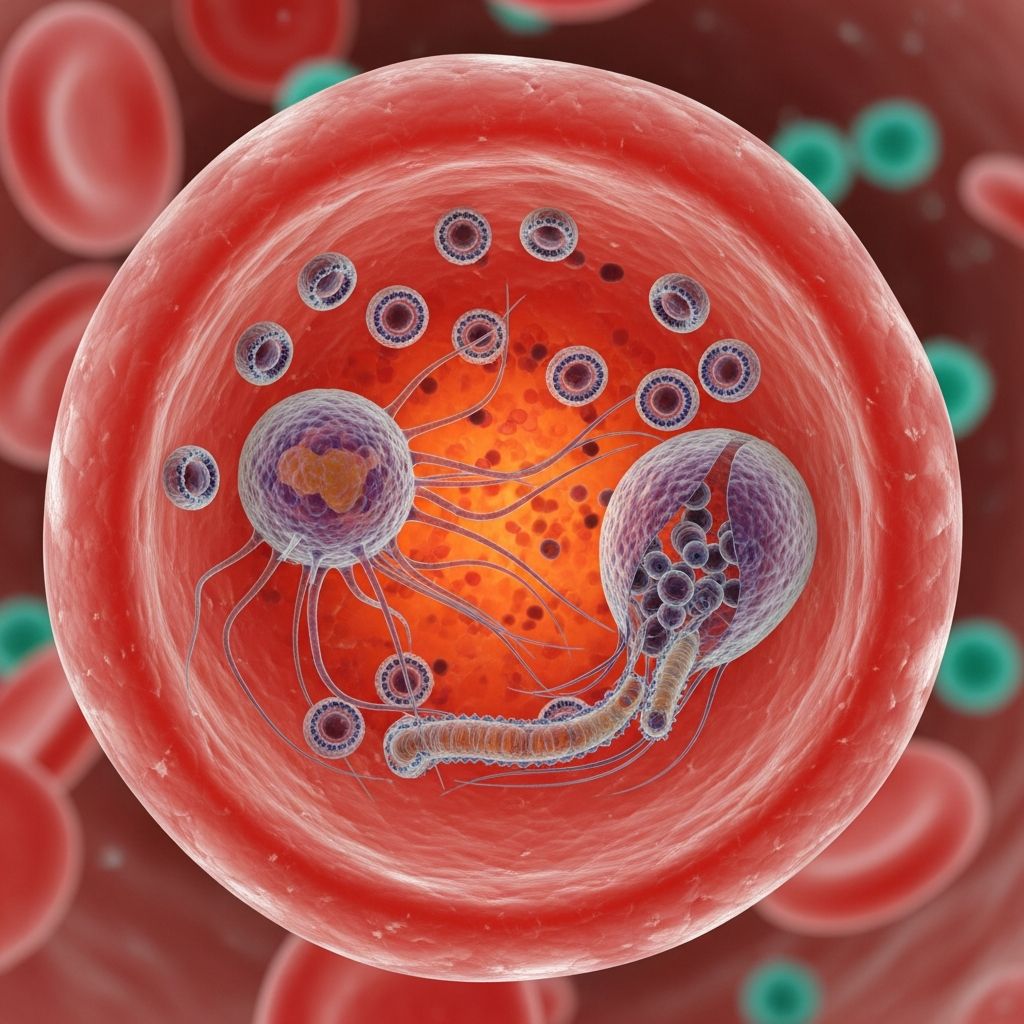
Malaria is a life-threatening parasitic disease transmitted primarily through the bites of infected Anopheles mosquitoes, predominantly affecting tropical and subtropical regions.
What Is Malaria?
Malaria represents one of the world’s most significant public health challenges, caused by protozoan parasites of the genus Plasmodium. It infects humans via female Anopheles mosquitoes and is preventable and curable if addressed promptly. The disease does not spread directly from person to person but cycles between mosquitoes and human hosts. Globally, it imposes a heavy burden, with an estimated 249 million cases and 608,000 deaths in 2022, 94% in the WHO African Region. Children under 5 account for about 76% of all malaria deaths worldwide.
The parasites responsible include five main species: P. falciparum (most deadly and prevalent in Africa), P. vivax (dominant outside sub-Saharan Africa), P. ovale, P. malariae, and P. knowlesi. P. falciparum causes the most severe form, leading to complications like cerebral malaria.
Symptoms of Malaria
Symptoms typically appear 10-15 days after an infected mosquito bite, starting as flu-like: fever, chills, headache, myalgias, fatigue, nausea, and vomiting. Cycles of high fever (up to 106°F), shaking chills, and profuse sweating occur every 48-72 hours, depending on the parasite species.
In severe cases, particularly with P. falciparum, symptoms escalate to life-threatening levels: severe anemia, jaundice, kidney failure, seizures, mental confusion, coma, difficulty breathing, and multi-organ failure. Children under 5, pregnant individuals, and non-immune travelers face the highest risk of severe disease.
- Mild symptoms: Fever, chills, headache, muscle pain, tiredness.
- Severe symptoms: Persistent high fever, confusion, seizures, breathing issues, dark urine, extreme weakness.
Prompt recognition is crucial; untreated severe malaria can lead to death within hours.
Causes
Malaria’s etiology traces to Plasmodium parasites originating from photosynthetic protozoa. Transmission occurs when an infected female Anopheles mosquito bites a human, injecting sporozoites into the bloodstream.
Malaria Life Cycle
The parasite’s complex life cycle spans human and mosquito hosts, involving asexual and sexual reproduction phases, complicating vaccine and drug development.
- Sporozoite stage: Injected into skin, sporozoites travel to the liver.
- Hepatic (pre-erythrocytic) phase: Invade hepatocytes, multiply asexually into merozoites (thousands released upon rupture). P. vivax and P. ovale form dormant hypnozoites, enabling relapses years later.
- Erythrocytic phase: Merozoites infect red blood cells (RBCs), develop into trophozoites, schizonts, then burst RBCs, releasing more merozoites and causing symptoms via cytokine release like TNF-α.
- Gametocyte stage: Some merozoites become gametocytes, taken up by mosquitoes during blood meals.
- Mosquito phase: Gametocytes form zygotes, ookinetes, oocysts in mosquito gut; sporozoites migrate to salivary glands for transmission.
Rare non-mosquito transmissions include mother-to-fetus (congenital), blood transfusions, or shared needles.
Risk Factors
Residing in or traveling to endemic areas (sub-Saharan Africa, parts of Asia, Latin America) heightens risk. Vulnerable groups include:
- Children under 5 (76% of deaths).
- Pregnant women (anemia, low birth weight, maternal death).
- Non-immune travelers, HIV-infected individuals.
- People in poverty without bed nets or indoor spraying.
| Risk Factor | Impact |
|---|---|
| Age <5 years | Highest mortality (67% of child deaths). |
| Pregnancy | Increased severe anemia, miscarriage risk. |
| Travel to endemic areas | Non-immune adults at risk for severe disease. |
| Drug resistance areas | Reduced treatment efficacy. |
Diagnosis and Tests
Rapid diagnosis is essential to prevent progression. Methods include:
Related Stories



- Microscopy: Gold standard; examines Giemsa-stained blood smears for parasites (species identification, parasitemia quantification).
- Rapid Diagnostic Tests (RDTs): Detect parasite antigens (e.g., HRP-2 for P. falciparum); quick, field-usable.
- PCR: Highly sensitive for low parasitemia, species differentiation; used in research.
Symptom onset prompts immediate blood testing; in non-endemic areas, travel history guides suspicion.
Treatment
Treatment depends on species, severity, location, and resistance patterns. Artemisinin-based combination therapies (ACTs) are first-line for uncomplicated P. falciparum.
- Uncomplicated: ACTs (artemether-lumefantrine, artesunate-amodiaquine); 3-day course.
- Severe: Intravenous artesunate (preferred), followed by oral ACT; supportive care (fluids, transfusions).
- P. vivax/P. ovale: Chloroquine or ACT + primaquine (14 days) to eliminate hypnozoites (G6PD testing required).
WHO recommends prompt treatment within 24 hours; delays increase mortality. No single drug cures all; resistance monitoring is critical.
Prevention
Prevention (malaria prophylaxis) combines vector control and chemoprevention.
Vector Control
- Insecticide-treated bed nets (ITNs): Reduced child mortality by 20% in Africa.
- Indoor residual spraying (IRS): Kills mosquitoes resting indoors.
Chemoprevention
- Travelers: Atovaquone-proguanil, doxycycline, mefloquine, tafenoquine; start pre-travel.
- Seasonal Malaria Chemoprevention (SMC): Monthly sulfadoxine-pyrimethamine + amodiaquine for Sahel children.
- Intermittent Preventive Treatment in Pregnancy (IPTp): Monthly sulfadoxine-pyrimethamine from 2nd trimester.
Vaccines
RTS,S/AS01 (Mosquirix) for children in moderate-high transmission areas (4 doses); R21/Matrix-M approved 2023, higher efficacy.
Personal protection: DEET repellents, long clothing, avoid dusk/dawn bites.
Complications
Severe malaria includes cerebral malaria (coma, seizures), severe anemia, acute respiratory distress, blackwater fever (hemoglobinuria), hypoglycemia, lactic acidosis. Long-term: neurological deficits in survivors, especially children. Pregnancy complications: maternal death, stillbirths, preterm delivery.
Outlook
With prompt ACT treatment, cure rates exceed 95% for uncomplicated cases. Severe cases have 15-20% mortality even with care; early intervention improves survival. Relapses possible with hypnozoite-formers.
Living With
Post-treatment monitoring prevents relapse; complete full courses to avoid resistance. In endemic areas, repeated infections build partial immunity, but severe episodes decline with age. Travelers report symptoms up to a year post-travel.
Frequently Asked Questions
Is malaria contagious?
No, malaria spreads only via infected mosquitoes or rarely blood exposure, not person-to-person.
Can you get malaria more than once?
Yes, reinfection occurs without immunity; hypnozoites cause relapses in P. vivax/P. ovale.
How long before malaria symptoms appear?
Usually 7-30 days post-bite, but can be weeks to months.
Is there a vaccine for malaria?
Yes, RTS,S and R21 vaccines for children in endemic areas; not 100% effective, used with other measures.
Can malaria be cured?
Yes, with proper antimalarials; untreated severe cases are often fatal.
References
- Malaria Fact Sheet — World Health Organization. 2024-04-25. https://www.who.int/news-room/fact-sheets/detail/malaria
- Malaria: Causes, Symptoms, Diagnosis, Treatment & Prevention — Cleveland Clinic. 2023-11-01. https://my.clevelandclinic.org/health/diseases/15014-malaria
- Malaria: An Overview — National Center for Biotechnology Information (PMC). 2023-05-15. https://pmc.ncbi.nlm.nih.gov/articles/PMC10237628/
- Malaria – Symptoms & Causes — Mayo Clinic. 2023-09-28. https://www.mayoclinic.org/diseases-conditions/malaria/symptoms-causes/syc-20351184
- About Malaria — Centers for Disease Control and Prevention (CDC). 2024-02-12. https://www.cdc.gov/malaria/about/index.html
Similar Articles








Read full bio of medha deb