Male Genital Dysaesthesia: Symptoms, Causes, And Treatments
Understanding the burning sensations, causes, diagnosis, and management of male genital dysaesthesia for improved quality of life.
Revised: January 2026
What is male genital dysaesthesia?
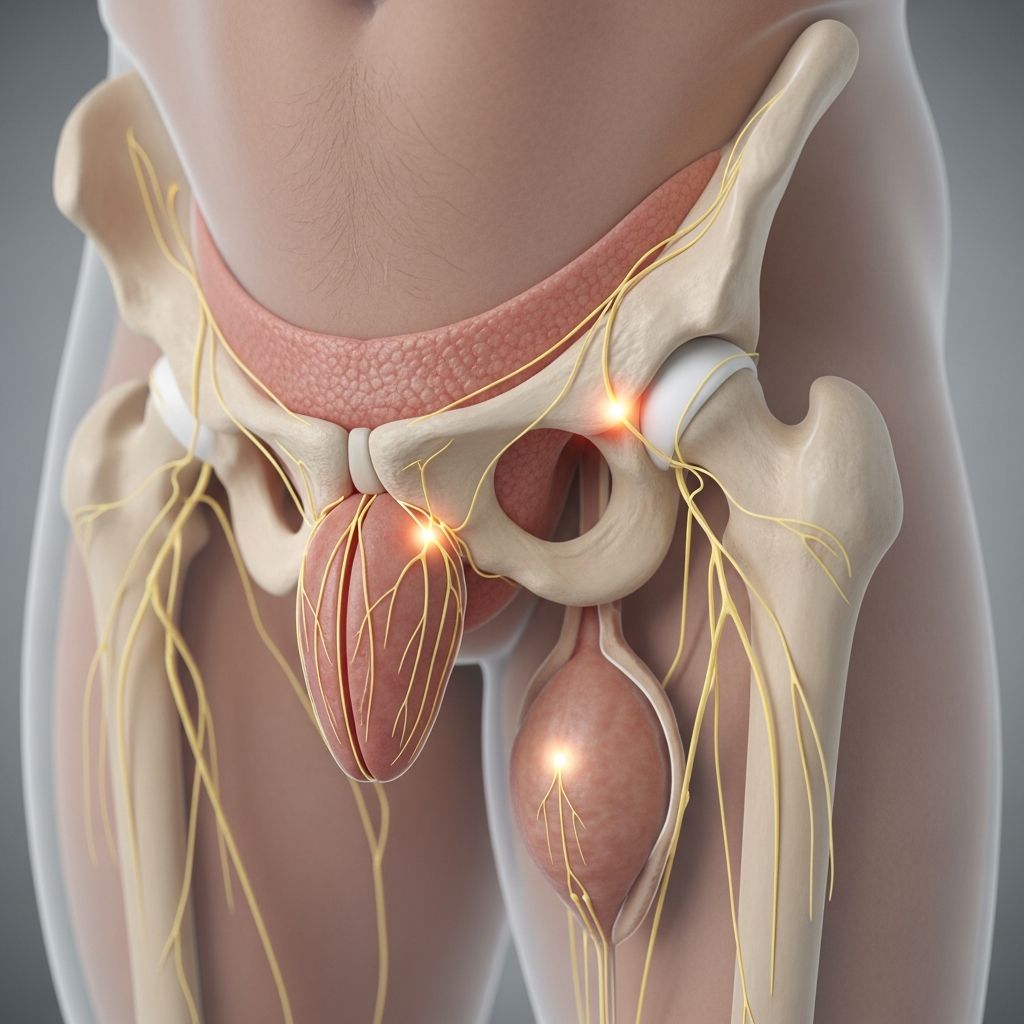
Male genital dysaesthesia is a form of cutaneous dysaesthesia characterised by a burning, hot, irritating discomfort of the penis, foreskin, and/or scrotum. It is often accompanied by increased sensitivity to touch (hyperaesthesia). This condition manifests as abnormal sensations such as burning, warmth, tingling, or irritation without visible skin changes in many cases.
The disorder primarily affects the genital skin, leading to persistent discomfort that can significantly impact daily life, sexual function, and mental well-being. Sensations are typically described as hot or scalding, distinguishing them from true itchiness, which prompts scratching. If itching occurs, it may result from secondary contact dermatitis due to applied treatments like soaps or creams.
Male genital dysaesthesia is also known by several other terms, including dysaesthetic penoscrotodynia (DPSD), male genital burning syndrome, burning scrotum syndrome, penodynia, scrotodynia, or glansodynia. When accompanied by redness, it may be termed red scrotum syndrome.
Who gets male genital dysaesthesia?
Male genital dysaesthesia predominantly affects adult men, with no specific demographic data widely reported. It is more common in middle-aged to older males, though cases occur across age groups. The condition is rare and often underdiagnosed due to embarrassment or misattribution to infections or dermatoses.
Patients typically present with chronic symptoms lasting months to years, often after unsuccessful trials of antibiotics, antifungals, or topical steroids. Psychological stress from the condition can exacerbate symptoms, creating a cycle of anxiety and heightened sensation.
Causes of male genital dysaesthesia
The exact aetiology of male genital dysaesthesia remains poorly understood, but several mechanisms have been proposed:
- Nerve hyperactivity: Symptoms arise from overactive sensory nerves in the genital skin, leading to dysaesthetic sensations without structural damage.
- Nerve compression: Entrapment of nerves such as the pudendal nerve, often from prolonged sitting, cycling, or pelvic floor muscle tension, can cause referred genital discomfort.
- Spinal or radicular issues: Compression of nerve roots in the lower spinal cord (radiculopathy) may refer sensations to the genitals.
- Vascular hyperreactivity: In red scrotum syndrome, persistent erythema results from dilated blood vessels, possibly triggered by nerve-released vasodilators or rosacea-like processes.
- Iatrogenic factors: Prolonged use of potent topical corticosteroids can induce steroid rosacea-like changes, worsening burning and redness.
- Triggers: Alcohol, caffeine, stress, infections (e.g., post-herpetic neuralgia), pelvic surgery, or back injuries may precipitate or exacerbate symptoms.
Importantly, the condition is not caused by cancer, infection, or sexually transmitted diseases, though these must be excluded via examination and tests. Genetic predisposition may play a role in some cases.
Clinical features of male genital dysaesthesia
Patients report:
- Burning, hot, or scalding sensations on the glans penis, penile shaft, foreskin, or scrotum.
- Hyperalgesia or allodynia (pain from non-painful stimuli like light touch).
- Symptoms worse with heat, friction, tight clothing, or triggers like alcohol/caffeine.
- Possible scrotal erythema in red scrotum syndrome variant.
- No primary skin eruption in classic cases; secondary changes from scratching or treatments.
Symptoms can be constant or intermittent, often fluctuating with stress or environmental factors. The discomfort disrupts sleep, work, relationships, and sexual activity.
Related Stories



Variation in skin types
In uncircumcised men, symptoms may localise to the foreskin or glans due to moisture and friction. Darker skin types may show less visible erythema, complicating diagnosis. Genital skin’s thin stratum corneum and rich innervation heighten susceptibility to dysaesthesia across all phototypes.
Complications of male genital dysaesthesia
Chronic symptoms lead to:
- Anxiety, depression, and relationship strain.
- Sexual dysfunction from pain and hypersensitivity.
- Secondary contact dermatitis from over-treatment.
- Social withdrawal and reduced quality of life.
Diagnosis of male genital dysaesthesia
Diagnosis is clinical, based on history and exclusion of alternatives. Key steps include:
- Detailed history: Symptom onset, triggers, prior treatments.
- Physical exam: Genital skin, prostate, spine; look for subtle erythema or neuralgia signs.
- Tests: Swabs for infections/STDs, blood tests, biopsy if needed (rarely shows pathology).
Differential diagnoses
| Condition | Key Features |
|---|---|
| Lichen sclerosus | White patches, scarring, itch > burn. |
| Genital psoriasis | Well-defined plaques, scales. |
| Candidiasis | Yeast infection signs, responds to antifungals. |
| Herpes zoster neuralgia | Dermatomal distribution, history of shingles. |
| Pudendal neuralgia | Perineal pain, urinary/sexual symptoms. |
Treatment of male genital dysaesthesia
Treatment is challenging, often trial-based, focusing on symptom relief. No cure exists, but many improve.
General measures
- Cool compresses (cold wet cloth) for temporary relief.
- Avoid triggers: Alcohol, caffeine, heat, tight clothes.
- Emollients: Aqueous cream to protect skin.
- Stop all prior topicals, especially steroids.
Topical treatments
- Menthol 1% in aqueous cream: Cooling effect, apply 3-4x/day.
- Pimecrolimus cream: Reduces redness/burning, 1-2x/day.
- Lidocaine cream/patches: Local numbing.
Systemic treatments
- Neuropathic agents: Gabapentin, pregabalin (calm nerves).
- Tricyclics: Amitriptyline/nortriptyline 10-30mg nightly.
- Doxycycline 50mg 1-2x/day: 3-6 months for anti-inflammatory effects.
- SSRIs: Improve symptoms and mood.
- Beta-blockers: Low-dose carvedilol for vascular symptoms.
Other treatments
- Physical therapy for pelvic floor/nerve entrapment.
- Pudendal nerve blocks or Botox for muscle spasm.
- Cognitive behavioural therapy (CBT) for coping.
- Advanced: Spinal cord stimulation (refractory cases).
Prevention of male genital dysaesthesia
As aetiology is unclear, prevention is limited. Strategies include avoiding prolonged perineal pressure (e.g., cycling adjustments), limiting steroid use, managing stress, and prompt evaluation of genital symptoms.
Outcome for male genital dysaesthesia
Some cases resolve spontaneously; others persist chronically. Treatment reduces severity, improving quality of life. Multidisciplinary care (dermatology, neurology, psychology) optimises outcomes.
Frequently Asked Questions
Is male genital dysaesthesia contagious?
No, it is not infectious and cannot be transmitted.
Does it cause cancer?
No, it is benign; cancer must be ruled out via exam.
Can it be cured?
No permanent cure, but symptoms often managed effectively.
Is it psychological?
Primarily neuropathic; stress worsens it but does not cause it.
How long does it last?
Varies; some short-term, others chronic with flares.
References
- What Is Genital Dysesthesia? Understanding the Condition — Hims. 2023. https://www.hims.com/conditions/genital-dysesthesia
- Genital dysaesthesia. Penile or scrotodynia — DermNet NZ. 2023. https://dermnetnz.org/topics/male-genital-dysaesthesia
- Male genital dysesthesia — Doctor Hoogstra. 2023. https://doctorhoogstra.com/en/wiki/male-genital-dysesthesia/
- The male genital skin burning syndrome (Dysaesthetic Peno/Scroto… — PubMed. 2002-02-01. https://pubmed.ncbi.nlm.nih.gov/11886614/
- Red scrotum syndrome — VisualDx. 2023. https://www.visualdx.com/visualdx/diagnosis/red+scrotum+syndrome
Similar Articles








Read full bio of Sneha Tete