Male Pattern Baldness: Stages, Causes, and Treatment Options
Understanding the seven stages of male pattern baldness and exploring proven treatment options to restore hair growth.
Understanding Male Pattern Baldness (Androgenic Alopecia)
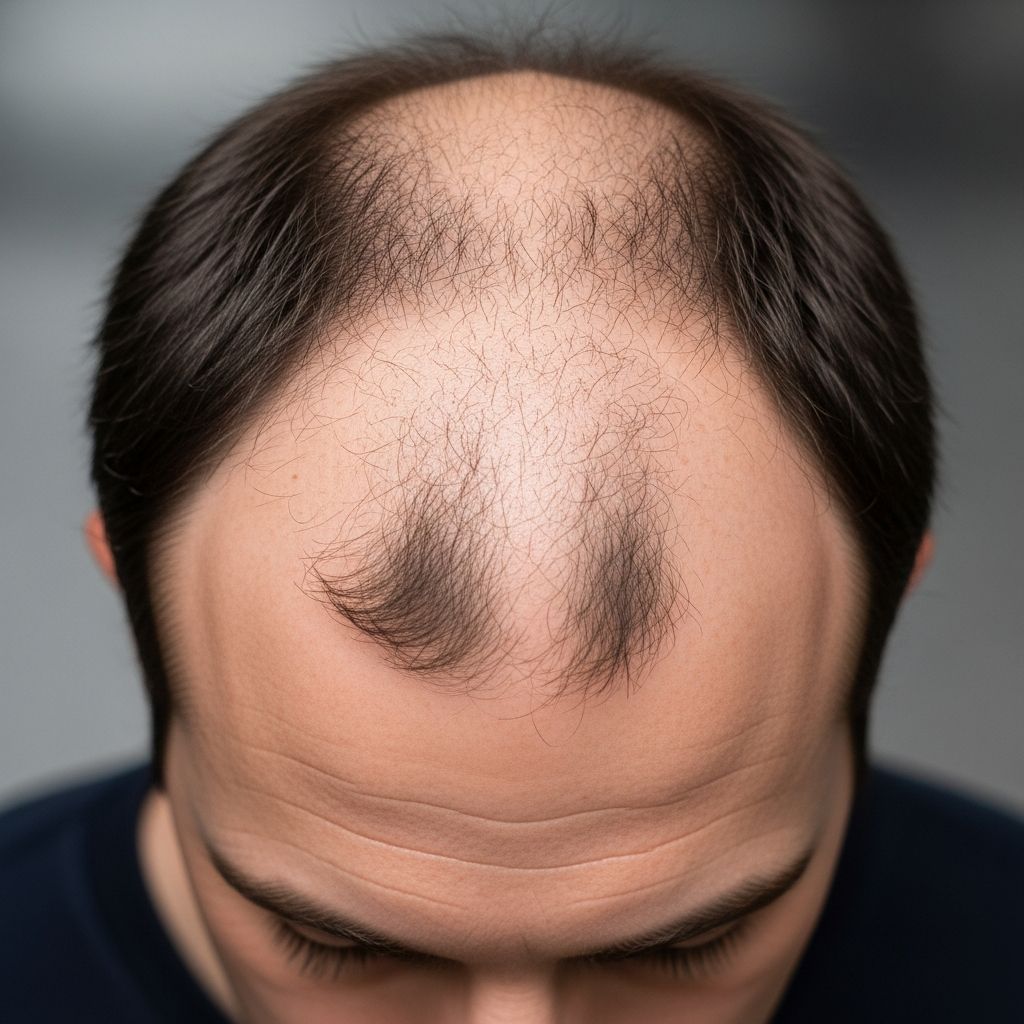
Male pattern baldness, medically known as androgenic alopecia, is one of the most common types of hair loss affecting men worldwide. This progressive condition causes gradual hair loss on the scalp, resulting in thinning hair and a receding hairline. Unlike some temporary hair loss conditions, male pattern baldness is typically permanent without medical intervention. The condition is characterized by the shrinking of hair follicles, which leads to shorter, thinner hairs that eventually stop growing altogether.
Male pattern baldness affects approximately two-thirds of all men, with the likelihood of experiencing hair loss increasing significantly with age. While the condition can begin as early as the late teens, most men start noticing signs in their 30s. The impact extends beyond physical appearance, as hair loss can affect mental health and self-confidence for many individuals.
The Seven Stages of Male Pattern Baldness
The Hamilton-Norwood scale is the standard classification system used to categorize the progression of male pattern baldness into seven distinct stages:
Stage 1: No noticeable hair loss; the hairline remains unaffected and appears normal.
Stage 2: Minor recession of the hairline, typically at the temples, creating a slight triangular shape.
Stage 3: More pronounced recession at the temples with the characteristic “M” shaped hairline becoming visible.
Stage 4: Significant hair loss at the crown combined with deeper temple recession, though a band of hair remains between the two areas.
Stage 5: More extensive hair loss with the band of hair between the crown and temples becoming thinner and less defined.
Stage 6: Continued expansion of baldness with the hair loss at the crown and temples merging into larger bald areas.
Stage 7: Advanced baldness affecting most of the scalp, leaving only a band of hair on the sides and back of the head.
Hair loss patterns typically begin at the temples, frontal scalp, and crown. As hair loss progresses, these areas may merge to form a distinctive “U” shape or “crown of laurel” appearance. Interestingly, hair below the ears remains genetically programmed to resist hair loss, which is why men often retain tufts of hair in these regions.
What Causes Male Pattern Baldness?
Male pattern baldness results from the interaction of genetic predisposition and hormonal factors. If your father, grandfather, or uncle experienced baldness, you are significantly more likely to develop the condition. The development and severity of male pattern baldness depend on your inherited genes and how your body responds to certain hormones.
Androgens, particularly dihydroxytestosterone (DHT), play a crucial role in male pattern baldness. DHT is a potent metabolite of testosterone synthesized by the enzyme 5-alpha reductase in hair follicles and sebaceous glands. In genetically predisposed individuals, hair follicles in specific areas of the scalp are sensitive to DHT, causing them to shrink over time. This process, known as miniaturization, results in shorter, thinner hairs that eventually stop growing.
Related Stories



The condition typically begins after puberty, when androgen levels increase dramatically. This explains why male pattern baldness usually manifests in the late teens through adulthood. The exact mechanism of why certain hair follicles are sensitive to DHT while others remain resistant is not completely understood, though genetic factors clearly play a significant role.
Ethnic and Genetic Variations
Male pattern baldness affects different ethnic groups at varying rates. White men experience the highest prevalence, followed by men of Afro-Caribbean descent. Men of Chinese or Japanese descent are significantly less likely to experience male pattern baldness. Additionally, the condition rarely affects Native American, First Nations, and Alaska Native peoples. These differences reflect genetic variations in hair follicle sensitivity to androgens and overall genetic predisposition across different populations.
How Is Male Pattern Baldness Diagnosed?
Male pattern baldness is relatively straightforward to diagnose based on its characteristic appearance and pattern. Many men recognize the condition without medical consultation. However, a healthcare provider can confirm the diagnosis during a physical examination of the scalp.
During a diagnostic evaluation, your healthcare provider will:
– Review your medical history, including when you first noticed hair loss
– Ask about family history of baldness
– Examine the shape and pattern of your hairline
– Assess areas showing thinning or balding
– Use a densitometer, a specialized tool that measures hair follicle thickness
If your healthcare provider suspects your hair loss may not be related to male pattern baldness, they may order additional tests such as blood work or scalp biopsies to rule out other conditions causing hair loss, including alopecia areata, thyroid disorders, nutritional deficiencies, or scalp infections.
Treatment Options for Male Pattern Baldness
Several effective treatments are available for male pattern baldness, ranging from medications to surgical procedures. The most reliable and effective treatments are provided by healthcare professionals or under medical supervision.
Medications
Finasteride: This oral medication works by blocking the enzyme 5-alpha reductase, which converts testosterone to DHT. By reducing DHT levels, finasteride helps prevent hair follicle miniaturization and can promote hair regrowth. Men typically take 1 mg daily, and results may take at least three months to become noticeable. Longer-term treatment with finasteride promotes greater therapeutic success. A systematic review found that 3.4 patients need to be treated long-term for one patient to perceive improvement, with a 30% absolute increase in patient-perceived improvement over extended use.
Minoxidil: Available in topical form, minoxidil stimulates hair growth directly on the scalp. It may take two to four months of daily application before you notice improvement. Minoxidil can be used alone or in combination with finasteride for enhanced results. It’s important to note that if you stop using minoxidil, any regrown hair will fall out, requiring continuous treatment for maintenance.
Hair Transplant Surgery
Hair transplant surgery involves removing hair follicles from areas resistant to hair loss (typically the back and sides of the scalp) and implanting them into balding areas. This surgical procedure can provide permanent results, as transplanted hair typically retains its original characteristics and resistance to DHT.
Platelet-Rich Plasma (PRP) Therapy
PRP therapy involves extracting platelets from your blood and injecting the concentrated plasma into the scalp. This treatment may stimulate hair growth and improve hair thickness in some patients, though research is still ongoing regarding its long-term efficacy.
Styling Techniques and Cosmetic Solutions
While not treating the underlying condition, various styling techniques and cosmetic products can help minimize the appearance of hair loss. These include specialized haircuts, volumizing products, and hair fibers that temporarily thicken the appearance of existing hair.
When to Seek Medical Attention
Many men accept male pattern baldness as a natural part of aging and don’t seek treatment. However, if you’d like to maintain your hair or if hair loss significantly impacts your mental health, causing stress, anxiety, or depression, you should contact your healthcare provider promptly. Early intervention often yields better results, and treatment options can halt progression or even reverse hair loss in many cases.
It’s important to note that male pattern baldness is not contagious and cannot be transmitted from one person to another, despite being heritable through genetic factors.
Understanding Hair Loss vs. Male Pattern Baldness
Male pattern baldness differs from other types of hair loss, such as telogen effluvium. Telogen effluvium involves rapid shedding of hair over a short period, typically occurring a few months after physical or emotional stress or sudden hormonal changes. This type of hair loss is usually temporary, with hair often regrowing without treatment once the stressful period ends. In contrast, male pattern baldness progresses gradually over months or years and is permanent without medical intervention.
Health Considerations and Associations
Research has identified certain health associations with male pattern baldness. Baldness affecting the crown of the head (vertex) has been associated with an increased risk for coronary heart disease. However, recent studies suggest that baldness is not a consistent biomarker for prostate cancer risk or progression, contrary to earlier concerns.
These findings highlight the importance of discussing male pattern baldness with your healthcare provider, as it may prompt evaluation for associated health conditions and overall cardiovascular health monitoring.
Frequently Asked Questions About Male Pattern Baldness
Q: At what age does male pattern baldness typically start?
A: Early signs can appear as early as the late teens, but male pattern baldness most commonly begins in the 30s. However, some men don’t experience noticeable hair loss until later in life. Age-related hair loss increases significantly with each passing decade.
Q: Is male pattern baldness inherited?
A: Yes, male pattern baldness is primarily inherited. If your father, grandfather, or uncle experienced baldness, you have a higher likelihood of developing the condition. The inheritance pattern is influenced by multiple genes from both parents.
Q: How long do hair loss medications take to work?
A: Finasteride typically requires at least three months of daily use before noticeable improvement occurs. Minoxidil may take two to four months of daily application. For best results, consistency is essential, and longer-term treatment generally produces better outcomes.
Q: What happens if I stop taking hair loss medications?
A: If you stop using finasteride or minoxidil, any hair regrowth will eventually fall out, and hair loss will resume. These medications require continuous use to maintain results.
Q: Is male pattern baldness permanent without treatment?
A: Yes, male pattern baldness is permanent without treatment. Unlike temporary hair loss conditions, male pattern baldness will continue to progress without medical intervention. However, various treatments can stop progression or reverse hair loss.
Q: Can women develop male pattern baldness?
A: While the condition is called “male” pattern baldness, women can experience female pattern hair loss, which is related but presents differently. Female pattern hair loss typically affects the vertex and crown with diffuse thinning rather than the receding hairline seen in men.
Q: Are there any side effects to hair loss treatments?
A: Finasteride may have side effects including decreased libido, erectile dysfunction, and decreased ejaculate volume in some men. Minoxidil may cause scalp irritation, itching, or dryness. Discuss potential side effects with your healthcare provider before starting treatment.
Moving Forward with Male Pattern Baldness
Losing your hair can be shocking and emotionally challenging. The key is understanding your options and taking action early if you want to maintain your hair. Effective treatments exist today that can stop hair loss progression or even reverse it in many cases. Consulting with a healthcare provider as soon as you notice signs of male pattern baldness allows for personalized treatment plans tailored to your specific situation and preferences. Whether you choose medication, surgical options, or a combination approach, professional guidance ensures you receive the most appropriate and effective care for your individual needs.
References
- Male Pattern Baldness (Androgenic Alopecia): Stages, Treatment — Cleveland Clinic. 2022-12-09. https://my.clevelandclinic.org/health/diseases/24515-male-pattern-baldness-androgenic-alopecia
- Male and female pattern hair loss: Treatable and worth treating — Cleveland Clinic Journal of Medicine, 88(3):173-183. 2021. https://www.ccjm.org/content/88/3/173
- Why Do Men Go Bald? Health Cleveland Clinic — Cleveland Clinic Health Essentials. https://health.clevelandclinic.org/why-do-men-go-bald-and-is-there-anything-you-can-really-do-about-it
- Male and Female Pattern Hair Loss: A Guide to Treatment — Cleveland Clinic Consult QD. https://consultqd.clevelandclinic.org/male-and-female-pattern-hair-loss-a-guide-to-treatment
- Male and Female Pattern Hair Loss – Consult QD — Cleveland Clinic Consult QD. https://consultqd.clevelandclinic.org/male-and-female-pattern-hair-loss-a-guide-to-clinical-presentations-and-diagnosis
- Oral Minoxidil Offers Strong Results Against Alopecia — Cleveland Clinic Consult QD. https://consultqd.clevelandclinic.org/oral-minoxidil-offers-strong-results-against-alopecia
- Male and female pattern hair loss: Treatable and worth treating — PubMed/NCBI. 2021-03-01. https://pubmed.ncbi.nlm.nih.gov/33648970/
Similar Articles








Read full bio of Sneha Tete