Mallet Finger Complete Guide: Symptoms, Treatment & Prevention
Understand mallet finger: causes, symptoms, diagnosis, and effective treatments for this common finger injury.
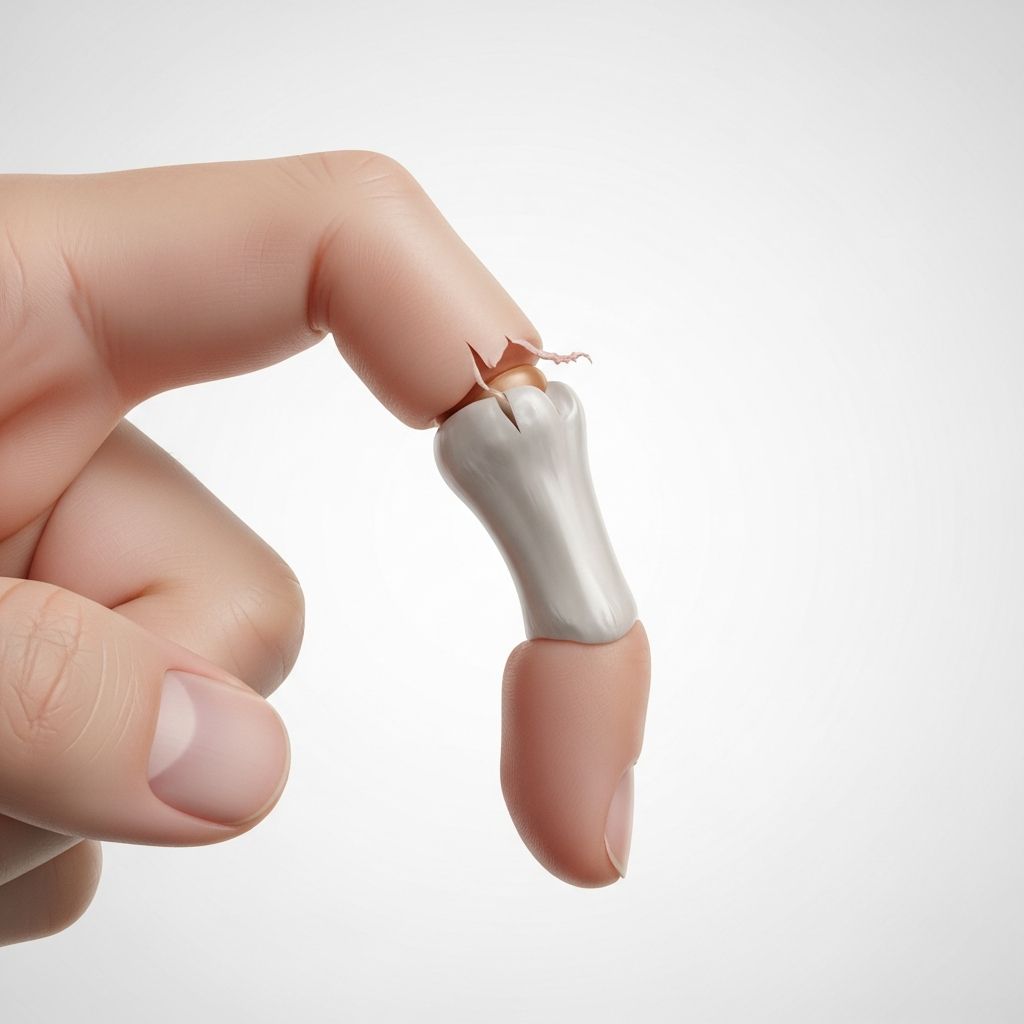
Mallet finger, also known as baseball finger or drop finger, is a common injury where the fingertip droops and cannot be actively straightened due to damage to the extensor tendon at the distal interphalangeal joint (DIPJ).
What is mallet finger?
Mallet finger occurs when the thin extensor tendon that straightens the end joint of a finger or thumb is ruptured or avulsed from the bone. This leads to the distal phalanx being held in flexion by the unopposed flexor digitorum profundus (FDP) tendon, resulting in a characteristic drooping deformity. The injury can be closed (tendon rupture without bone involvement) or open (with skin laceration), and bony (with avulsion fracture) or soft tissue only.
The DIPJ is the joint closest to the fingertip. Disruption at the tendon’s insertion on the proximal distal phalanx prevents active extension while passive extension remains possible. This deformity is frequently seen in sports like baseball, basketball, or cricket, where a ball strikes the fingertip.
Symptoms
Immediate symptoms following a mallet finger injury include:
- Pain and tenderness at the dorsal DIPJ
- Swelling and bruising around the fingertip
- Redness or ecchymosis on the dorsum of the finger
- Inability to actively extend the DIPJ, with a noticeable droop of the fingertip
- Possible blood under the nail or detached fingernail in open injuries
- A bony prominence if an avulsion fracture is present
Patients often report a sudden forceful flexion of the extended fingertip, such as being hit by a ball. The finger may straighten passively but snaps back to flexion when released. Seek urgent care if there’s blood under the nail, as this indicates risk of infection or open fracture.
Causes
Mallet finger typically results from axial loading on the fingertip in extension, causing sudden flexion force. Common mechanisms include:
- Sports injuries: Ball striking the fingertip (e.g., baseball, volleyball)
- Crushing injuries or direct trauma
- Accidental jamming of the finger
- Rarely, sudden forceful pull on the extended finger
The long, ring, and small fingers of the dominant hand are most affected. In children, it may involve growth plate cartilage, risking deformity if untreated. Open injuries occur with lacerations over the tendon.
Diagnosis
Diagnosis is primarily clinical, supplemented by imaging. Key steps include:
Clinical Examination: Observe extensor lag at the DIPJ. Test active vs. passive extension while isolating the DIPJ (hold PIPJ flexed to avoid compensation). In open injuries, check for dorsal skin wounds.
X-rays: AP and lateral views of the digit confirm avulsion fracture (common in 20-50% of cases), subluxation, or dislocation. X-rays rule out joint malalignment requiring surgery.
Advanced imaging like MRI is rarely needed but may assess tendon integrity if unclear. The mallet finger test involves asking the patient to extend the finger; failure confirms the diagnosis.
Treatment
Most mallet finger injuries (over 80%) respond to non-surgical management with continuous splinting. Treatment varies by type:
Non-surgical Treatment
Apply a splint holding the DIPJ in full extension or slight hyperextension for 6-8 weeks, day and night. Allow PIPJ and MCPJ motion. Splint types include:
- Stack splint (prefabricated aluminum)
- Dorsal or volar padded splints
- Custom thermoplastic splints
Related Stories



Maintain strict extension; flexion resets the healing clock. After 6-8 weeks, protect with splint during activities for another 4 weeks while starting gentle ROM exercises. Pain, swelling managed with ice, elevation, NSAIDs.
| Injury Type | Splinting Duration | Additional Care |
|---|---|---|
| Closed soft tissue | 6-8 weeks continuous | Followed by night splinting 4 weeks |
| Bony mallet (<30% articular involvement) | 6-8 weeks | X-ray follow-up |
| Open injury | 6-8 weeks post-wound closure |
Surgical Treatment
Surgery indicated for:
- Large avulsion fractures (>30-50% articular surface) with subluxation
- Displaced fractures or joint instability
- Failed splinting (persistent lag after 3 months)
- Open injuries needing tendon repair
- Chronic deformities
Procedures: Closed reduction K-wire fixation, open reduction internal fixation (pins, screws), or tendon repair. Pins removed after 6 weeks. Post-op: Splinting and therapy.
Recovery
Healing takes 6-12 weeks with splinting. Full recovery may require 3-4 months. Expected outcomes:
- 80-90% regain good extension with compliant splinting
- Mild residual lag (10 degrees) common, rarely symptomatic
- Bony mallets heal well if non-displaced
Physical therapy post-immobilization: Gentle extension exercises, strengthening. Complications include infection (open injuries), skin breakdown from splint, stiffness, swan-neck deformity (chronic cases), or nonunion. Compliance critical; non-compliance leads to permanent deformity and impaired function.
Monitor children closely to prevent growth disturbances.
When to see a doctor
Seek immediate medical attention if:
- Fingertip droops after injury
- Pain, swelling prevents use
- Blood under nail or open wound
- Inability to straighten tip after 48 hours
- Joint feels unstable or subluxed
Primary care or emergency for initial splint; refer to hand specialist for bony, open, or complex cases.
Frequently Asked Questions
Can mallet finger heal on its own without a splint?
No, untreated mallet finger leads to permanent droop and impaired function. Continuous splinting is essential for tendon healing.
How long do I wear the splint?
6-8 weeks continuously, then 4 weeks during high-risk activities. Do not remove except for hygiene under guidance.
Will I need surgery?
Most do not; surgery for large fractures, subluxation, or splint failure. X-rays determine need.
What if my finger flexes during splinting?
Healing clock resets; restart 6-8 weeks from flexion event. Strict compliance key.
Can children get mallet finger?
Yes, requires careful evaluation to avoid growth plate issues and permanent deformity.
Prevention
Prevent by:
- Wearing protective gear in sports (e.g., fingertip guards)
- Avoiding fingertip strikes
- Proper technique in ball sports
- Prompt treatment of minor finger injuries
References
- An overview of mallet finger injuries — PMC – PubMed Central. 2021. https://pmc.ncbi.nlm.nih.gov/articles/PMC8689306/
- Mallet Finger: Symptoms & Treatment — Proliance Puget Sound Orthopaedics. Accessed 2026. https://pugetsoundorthopaedics.com/specialties/hand/mallet-finger/
- Mallet Finger — Tripler Army Medical Center. Accessed 2026. https://tripler.tricare.mil/Health-Services/Specialty-Care/Orthopedics-Podiatry-Clinic/Mallet-Finger
- Mallet Finger (Baseball Finger) — OrthoInfo – AAOS. Accessed 2026. https://orthoinfo.aaos.org/en/diseases–conditions/mallet-finger-baseball-finger/
- Mallet Finger — Joshua Richards MD. Accessed 2026. https://www.joshuarichardsmd.com/mallet-finger-shoulder-elbow-hand-specialist-stanford-pleasanton-emeryville-ca.html
- Mallet Finger — Connecticut Orthopaedics. Accessed 2026. https://www.ct-ortho.com/patient-resources/patient-education/articles/mallet-finger/
Similar Articles








Read full bio of medha deb