Mammary and Extramammary Paget Disease Images
Comprehensive visual guide to mammary and extramammary Paget disease, aiding diagnosis through detailed skin lesion images.
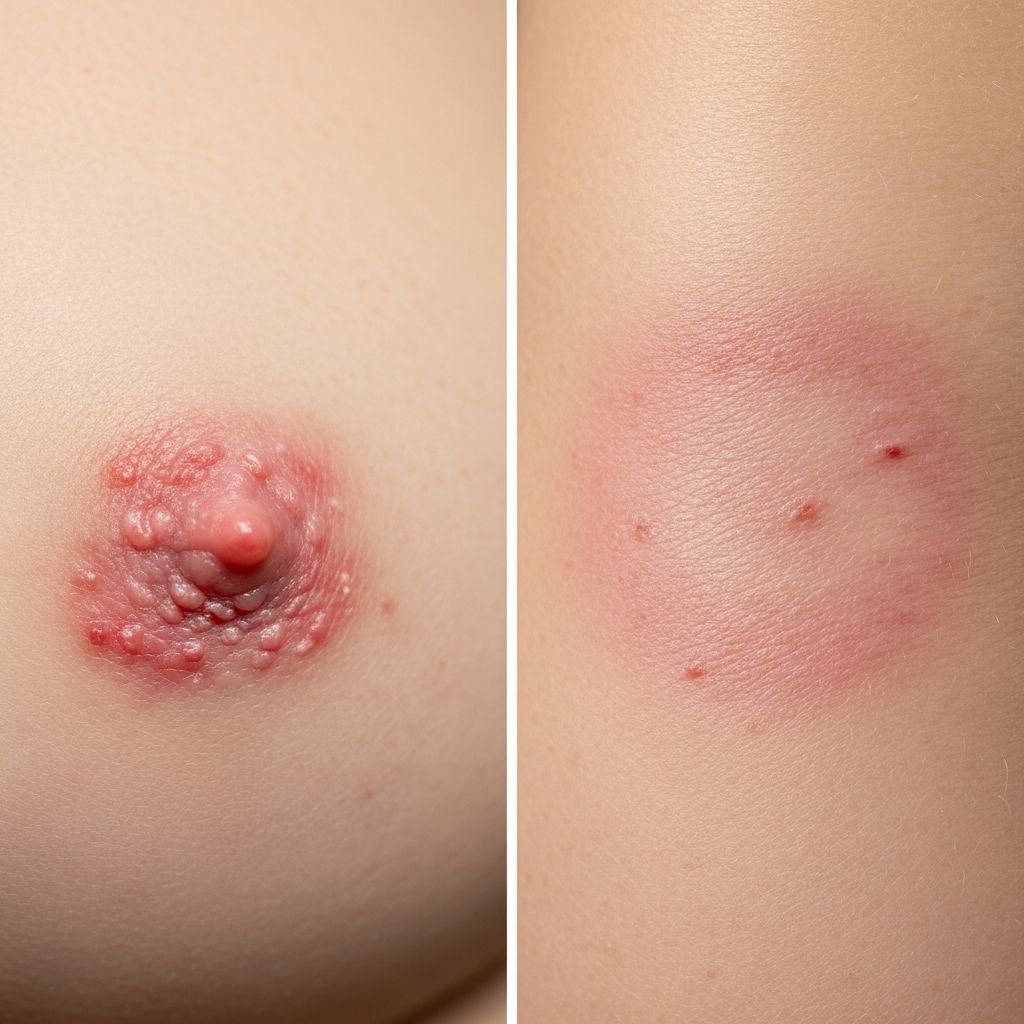
Mammary and extramammary Paget disease are rare skin cancers characterized by distinct clinical appearances and histopathological features. This image gallery provides visual references for accurate diagnosis, highlighting eczematous plaques, erosions, and scaling in key anatomical sites. Early recognition is essential, as these conditions often associate with underlying malignancies, influencing prognosis and management.
What is mammary Paget disease?
Mammary Paget disease, also known as Paget disease of the breast or nipple, represents approximately 1–4% of all breast malignancies. It typically manifests as a unilateral, persistent eczematous eruption confined to the nipple and areola, which may extend to the surrounding skin. Unlike benign dermatitis, it progresses slowly over months to years, failing to respond to topical steroids or antifungals.
Histologically, it features large, pale Paget cells within the epidermis, originating from intraepidermal spread of underlying ductal carcinoma in over 95% of cases. Prognosis correlates with the extent of associated invasive breast cancer; five-year survival reaches 82.6% overall, improving with early detection.
- Classic presentation: Erythematous, sharply demarcated plaque with scaling, oozing, and crusting on the nipple-areola complex.
- Advanced features: Nipple erosion, retraction, palpable mass indicating ductal carcinoma.
- Bilateral cases: Rare, often secondary to systemic conditions.
Images of mammary Paget disease
The following images depict characteristic lesions of mammary Paget disease, sourced from clinical dermatology archives.
- Image 1: Unilateral erythematous plaque with fine scaling on the right nipple and areola, mimicking eczema. Subtle erosion at the nipple tip.
- Image 2: Advanced mammary Paget disease showing thickened, crusted plaque extending beyond areola with nipple destruction. Underlying breast mass palpable.
- Image 3: Close-up of nipple-areola involvement with yellow serous discharge and hypopigmented macules.
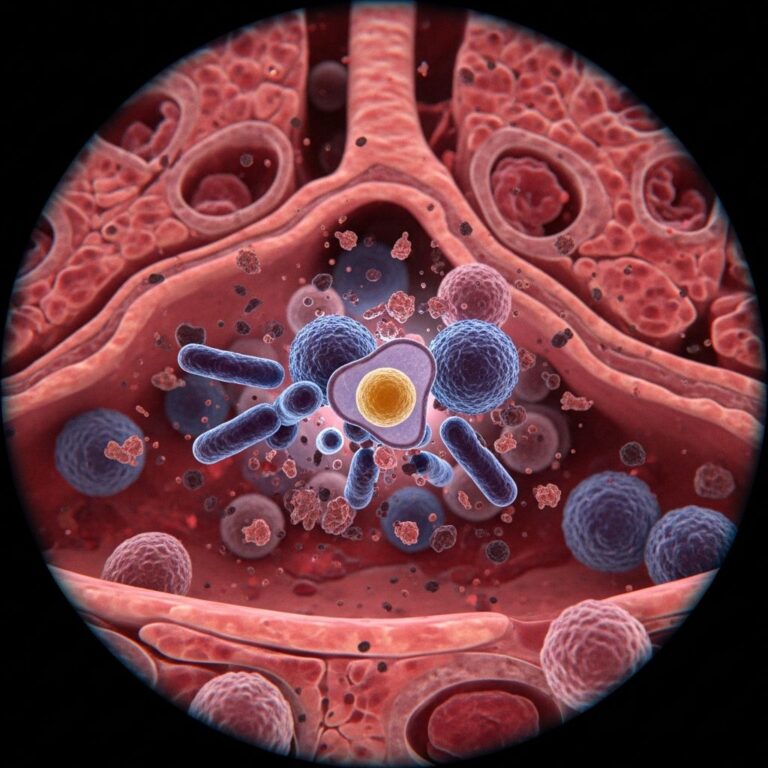
- Image 4: Histopathology slide revealing intraepidermal Paget cells with abundant pale cytoplasm and hyperchromatic nuclei.
What is extramammary Paget disease?
Extramammary Paget disease (EMPD) arises in apocrine gland-bearing skin outside the breast, most commonly the vulva (65%), perianal region (20%), scrotum, penis, or axillae. It presents as a well-demarcated, erythematous, eczematous plaque with scaling, crusting, or erosion, often pruritic and refractory to conservative treatments.
EMPD exists in primary (intraepithelial adenocarcinoma, 75%) and secondary (intraepidermal extension from visceral carcinoma, 25%) forms. Prognosis varies: noninvasive EMPD has 95% five-year survival, while invasive or metastatic cases drop to 61–16% depending on stage. Deep dermal invasion ≥1 mm or lymph node involvement significantly worsens outcomes.
- Risk factors: Age >65 years, female predominance in vulvar sites, Caucasian ethnicity.
- Associated malignancies: Colorectal (perianal EMPD), urogenital (genital EMPD), breast.
- Diagnostic challenge: Mimics chronic dermatitis, psoriasis, or melanoma in situ.
Images of vulvar extramammary Paget disease
Vulvar EMPD is the most frequent subtype, often multifocal and bilateral.
- Image 5: Extensive erythematous plaque with white scaling on labia majora and perineum, sharp borders.
- Image 6: Erosive vulvar EMPD with moist, weeping surface and satellite lesions on inner thighs.
- Image 7: Hyperkeratotic plaque on mons pubis extending to clitoris, resistant to topical therapy.
- Image 8: Subtle hypopigmented macules with underlying erythema on vulva in early disease.
Related Stories



Images of perianal extramammary Paget disease
Perianal EMPD mandates colorectal evaluation due to high association with underlying adenocarcinoma.
- Image 9: Annular erythematous plaque encircling anus with crusting and pruritus.
- Image 10: Perianal erosion with indurated borders and perirectal extension.
Images of male genital extramammary Paget disease
In males, EMPD favors scrotum and penis, with poorer prognosis linked to invasion.
- Image 11: Scrotal EMPD presenting as large, eczematous plaque with oozing.
- Image 12: Penile shaft involvement with well-defined scaling plaque.
- Image 13: Extensive scrotal and groin EMPD with leukoplakia-like areas.
Images of other sites of extramammary Paget disease
Rare sites include axillae, umbilicus, and trunk.
- Image 14: Axillary EMPD mimicking hidradenitis suppurativa with erosions.
- Image 15: Umbilical plaque in secondary EMPD associated with internal malignancy.
Histopathology of mammary and extramammary Paget disease
Diagnosis requires skin biopsy showing Paget cells: large, round cells with pale cytoplasm, prominent nucleoli in the basal epidermis. Immunohistochemistry confirms: positive for CK7, GCDFP-15, HER2; negative for CK20 (distinguishes from secondary forms).
- Mammary Paget: Ductal origin, HER2 overexpression common.
- Primary EMPD: CK7+/CK20-.
- Secondary EMPD: CK7-/CK20+ if from GI tract.
Management and prognosis
Surgery remains first-line: wide local excision (WLE) or Mohs micrographic surgery (MMS) for precise margins, reducing recurrence (MMS: 63% 5-year recurrence-free survival vs. WLE). Non-surgical options include imiquimod, photodynamic therapy for noninvasive disease, or chemotherapy (docetaxel-based) for metastatic EMPD.
Prognosis excels in noninvasive cases (95% 5-year DSS); invasive/metastatic EMPD shows 61–88.5% 15-year DSS, with female sex protective in early stages. Long-term surveillance (>15 years) is critical due to late recurrences.
| Stage | 5-Year Survival | Treatment |
|---|---|---|
| Noninvasive | 95% | MMS/WLE, topicals |
| Invasive (localized) | 92% | Surgery ± RT |
| Regional mets | 77% | Surgery + chemo/RT |
| Distant mets | 16% | Systemic therapy |
Frequently asked questions
What does Paget disease look like on the skin?
A red, scaly, itchy rash resembling eczema but persistent and localized to nipple/areola or anogenital skin.
Is Paget disease curable?
High cure rates (75–95%) with complete surgical excision in early, noninvasive disease; prognosis declines with invasion or metastasis.
How is Paget disease diagnosed?
Skin biopsy with immunohistochemistry; imaging/endoscopy to exclude underlying cancer.
What is the best treatment for extramammary Paget disease?
Mohs surgery for optimal margin control and lowest recurrence.
Does Paget disease always mean cancer?
Yes, it is an intraepidermal carcinoma, often linked to ductal or adnexal malignancy.
References
- Paget’s Disease of the Breast: Symptoms, Treatment & Prognosis — City of Hope Cancer Center. 2023. https://www.cancercenter.com/cancer-types/breast-cancer/types/rare-breast-cancer-types/pagets-disease-of-the-breast
- Recent treatment and prognosis in 643 patients with extramammary Paget’s disease — PubMed (Cancer Sci). 2024-02-20. https://pubmed.ncbi.nlm.nih.gov/38375900/
- Prognosis studies on extramammary Paget’s disease — MyEMPD Studies. 2024. https://www.myempd.com/studies/category/Prognosis
- Clinical Characteristics, Treatment, and Prognostic Factors of Extramammary Paget Disease — Frontiers in Oncology. 2020-07-10. https://www.frontiersin.org/journals/oncology/articles/10.3389/fonc.2020.01114/full
- Extramammary Paget’s Disease: A Review of the Literature Part II — Washington University Profiles (Therapeutics). 2019. https://profiles.wustl.edu/en/publications/extramammary-pagets-disease-a-review-of-the-literature-part-ii-tr/
- Extramammary Paget disease (EMPD): What you need to know — MD Anderson Cancer Center. 2022. https://www.mdanderson.org/cancerwise/extramammary-paget-disease-what-you-need-to-know.h00-159778812.html
- Extramammary Paget’s Disease: Symptoms, Causes & Treatment — Cleveland Clinic. 2023. https://my.clevelandclinic.org/health/diseases/24266-extramammary-pagets-disease
- Extramammary Paget Disease – StatPearls — NCBI Bookshelf. 2023-08-08. https://www.ncbi.nlm.nih.gov/books/NBK493224/
Similar Articles








Read full bio of medha deb