Dissociated Vertical Deviation: Diagnosis & Treatment
Explore effective strategies for diagnosing and treating dissociated vertical deviation to improve eye alignment and vision quality.
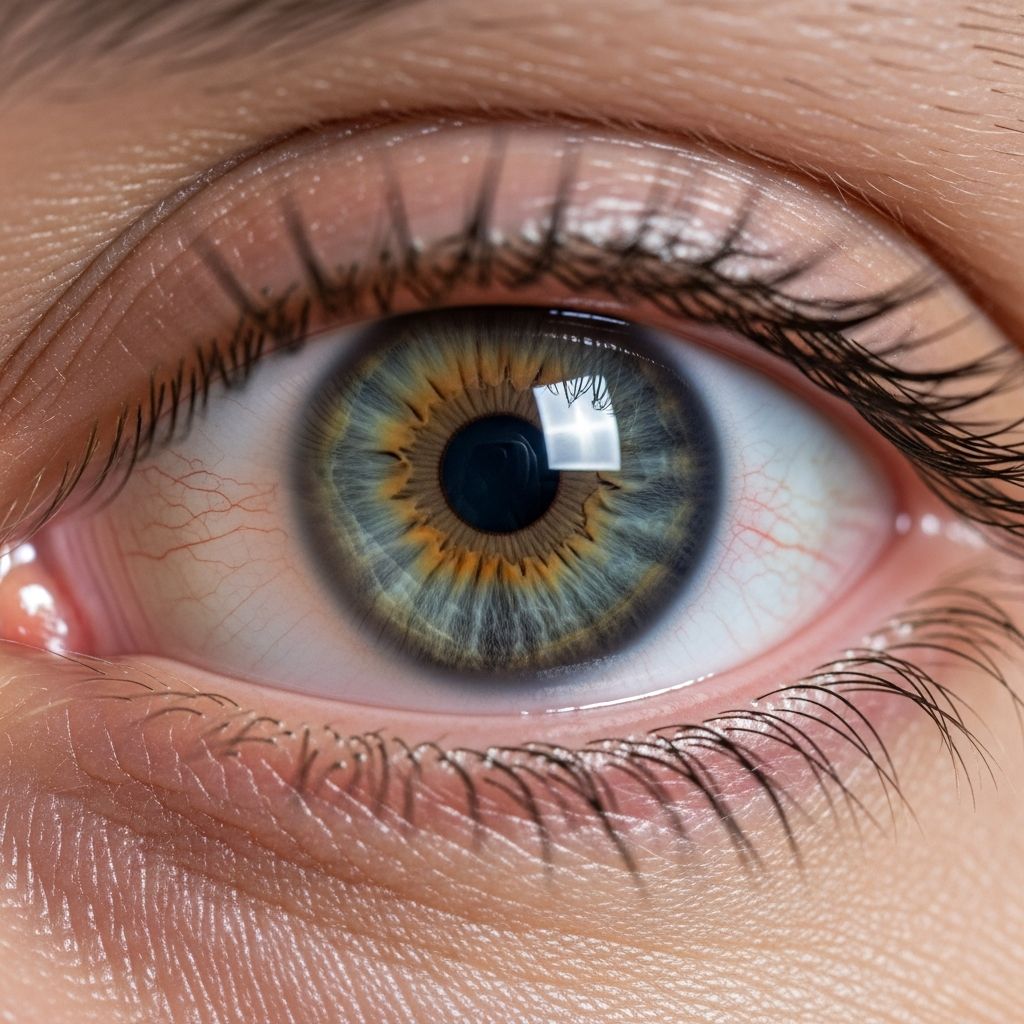
Dissociated vertical deviation (DVD) is a binocular vision disorder where the non-fixating eye drifts upward during dissociation, often linked to early strabismus.
Understanding the Nature of DVD
DVD represents a sensorimotor issue in the binocular system, characterized by upward movement of the non-dominant eye when visual inputs are separated, such as during cover testing. This condition typically emerges between ages 2 and 5, frequently alongside infantile esotropia, affecting up to 53% of such cases.
Unlike constant strabismus, DVD manifests intermittently, often when a child is fatigued or daydreaming, and may involve both eyes asymmetrically, more noticeably in the amblyopic eye. The deviation includes hyperdeviation, abduction, and excyclotorsion, distinguishing it from other vertical misalignments.
Root Causes and Risk Factors
The precise etiology of DVD remains unclear, but evidence points to imbalances in extraocular muscle innervation or signaling pathways from the eyes to the brain. Disruptions in vestibular signals from the inner ear or unequal stimulation between eyes may contribute.
Key associations include:
- Congenital esotropia (53% prevalence).
- Developmental esotropia (25%).
- Accommodative esotropia (3.4%).
- Early-onset strabismus or post-surgical changes.
Patients with poor binocular fusion or depth perception are particularly susceptible, as DVD correlates with reduced 3D vision.
Recognizing Symptoms and Signs
Many individuals with DVD experience no subjective blurred or double vision due to cortical suppression in the deviating eye. Observable signs include:
- Upward drift of one or both eyes under cover.
- Abnormal head posture or working distance.
- Spatial disorientation or poor depth judgment.
- Intermittent eye turns, especially in the non-dominant eye.
Associated complications can involve amblyopia, torticollis, or neck muscle contractures. Symptoms worsen with fatigue or specific gazes, mimicking oblique muscle issues.
| Common Signs | Frequency | Associated Conditions |
|---|---|---|
| Upward eye deviation | High | Esotropia, amblyopia |
| Head tilt | Moderate | Torticollis |
| Depth perception issues | Variable | Poor fusion |
| Excyclotorsion | Common | Muscle imbalance |
Diagnostic Approaches
Diagnosis relies on clinical exams revealing the dissociated nature: the covered eye elevates without contralateral movement, violating Hering’s law. Key tests include:
- Cover-uncover test to provoke deviation.
- Bielschowsky phenomenon: increasing filter opacity over the fixing eye causes downward drift in the covered eye.
- Motility assessment in various gazes to differentiate from inferior oblique overaction.
- Evaluation for latent nystagmus or asymmetry.
Differential diagnosis excludes superior oblique palsy or true hypertropia, confirmed by alternate cover testing showing bilateral upward drift.
Treatment Strategies Overview
Treatment targets symptoms and underlying misalignment, as DVD often persists despite strabismus correction. Options range from conservative to surgical, tailored to severity, age, and binocular status.
Non-Surgical Interventions
Vision therapy strengthens fusion and reduces suppression, beneficial for mild cases or post-surgery. Techniques address postural adaptations and depth judgment inaccuracies.
Observation suits asymptomatic DVD, especially if fusion is adequate. Patching or glasses manage associated amblyopia or refractive errors.
Surgical Management
Surgery is indicated for significant, persistent deviation causing head tilt or cosmesis issues. Common procedures:
Related Stories



- Inferior rectus recession to counter upward drift.
- Oblique muscle weakening if overaction coexists.
- Bilateral symmetric surgery for asymmetric DVD.
Success rates vary; DVD may recur or manifest contralaterally post-op. Anesthesia risks include oculocardiac reflex or hyperthermia, necessitating careful monitoring.
| Treatment Type | Indications | Pros | Cons |
|---|---|---|---|
| Vision Therapy | Mild symptoms, poor fusion | Non-invasive, improves binocularity | Requires compliance, time-intensive |
| Surgical Recession | Large deviations, torticollis | Quick alignment improvement | Risks of under/over-correction |
| Observation | Asymptomatic, good fusion | No intervention needed | Potential progression |
Factors Influencing Outcomes
Prognosis depends on early intervention, patient compliance, and coexisting conditions like amblyopia. Factors include:
- Onset age and duration.
- Visual demands and cognitive development.
- Pre-existing fusion ability.
- Surgical precision and anesthesia safety.
Long-term monitoring prevents complications like contractures.
Living with DVD: Practical Advice
Parents should monitor for head postures or fatigue-related drifts and seek pediatric ophthalmology input. Encourage activities promoting binocular vision, like near-far focusing games, under professional guidance.
Regular follow-ups track progression, adjusting therapies as needed.
Frequently Asked Questions
Does DVD always require surgery?
No, many cases are managed conservatively if asymptomatic, prioritizing vision therapy or observation.
Can DVD develop after strabismus surgery?
Yes, it may emerge post-operatively in strabismus patients due to altered innervation.
Is DVD painful?
Typically not; suppression prevents diplopia or discomfort.
How common is DVD in children with esotropia?
Up to 53% in congenital cases.
Can adults have DVD?
Rarely de novo, but persistent from childhood or post-trauma.
Understanding DVD empowers informed decisions for optimal eye health.
References
- Dissociated Vertical Deviation – Focus Vision Therapy — Focus Vision Therapy Center. Accessed 2026. https://focusvisiontherapycenter.com/vision-therapy-glossary-a-z/dissociated-vertical-deviation/
- Dissociated Vertical Deviation — MD Searchlight. Accessed 2026. https://mdsearchlight.com/eye-health/dissociated-vertical-deviation/
- Dissociated Vertical Deviation Therapy — Aspire Vision Care. Accessed 2026. https://www.aspirevisioncare.com/eye-care-services/vision-therapy-optometrist/dissociated-vertical-deviation/
- Understanding the Causes of Vertical Diplopia — Review of Ophthalmology. Accessed 2026. https://www.reviewofophthalmology.com/article/understanding-the-causes-of-vertical-diplopia
- Dissociated Vertical Deviation — AAPOS. Accessed 2026. https://www.aapos.org/glossary/dissociated-vertical-deviation
- Dissociated Vertical Deviation – StatPearls — NCBI Bookshelf / NIH. 2023. https://www.ncbi.nlm.nih.gov/books/NBK573061/
Similar Articles








Read full bio of medha deb