Managing Infantile Nystagmus in Children
Comprehensive guide to understanding, diagnosing, and treating involuntary eye movements in infants for better vision outcomes.
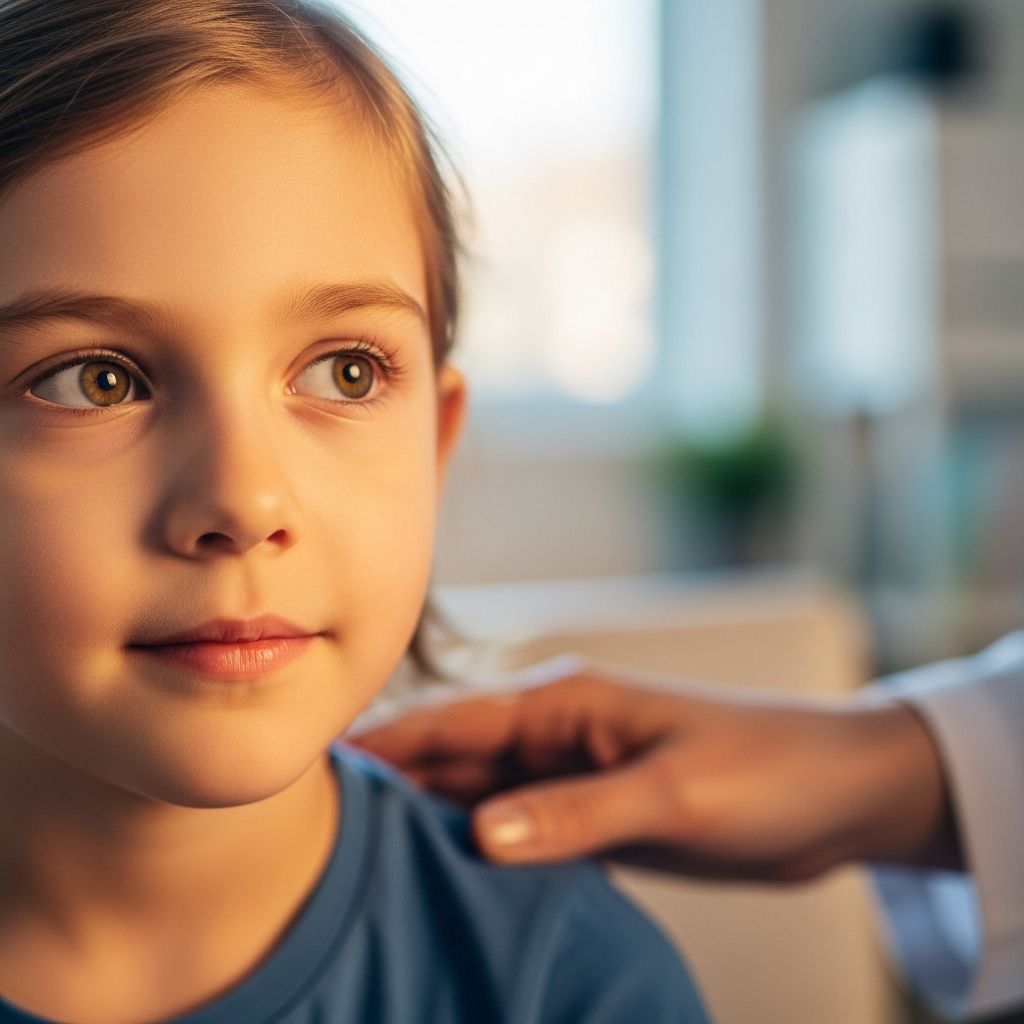
Infantile nystagmus involves involuntary, rhythmic eye oscillations that typically emerge in the first few months of life, often impacting visual development and daily activities in young children. This condition, also known as congenital nystagmus, primarily manifests as horizontal side-to-side movements but can include vertical or rotary patterns, leading to reduced visual acuity and challenges with fixation.
Understanding the Fundamentals of Infantile Nystagmus
At its core, infantile nystagmus disrupts the stability of gaze, causing the eyes to move repetitively in a predictable waveform. These movements are usually conjugate, meaning both eyes move together, and they intensify with visual tasks or stress while dampening in certain head positions known as the null zone. Unlike acquired forms that arise later due to injury or disease, infantile variants are present from birth or within the first six months, distinguishing them from conditions like spasmus nutans, which appears between 6 months and 3 years and often resolves spontaneously.
The prevalence of nystagmus ranges from 6 to 24 per 10,000 individuals, with infantile cases frequently linked to underlying sensory defects rather than primary neurological issues. Children may exhibit compensatory behaviors, such as head tilting or turning, to minimize oscillopsia—the perception of a shaky visual world—and optimize vision.
Primary Causes and Genetic Underpinnings
Retinal disorders account for over half of infantile nystagmus cases, including albinism (19%), Leber congenital amaurosis (14%), and other non-LCA retinal dystrophies (13%). These sensory defects impair sharp vision, prompting pendular or jerk nystagmus as the visual system attempts to stabilize images on the retina. Anatomic issues like optic nerve hypoplasia and motor inefficiencies contribute another 20% combined.
Genetic factors play a pivotal role, particularly in X-linked infantile nystagmus caused by variants in the FRMD7 gene. This gene encodes a protein crucial for neural development in eye movement control centers and the retina, leading to disrupted circuitry and foveal hypoplasia—a shallow or absent central fovea. Inheritance follows an X-linked pattern: males with one mutated copy are fully affected, while females may show milder or absent symptoms due to mosaicism.
Idiopathic cases, where no clear etiology emerges, still predominate in some cohorts, but advances in molecular testing reveal subtle retinal pathologies missed by older diagnostics. Neurologic origins, such as cerebellar malformations, are less common absent other signs like developmental delays.
Recognizing Early Warning Signs
Parents often first notice nystagmus during routine interactions, observing eyes that ‘wiggle’ horizontally, vertically, or rotationally. Infants may struggle with tracking objects, show poor eye contact, or display balance issues due to vestibulo-ocular pathway involvement. Visual acuity suffers, with children relying on peripheral vision and exhibiting difficulty following fast-moving stimuli.
- Horizontal nystagmus: Most prevalent in infantile forms, worsening on gaze.
- Vertical or torsional: Suggests retinal or albinism-related issues.
- Periodic alternating: Direction shifts every 90-120 seconds, linked to genetic variants.
- Asymmetric or head nodding: May indicate spasmus nutans or evolving pathology.
Associated features include strabismus, poor pupillary responses, or foveal abnormalities visible on fundoscopy. Prompt recognition is vital, as early intervention can mitigate amblyopia risks.
Related Stories



Step-by-Step Diagnostic Approach
Evaluation prioritizes a thorough pediatric ophthalmologic exam over immediate neuroimaging for isolated nystagmus. Begin with history: onset age, family patterns, and neurologic milestones. Slit-lamp and dilated fundus exams assess anterior/posterior segments for albinism (iris transillumination), retinal dystrophies (pigment clumping), or foveal hypoplasia (vessels over fovea).
Key tests include:
| Test | Purpose | Yield in Isolated Cases |
|---|---|---|
| Electroretinogram (ERG) | Detects retinal dysfunction (e.g., LCA, achromatopsia) | High for sensory defects |
| Optical Coherence Tomography (OCT) | Images foveal hypoplasia, cystoid macular changes | Revolutionized subtle diagnoses |
| Molecular Genetic Testing | Identifies FRMD7, albinism genes | Increasingly definitive |
| Brain MRI | Ruled out if no neuro signs; low yield (16%) | Reserve for delays or anomalies |
MRI, the most common initial test (74%), yields only 16% positives without neurologic stigmata, underscoring the need for ocular-focused workups first. New technologies like OCT have unveiled previously undetectable foveal issues, shifting paradigms from presumed idiopathic to treatable etiologies.
Therapeutic Strategies and Management
Treatment targets underlying causes and symptom amelioration. For sensory nystagmus, spectacles correct refractive errors, while prisms in glasses shift images to the null zone, enhancing acuity. Pharmacologic options like gabapentin or memantine reduce amplitude in select cases, though evidence is anecdotal.
Surgical interventions, such as horizontal rectus recession-resection, enlarge the null zone and lessen head postures, improving binocularity without eliminating oscillations. Botulinum toxin injections offer temporary relief but risk ptosis.
Visual rehabilitation emphasizes high-contrast materials, reduced fixation demands, and positioning aids. For genetic forms, counseling on inheritance patterns aids family planning.
Prognosis and Long-Term Outlook
Visual outcomes correlate with etiology: idiopathic cases fare best, while retinal dystrophies portend poorer acuity. Early diagnosis via ERG/OCT/genetics enables tailored interventions, preventing secondary losses like strabismic amblyopia. Multidisciplinary care involving ophthalmologists, neurologists, and therapists optimizes development.
Spasmus nutans typically self-resolves by age 8, but persistent infantile forms demand lifelong monitoring.
Frequently Asked Questions (FAQs)
Can infantile nystagmus be cured?
No outright cure exists, but treatments significantly improve vision and quality of life by addressing causes and minimizing movements.
Is nystagmus always present at birth?
It appears by 6 months; true congenital cases start within weeks.
Does nystagmus affect learning?
Indirectly via poor vision; accommodations like large-print materials help.
Should I worry if my baby has nystagmus?
Consult a pediatric ophthalmologist promptly for evaluation.
Is nystagmus hereditary?
Often, especially X-linked forms; genetic testing clarifies risks.
Emerging Advances in Diagnosis and Care
Gene therapies for retinal dystrophies (e.g., LCA) hold promise, potentially stabilizing vision and dampening nystagmus. Portable gaze analyzers quantify waveforms for precise tracking. AI-enhanced OCT interprets subtle foveal metrics, accelerating diagnoses.
References
- X-linked infantile nystagmus – Genetics – MedlinePlus — National Library of Medicine. 2023. https://medlineplus.gov/genetics/condition/x-linked-infantile-nystagmus/
- Nystagmus | Great Ormond Street Hospital — Great Ormond Street Hospital. 2024. https://www.gosh.nhs.uk/medical-information-0/nystagmus/
- The clinical evaluation of infantile nystagmus: What to do first and why — PMC (Peer-reviewed). 2017-10-13. https://pmc.ncbi.nlm.nih.gov/articles/PMC5665016/
- Nystagmus: Definition, Causes, Testing & Treatment — Cleveland Clinic. 2023-08-01. https://my.clevelandclinic.org/health/diseases/22064-nystagmus
- Nystagmus in Babies & Children — American Academy of Pediatrics (HealthyChildren.org). 2022. https://www.healthychildren.org/English/health-issues/conditions/eyes/Pages/nystagmus-in-babies-and-children.aspx
Similar Articles








Read full bio of Sneha Tete