Managing IOL Failures: Surgical Solutions
Discover essential strategies for addressing intraocular lens complications through explantation and replacement to restore clear vision effectively.
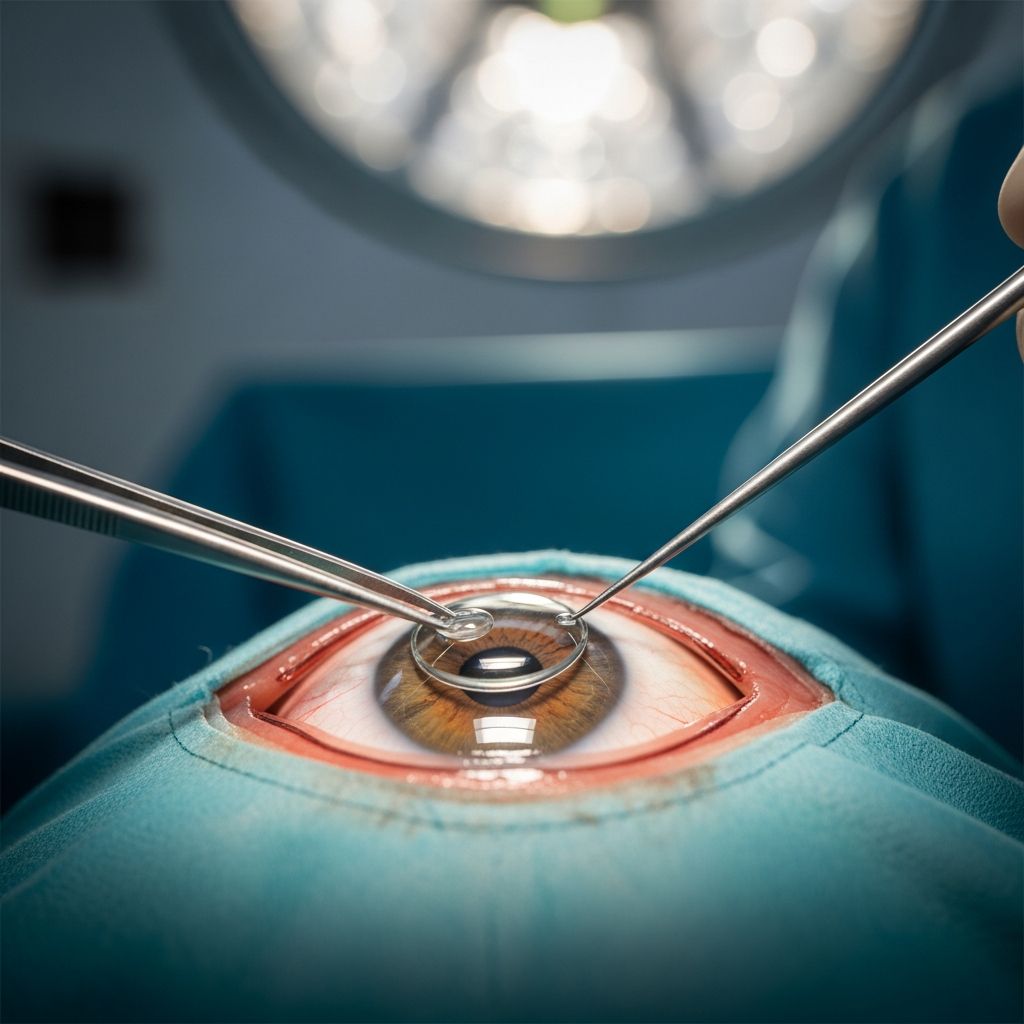
Intraocular lenses (IOLs) are vital for vision correction during cataract surgery, but complications can arise, necessitating removal and replacement. This article examines the underlying issues, diagnostic approaches, and precise surgical interventions to achieve successful outcomes.
Understanding Intraocular Lens Complications
Cataract surgery implants an IOL to replace the clouded natural lens, restoring clarity. However, issues like improper positioning or material intolerance can impair vision. Common problems include lens dislocation, where the IOL shifts from its capsular bag, leading to blurred or double vision. Other concerns involve optical aberrations causing glare or halos, often termed dysphotopsias.
Dislocation typically occurs months or years post-surgery due to weakened zonules or capsular rupture during the initial procedure. Symptoms range from mild blurriness to severe visual loss, sometimes accompanied by eye pain or a sensation of lens movement. Inflammation or infection, such as endophthalmitis, can also compromise IOL function, requiring urgent action.
Recognizing Warning Signs After Surgery
Early detection is crucial for preventing permanent damage. Patients should monitor for persistent blurred vision, halos around lights, or sudden prescription changes, which may indicate IOL misalignment. Additional red flags include increasing eye pressure causing headaches, nausea, or discomfort; thick discharge signaling infection; and wavy central vision from cystoid macular edema.
- Sudden vision decline: Often linked to dislocation or decentration.
- Glare and halos: Persistent cases may stem from lens edge design.
- Pain or redness: Could signal inflammation, infection, or pressure elevation.
- Double vision: Suggests IOL tilt or shift.
- Visible lens edge: A hallmark of subluxation.
Regular follow-ups allow ophthalmologists to use tools like slit-lamp exams and optical coherence tomography (OCT) to confirm these issues promptly.
Diagnostic Tools for IOL Assessment
Comprehensive evaluation begins with a detailed history and visual acuity test. Gonioscopy measures intraocular pressure, while ultrasound biomicroscopy visualizes IOL position relative to the capsular bag. OCT provides high-resolution retinal images to rule out concurrent edema or detachment.
For dislocation, anterior segment OCT or Scheimpflug imaging quantifies haptics placement and zonular integrity. If vitreous prolapse is suspected, B-scan ultrasonography detects posterior segment involvement. These non-invasive methods guide whether conservative management or surgery is needed.
Surgical Techniques for IOL Removal
IOL explantation involves precise extraction to minimize trauma. Surgeons prefer phacoemulsification-like methods, fragmenting the optic under viscoelastic protection to avoid capsular tears. For malpositioned haptics, a pars plana approach accesses the vitreous cavity safely.
Challenges include calcified lenses or fibrotic capsules, addressed with viscodissection or femtosecond laser assistance for precise capsulotomy. Intraoperative aberrometry ensures accurate power calculation for the replacement IOL, reducing refractive surprises.
| Complication | Surgical Approach | Key Considerations |
|---|---|---|
| Lens Dislocation | Anterior or pars plana vitrectomy | Zonular stability, vitreous management |
| Dysphotopsia | Polishing optic edges or exchange | Patient symptoms severity |
| Infection-Related | Complete capsulectomy and irrigation | Antibiotic prophylaxis |
| Decentration | Haptic repositioning or scleral fixation | Bag integrity assessment |
Related Stories



Choosing the Right Replacement IOL
Post-explantation, selecting an optimal IOL is pivotal. Monofocal lenses suit patients prioritizing distance vision, while multifocal or extended-depth-of-focus (EDOF) options enhance near tasks but risk dysphotopsia. Toric IOLs correct astigmatism in irregular corneas.
For compromised capsules, sulcus-placed or scleral-fixated IOLs provide stability. Three-piece hydrophobic acrylic lenses offer durability in challenging anatomies. Preoperative biometry with IOLMaster refines calculations, aiming for emmetropia.
Postoperative Care and Recovery
After explantation, patients follow a regimen of topical steroids, antibiotics, and NSAIDs to curb inflammation. Frequent check-ins monitor pressure and edema resolution. Most regain functional vision within weeks, though full stabilization takes months.
Potential hurdles include transient corneal edema or posterior capsule opacification (PCO), treatable via YAG laser. Long-term, annual exams track IOL centering and retinal health.
Patient Outcomes and Success Rates
Studies show explantation yields high satisfaction, with over 90% achieving 20/40 vision or better when performed timely. Factors like surgeon experience and patient comorbidities influence results. Multifocal IOL exchanges carry higher dysphotopsia risk but improve spectacle independence.
Complications from secondary surgery remain low at under 5%, comparable to primary procedures. Patient education on symptoms empowers proactive care.
Preventive Strategies in Cataract Surgery
Mitigating risks starts with preoperative zonular assessment via dilated exams and AS-OCT. Intraoperatively, capsular tension rings stabilize weak bags, and meticulous hydrodissection prevents haptic misplacement. Choosing square-edge IOLs reduces PCO.
Postop, strict drop adherence and prompt reporting of anomalies minimize escalations. Advanced imaging during surgery enhances precision.
FAQs on IOL Explantation
Q: How soon after surgery can IOL issues appear?
A: Early within days from surgical trauma; late beyond months from zonular dehiscence.
Q: Is explantation riskier than initial surgery?
A: Slightly, due to scar tissue, but modern techniques yield excellent safety profiles.
Q: Can all patients get multifocal IOLs post-exchange?
A: No, depends on ocular health; monofocals are safer for irregular anatomies.
Q: What if dysphotopsia persists after exchange?
A: Rare; reverse polishing or alternative designs resolve most cases.
Q: How much does IOL explantation cost?
A: Varies by region and IOL type; insurance often covers medically necessary cases.
Emerging Innovations in IOL Management
Light-adjustable lenses allow postoperative tweaks via UV light, minimizing errors. Injectable lenses conform to irregular bags, and AI-driven biometry boosts accuracy. Femtosecond lasers enable precise haptic capture, reducing future dislocations.
Research into bioengineered zonules and drug-eluting IOLs promises fewer interventions. These advances, combined with robotic assistance, herald safer revisions.
References
- What Complications Could I Experience with Intraocular Lens (IOL)? — OAV Eyes. 2025. https://oaveyes.com/blog/what-complications-could-i-experience-with-intraocular-lens-iol/
- Complications of cataracts and intraocular lens dislocation — Institut Macula. 2025-09-01. https://www.institutmacula.com/en/pathology/complicacio-de-les-cataractes-i-luxacio-de-lents-intraoculars/
- Common Problems and Complications After Cataract Surgery — ReFocus Eye Doctors. 2025. https://cheshire.refocuseyedoctors.com/article/common-problems-and-complications-after-cataract-surgery/
- Detecting and managing complications in cataract patients — PMC (PubMed Central). 2016-11-01. https://pmc.ncbi.nlm.nih.gov/articles/PMC5100470/
- Why Do Cataract Lenses Fail? — Assil Gaur Eye Institute. 2025. https://assileye.com/blog/why-do-cataract-lenses-fail/
- IOLs (Intraocular Lenses): Pros and Cons — Cleveland Clinic. 2025. https://my.clevelandclinic.org/health/articles/25099-iols-intraocular-lenses
Similar Articles








Read full bio of medha deb