Managing Large Prostate Enlargement: Key Treatment Paths
Discover effective strategies from medications to advanced surgeries for relieving symptoms of significantly enlarged prostates and improving daily life.
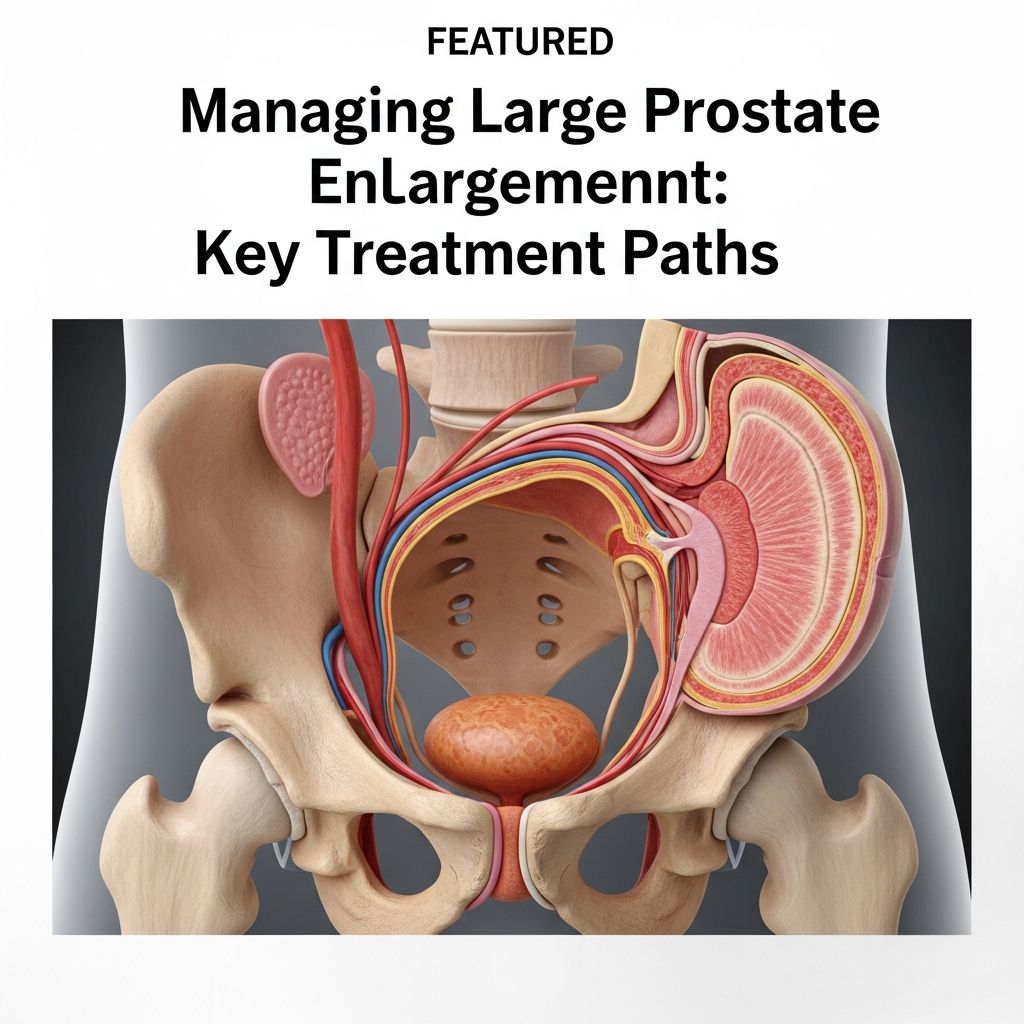
Benign prostatic hyperplasia (BPH), characterized by non-cancerous prostate growth, often leads to urinary difficulties in older men, particularly when the prostate reaches high volumes. Effective management hinges on prostate size, symptom severity, and patient health, offering a spectrum of interventions from lifestyle adjustments to sophisticated surgeries.
Recognizing When Treatment Becomes Essential
Symptoms like frequent urination, weak stream, incomplete emptying, or nighttime awakenings signal the need for action, especially with prostates exceeding 80 grams. Initial assessments involve digital rectal exams, PSA tests, and ultrasound to gauge size and rule out cancer. For high-volume cases, standard options may fall short, necessitating targeted approaches that address substantial tissue overgrowth.
Initial Steps: Lifestyle and Medication Strategies
Before invasive measures, non-surgical tactics provide relief for many. Reducing caffeine and alcohol intake, practicing double voiding, and pelvic floor exercises can ease mild symptoms.
- Alpha-blockers: Drugs like tamsulosin relax prostate and bladder muscles for quicker urine flow, often working within days.
- 5-Alpha reductase inhibitors: Finasteride or dutasteride shrink the prostate by 20-30% over months by blocking hormone effects.
- Combination regimens: Pairing both yields superior results for moderate enlargement, balancing immediate and long-term benefits.
These carry risks like dizziness or sexual dysfunction, prompting shifts to procedures if ineffective.
Minimally Invasive Innovations for Moderate to Large Prostates
For prostates too sizable for drugs alone but unsuitable for major surgery, office-based procedures minimize recovery. These preserve sexual function better than traditional methods.
| Procedure | Mechanism | Ideal Prostate Size | Recovery Time |
|---|---|---|---|
| Prostatic Urethral Lift (UroLift) | Implants retract obstructing tissue | 30-80g | 1 week |
| Rezūm Water Vapor Therapy | Steam injections destroy tissue | 30-80g | 1-2 weeks |
| GreenLight Laser | Laser vaporizes excess tissue | Up to 100g | Outpatient |
UroLift avoids tissue removal, suiting active men; studies show sustained symptom improvement up to five years. Rezūm’s steam targets blockage with low sexual side effect risk, enhancing quality of life. GreenLight excels in outpatient settings, rivaling TURP efficacy short-term.
Advanced Laser and Water-Based Solutions for High-Volume Cases
Large prostates demand robust techniques. Holmium laser enucleation (HoLEP) removes tissue en bloc, ideal for glands over 100g, matching TURP outcomes with fewer reoperations.
- HoLEP: High-powered laser excels for very large prostates, available at specialized centers.
- Aquablation: Robotic water jets precisely ablate tissue, reducing side effects versus TURP.
- ThuLEP: Thulium laser variant suits diverse sizes without incisions.
These outperform older methods in durability, especially for high-volume BPH.
Surgical Standards and Next-Generation Alternatives
Transurethral resection of the prostate (TURP) remains gold-standard, scraping tissue via scope, though retrograde ejaculation affects many. For extreme sizes, robotic simple prostatectomy offers precision with minimal incisions, cutting blood loss and hospital stays.
Related Stories



Prostate artery embolization (PAE), performed by interventional radiologists, starves tissue of blood, shrinking the gland non-surgically. It boasts less pain, no sexual risks, and quick recovery, transforming care for frail patients.
Comparing Outcomes: Procedures Side-by-Side
| Treatment Type | Effectiveness | Sexual Side Effects | Best For |
|---|---|---|---|
| TURP | High, durable | Common (ejaculation) | Medium-large |
| HoLEP | High, long-term | Low-moderate | Very large |
| PAE | Moderate-high | Minimal | High-risk patients |
| UroLift/Rezūm | Moderate | Very low | Smaller, active men |
Selection weighs durability against risks; HoLEP shines for retreatment avoidance.
Patient Factors Influencing Choice
Age, comorbidities, and preferences guide decisions. Younger men favor function-preserving options like UroLift; those with retention may need HoLEP or Aquablation. Shared decision-making with urologists optimizes results.
Potential Complications and Recovery Insights
All interventions risk infection or bleeding, but minimally invasive ones shorten downtime. Post-TURP, catheters last days; PAE allows same-day discharge. Long-term monitoring prevents recurrence.
Emerging Horizons in BPH Care
Ongoing trials refine aquablation and PAE, promising broader access. Personalized medicine, factoring genetics and imaging, may tailor therapies further.
Frequently Asked Questions
1. How do I know if my prostate is high-volume?
Ultrasound or MRI measures beyond 80g; symptoms alone don’t confirm.
2. Can medications fully resolve large BPH?
No, they slow growth but rarely suffice for severe obstruction; procedures often follow.
3. Is PAE suitable for everyone?
Ideal for surgery-averse or high-risk men, but not for all anatomies.
4. What’s recovery like after HoLEP?
Typically 1-2 weeks, with catheter brief; superior for large glands.
5. Do these treatments affect sex life?
Many like Rezūm and PAE preserve function; TURP may cause dry orgasms.
6. When is surgery unavoidable?
For retention, stones, or kidney damage unresponsive to meds.
Consulting specialists ensures aligned choices, restoring urinary health and vitality.
References
- When Does an Enlarged Prostate Require Treatment and What Are My Options? — Advanced Urology Westchester. 2023. https://www.advancedurologywestchester.com/blog/when-does-an-enlarged-prostate-require-treatment-and-what-are-my-options
- Enlarged Prostate Treatment — Prostate Cancer UK. 2024-10-15. https://prostatecanceruk.org/prostate-information-and-support/just-diagnosed/other-prostate-problems/enlarged-prostate-treatment
- Treatment Options for Enlarged Prostate (BPH) — Brown University Health. 2023. https://www.brownhealth.org/be-well/treatment-options-enlarged-prostate-bph
- What Is the Latest Treatment for an Enlarged Prostate? — YouTube (Brant Fulmer). 2023. https://www.youtube.com/watch?v=YGLHX-l6Vgk
- Prostate Surgery Options for Enlarged Prostate (BPH) — Summit IRAD. 2024. https://summit-irad.com/ir-for-men/prostate-surgery-options-bph/
- Enlarged Prostate — Society of Interventional Radiology (SIR). 2024. https://www.sirweb.org/for-patients/conditions-and-treatments/enlarged-prostate/
- Benign Prostatic Hyperplasia (BPH) – Diagnosis and Treatment — Mayo Clinic. 2024-02-15. https://www.mayoclinic.org/diseases-conditions/benign-prostatic-hyperplasia/diagnosis-treatment/drc-20370093
- A Life-Changing Treatment for Enlarged Prostate — Cedars-Sinai. 2023. https://www.cedars-sinai.org/newsroom/a-life-changing-treatment-for-enlarged-prostate/
Similar Articles








Read full bio of medha deb