Managing Leaking Glaucoma Blebs: Key Management Strategies
Essential strategies for identifying, treating, and preventing complications from leaking filtering blebs in glaucoma surgery patients.
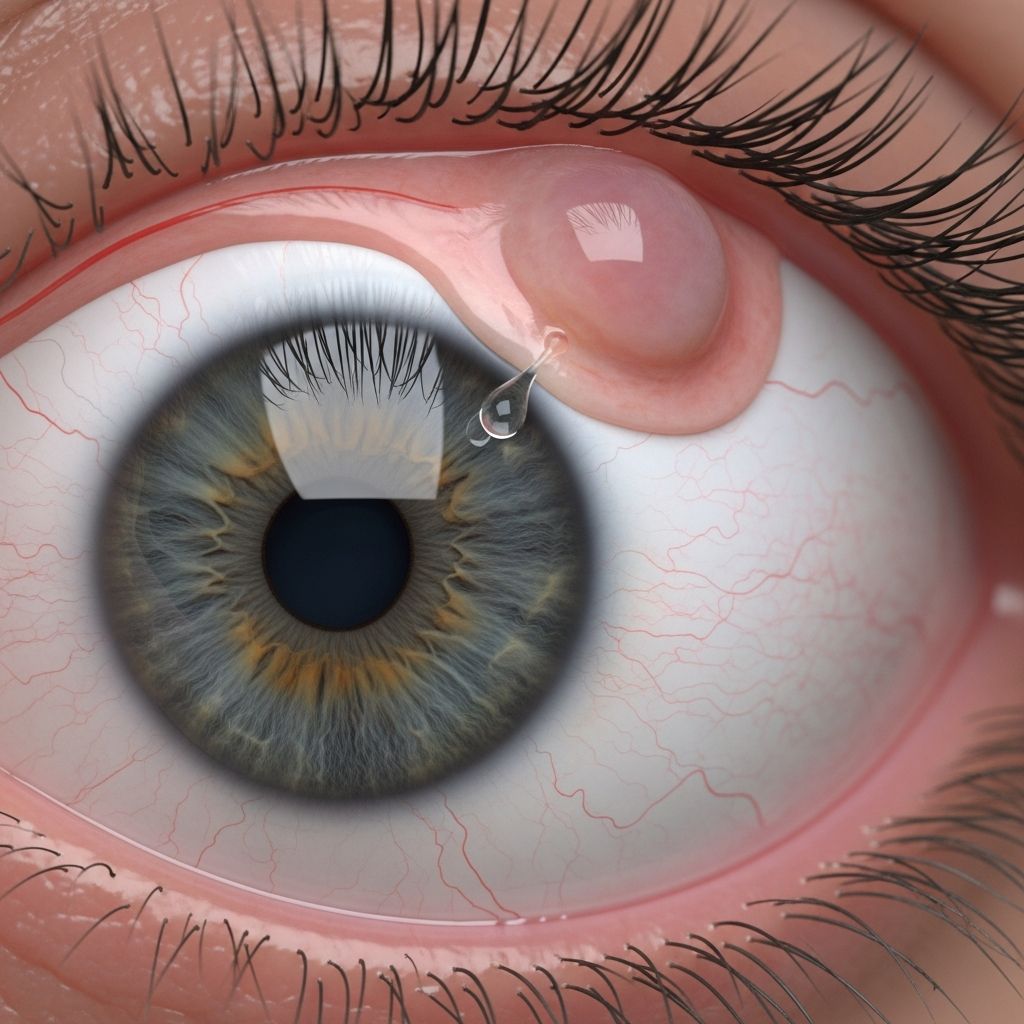
Leaking filtering blebs represent a critical complication following glaucoma surgeries like trabeculectomy, where aqueous humor escapes through the surgical site, potentially leading to hypotony, infections, and vision loss. Prompt recognition and intervention are vital to safeguard ocular health.
Understanding Filtering Blebs in Glaucoma Treatment
Filtering blebs form during trabeculectomy, a procedure that creates a new drainage pathway for intraocular fluid to lower eye pressure in glaucoma patients. Surgeons fashion a partial scleral flap and excise a portion of the trabecular meshwork, allowing fluid to collect subconjunctivally, forming a bleb visible under the upper eyelid.
While effective for pressure control, blebs can fail due to excessive scarring or leakage. Early postoperative leaks occur within weeks, often from surgical closure issues, whereas late leaks emerge months or years later, linked to tissue weakening.
Causes and Types of Bleb Leakage
Bleb leaks arise from disruptions in the conjunctival barrier. Early leaks stem from incomplete wound healing, buttonholes, or dehiscence at the limbus. Late leaks frequently associate with antimetabolite use, such as mitomycin-C (MMC), which thins conjunctiva, reduces vascularity, and promotes avascular, fragile blebs.
- Early leaks (<1-3 months): Surgical trauma, fornix-based flaps, inadequate closure.
- Late leaks (>3 months): Antimetabolite effects, thin blebs, chronic inflammation.
Diffuse seepage versus focal pinhole leaks demands different approaches; the former may not always require aggressive repair if Seidel-negative.
Risk Factors for Developing Bleb Leaks
Several patient and procedural elements heighten leak susceptibility. Thin conjunctiva from prior drops or inflammation, younger age, and male gender correlate with higher risks. Surgical choices like limbus- versus fornix-based flaps influence outcomes, with fornix flaps prone to limbal gaps.
| Risk Category | Specific Factors | Impact |
|---|---|---|
| Patient-Related | Young age, male gender, blepharitis, conjunctivitis, myopia, hyperlipidemia | Increases bacterial load, tissue fragility |
| Surgical | MMC/5-FU use, fornix-based flap, inferior bleb location | Promotes thinning, avascularity |
| Postoperative | Wound manipulation, hypotony, chronic antibiotics | Disrupts healing, invites infection |
Intraoperative antimetabolites triple leak incidence compared to non-use, underscoring meticulous conjunctival handling.
Recognizing Signs and Symptoms of Leaks
Patients may report blurred vision, foreign body sensation, or tearing. Clinically, observe a low, flat bleb, shallow anterior chamber, or hypotony (IOP <6 mmHg). Seidel test with fluorescein confirms leakage as greenish flow under cobalt blue light.
- Shallow AC, choroidal effusion, disc edema.
- Macroedema from prolonged hypotony.
- Infection signs: discharge, ciliary injection.
Routine bleb exams post-surgery detect subclinical leaks, preventing escalation.
Diagnostic Approaches for Bleb Assessment
Beyond Seidel, use anterior segment OCT for bleb wall thickness and fluid dynamics. Slit-lamp biomicroscopy evaluates vascularity; cystic, avascular blebs signal leak proneness. IOP measurement and gonioscopy rule out other failures.
Culture swabs if infection suspected, especially with blebitis risk amplified 26-fold by leaks.
Conservative Management Strategies
Minor leaks may self-resolve. Taper steroids cautiously to promote healing without fibrosing the bleb. Large-diameter bandage contact lenses tamponade the site, reducing flow via pressure.
- Pressure patching overnight.
- Aqueous suppressants (beta-blockers, CAIs) to lessen output.
- Monitor daily initially.
Avoid over-reliance on steroids, as they impede closure.
Related Stories



Office-Based Interventions
For persistent small leaks, focal cautery shrinks collagen adjacent to the site without invading the bleb. Argon laser suture lysis targets scleral flap sutures if contributing, but cautiously.
Topical cyanoacrylate glue seals pinholes rapidly, though it risks inflammation.
Surgical Repair Techniques
Resistant leaks necessitate surgery. Mobilize healthy conjunctiva for advancement flaps, suturing securely. Donor sclera, pericardium, or amniotic membrane overlays reinforce the site, minimizing recurrence.
In severe cases, resorbable sutures or fibrin glue aid watertight closure. For over-filtering, revise the scleral flap to moderate flow.
- Conjunctival autografting.
- Patch grafting with processed tissue.
- Bleb excision if infected.
Preventing Bleb Leaks and Complications
Intraoperatively, ensure extensive conjunctival undermining for diffuse filtration, favoring low-profile blebs. Prefer fornix-based flaps with meticulous closure using 10-0 nylon.
Postoperatively, treat ocular surface disease aggressively; educate on hygiene to curb bacteria. Serial needling combats early fibrosis without leaks.
Complications of Untreated Leaks
Leaks predispose to bleb-related infections (blebitis, endophthalmitis), hypotony maculopathy, and bleb failure via scarring. Late leaks elevate infection odds 25-fold.
Chronic hypotony risks corneal decompensation, cataract, or phthisis.
Long-Term Monitoring and Outcomes
Lifelong surveillance with Seidel tests every 3-6 months detects issues early. Success rates for repairs exceed 80% with proper technique, preserving pressure control.
Patient compliance with follow-ups halves complication rates.
Frequently Asked Questions (FAQs)
What is a Seidel test?
A diagnostic using fluorescein to spotlight aqueous leaks under blue light, essential for bleb evaluation.
Can bleb leaks heal without surgery?
Yes, small early leaks often close with conservative measures like lenses or patching.
Are antimetabolites always risky?
They boost success but heighten leak risks; balanced use with vigilant monitoring is key.
How often should blebs be checked?
Weekly early postop, then quarterly lifelong.
What if infection develops?
Immediate intravitreal antibiotics and possible vitrectomy; prognosis hinges on swift action.
References
- Bleb Associated Infections — EyeWiki (AAO). 2023. https://eyewiki.org/Bleb_Associated_Infections
- Five Pointers on Bleb Leaks — Glaucoma Today. 2019-07. https://glaucomatoday.com/articles/2019-july-aug/five-pointers-on-bleb-leaks
- Bleb Leaks — Glaucoma Today. 2009-10. https://glaucomatoday.com/articles/2009-oct/GT1009_06-php
- Bleb resuscitation of failing, leaking and dysfunctional blebs: A review — PMC/NCBI. 2012. https://pmc.ncbi.nlm.nih.gov/articles/PMC12013292/
- Risk Factors for Glaucoma Filtering Bleb Infections — JAMA Ophthalmology. 1998. https://jamanetwork.com/journals/jamaophthalmology/fullarticle/412936
- Handling bleb leaks — EyeWorld. 2021. https://www.eyeworld.org/2021/handling-bleb-leaks/
Similar Articles








Read full bio of medha deb