Managing Multiple Medications: A Complete Guide
Learn effective strategies for organizing and managing multiple medications safely and efficiently.
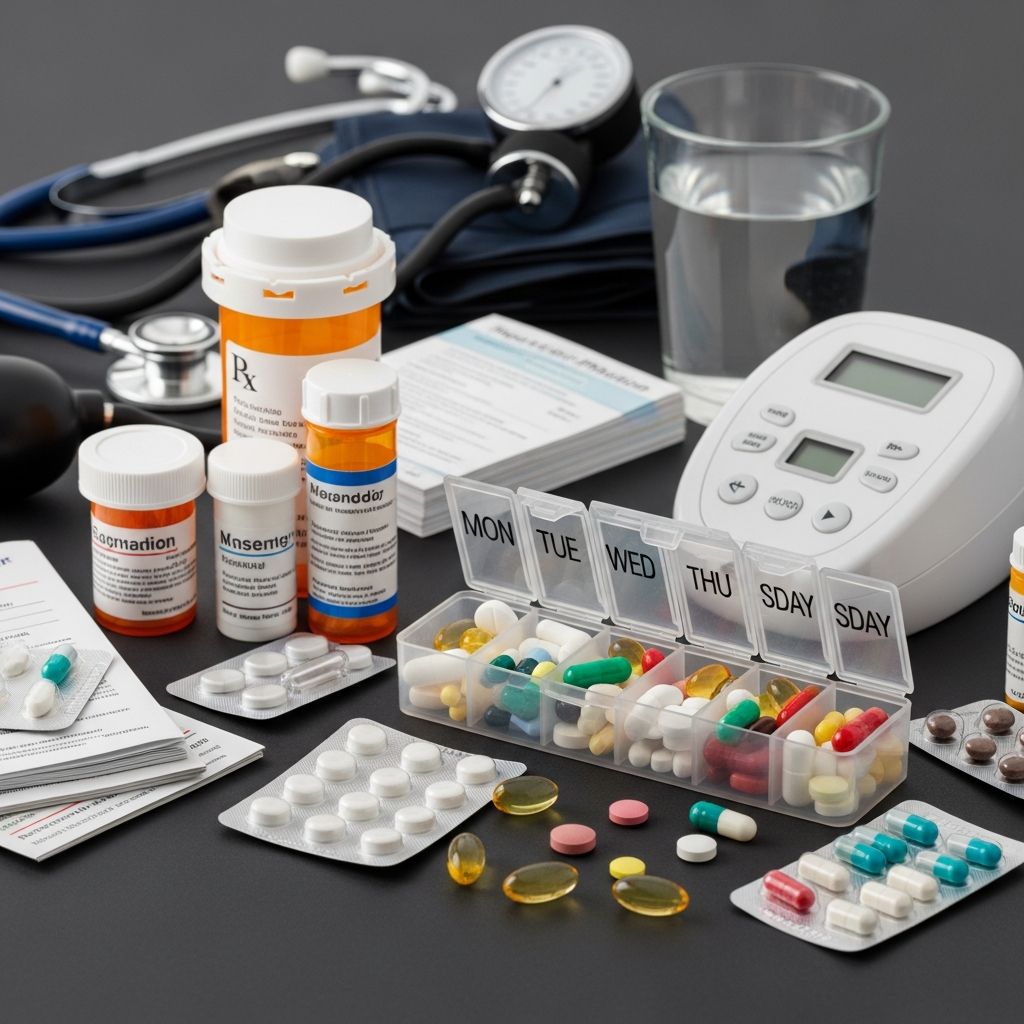
Help for Managing Multiple Medications
Taking multiple medications can be overwhelming, but with the right strategies and organization systems, you can manage your prescriptions effectively and safely. Many people, especially those with chronic conditions or multiple health concerns, find themselves taking several medications daily. Understanding how to organize, track, and take your medications as prescribed is essential for maintaining your health and preventing serious complications.
Understanding Polypharmacy
Polypharmacy refers to the practice of taking multiple medications, often on a long-term basis. While these medications provide essential disease management and symptom relief that can significantly improve quality of life, managing multiple prescriptions presents unique challenges. As more medications are added to your regimen, it becomes increasingly difficult to take all pills exactly as prescribed.
Patients taking multiple medications face several significant challenges, including the financial burden of copayments for numerous prescriptions, difficulty incorporating medications into a daily routine, and an increased risk of harmful medication interactions. These factors can contribute to medication errors, missed doses, and potentially serious health consequences.
Who Is at Higher Risk?
Certain individuals face a higher likelihood of managing multiple medications. Understanding if you fall into a higher-risk category can help you take proactive steps to better manage your prescriptions:
- Patients with multiple chronic diseases or conditions
- Individuals seeing several specialist physicians
- People with frequent hospitalizations
- Those with mental health diagnoses
- Residents in long-term care facilities
- Older adults with age-related health changes
If you identify with any of these categories, implementing strong medication management strategies becomes even more critical for your health and safety.
Common Challenges When Managing Multiple Medications
Managing multiple medications presents several obstacles that can interfere with your ability to take medications correctly:
Organization and Tracking
Keeping track of multiple prescriptions with different dosing schedules, refill dates, and special instructions can be confusing. Without a clear system, it’s easy to forget whether you’ve taken a particular medication or to accidentally take the same dose twice.
Cost Considerations
Multiple prescriptions mean multiple copayments, which can add up quickly. The financial burden of managing several medications may lead some patients to skip doses or not fill prescriptions, which can compromise their health.
Medication Interactions
When taking multiple medications, there’s an increased risk that one drug may interact negatively with another, reducing effectiveness or causing dangerous side effects. Some medications should not be taken together, while others may reduce each other’s effectiveness.
Side Effects and Adverse Reactions
As the number of medications increases, so does the likelihood of experiencing side effects. Sometimes what seems like a new health problem is actually an adverse reaction to one of your medications.
Related Stories



Cognitive Load
Remembering which medication to take at which time, understanding why each medication is necessary, and following complex dosing instructions can be mentally taxing, particularly for older adults or those with cognitive challenges.
Strategies for Effective Medication Organization
Use a Pill Organizer or Medication Box
Pill organizers with compartments for each day of the week and time of day can be invaluable tools. Fill your organizer weekly or monthly, depending on your preference and prescription quantities. This visual system makes it immediately obvious if you’ve missed a dose, as the compartment will still be full at the expected time.
Create a Medication List
Maintain a written or digital list of all your medications, including:
- Medication name
- Dosage strength
- How many times per day you take it
- Why you’re taking it
- Any special instructions (take with food, avoid with certain substances)
- Pharmacy contact information
- Prescribing physician
Keep this list updated and carry a copy with you to medical appointments, emergency rooms, and when traveling.
Set Reminders and Alarms
Use your smartphone, smartwatch, or a simple alarm clock to remind you when it’s time to take your medications. Many pharmacies also offer text message or phone call reminders when prescriptions are ready for refill.
Coordinate with Your Healthcare Team
Work with your pharmacist and doctors to simplify your medication regimen whenever possible. During regular appointments, discuss whether all your current medications are still necessary and if any can be discontinued or combined into a single medication.
Schedule Medication Reviews
Comprehensive medication reviews involve a thorough evaluation of all your prescriptions to ensure each medication is still needed and working effectively. Pharmacists can identify potential drug interactions, duplicate therapies, and medications that may be causing unwanted side effects.
Preventing Medication Errors
Medication errors can have serious consequences. Take these steps to prevent mistakes:
- Always read medication labels carefully before taking a dose
- Keep medications in their original labeled containers
- Don’t rely solely on memory; use written systems
- Ask your pharmacist to clarify any confusing instructions
- Inform all your healthcare providers about every medication you take, including supplements and over-the-counter drugs
- Watch for signs of adverse reactions and report them immediately
Understanding Medication Interactions
Medication interactions occur when two or more drugs affect each other’s action in your body. Some interactions can reduce a medication’s effectiveness, while others can cause dangerous side effects. Your pharmacist is your best resource for understanding potential interactions. When filling prescriptions, always inform your pharmacist about:
- All prescription medications you take
- Over-the-counter medications and supplements
- Herbal products
- Vitamins and minerals
- Any alcohol consumption
Working with Your Pharmacist
Your pharmacist is a crucial member of your healthcare team and can provide valuable support in managing multiple medications. Pharmacists can:
- Review all your medications for interactions and duplications
- Explain how to take each medication correctly
- Identify potential side effects
- Suggest the most cost-effective medication options
- Answer questions about your prescriptions
- Help establish a medication management system that works for you
Improving Medication Adherence
Medication adherence refers to taking medications exactly as prescribed. Poor adherence can lead to treatment failure, disease progression, and increased healthcare costs. To improve your adherence:
- Understand why each medication is important for your health
- Discuss any concerns or side effects with your doctor
- Use a pill organizer or calendar to track doses
- Set up automatic refills through your pharmacy
- Ask family members or caregivers to help remind you
- Keep all medication appointments with your pharmacy
Managing Medications During Travel
Taking medications while traveling requires extra planning:
- Pack medications in their original labeled containers
- Carry a copy of your medication list and prescriptions
- Keep medications in your carry-on bag when flying
- Research time zone adjustments for medications taken at specific times
- Locate pharmacies or medical facilities at your destination
- Keep medications in a temperature-controlled environment
When to Seek Professional Help
Medication Therapy Management (MTM) services provided by clinical pharmacists can be especially helpful if you:
- Take more than five medications regularly
- Have multiple chronic conditions
- Frequently miss doses or take medications incorrectly
- Experience frequent side effects or adverse reactions
- Have been hospitalized or experienced medication-related problems
- Feel overwhelmed by your medication regimen
MTM services typically include comprehensive medication reviews, identification of medication-related problems, development of action plans, and follow-up care coordination with your healthcare providers.
The Role of Communication
Effective communication among all members of your healthcare team is essential for safe medication management. Make sure your doctors, pharmacists, and other healthcare providers have:
- A complete and current list of all your medications
- Information about any drug allergies or sensitivities
- Details about past adverse reactions to medications
- Knowledge of any supplements or over-the-counter products you use
This information helps prevent dangerous drug interactions and ensures coordinated, safe care.
Frequently Asked Questions
Q: How can I remember to take my medications on time?
A: Use multiple strategies including pill organizers, smartphone reminders, alarm clocks, or asking a family member to help. Linking medication times to daily activities like meals can also help establish a routine.
Q: What should I do if I miss a dose?
A: Contact your pharmacist or doctor for specific instructions. In general, if you remember within a few hours, take the missed dose. If it’s almost time for your next dose, skip the missed dose and continue with your regular schedule. Never double up on doses.
Q: Can I stop taking a medication if I feel better?
A: Never stop or change your medication regimen without consulting your doctor. Even if you feel fine, stopping medications can allow your condition to worsen or cause other health problems. Your doctor can advise whether a medication is still necessary.
Q: How do I know if I’m experiencing a medication side effect?
A: Common side effects include nausea, headaches, dizziness, and fatigue. If you experience new or unusual symptoms after starting a medication, contact your doctor or pharmacist. They can determine whether the symptom is a side effect and discuss options for managing it.
Q: What’s the best way to store multiple medications?
A: Store medications in a cool, dry place away from direct sunlight. Keep them in their original labeled containers and away from moisture and heat. A bedroom closet or bathroom medicine cabinet typically works well. Avoid storing medications in the kitchen or bathroom near water sources.
Q: How can I reduce the cost of multiple medications?
A: Ask your doctor or pharmacist about generic alternatives, which are typically less expensive than brand-name medications. Some pharmacies offer discount programs, and you may qualify for patient assistance programs through medication manufacturers. Discussing whether all medications are still necessary can also reduce costs.
Q: Should I tell my doctor about over-the-counter medications and supplements?
A: Yes, absolutely. Over-the-counter medications and supplements can interact with prescription medications and should be included in your complete medication list. Always inform all your healthcare providers about everything you take.
References
- Quick Win #2: Streamline Medication Needs — Johns Hopkins ACG System. 2024. https://www.hopkinsacg.org/acg-system-quick-win-2-streamline-medication-needs/
- A medication therapy management residency rotation adjusts to COVID-19 pandemic restrictions — Pennock, D. Johns Hopkins Home Care Group, National Center for Biotechnology Information. 2021. https://pmc.ncbi.nlm.nih.gov/articles/PMC7826126/
- Assessing patient work system factors for medication management — Xiao, Y. Johns Hopkins Medicine Research. 2024. https://pure.johnshopkins.edu/en/publications/assessing-patient-work-system-factors-for-medication-management-d/
- Validation of the Hopkins Medication Schedule To Identify Individuals at Risk for Medication Mismanagement — Carlson, M.C. Oxford Academic, The Journals of Gerontology. 2005. https://academic.oup.com/biomedgerontology/article/60/2/217
- Medication Management for Older Adults — National Institute on Aging, U.S. National Institutes of Health. 2024. https://www.nia.nih.gov/
Similar Articles








Read full bio of medha deb