Managing Trichiasis: Effective Eyelash Removal Strategies
Discover proven medical techniques to safely correct misdirected eyelashes and prevent eye damage from trichiasis.
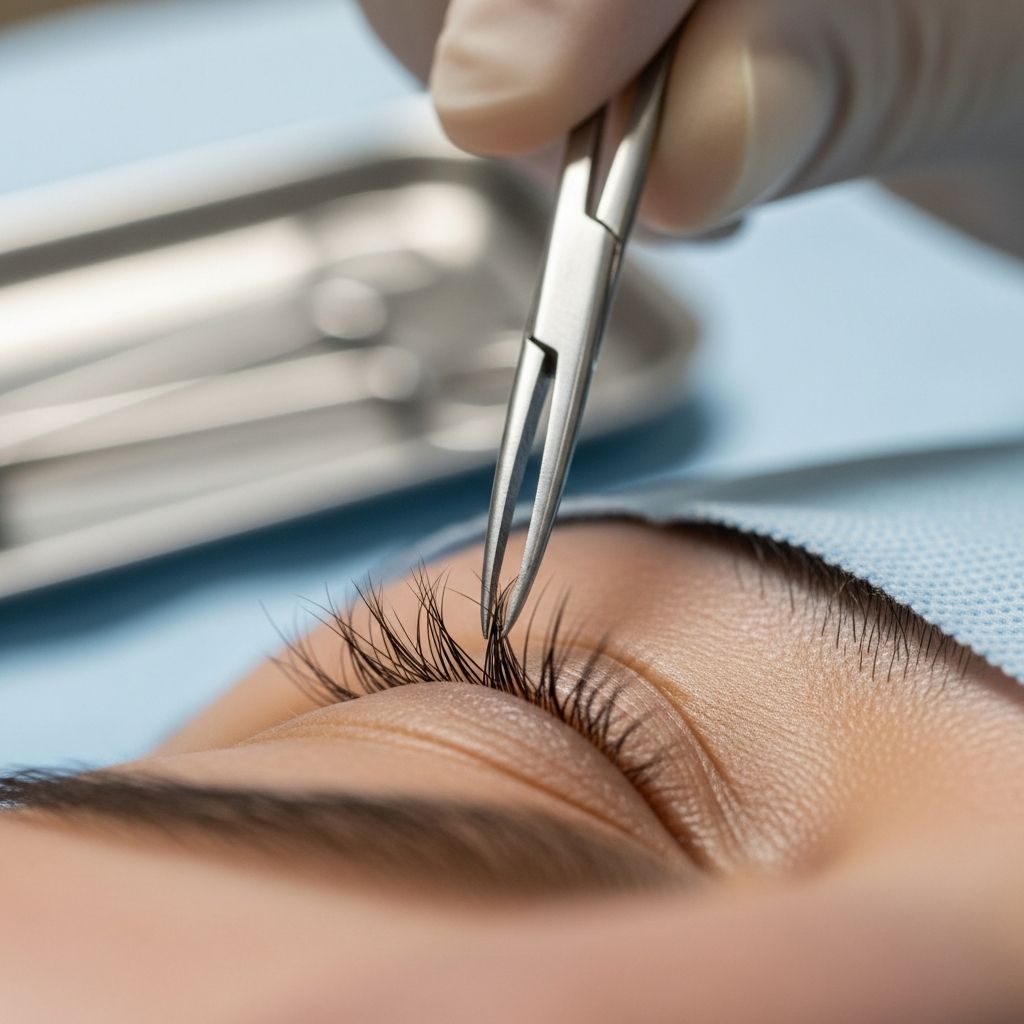
Trichiasis occurs when eyelashes grow inward, rubbing against the cornea and causing pain, irritation, and risk of infection. Proper intervention prevents complications like corneal abrasions.
Understanding the Condition and Its Impact
Inward-growing lashes disrupt the eye’s protective barrier, leading to symptoms such as tearing, redness, light sensitivity, and blurred vision. Over time, untreated cases can scar the cornea, impairing vision permanently. Common triggers include chronic blepharitis, entropion, or scarring from infections like trachoma.
- Early symptoms: Foreign body sensation and frequent blinking.
- Advanced signs: Corneal ulcers and persistent discomfort.
- Affected populations: Often seen in older adults or those with eyelid disorders.
Initial Non-Invasive Approaches
Before considering removal, address underlying causes with lubrication and hygiene. Artificial tears soothe irritation, while warm compresses loosen debris in chronic cases.
Mechanical Epilation Technique
The simplest method involves plucking misdirected lashes with sterile forceps. Performed in-office, it offers immediate relief but requires repetition every 4-8 weeks as follicles regrow.
- Procedure: Clean the lid, grasp lash base, pull steadily.
- Pros: Quick, no anesthesia needed.
- Cons: Temporary; unsuitable for multiple lashes.
For minor cases, this buys time while planning definitive care.
Permanent Follicle Destruction Methods
For lasting results, target the hair root directly. These in-office procedures use energy to ablate follicles, minimizing regrowth.
Radiofrequency Ablation Explained
This technique employs controlled radiofrequency waves to destroy lash roots precisely. Patients lie supine with a grounding plate; topical and injected anesthetics ensure comfort.
- Anesthetize with proparacaine drops and lidocaine injections.
- Insert probe into follicle at low power.
- Ablate until root is eradicated; repeat per lash.
Duration: 15-30 minutes. Post-care includes antibiotic ointment; no patching required. Recurrence is low, with repeats possible after months.
| Aspect | Details |
|---|---|
| Anesthesia | Topical + subcutaneous lidocaine |
| Contraindications | Pacemakers, active herpes |
| Recovery | Minimal swelling, immediate return to activities |
Electrolysis for Precise Removal
A fine probe delivers electric current to individual follicles, causing permanent damage. Ideal for sparse misdirected lashes, it demands multiple sessions.
Challenges include time intensity and potential scarring if lashes curl tightly. Not recommended for pacemaker users.
Cryoablation and Its Applications
Freezing follicles with liquid nitrogen or probes halts regrowth. Often combined with eyelid splitting for deeper access, it suits moderate cases but risks pigment changes or depigmentation.
- Advantages: Swift procedure, effective for clusters.
- Drawbacks: Possible hypopigmentation, especially in darker skin.
Advanced Surgical Interventions
When ablation fails or affects many lashes, surgery repositions or excises tissue.
Follicle Excision Surgery
Local anesthesia numbs the lid; surgeons remove entire follicles via small incisions. Takes 20 minutes; expect 3-5 days of swelling.
Benefits: Prevents regrowth; preserves lash density if selective.
Related Stories



Lid Repositioning Procedures
For entropion-related trichiasis, rotate the lid margin outward using sutures. This maintains natural lash alignment without removal.
- Indications: Severe misalignment from scarring.
- Outcomes: High success, fuller lash appearance.
Laser-Based Therapies
Lasers offer non-contact precision. Argon lasers coagulate vessels feeding follicles; newer options like Nd:YAG provide deeper penetration.
A 54-patient study showed argon laser effectively ablated symptomatic lashes across upper and lower lids, with informed consent and ethical approval ensuring safety.
- Session: Outpatient, minimal downtime.
- Efficacy: Reduces recurrence vs. epilation.
Infrared diode or ruby variants expand options for varied skin types.
Choosing the Right Treatment Path
Selection depends on lash count, cause, and patient health. Consult ophthalmologists for tailored plans.
| Method | Permanence | Sessions Needed | Risks |
|---|---|---|---|
| Epilation | Temporary | Every 4-8 weeks | Regrowth |
| Radiofrequency | Long-term | 1-2 | Pacemaker contraindication |
| Electrolysis | Permanent | Multiple | Scarring |
| Cryoablation | Permanent | 1-3 | Pigment loss |
| Laser | Long-term | 1-2 | Minimal |
| Surgery | Permanent | 1 | Swelling |
Primary sources emphasize radiofrequency and electrolysis for office settings, balancing efficacy and safety.
Pre-Procedure Preparation Essentials
Optimize outcomes with thorough evaluation. Disclose medical history, especially cardiac devices or infections. Pre-treat herpes outbreaks.
- Hygiene: Lid scrubs reduce bacterial load.
- Anesthesia test: Confirm numbness before ablation.
- Equipment: Surgical loupes or microscope for precision.
Post-Treatment Care Guidelines
Monitor for infection; apply ointments as directed. Avoid rubbing eyes; use cold compresses for swelling.
- Follow-up: 1-2 weeks to assess healing.
- Warning signs: Increased pain, vision loss—seek immediate care.
- Lifestyle: Sunglasses protect healing lids.
Success rates exceed 80% for ablation methods, transforming daily comfort.
Preventing Recurrence Long-Term
Manage root causes: Treat blepharitis aggressively. Regular exams catch early misalignment.
In high-risk areas like trachoma-endemic regions, community hygiene prevents scarring.
Frequently Asked Questions
Is trichiasis painful to treat?
Local anesthetics minimize discomfort; most report only pressure sensations.
How soon can I drive after radiofrequency ablation?
Immediately, as no sedation is used and vision clears quickly.
Will my eyelashes grow back unevenly?
Targeted treatments preserve surrounding lashes; cosmetic concerns are rare.
Can children undergo these procedures?
Yes, for congenital cases, with age-appropriate adaptations.
What’s the cost range for electrolysis?
Varies by sessions; often covered if medically necessary.
Emerging Innovations in Lash Correction
Research explores follicle release surgeries, gluing incisions to retain lashes while redirecting growth. Combined therapies, like laser pre-treatment before ablation, promise higher efficacy.
Patient education empowers better outcomes; ophthalmologists guide through options.
References
- Uprooting Misdirected Lashes — Review of Optometry. 2023. https://www.reviewofoptometry.com/article/uprooting-misdirected-lashes
- Trichiasis — Ophthalmic Consultants of Vermont. 2024. https://ocvermont.com/eyelid-surgery/trichiasis/
- Trichiasis Surgery for Eyelash Misalignment — Wilmington Family Eye Care. 2024. https://wilmingtonfamilyeyecare.com/trichiasis-surgery-for-eyelash-misalignment/
- Trichiasis (Misdirected Eyelashes): Causes & Treatment — Cleveland Clinic. 2025-02-10. https://my.clevelandclinic.org/health/diseases/24542-trichiasis
- Argon Laser: A Modality of Treatment for Trichiasis — PMC (National Library of Medicine). 2013-04-04. https://pmc.ncbi.nlm.nih.gov/articles/PMC3614615/
Similar Articles








Read full bio of Sneha Tete