Mastering Manual Small Incision Cataract Surgery
Discover the step-by-step essentials of MSICS, a cost-effective technique for restoring vision in dense cataracts with minimal astigmatism and rapid recovery.
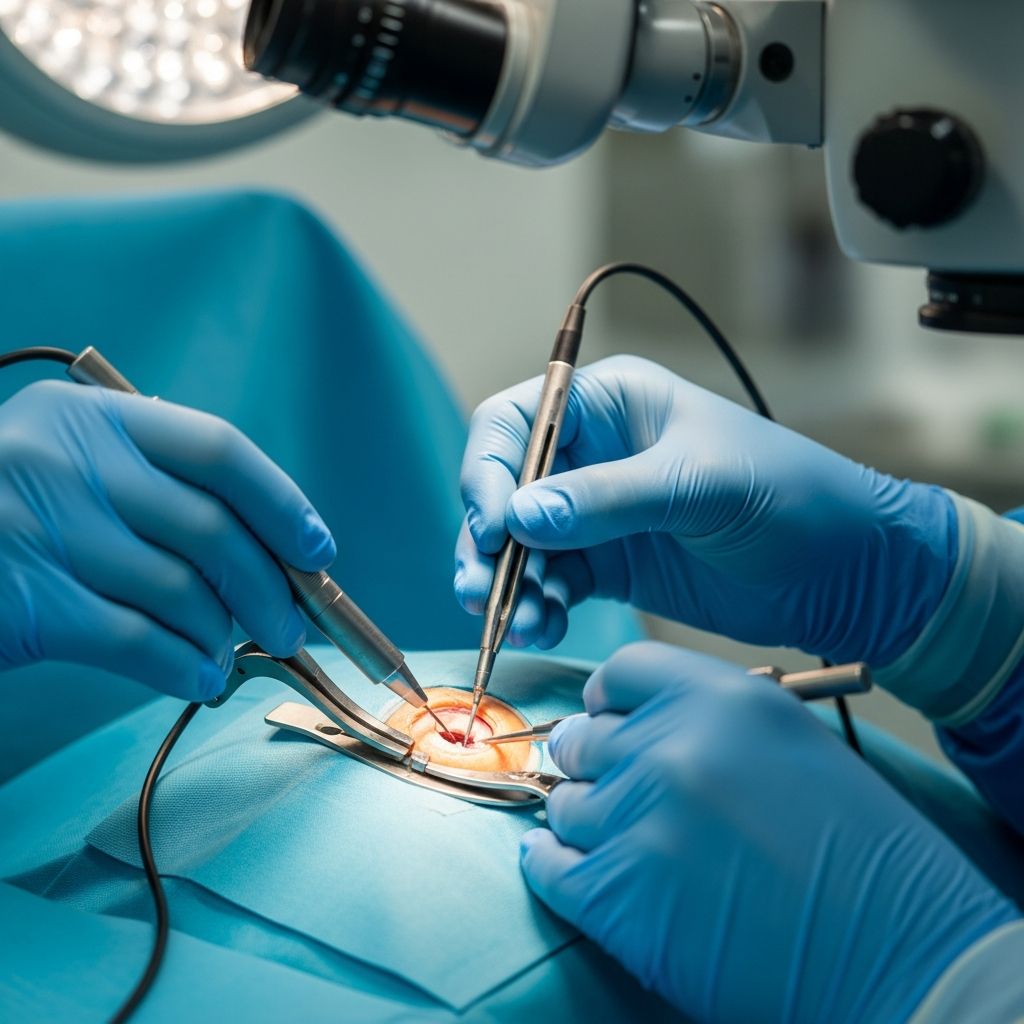
Manual Small Incision Cataract Surgery (MSICS) represents a cornerstone in modern ophthalmology, particularly for addressing advanced cataracts in resource-limited settings. This technique combines the efficiency of small incisions with manual nucleus extraction, minimizing astigmatism while promoting swift visual recovery.
Why Choose MSICS Over Traditional Methods?
MSICS stands out for its versatility across cataract types, including dense brunescent lenses where phacoemulsification may falter due to ultrasound energy risks to the corneal endothelium. It induces less surgically induced astigmatism than extracapsular extraction, eliminates suture complications, and supports early rehabilitation with fewer follow-ups. The procedure’s short learning curve and cost-effectiveness make it invaluable for high-volume surgeries.
Key advantages include:
- Patient comfort: Reduced postoperative pain and inflammation.
- Economic benefits: Lower equipment needs compared to phaco systems.
- Safety profile: Gentler on delicate ocular structures, especially in weak corneas.
- Speed: Studies show skilled MSICS surgeons outperform phaco experts in dense cataracts.
Patient Selection and Preoperative Preparation
Ideal candidates encompass nearly all cataract severities, from soft to hypermature, including traumatic cases. Contraindications are rare but include severe zonular instability or active infection. Preoperative assessment involves detailed slit-lamp examination, biometry for IOL power calculation, and pupil dilation evaluation.
Preparation steps:
- Administer peribulbar or topical anesthesia.
- Apply iodine-based antiseptic and sterile draping.
- Insert lid speculum; optional superior rectus bridle suture for stability.
- Create fornix-based conjunctival flap from 10 to 2 o’clock to expose sclera.
Constructing the Scleral Tunnel Incision
The hallmark of MSICS is the self-sealing scleral tunnel, typically 5-7 mm wide, with a trapezoidal or funnel shape—narrower externally, wider internally—for secure closure without sutures. Position superiorly unless against-the-rule astigmatism or glaucoma necessitates temporal incision, offering better microscope alignment and astigmatism control.
Procedure details:
- Perform conjunctival peritomy: Grasp conjunctiva with forceps, incise buttonhole at limbus with scissors, extend from 10 to 2 o’clock, add relaxing incision, and cauterize vessels.
- Mark 6-7 mm scleral incision 1-2 mm posterior to limbus.
- Dissect tunnel using crescent knife, aiming 1-2 mm into clear cornea for optimal sealing.
- Enter anterior chamber with 3.2 mm angled keratome: Align heel parallel to tunnel, rotate 90 degrees perpendicularly, advance until corneal dimple forms, then extend laterally to limbus.
This tunnel facilitates nucleus prolapse while preserving globe integrity.
Capsulotomy and Hydrodissection Techniques
A precise capsulotomy is critical for nucleus manipulation. Continuous curvilinear capsulorhexis (CCC) is preferred for its stability, though can-opener styles suit mature cataracts.
| Technique | Indications | Advantages | Risks |
|---|---|---|---|
| Continuous Curvilinear Capsulorhexis (CCC) | Most cases, small pupils | Tear resistance, IOL centration | Radial extension risk |
| Can-Opener Capsulotomy | Mature, brown cataracts | Easier in intumescent lenses | Irregular edge, PCR risk |
| Triangular Capsulotomy | Blumenthal variant | Quick for manual ECCE | Limited extensibility |
Post-capsulotomy, hydrodissection separates cortex from capsule using balanced salt solution via cannula, enabling nucleus rotation and prolapse. Maintain deep anterior chamber throughout.
Nucleus Delivery Methods
Nucleus extraction defines MSICS variants. Common approaches include hydroexpression, viscoexpression, and vectis-assisted techniques, all leveraging the tunnel’s geometry.
Hydroexpression (Blumenthal Technique): With anterior chamber maintainer, position hydrocannula behind nucleus, apply external pressure and internal fluid to expel it via glide.
Related Stories



Irrigating Vectis: Slide vectis under nucleus, lift into tunnel, irrigate to deliver. Ideal for dense nuclei.
Bimanual Prolapse: Use Sinskey hook and spatula for stubborn cases or small pupils; tumbling suits soft lenses with deep chambers.
Intratunnel phacofracture fractures nucleus within a sub-6 mm tunnel, minimizing incision size and astigmatism.
Cortical Cleanup and IOL Implantation
Post-nucleus removal, meticulous cortex aspiration prevents secondary issues. Employ Simcoe cannula via side port or bimanual irrigation-aspiration (I/A). J-shaped cannulas access subincisional cortex; dial IOL to aid evacuation.
IOL implantation uses PMMA or foldable lenses (5-6 mm optic) via lens forceps and Sinskey hook:
- Inject viscoelastic for chamber stability.
- Pass IOL parallel to iris into central chamber.
- Tilt haptic into capsular bag under rhexis margin.
- Dial optic-haptic junction to 4 o’clock, depress and drag trailing haptic into bag.
- For sulcus placement (e.g., PCR cases), adjust accordingly.
- Remove viscoelastic, hydrate paracentesis, confirm self-sealing.
Potential Complications and Mitigation
MSICS boasts a strong safety record, but vigilance is key:
- Posterior Capsule Rupture (PCR): 1-2% risk; convert to sulcus IOL or anterior vitrectomy.
- Zonular Dialysis: Gentle hydrodissection, bimanual support.
- Endothelial Damage: Adequate viscoelastic, controlled manipulation.
- Astigmatism: Funnel tunnel design minimizes.
- Infection: Strict asepsis, subconjunctival antibiotics/steroids postop.
Postoperative Care and Outcomes
Patients experience rapid recovery: uncorrected vision improves within days. Regimen includes topical steroids/antibiotics for 4 weeks, steroidal drops taper. Monitor for elevated IOP from viscoelastic. Long-term, MSICS yields outcomes rivaling phaco, with less astigmatism and cost savings.
Advanced Variations for Challenging Cases
Temporal incisions benefit glaucoma or deep sockets; bimanual I/A enhances subincisional cleanup. For dense subcapsular cataracts, precise tunnel flaring aids nucleus engagement. These adaptations expand MSICS applicability.
Training and Skill Development
Residency programs emphasize MSICS for its utility in compromised corneas and dense nuclei. Wet lab practice on porcine eyes hones tunnel construction and nucleus handling. Mastery enables high throughput safely.
Frequently Asked Questions (FAQs)
What makes MSICS cost-effective?
No phaco machine required; uses basic instruments, ideal for outreach.
Is MSICS suitable for all cataracts?
Yes, excels in dense types; versatile across grades.
How long is recovery?
Most resume activities in days; full vision in weeks.
What is the astigmatism risk?
Minimal due to small, self-sealing tunnel.
Can foldable IOLs be used?
Yes, with slight tunnel adjustments.
MSICS empowers surgeons to deliver high-quality vision restoration efficiently worldwide.
References
- Manual Small Incision Cataract Surgery – StatPearls — NCBI Bookshelf. 2023-07-17. https://www.ncbi.nlm.nih.gov/books/NBK582123/
- MSICS: manual small incision cataract surgery — YouTube (Ophthalmology Video). 2023. https://www.youtube.com/watch?v=zuYaWLFyH8U
- Manual Small Incision Cataract Surgery — EyeWiki (AAO). 2024-02-15. https://eyewiki.org/Manual_Small_Incision_Cataract_Surgery
- Manual Small Incision Cataract Surgery (MSICS) — Cybersight YouTube. 2024-04-22. https://www.youtube.com/watch?v=XjZ5r8GZq5Y
- Manual Small Incision Cataract Surgery — Cybersight Library. 2024. https://cybersight.org/library/manual-small-incision-cataract-surgery/
Similar Articles








Read full bio of medha deb