Manuka Honey: 7 Science-Backed Health Benefits & Uses
Discover the science-backed health benefits of Manuka honey, from wound healing and sore throat relief to gut health support and more.
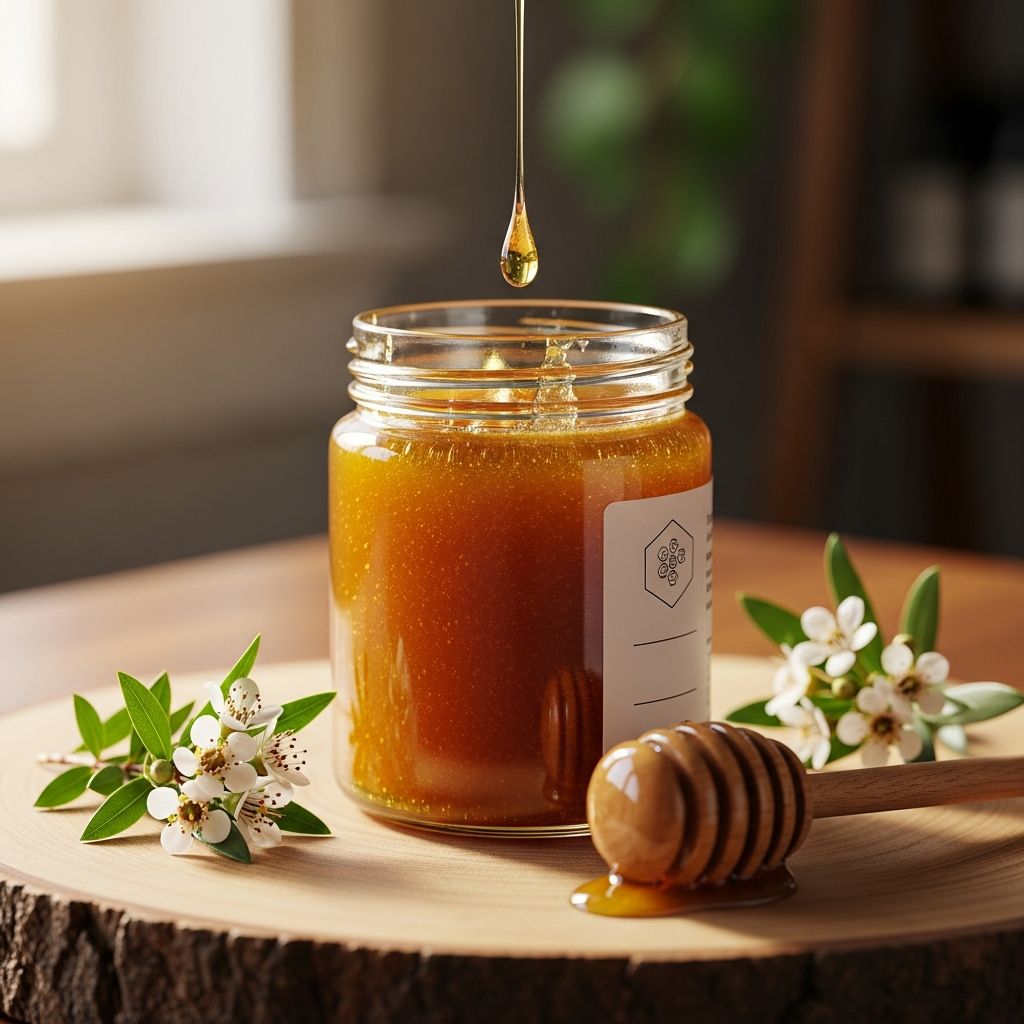
Manuka honey, derived from the nectar of the Manuka bush (*Leptospermum scoparium*) native to New Zealand and parts of Australia, stands out from regular honey due to its exceptional antibacterial properties. Unlike ordinary honey, Manuka honey contains high levels of methylglyoxal (MGO), a compound responsible for its potent therapeutic effects. These properties make it a popular choice for wound healing, soothing sore throats, supporting digestive health, and more. Research highlights its antiviral, anti-inflammatory, and antioxidant benefits, positioning it as a natural remedy backed by science.
What Is Manuka Honey?
Manuka honey is a monofloral honey produced by bees that primarily forage on the Manuka plant. Its unique composition includes MGO, which forms from dihydroxyacetone (DHA) in the nectar during honey maturation. This gives Manuka honey superior antibacterial activity compared to other honeys, which rely more on hydrogen peroxide for their effects. The honey is typically darker, thicker, and has a richer, earthier flavor that’s less sweet.
Authentic Manuka honey is graded using systems like UMF (Unique Manuka Factor), MGO, or NPA (Non-Peroxide Activity) to indicate potency. A UMF rating of 10+ or higher is considered therapeutic, reflecting concentrations of MGO, DHA, and leptosperin. Higher ratings correlate with stronger antibacterial effects, making rating essential for efficacy.
Nutritional Profile of Manuka Honey
Manuka honey is nutrient-dense, providing about 64 calories per tablespoon, primarily from natural sugars like fructose and glucose. It contains trace vitamins (B vitamins, vitamin C), minerals (potassium, calcium), amino acids, and antioxidants such as phenolic compounds. These contribute to its anti-inflammatory and immune-supporting roles. However, its high sugar content means moderation is key, especially for those managing blood sugar.
Health Benefits of Manuka Honey
Science supports several key benefits of Manuka honey, primarily due to its non-peroxide antibacterial activity from MGO.
1. Promotes Wound Healing
Manuka honey’s primary medical use is for treating minor wounds and burns. It creates a moist healing environment, reduces inflammation, and fights infection by inhibiting bacterial growth. Studies show it stimulates tissue repair cells and prevents scarring. Medical-grade Manuka honey (UMF 10+) is used in dressings for antibiotic-resistant infections, outperforming traditional treatments in some cases.
2. Supports Oral Health and Prevents Tooth Decay
Manuka honey combats plaque-causing bacteria like *Streptococcus mutans* without promoting decay, unlike refined sugars. Research indicates it reduces gum inflammation and gingivitis risk. Rinsing with Manuka honey or using it in toothpaste may prevent periodontal disease by limiting bacterial buildup.
3. Soothes Coughs and Sore Throats
For upper respiratory tract infections (URTIs) like colds and flu, Manuka honey eases coughs, sore throats, and congestion more effectively than some over-the-counter remedies. Its coating action soothes irritation, while antibacterial properties target pathogens. Clinical evidence supports its use, especially in children over 1 year (avoid in infants due to botulism risk).
4. Aids Digestive Health and Prevents Ulcers
Manuka honey acts as a prebiotic via oligosaccharides, boosting beneficial gut bacteria. It combats *Helicobacter pylori* (*H. pylori*), reducing risks of peptic ulcers and gastric issues. Regular consumption (more than 5 days/week) lowers *H. pylori* infection rates. It may alleviate IBS, IBD, colitis, gastritis, and acid reflux symptoms.
Related Stories



5. Benefits Skin Conditions
Applied topically, Manuka honey treats acne, eczema, psoriasis, rosacea, and sunburn due to its anti-inflammatory, antibacterial, and hydrating effects from sugars and amino acids. It promotes collagen production and skin barrier repair. Ingesting it may also help from within.
6. Fights Antibiotic-Resistant Infections
Manuka honey inhibits “superbugs” resistant to standard antibiotics. Its MGO disrupts bacterial biofilms and cell walls. Combined with antibiotics, it enhances efficacy against pathogens like *P. aeruginosa* and *B. cepacia*.
7. May Help with Cystic Fibrosis
In cystic fibrosis patients, Manuka honey inhibits respiratory bacteria *Pseudomonas aeruginosa* and *Burkholderia cepacia*. Test-tube studies show it synergizes with antibiotics, potentially reducing infection severity in vulnerable groups.
How to Use Manuka Honey
- For wounds: Apply medical-grade honey directly or use in dressings; consult a doctor for serious injuries.
- Sore throat/cough: Take 1-2 teaspoons straight or in warm tea; 15g (about 2 tbsp) daily max.
- Oral health: Swish 1 tsp for 30-60 seconds or add to toothpaste.
- Digestion: Consume 1 tbsp daily on empty stomach for gut support.
- Skin: Apply thin layer to clean skin; mix with moisturizer for aftersun.
- General: Drizzle on yogurt, oatmeal, or use in recipes for antioxidant boost.
How to Choose High-Quality Manuka Honey
Look for UMF 10+ or MGO 250+ ratings from licensed labs. Verify independent testing for authenticity. Avoid blends or low-rated products lacking therapeutic potency. Genuine Manuka is certified by UMFHA or AMHA.
| Rating System | Minimum Therapeutic Level | Key Compounds Measured |
|---|---|---|
| UMF | 10+ | MGO, DHA, Leptosperin |
| MGO | 250+ | Methylglyoxal |
| NPA | 10+ | Non-Peroxide Activity |
Safety and Side Effects
Manuka honey is safe for most adults in moderation (1-2 tbsp/day). Risks include:
- Blood sugar spikes for diabetics.
- Allergic reactions in those sensitive to bees/honey.
- Botulism risk for infants under 12 months—CDC advises against.
- Potential interactions with chemotherapy or blood sugar meds.
Consult a healthcare provider if pregnant, diabetic, or on medications. Not a substitute for medical treatment.
Frequently Asked Questions (FAQs)
What makes Manuka honey special?
Its high MGO content provides non-peroxide antibacterial activity, plus anti-inflammatory and antioxidant effects, surpassing regular honey.
Is Manuka honey OK to eat daily?
Yes, in small amounts (up to 2 tbsp/day) for most people, but monitor blood sugar if diabetic.
Who should avoid Manuka honey?
Infants under 1 year, those with honey allergies, or uncontrolled diabetes without doctor approval.
Does Manuka honey expire?
It has a long shelf life (2+ years) if stored properly; higher-rated honeys retain potency longer.
Can Manuka honey cure infections?
It supports treatment, especially topically, but more human studies are needed for internal use.
References
- 6 Proven Benefits and Uses of Manuka Honey — Healthline. 2024-10-25. https://www.healthline.com/nutrition/manuka-honey-uses-benefits
- Manuka Honey: Medicinal Uses, Benefits, and Side Effects — WebMD. 2023-01-15. https://www.webmd.com/a-to-z-guides/manuka-honey-medicinal-uses
- Antibacterial activity of Manuka honey and its components: An overview — National Center for Biotechnology Information (PMC). 2019-04-03. https://pmc.ncbi.nlm.nih.gov/articles/PMC6613335/
- Why do people wax lyrical about manuka honey? — Women’s Health Magazine UK. 2023-05-10. https://www.womenshealthmag.com/uk/food/healthy-eating/a44493320/manuka-honey-benefits/
- Manuka Honey Guide: Benefits, Strengths and MGO, UMF & NPA — Holland & Barrett. 2024-02-20. https://www.hollandandbarrett.com/the-health-hub/food-drink/food/manuka-honey/understanding-manuka-honey-label/
Similar Articles








Read full bio of Sneha Tete