MASLD vs. MASH: Understanding Liver Disease Spectrum
Learn the critical differences between MASLD and MASH, and why early detection matters.
Understanding MASLD and MASH: A Comprehensive Guide
The landscape of liver disease has evolved significantly with updated terminology and a deeper understanding of metabolic dysfunction. Metabolic dysfunction-associated steatotic liver disease (MASLD), formerly known as nonalcoholic fatty liver disease (NAFLD), represents one of the most pressing yet underrecognized health challenges globally. More than a quarter of the world’s population lives with MASLD or its progressive form, metabolic dysfunction-associated steatohepatitis (MASH), yet these conditions remain largely invisible in mainstream health conversations. Understanding the distinction between MASLD and MASH is crucial for patients, healthcare providers, and policymakers committed to preventing serious liver complications.
What is MASLD?
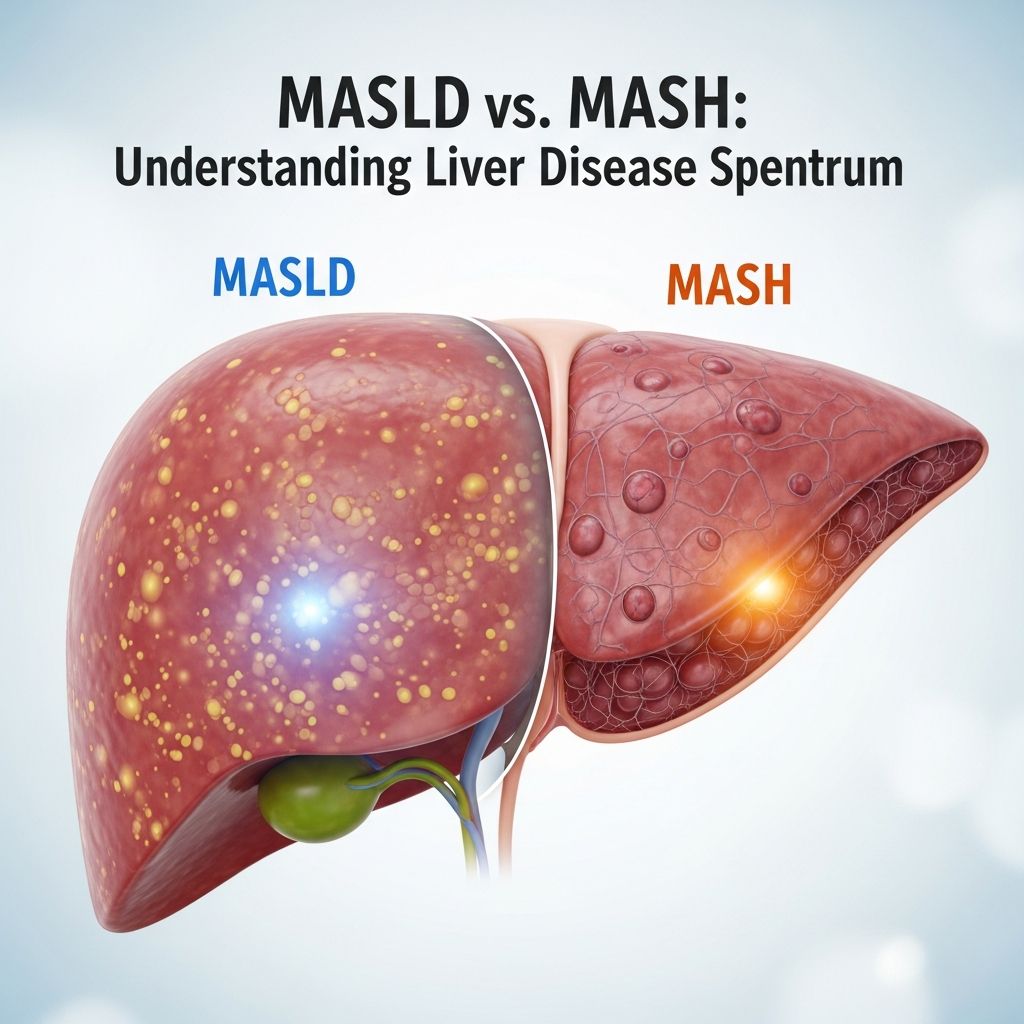
MASLD is a liver condition characterized by excess fat accumulation in the liver cells, affecting people with obesity, excess weight, or metabolic disorders such as type 2 diabetes, high blood pressure, or elevated cholesterol. The condition develops when too much fat builds up in liver tissue, but the disease remains in its early, less inflammatory stage. This stage is sometimes called hepatic steatosis or simple fatty liver disease. MASLD is the most common form of liver disease worldwide, particularly in Western nations and the Middle East, correlating directly with rising obesity rates.
In MASLD, the liver becomes enlarged and may appear discolored, but inflammation and advanced scarring are not yet present as they are in more severe disease states. Many people with MASLD have no symptoms and discover the condition only through imaging tests performed for other reasons. This asymptomatic nature underscores why early detection and preventive measures are essential.
What is MASH?
MASH represents the progressive, inflammatory form of metabolic liver disease and stands as the advanced stage on the MASLD-MASH disease spectrum. In MASH, the liver experiences inflammation and fat accumulation simultaneously, causing progressive liver damage. The liver swells or enlarges—a condition called hepatomegaly—and fat deposits combined with inflammation trigger hepatic injury. Unlike MASLD, MASH can advance to severe liver scarring (cirrhosis) or even hepatocellular carcinoma (liver cancer) if left untreated.
MASH is not a separate disease from MASLD but rather a continuation on the same disease spectrum, similar to how HIV and AIDS exist on a continuum. This critical distinction means that prevention and treatment strategies must address the full continuum rather than treating them as isolated conditions.
Key Differences Between MASLD and MASH
While MASLD and MASH are interconnected stages of the same disease process, they differ in severity, inflammatory response, and clinical outcomes:
| Feature | MASLD | MASH |
|---|---|---|
| Inflammation Level | Minimal to no inflammation | Significant hepatic inflammation |
| Liver Damage | Fat accumulation only | Fat accumulation plus inflammation and cell injury |
| Fibrosis/Scarring | Absent or minimal | Present and progressive |
| Progression Risk | Low to moderate | High—may progress to cirrhosis |
| Symptoms | Usually none (asymptomatic) | May include fatigue, abdominal pain, jaundice |
| Life Expectancy Impact | Variable; often reversible with lifestyle changes | Significantly affected if advanced |
Risk Factors and Who is Affected
Multiple interconnected factors increase the likelihood of developing MASLD and progressing to MASH:
- Obesity and excess weight: Being overweight or obese significantly elevates risk for both conditions.
- Insulin resistance: When the body’s cells fail to respond properly to insulin, fat accumulation in the liver accelerates.
- Type 2 diabetes: High blood sugar and metabolic dysfunction are strongly linked to MASLD and MASH development.
- High triglycerides: Elevated blood fat levels, particularly triglycerides, contribute to hepatic lipid accumulation.
- High blood pressure: Hypertension is part of metabolic syndrome, a cluster of conditions increasing MASLD/MASH risk.
- Genetics: Genetic predisposition influences both disease development and severity.
- Age: MASH is more likely in people older than 50.
Related Stories



Remarkably, some individuals develop MASLD even without conventional risk factors, suggesting that disease development involves complex biological mechanisms not yet fully understood.
Symptoms and Diagnosis
A major challenge with MASLD and MASH is that early stages are typically asymptomatic. Many people have no awareness of disease presence until advanced stages develop. However, as disease progresses to MASH and cirrhosis, symptoms may emerge:
- Itchy skin (pruritus)
- Abdominal swelling (ascites)
- Shortness of breath
- Swelling in the legs and feet
- Spiderlike blood vessels beneath the skin surface
- Enlarged spleen
- Yellowing of skin and eyes (jaundice)
- Confusion and slurred speech (hepatic encephalopathy)
Distinguishing between MASLD and MASH requires clinical examination, laboratory testing, and imaging studies. Simple visual inspection cannot differentiate the two conditions; healthcare providers rely on blood tests, ultrasound, elastography, or liver biopsy to confirm diagnosis and assess disease severity.
Complications and Long-Term Consequences
The most serious complication of both MASLD and MASH is cirrhosis—severe liver scarring that fundamentally impairs liver function. Cirrhosis develops through a progressive cycle: liver inflammation triggers compensatory scarring responses, and with ongoing injury, fibrosis (scarring) spreads throughout liver tissue, eventually dominating the organ.
Once cirrhosis develops, life-threatening complications can follow:
- Ascites: Fluid accumulation in the abdominal cavity requiring management and monitoring.
- Esophageal varices: Enlarged, fragile veins in the esophagus that can rupture and cause life-threatening bleeding.
- Hepatic encephalopathy: Brain dysfunction resulting from liver’s inability to filter toxins, causing confusion and cognitive impairment.
- Hypersplenism: Overactive spleen causing dangerously low platelet counts.
- Hepatocellular carcinoma: Primary liver cancer, a devastating consequence of chronic liver injury.
- End-stage liver failure: Complete liver dysfunction requiring transplantation for survival.
Prognosis and Life Expectancy
Life expectancy varies significantly based on disease stage and individual factors. For people with MASLD alone, the outlook is generally optimistic, especially when lifestyle modifications are implemented early. Weight loss, in particular, can reverse MASLD in some individuals. However, progression to MASH substantially alters outcomes. The presence of fibrosis, cirrhosis, and other comorbidities dramatically impacts life expectancy and quality of life.
This variation in outcomes underscores the critical importance of early detection and intervention during the MASLD stage, before progression to inflammatory MASH occurs.
Treatment and Management Strategies
Currently, no FDA-approved medications specifically treat MASLD or MASH, making lifestyle modification the cornerstone of management. Evidence-based approaches include:
- Weight loss: Even 5-10% weight reduction can improve liver histology and reduce fat accumulation.
- Dietary modification: Mediterranean and DASH diets, along with reduced ultra-processed food and sugar-sweetened beverage consumption, benefit liver health.
- Physical activity: Regular exercise improves insulin sensitivity and metabolic health independent of weight loss.
- Management of comorbidities: Controlling diabetes, hypertension, and dyslipidemia reduces disease progression risk.
- Alcohol avoidance: Complete abstinence prevents additional liver injury.
- Pharmacotherapy for metabolic conditions: Medications managing diabetes and cholesterol may provide hepatic benefits.
Multiple clinical trials are investigating novel therapeutics targeting fibrosis progression, inflammation, and underlying metabolic dysfunction, offering hope for future treatment options.
Global Recognition and Public Health Action
Despite affecting over a quarter of the global population, MASLD and MASH remain largely absent from major public health agendas. The World Health Organization has not formally recognized MASLD/MASH as a priority non-communicable disease, despite calls from leading health experts and advocacy groups. This lack of recognition perpetuates underdiagnosis, limited research funding, and fragmented prevention efforts.
Advocacy groups are pushing for comprehensive WHO action, including formal disease recognition, integration into primary care and digital health screening programs, and inclusion in nutrition and public health policies targeting obesity and metabolic dysfunction.
Frequently Asked Questions
Q: Can MASLD progress to MASH?
A: Yes. MASLD and MASH exist on a disease spectrum, and some individuals progress from simple steatosis to inflammatory MASH. However, not everyone with MASLD develops MASH, and many can reverse MASLD through lifestyle changes.
Q: Is MASLD reversible?
A: MASLD can be reversible, particularly in early stages, through weight loss, dietary improvement, and increased physical activity. Some individuals achieve complete histological normalization with sustained lifestyle modification.
Q: How is MASLD/MASH diagnosed?
A: Diagnosis involves imaging studies (ultrasound, CT, MRI), laboratory tests (liver enzymes, fibrosis markers), and sometimes liver biopsy. Transient elastography is increasingly used to assess fibrosis non-invasively.
Q: What should I eat if I have MASLD?
A: Mediterranean and DASH diets are recommended, emphasizing whole grains, vegetables, lean proteins, and healthy fats while limiting processed foods, added sugars, and alcohol.
Q: Can I live a normal life with MASLD or MASH?
A: Many people with MASLD live normal lifespans with appropriate management. Those with MASH or cirrhosis face greater health challenges but can optimize outcomes through medical care, lifestyle modification, and disease monitoring.
Q: Is MASLD/MASH hereditary?
A: Genetic factors influence susceptibility, but MASLD/MASH is primarily driven by metabolic dysfunction. Family members should be screened if metabolic risk factors are present.
References
- Name MASLD/MASH — and act on it — National Institutes of Health (NIH), National Center for Biotechnology Information. 2025. https://pmc.ncbi.nlm.nih.gov/articles/PMC12788892/
- Fatty liver disease (MASLD) – Symptoms and causes — Mayo Clinic. 2024. https://www.mayoclinic.org/diseases-conditions/fatty-liver-disease-masld/symptoms-causes/syc-20354567
Similar Articles








Read full bio of medha deb