Mastering BCSC for Ophthalmology Success
Unlock the full potential of BCSC resources to elevate your ophthalmic knowledge, exam performance, and clinical expertise as a young eye specialist.
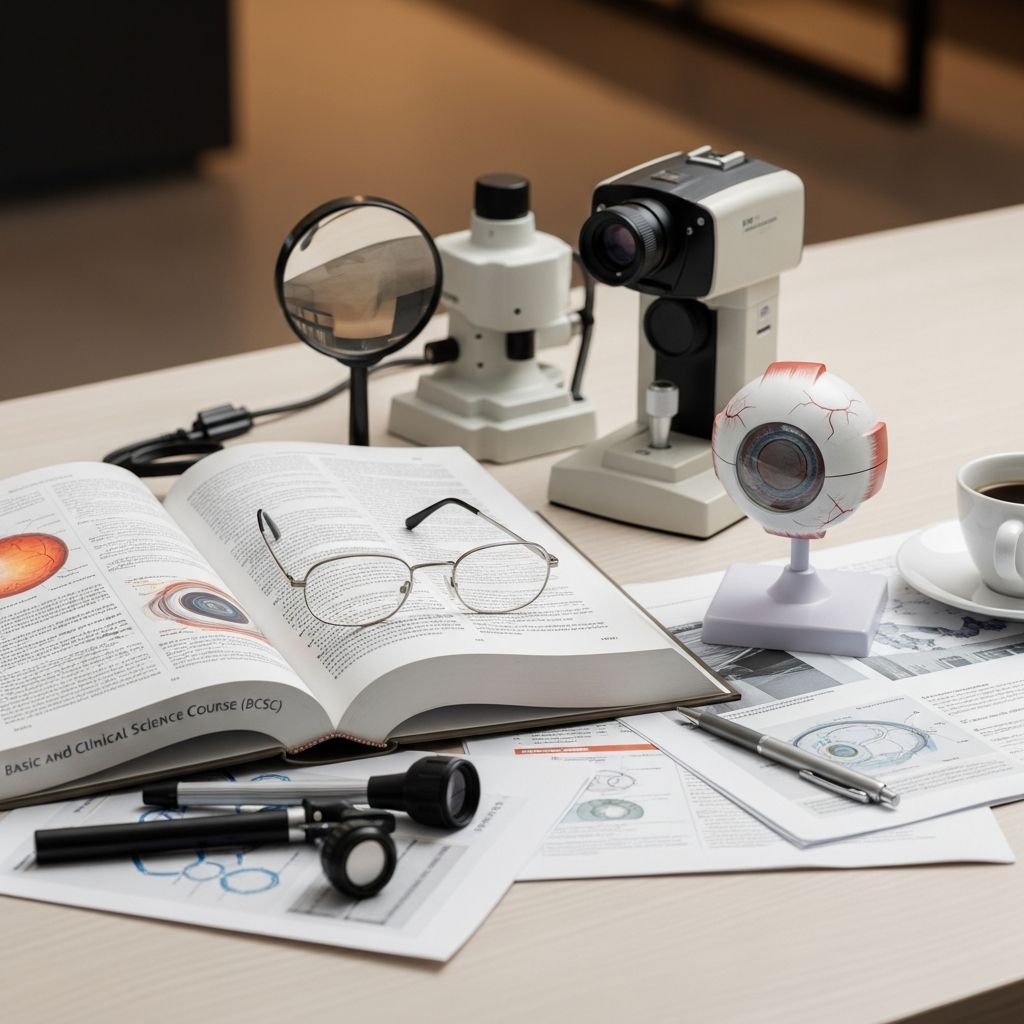
The Basic and Clinical Science Course (BCSC) series from the American Academy of Ophthalmology stands as a cornerstone for eye care professionals in training. This comprehensive 13-section collection delivers foundational knowledge across ophthalmic subspecialties, making it indispensable for residents preparing for exams like the Ophthalmic Knowledge Assessment Program (OKAP).
Understanding the BCSC Framework
BCSC organizes ophthalmic education into structured volumes that progress from basic sciences to advanced clinical applications. Each annual edition, such as the 2025-2026 series, receives updates to reflect evolving practices, including new insights on pharmacology, genetics, and imaging. For instance, Section 2 covers fundamentals like ocular anatomy, embryology, biochemistry, and pharmacology, providing the scientific bedrock for all ophthalmic diagnoses.
Residents often aim to review the entire set yearly, though its depth requires strategic approaches. Questions on OKAP exams frequently draw directly from BCSC content, underscoring its role beyond mere reading—it’s a primary exam blueprint.
Why BCSC Excels in Residency Training
Unlike single-volume texts, BCSC’s modular design allows targeted study. Section 3 delves into clinical optics, including refractive surgery, intraocular lenses, and vision rehabilitation tools like low-vision aids. Section 4 focuses on pathology and intraocular tumors, employing a hierarchical approach from general topography to specific differentials, enhanced by an online Pathology Atlas for visual learning.
- Comprehensive Coverage: Spans 13 sections, from fundamentals to subspecialties like retina, glaucoma, and neuro-ophthalmology.
- Annual Updates: Ensures relevance with additions like biosimilars and pediatric dosing in recent editions.
- Exam Alignment: Core material for OKAP, board certification, and maintenance of certification.
- Practical Integration: Links theory to clinic via case studies, imaging, and surgical principles.
This structure supports progressive learning, starting with basics in early residency and advancing to complex topics later.
Building an Effective Study Plan
Craft a personalized schedule by prioritizing sections based on rotation schedules and exam timelines. Dedicate mornings to dense fundamentals (Sections 1-4) and evenings to clinical sections (5-13). Aim for 50-100 pages daily, adjusting for comprehension.
| Residency Year | Priority Sections | Focus Areas | Weekly Goal |
|---|---|---|---|
| PGY-2 | 2, 3, 4 | Anatomy, Optics, Pathology | 200 pages |
| PGY-3 | 5-8 | Cornea, Lens, Retina, Glaucoma | 250 pages |
| PGY-4 | 9-13 | Neuro-ophth, Pediatrics, Oncology | Full review |
Incorporate active recall: After reading, summarize key points in your own words. Use digital versions for searchable text and annotations, available through platforms like EBSCOhost with concurrent user limits.
Key Sections for Foundational Mastery
Section 2: Core Ophthalmic Sciences
This volume grounds trainees in ocular biology, including metabolism, genetics, and pharmacology updates like systemic antimicrobial penetration. It features imaging chapters on MRI/CT, vital for interpreting orbital pathology.
Section 3: Optics and Refractive Principles
Offers a quick-start guide to refraction, geometric optics, and instruments. Essential for understanding lasers, spectacles, and post-surgical vision rehab.
Related Stories



Section 4: Pathology Essentials
Part I builds differential diagnoses hierarchically; Part II covers tumors relevant to generalists. Learning objectives include specimen handling and advanced tests like immunohistochemistry.
Other sections, like surgical principles (e.g., ergonomics, patient safety), prepare for operative skills across 80+ procedures.
Enhancing Retention with Proven Techniques
Combine BCSC with visuals: Pair Section 4 with its Pathology Atlas for case-based reinforcement. Create mind maps linking anatomy (Section 2) to diseases (Sections 7-11).
- Annotate margins with clinical correlations from rotations.
- Form study groups to discuss subspecialty chapters weekly.
- Integrate with apps for OKAP practice questions tied to BCSC topics.
- Review updates yearly, focusing on “major revisions” sections.
For optics-heavy content, practice refractions hands-on after theoretical reading to solidify concepts.
BCSC in Exam Preparation
OKAP success hinges on BCSC fluency. Residents report higher scores by aligning study with exam-derived questions. Supplement with quick-reference manuals like Wills Eye Manual for clinical pearls, but rely on BCSC for depth.
Simulate exams: Time yourself quizzing on one section per week. Track weak areas, such as intraocular tumors, and revisit with atlas images.
Practical Clinic and OR Applications
BCSC bridges classroom to practice. Preoperative planning draws from surgical sections, covering instruments, fluids, and complications. In clinic, use pathology hierarchies for differentials during consults.
For emergencies, optics knowledge aids in managing refractive surprises post-cataract surgery.
Digital and Accessibility Tips
Leverage eBooks for portability, though note access limits (e.g., 3 users). AAO platforms offer multimedia, enhancing traditional reading.
Common Challenges and Solutions
Density overwhelms newcomers—break into 20-page chunks. Time constraints? Prioritize high-yield sections per rotation. Motivation dips? Set milestones with rewards.
FAQs
What is the latest BCSC edition?
The 2025-2026 series features updates in Sections 2 and 4, among others.
How often should residents read BCSC?
Ideally, complete annually, with focused reviews for exams.
Is BCSC sufficient for OKAP alone?
It’s the primary source; pair with practice questions and clinics.
Where to access BCSC?
Through AAO, libraries like University of Iowa, or EBSCOhost.
Best way to study pathology sections?
Use hierarchical differentials and online atlas cases.
Advanced Strategies for Senior Residents
In PGY-4, synthesize across sections: Link glaucoma genetics (Section 2) to management (Section 10). Teach juniors to reinforce your knowledge. Prepare for boards by condensing notes into a personal index.
Explore companion texts like Basic Principles of Ophthalmic Surgery for procedural depth, directly tied to BCSC.
Long-Term Career Benefits
BCSC proficiency yields lifelong advantages: Sharper differentials, safer surgeries, and easier MOC. Many leaders credit early mastery for subspecialty success.
In summary, strategic BCSC use transforms residency from survival to excellence. Commit to consistent, active engagement for unparalleled ophthalmic expertise.
References
- Ophthalmology: BCSC Books – AAO – Guides — University of Iowa Libraries. 2025. https://guides.lib.uiowa.edu/eye/bcsc-books
- Suggested Reading List — Ophthalmology Foundation. 2024. https://ophthalmologyfoundation.org/examinations/reading-list/
- Seven Must-Have Books for the Beginning Ophthalmologist — MillennialEYE. 2023. https://millennialeye.com/online-exclusives/seven-must-have-books-for-the-beginning-ophthalmologist/
- Ophthalmology Guide: Current BCSC Edition — UT Southwestern LibGuides. 2024. https://utsouthwestern.libguides.com/ophthalmology-guide
- Ophthalmology Resources for Medical Students and Residents — EyeGuru. 2024. https://eyeguru.org/blog/ophtho-resource-guide/
Similar Articles








Read full bio of Sneha Tete