Peripheral Retina Exams: 7-Step Clinical Guide For Clinicians
Expert techniques and advanced imaging to detect hidden retinal issues early and improve patient outcomes.
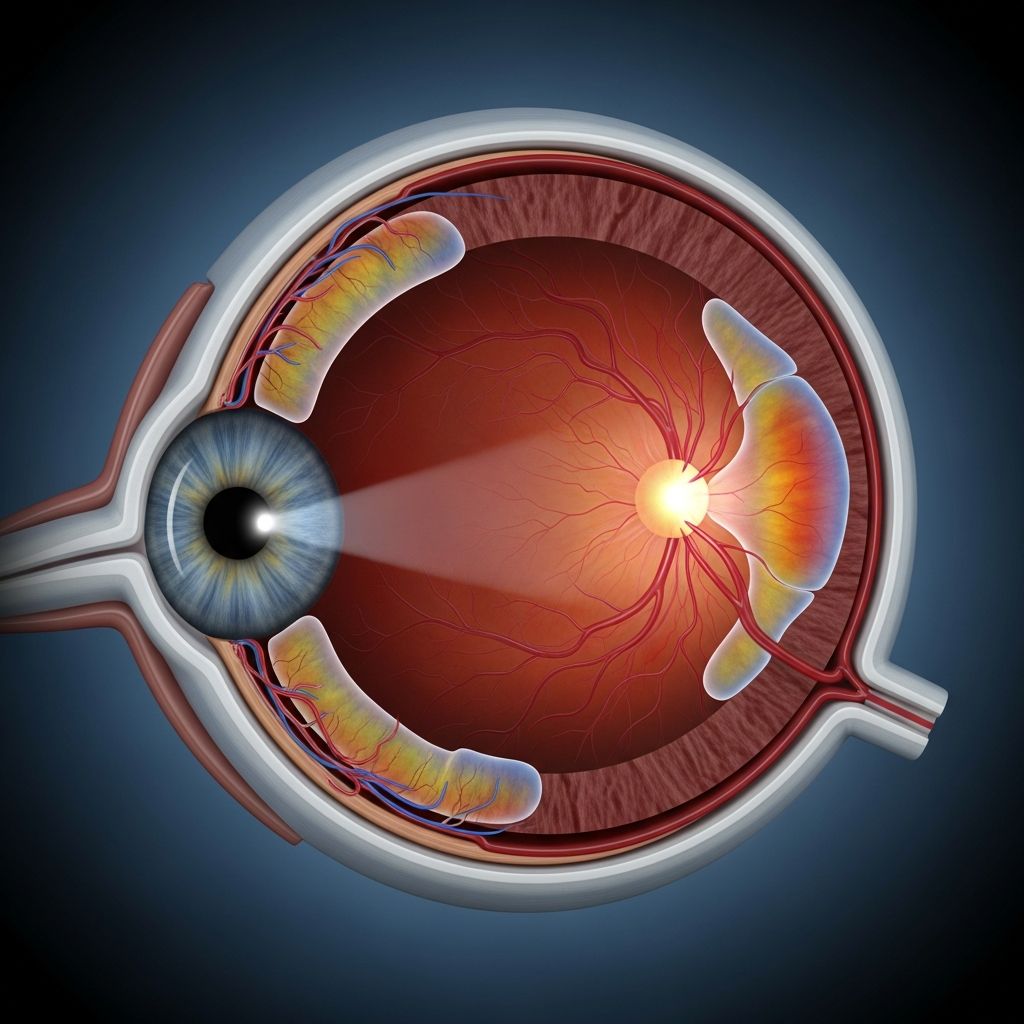
The peripheral retina, often overlooked in routine checks, holds critical clues to conditions like retinal tears, detachments, and vascular abnormalities. Effective examination techniques allow clinicians to visualize up to 90% of the retinal surface, enabling early intervention that can prevent vision loss.
Why Focus on the Peripheral Retina?
Peripheral retinal pathology accounts for a significant portion of retinal diseases, including lattice degeneration in 6-8% of adults and retinal breaks in symptomatic patients. Unlike the macula, peripheral areas are prone to traction from vitreous changes, leading to detachments if undetected. Routine dilated exams with peripheral emphasis reduce progression risks in conditions like diabetic retinopathy, where ischemic zones often lurk beyond central fields.
Studies show ultra-widefield imaging correlates strongly with traditional stereoscopic photography for grading diabetic retinopathy severity, with fewer ungradable images. This underscores the need for comprehensive views in screening programs.
Essential Tools for Traditional Exams
Binocular indirect ophthalmoscopy remains the gold standard for stereoscopic peripheral visualization. Paired with a 20- or 28-diopter lens, it provides a wide field of view, ideal for dynamic assessment during patient gaze shifts.
- 20D Lens: Offers higher magnification for detailed lesion analysis but narrower field.
- 28D Lens: Wider view suited for initial surveys and pediatric cases.
- Superfield Lens (up to 40D): Balances magnification and field for quick overviews.
Incorporate a teaching headset for training or complex cases, enhancing depth perception. Portable slit lamps aid anterior segment checks before posterior dilation.
Mastering Scleral Depression Techniques
Scleral indentation presses the globe to expose the ora serrata and pars plana, crucial for vitreous base evaluation in high-risk patients like those with floaters or photopsia. Proper technique minimizes discomfort and artifacts.
| Step | Action | Tips |
|---|---|---|
| 1. Preparation | Dilate pupil fully; position patient supine or seated. | Use topical anesthetic; explain procedure to reduce anxiety. |
| 2. Grip | Hold depressor like a pencil, thumb on sclera. | Aim 1-2mm posterior to limbus; avoid cornea. |
| 3. Direction | Patient gazes opposite; depress radially or tangentially. | Bend low to align with lens; follow equator meridians. |
| 4. Visualization | Sweep systematically: temporal, nasal, superior, inferior. | Check for whitening (traction) or holes. |
For pediatrics, specialized depressors like Flynn models provide gentler pressure. Practice on models builds proficiency, ensuring clear views without patient movement.
Advanced Non-Contact Imaging Modalities
Ultra-widefield (UWF) systems like Optomap capture 200 degrees without contact, using scanning laser ophthalmoscopy (SLO) for pseudocolor images. These outperform traditional 7-field stereo photos in diabetic retinopathy screening, with high intergrader agreement.
Spectralis offers 55-degree confocal imaging with infrared, green, and blue channels for layered visualization. Multicolor modes highlight choroidal versus retinal lesions effectively.
- Fundus Autofluorescence (FAF): Detects lipofuscin in RPE disorders, signaling metabolic stress.
- Fluorescein Angiography (FA): Maps peripheral ischemia in proliferative diseases.
- Indocyanine Green (ICG): Penetrates to choroid for vascular anomalies.
Integrating Ultra-Widefield OCT
Spectral-domain OCT (SD-OCT) traditionally focused centrally, but UWF variants now image periphery. High-speed Fourier-domain mode-locking (FDML) enables dense 3D scans at 1.68 MHz, reconstructing en-face views.
UWF-OCT differentiates lesions precisely:
- Retinal Tears: Neurosensory breaks with subretinal fluid.
- Lattice Degeneration: Thinned retina with atrophic holes.
- Choroidal Nevus vs. Melanoma: Thickness >2mm, fluid, or photoreceptor loss flags malignancy.
Related Stories



Systems like DRI Topcon OCT-1 bring this to routine practice, aiding management from observation to laser.
Step-by-Step Clinical Protocol
- Patient History: Probe for symptoms (flashes, new floaters) and risks (myopia, trauma, family RD history).
- Dilation: Use tropicamide-phenylephrine combo; wait 20-30 minutes.
- Anterior Exam: Slit lamp for iritis or lens opacities.
- Posterior Survey: Binocular indirect with lens; full gaze maneuvers.
- Indentation: Quadrantic sweeps for ora and base.
- Imaging: UWF color, FAF, OCT if pathology suspected.
- Documentation: Sketch lesions; note clock-hour, size, status.
For diabetics or uveitis patients, prioritize UWF-FA to quantify non-perfusion.
Pediatric and Challenging Cases
Examining children requires adaptation. Use Alfonso speculums for speculum-assisted views and Icare tonometers for IOP without cooperation fears. Oral fluorescein (mixed in juice) enables UWF-FA 20-30 minutes post-ingestion for vascular assessment.
In uncooperative adults, start with non-mydriatic UWF for baseline, escalating to mydriatic protocols. Portable tools facilitate bedside exams.
Common Pitfalls and Solutions
Avoid these errors for reliable results:
- Inadequate Dilation: Solution: Re-dose if pupil <4mm.
- Poor Alignment: Solution: Lower examiner posture; use fixation targets.
- Missing Ora: Solution: Systematic indentation with gaze extremes.
- Media Opacities: Solution: UWF SLO bypasses mild cataracts.
Clinical Impact and Evidence
UWF imaging detects peripheral pathology missed by standard fields in 20-30% of cases, correlating with ETDRS standards. Prospective trials confirm its efficacy for DR grading and CSME detection, supporting telemedicine.
In uveitis, peripheral FA reveals skip lesions guiding therapy. OCT refines prognosis, e.g., distinguishing benign RPE hypertrophy from neoplasia.
Future Directions in Peripheral Imaging
AI-enhanced analysis promises automated lesion detection. Portable UWF-OCT units and non-invasive dye alternatives expand access. Integration with EHRs streamlines workflows.
Frequently Asked Questions (FAQs)
What is the best lens for peripheral retina exams?
The 20D or 28D indirect lens provides optimal stereopsis; choose based on field versus magnification needs.
Is scleral depression always necessary?
Not routinely, but essential for symptomatic patients or incomplete views.
How does UWF imaging compare to traditional methods?
It offers wider coverage with fewer ungradable images, ideal for screening.
Can peripheral exams detect early diabetic retinopathy?
Yes, UWF-FA identifies peripheral ischemia before central symptoms.
What training is required for UWF-OCT?
Brief sessions suffice; software guides scan acquisition.
References
- Imaging of the peripheral retina — PMC – NIH. 2013-12-20. https://pmc.ncbi.nlm.nih.gov/articles/PMC3872841/
- Peripheral Retinal Imaging and Disease Assessment — Review Education Group. 2023-01-01. https://www.revieweducationgroup.com/ce/peripheral-retinal-imaging-and-disease-assessment
- Binocular Indirect Ophthalmoscopy — EyeWiki (AAO). 2024-05-15. https://eyewiki.org/Binocular_Indirect_Ophthalmoscopy
- Clinical Tips to Perform Effective Scleral Indentation — Modern Optometry. 2023-10-10. https://modernod.com/topics/retina/clinical-tips-to-perform-effective-scleral-indentation/38716/
- Mastering the Art of Pediatric Retina Examinations — Retina Today. 2017-09-01. https://retinatoday.com/articles/2017-sept/mastering-the-art-of-pediatric-retina-examinations
Similar Articles








Read full bio of medha deb