Mastering Slit Lamp Examination Techniques
Essential strategies for conducting thorough anterior eye evaluations with precision
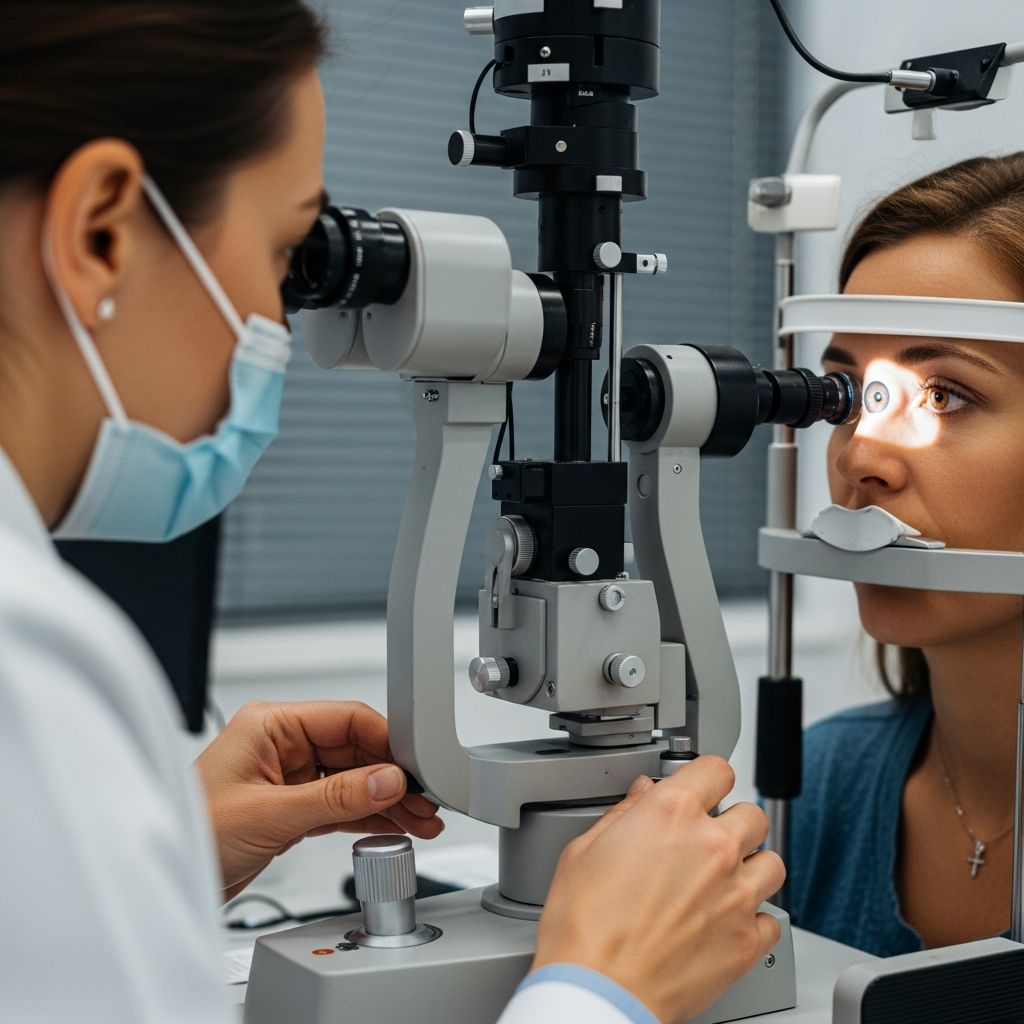
The slit lamp biomicroscope represents one of the most versatile diagnostic instruments in modern ophthalmology, serving as a fundamental tool for evaluating the health and structural integrity of the eye’s anterior segment. This instrument combines a powerful illumination system with magnification capabilities to provide three-dimensional visualization of ocular tissues. For clinicians seeking to maximize diagnostic accuracy and patient comfort, understanding the technical nuances of slit lamp operation proves essential.
Understanding Slit Lamp Architecture and Components
The slit lamp’s design integrates several coordinated mechanical systems that work synergistically to facilitate detailed eye examination. The instrument comprises two primary functional arms: the illumination arm containing the light source and slit beam apparatus, and the viewing arm equipped with dual eyepieces and the biomicroscope. Each component contributes to the overall capability of the system, and operators must understand how these elements interact.
The illumination arm houses the primary light source, which can be manipulated through various adjustments. The beam height adjusts through a center screw mechanism, typically set at 10mm for standard examination, while filter options including the specialized cobalt blue light for fluorescein evaluation can be accessed by rotating adjustment screws. The viewing arm contains adjustable eyepieces calibrated for individual examiner interpupillary distance and refractive correction.
The slit lamp functions as a low-power binocular microscope mounted on a portable base for convenient accessibility and optimal visualization angles. Understanding this architectural foundation allows practitioners to troubleshoot equipment issues and optimize positioning for various clinical scenarios.
Foundational Positioning and Patient Preparation
Successful slit lamp examination begins with proper patient positioning, which directly influences the quality of visualization and overall examination duration. Patients should be seated facing the slit lamp apparatus with their head stabilized by resting the chin firmly on the chin rest while the forehead contacts the head support structure. This stabilization prevents unwanted head movement that could compromise image quality or result in accidental contact between ocular structures and the instrument.
Before initiating the examination sequence, preliminary equipment checks ensure optimal functionality. The rheostat should be adjusted to 100% illumination intensity, and the filter lever positioned to the far left position to eliminate any light filtering during initial observation. This baseline configuration allows the clinician to establish proper alignment before introducing specialized filters or reducing beam width for detailed assessment.
Communication with the patient regarding the examination process reduces anxiety and facilitates cooperation. Explaining that the slit lamp does not touch the eye, that the light sensation is temporary, and that maintaining steady fixation improves examination quality helps establish patient confidence and participation.
Illumination Optimization: The Foundation of Clear Visualization
Effective illumination represents the cornerstone of diagnostic slit lamp examination, as proper light control directly determines visualization quality and the ability to detect subtle pathology. The slit lamp’s illumination beam can be focused into a very thin slit configuration, which allows precise determination of the depth and size of identified abnormalities. This adjustability transforms the instrument from a general survey tool into a precision diagnostic device.
Related Stories



The beam configuration should be systematically adjusted based on the anatomical structure under examination. Examination of the cornea should begin with a wide beam of light, and if abnormalities are identified, the beam should be narrowed into a very thin slit with the illumination arm moved to an oblique angle relative to the cornea surface. This angled oblique illumination allows visualization of all corneal layers in three-dimensional perspective, including the epithelium, stroma, Descemet membrane, and endothelium.
The vertical and horizontal beam dimensions require independent adjustment to match examination objectives. Broadening the beam provides comprehensive tissue illumination during initial survey examinations, while narrowing the beam serves dual purposes: enhancing patient comfort by reducing overall light exposure and allowing depth assessment of anterior chamber structures and focal pathology.
Specialized filter options expand diagnostic capabilities significantly. The cobalt blue filter, essential for fluorescein examination, enables identification of corneal epithelial defects, abrasions, and ulcerations through the visualization of tear film staining patterns. Practitioners should maintain facility with filter selection and positioning to transition smoothly between examination phases.
Magnification Application Across Examination Phases
The slit lamp’s magnification capability permits precision viewing ranging from contact lens edge design assessment to detailed visualization of individual corneal layers. However, magnification represents a tool requiring strategic application rather than continuous maximum settings.
Initial examination phases typically employ lower magnification levels to establish overall tissue appearance and identify gross abnormalities. This approach allows rapid survey of larger tissue areas and helps orient the examiner to the patient’s ocular anatomy. As specific findings emerge or particular anatomical regions require detailed evaluation, magnification should be progressively increased to focus on the area of interest.
Higher magnification settings prove particularly valuable when examining:
- Corneal clarity and potential opacity patterns
- Anterior chamber cell and flare quantification
- Iris surface structure and detailed pigmentation patterns
- Lens opacity characteristics and cataract morphology
- Fluorescein staining patterns and corneal defect boundaries
Clinicians should avoid the common error of initiating examination at maximum magnification, as this severely restricts the field of view and complicates proper tissue localization. Progressive magnification adjustment allows more efficient examination sequences and reduces patient fatigue from prolonged fixation on narrow visual fields.
Systematic Examination Sequence and Regional Assessment
Implementing a consistent examination sequence ensures comprehensive evaluation while preventing omission of important structures. A systematic approach begins with eyelid and lash examination, directing the light source toward the lower and upper lashes while observing for abnormalities such as entropion, ectropion, and blepharitis signs.
The examination sequence progresses logically through adjacent anatomical regions:
| Examination Region | Key Structures Evaluated | Notable Findings to Assess |
|---|---|---|
| Eyelids and Cilia | Upper/lower lid margins, lash distribution, meibomian glands | Entropion, ectropion, blepharitis, chalazia, hordeola |
| Conjunctiva and Sclera | Bulbar and tarsal conjunctiva, scleral surface, vascular injection patterns | Injection, chemosis, foreign bodies, subconjunctival hemorrhage |
| Cornea | Epithelium, stroma, Descemet membrane, endothelium in layered perspective | Abrasions, ulcerations, scarring, infiltrates, opacity patterns |
| Anterior Chamber | Aqueous humor clarity, chamber depth and angle configuration | Hyphema (blood), hypopyon (pus cells), inflammatory cells, flare |
| Iris and Pupil | Iris pigmentation, surface texture, iridopupillary margin | Posterior synechiae, iridodialysis, iris atrophy, pupil reactivity |
| Lens | Nuclear clarity, cortical opacity, posterior subcapsular regions | Cataract morphology, anterior/posterior lens capsule integrity |
Examination of the conjunctiva and sclera should include positioning requests for all four directions of gaze to visualize different quadrants and detect lesions or injection patterns that may be localized. Similarly, the tarsal conjunctiva on the posterior eyelid surface requires special positioning techniques, with the lower tarsal surface examined by pressing posteriorly under the lower eyelid when the patient looks upward, while upper tarsal conjunctiva evaluation necessitates eyelid eversion.
Clinical Applications and Diagnostic Capabilities
Slit lamp examination serves essential diagnostic functions in identifying abnormalities caused by injury or infection and diagnosing conditions including cataracts, dry eye syndrome, keratoconus, diabetic retinopathy, Fuchs’ dystrophy, uveitis, glaucoma, retinal detachment, and macular degeneration. The instrument’s versatility extends beyond initial diagnosis to longitudinal disease monitoring.
The slit lamp examination proves particularly useful in situations where magnification facilitates identification of anterior segment pathology, including assessment of eyelid insult, conjunctival conditions, corneal abnormalities, anterior chamber findings, iris changes, and lens opacity. The examination may constitute part of a complete painful red eye workup that incorporates tonometry, fundoscopy, visual acuity assessment, and fluorescein evaluation.
In certain cases, fluorescein eye drops—yellow colored drops that temporarily stain the tear film on the ocular surface—may be administered to facilitate detection of corneal injuries and other surface abnormalities. The slit lamp can also examine the optic nerve and retina located at the back of the eye, extending its utility beyond anterior segment assessment when combined with appropriate supplemental lenses.
Advanced Techniques for Enhanced Diagnostic Accuracy
Experienced slit lamp operators develop refined techniques that enhance diagnostic yield and efficiency. Mastering subtle beam angle adjustments allows differentiation between superficial and deep corneal pathology. Rapid beam width transitions between survey and detailed assessment modes streamline examination flow without requiring separate equipment adjustments.
The ability to interpret the three-dimensional appearance of lesions based on light reflex patterns and shadow formation represents an advanced skill that develops through consistent practice. Understanding how oblique illumination affects the apparent depth and extent of abnormalities allows more accurate assessment and documentation.
Clinicians should also develop proficiency with auxiliary diagnostic maneuvers that enhance slit lamp capabilities. Pressure application to various eyelid regions reveals anatomical relationships and facilitates examination of deeper glandular structures. Strategic patient gaze positioning optimizes visualization of specific quadrants or regional pathology.
Frequently Asked Questions
- What is the optimal rheostat setting for slit lamp examination?
- The rheostat should be dialled to 100% for initial examination with filter lever positioned at the far left position to remove light filters, with adjustments made as needed based on patient comfort and specific examination requirements.
- Should patients wear corrective lenses during slit lamp examination?
- It is generally recommended to keep glasses or contact lenses on during viewing arm eyepiece adjustments, with the power setting maintained at 0.
- How does oblique illumination improve corneal assessment?
- Oblique angle positioning of the illumination arm allows visualization of all corneal layers in three dimensions: epithelium closest to the light source, stroma, Descemet membrane, and endothelium furthest away.
- When should fluorescein drops be used during examination?
- Fluorescein eye drops may be administered in cases where corneal injuries or surface abnormalities require visualization through tear film staining.
- Can slit lamp examination assess posterior eye structures?
- While the slit lamp typically focuses on anterior segment structures, it can be used with appropriate supplemental lenses to examine the optic nerve and retina.
Conclusion
Proficiency in slit lamp examination represents a cornerstone competency for ophthalmologists, optometrists, and other eye care providers. Mastery of illumination optimization, magnification application, and systematic examination sequences transforms this versatile instrument into a powerful diagnostic tool. Practitioners who invest in developing refined slit lamp techniques enhance diagnostic accuracy, improve efficiency, and ultimately deliver superior patient care through comprehensive anterior segment evaluation.
References
- Slit Lamp Examination – OSCE Guide — Geeky Medics. 2024. https://geekymedics.com/slit-lamp-examination-osce-guide/
- Slit-Lamp Examination — Bruce Boyle, OD. https://bruceboyleod.com/slit-lamp-examination
- Slit Lamp Basics for the Contact Lens Fitter — 20/20 Magazine. https://www.2020mag.com/ce/slit-lamp-basics-for-the
- Mastering Minor Care: Slit Lamp Exam — Taming the SRU. https://www.tamingthesru.com/blog/masteringminorcare/slitlampexam
Similar Articles








Read full bio of medha deb