Mastering Surface Ablation: 15 Years of Insights
Explore 15 years of advanced techniques in surface ablation with mitomycin C for optimal refractive outcomes and patient safety.
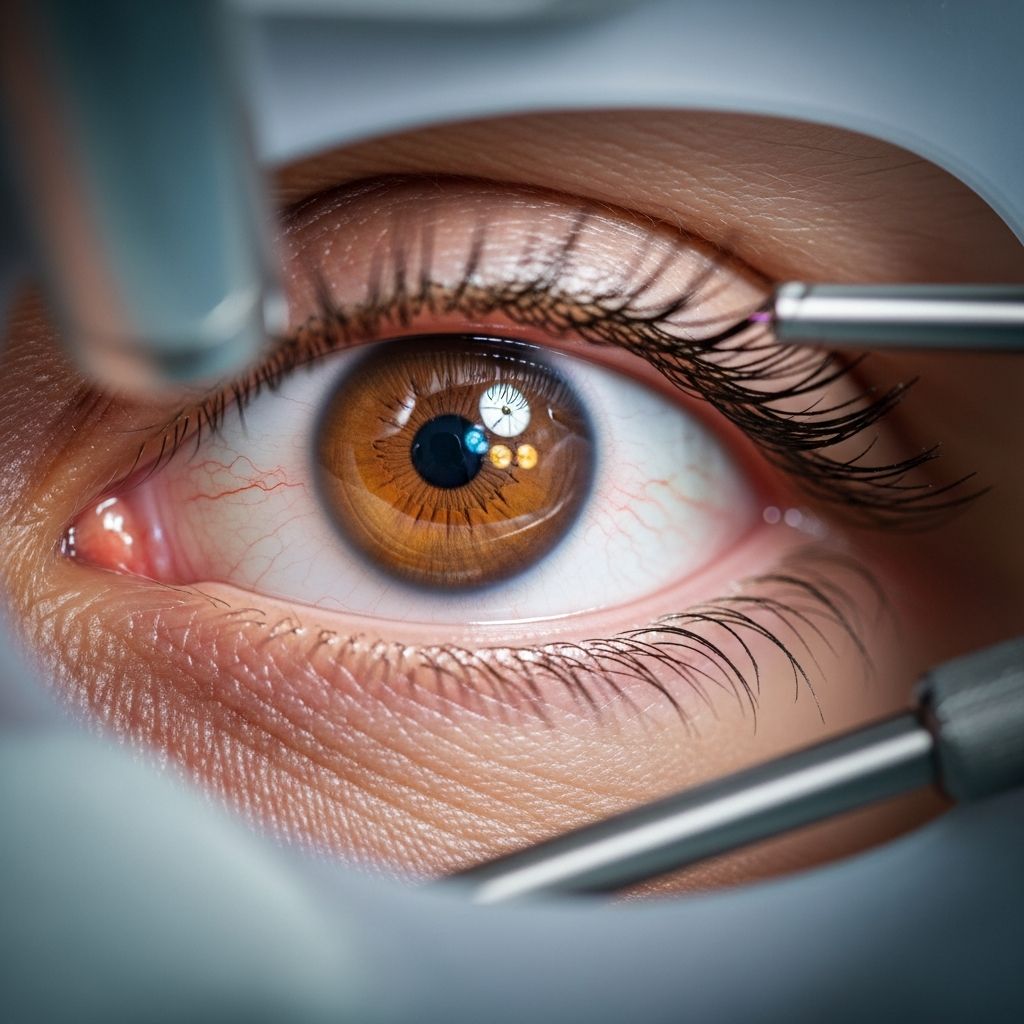
Surface ablation represents a cornerstone of refractive surgery, offering a flapless alternative to LASIK for reshaping the cornea to correct vision impairments like myopia, hyperopia, and astigmatism. Over the past 15 years, refinements in techniques, particularly the integration of mitomycin C (MMC), have elevated its safety and efficacy, making it ideal for patients with thin corneas or high prescriptions.
The Evolution of Surface Ablation Techniques
Surface ablation, also known as photorefractive keratectomy (PRK) or advanced surface ablation (ASA), involves removing the corneal epithelium to expose the underlying stroma for excimer laser reshaping. Unlike LASIK, which creates a corneal flap, this method preserves stromal integrity, reducing risks like ectasia. Key variants include mechanical PRK using a blunt blade, LASEK with alcohol-assisted epithelial loosening, epi-LASIK preserving epithelium as a flap, and transepithelial PRK for direct laser epithelial ablation.
Meta-analyses of multiple trials show these approaches yield comparable effectiveness, predictability, and safety within six months post-surgery, with no significant differences in uncorrected visual acuity. This versatility allows surgeons to tailor procedures to individual anatomies.
Role of Mitomycin C in Preventing Haze
Mitomycin C, an antimetabolite, inhibits fibroblast proliferation to minimize corneal haze—a common concern in surface ablation due to stromal removal. Applied intraoperatively at low concentrations (typically 0.02%), MMC significantly reduces scarring, especially in moderate to high corrections. Long-term data confirms its role in achieving clearer postoperative outcomes without increasing endothelial toxicity when used judiciously.
Studies highlight wavefront-guided surface ablation with MMC induces fewer higher-order aberrations than wavefront-optimized methods, benefiting patients with pre-existing corneal irregularities. This combination has become standard for optimizing visual quality.
Ideal Candidates and Patient Selection
- Thin corneas: ASA excels where LASIK is contraindicated, as it avoids flap creation and deeper penetration.
- High myopia or astigmatism: Superior biomechanical stability preserves corneal strength.
- Dry eye sufferers: No flap reduces nerve disruption, easing postoperative dry eye.
- Athletes or active lifestyles: Flapless design minimizes trauma risk from contact sports.
- Previous corneal surgery: Suitable for enhancements or irregularities post-keratoplasty.
Contraindications include active autoimmune diseases, uncontrolled diabetes, or corneas thinner than 450 microns post-ablation. Comprehensive preoperative mapping via corneal tomography ensures suitability.
Step-by-Step Procedural Guide
The procedure is outpatient, lasting 10-20 minutes per eye under topical anesthesia.
- Preparation: Anesthetic drops numb the eye; a speculum holds lids open.
- Epithelial removal: Options include alcohol (20% for 20-30 seconds), mechanical debridement, or transepithelial laser (50-70 microns).
- Laser ablation: Excimer laser pulses reshape stroma based on wavefront or topography data, typically 30-60 seconds per eye.
- MMC application: Sponge soaked in 0.02% MMC applied for 12-60 seconds, then irrigated thoroughly.
- Bandage contact lens: Placed to protect and promote epithelial regrowth (3-7 days).
Post-op, patients receive topical steroids, antibiotics, and lubricants. Pain peaks at 24-48 hours but subsides with oral analgesics.
Optimizing Outcomes: Advanced Tips
| Factor | Technique | Benefit |
|---|---|---|
| Ablation Depth | Minimize to <60 microns | Reduces haze risk |
| Centration | Wavefront/topography-guided | Improves night vision |
| MMC Dosage | 0.02% for 12s (low myopia) | Balances efficacy/safety |
| Post-op Care | Bandage lens + steroids taper | Accelerates healing |
Related Stories



Smooth ablation profiles via optimized laser pulses enhance epithelial adhesion. For astigmatism, topography-guided treatments correct irregularities post-keratoplasty or radial keratotomy.
Recovery Timeline and Management
Healing differs from LASIK: vision stabilizes over 1-3 months.
- Day 1-4: Discomfort, photophobia; bandage lens removed once epithelium heals.
- Week 1: 20/40 vision common; avoid rubbing eyes.
- Month 1: 20/25 or better; haze resolves with MMC.
- 6 Months: Final refraction; >95% achieve 20/20.
Monitor for haze (rare with MMC), infection (0.1% incidence), or regression. Enhancements possible after 3 months if needed.
Expanding Applications Beyond Standard Refractive Errors
Surface ablation’s utility extends to complex cases:
- Post-keratoplasty: Topography-guided PRK corrects residual astigmatism, improving uncorrected acuity.
- Enhancements: Safe for LASIK regression, preserving stroma.[49-53]
- Irregular corneas: Treats post-RK hyperopia or ectasia suspects.
- Pediatric amblyopia: Reduces anisometropia, enhancing stereopsis in non-compliant children.[57-60]
Phakic IOLs complement for extreme myopia post-DALK.
Pros and Cons: Surface Ablation vs. LASIK
| Aspect | Surface Ablation | LASIK |
|---|---|---|
| Pain/Recovery | Moderate pain, 1-4 days; 1-month vision | Minimal pain, 1-day recovery |
| Corneal Strength | Preserved (no flap) | Flap-related ectasia risk |
| Dry Eye | Less aggravation | More common |
| Cost/Complexity | Similar cost; longer follow-up | Quicker procedure |
Recent Innovations and Future Directions
Transepithelial lasers automate epithelial removal for precision. AI-driven ablation planning personalizes treatments. Long-term studies affirm stability up to 10 years, with MMC minimizing regression. Research explores femtosecond integration for hybrid procedures.
Frequently Asked Questions (FAQs)
Is surface ablation painful?
Expect discomfort for 2-4 days, managed with medications; far less than early PRK eras.
How long until I can drive?
Typically 5-7 days once bandage lens is out and vision clears.
Does MMC have side effects?
Rare endothelial damage with proper dosing; millions safely treated.
Can I get surface ablation if I have thin corneas?
Yes, it’s the preferred option.
What’s the success rate?
>95% achieve 20/40 or better; 80-90% 20/20 uncorrected.
Patient Testimonials and Real-World Results
Many report life-changing vision without glasses. One athlete noted, “Perfect for my sport—no flap worries.” Data supports high satisfaction, especially for non-LASIK candidates.
References
- Surface ablation laser surgery: Bibliometric and visualized analysis — PMC/NCBI. 2024. https://pmc.ncbi.nlm.nih.gov/articles/PMC11557019/
- Advanced Surface Ablation — Sutton Linder Sutton. Accessed 2026. https://suttonlinder.com/advanced-surface-ablation/
- Refractive Surgery: Advanced Surface Ablation — Southwestern Eye Associates. Accessed 2026. https://www.sweye.net/refractive-surgery/advanced-surface-ablation/
- PRK (Advanced Surface Ablation Photorefractive Keratectomy) — University of Utah Health. Accessed 2026. https://healthcare.utah.edu/moran/lasik/advanced-surface-ablation-photorefractive-keratectomy
- Advanced surface ablation for the eyes — See Clear. 2022-09-15. https://www.seeclear.com/2022/09/15/advanced-surface-ablation-for-the-eyes/
- PRK (Surface Ablation) — Carlsbad Eye Care. Accessed 2026. https://www.carlsbad-eye-care.com/Content2/PRK/whatisPRK/default.aspx
Similar Articles








Read full bio of Sneha Tete