Toric IOL Implantation: Precision Techniques For Stable Results
Expert strategies for precise toric intraocular lens placement to optimize astigmatism correction in cataract surgery.
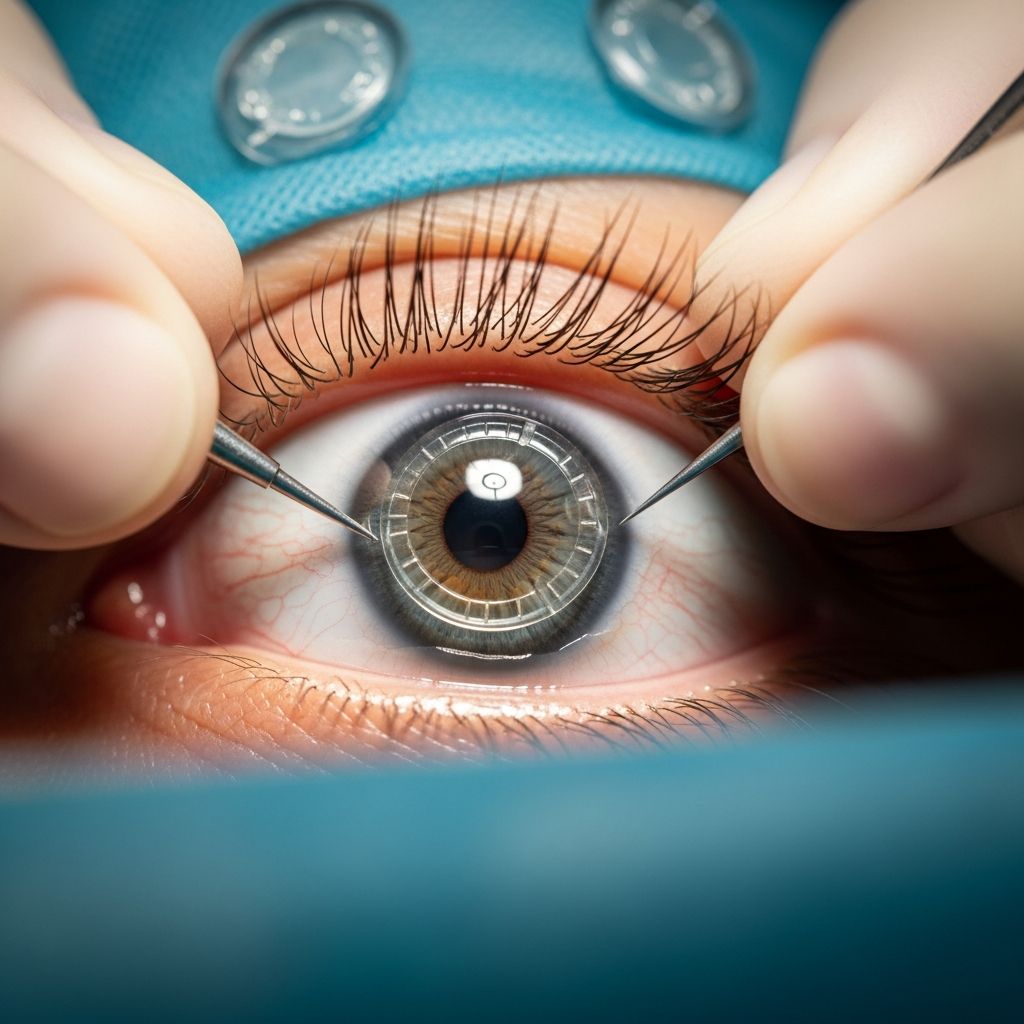
Toric intraocular lenses (IOLs) represent a significant advancement in cataract surgery, enabling simultaneous correction of astigmatism and restoration of clear vision. These specialized lenses correct corneal irregularities that cause blurred vision at various distances. Successful implantation demands meticulous preoperative planning, precise intraoperative execution, and diligent postoperative monitoring to minimize rotation and maximize refractive accuracy.
Understanding Toric IOL Fundamentals
Toric IOLs feature asymmetric optical powers designed to neutralize astigmatism. Unlike spherical IOLs, they require exact alignment with the patient’s steep corneal meridian. Misalignment by even 5-10 degrees can reduce corrective efficacy by up to 30%, underscoring the need for rigorous protocols. Modern toric IOLs, such as those with enhanced haptic designs, offer improved rotational stability through greater capsular bag contact, spanning up to 154 degrees for even pressure distribution.
Key advantages include reduced dependence on glasses post-surgery and enhanced quality of life for patients with moderate to high astigmatism. However, outcomes hinge on accurate biometry, incision planning, and axis marking to account for surgically induced astigmatism.
Preoperative Assessment and Planning
Effective toric IOL implantation begins with comprehensive preoperative evaluation. High-resolution corneal topography and tomography measure total corneal astigmatism, distinguishing anterior from posterior contributions. Biometry using optical low-coherence reflectometry or swept-source technology determines axial length, keratometry, and IOL power.
Online calculators integrate these metrics to recommend IOL model, cylinder power, and alignment axis. Factors like posterior corneal astigmatism and incision location influence calculations. Surgeons often adjust for expected surgically induced astigmatism, typically 0.5-1.0 diopters with clear corneal incisions.
- Corneal Astigmatism Calculation: Combine anterior and posterior surface data for accurate total magnitude.
- Spherical Equivalent Determination: Balance emmetropia targets with astigmatism correction.
- Incision Site Optimization: Plan temporal or superior incisions to couple with astigmatism axis.
Reference marking occurs preoperatively in an upright position to avoid cyclotorsion. Techniques include freehand ink, slit-lamp assisted, or appositional bubble markers under topical anesthesia on a dry ocular surface.
Intraoperative Techniques for Precision
Surgery proceeds under topical, sub-Tenon, or peribulbar anesthesia, with sedation for anxious patients. Standard phacoemulsification or femtosecond laser-assisted cataract surgery (FLACS) removes the natural lens, followed by capsulorhexis and hydrodissection.
Axis Marking Methods
Intraoperative alignment uses reference marks aligned to a horizontal Mendez gauge. The target axis is then marked for IOL orientation. Manual methods remain reliable, especially when digital systems are unavailable.
| Method | Advantages | Disadvantages |
|---|---|---|
| Manual Ink Marking | Cost-effective, no technology dependence | Potential for smudging or fading |
| Bubble Marker | Appositional accuracy | Requires dry surface |
| Image-Guided Systems | High precision, patient comfort | Equipment cost, learning curve |
Capsular Bag Preparation
Related Stories



Thorough cortex removal and capsule polishing minimize posterior capsular opacification risks, which could induce IOL tilt. Cohesive ophthalmic viscosurgical devices (OVDs) like Healon inflate the bag effectively and facilitate complete removal, crucial for stability.
IOL Insertion and Alignment
Load the toric IOL slightly anticlockwise (3-5 degrees) to the target axis. Insert under microscope fixation, centering via Purkinje image. Preloaded systems streamline delivery through 2.2-2.4 mm incisions, with dual silicone rings ensuring smooth plunger control.
Complete viscoelastic removal from anterior chamber and bag underside prevents rotation. Techniques like the soft shell shuffle—layering OVD anteriorly and balanced salt solution (BSS) in the bag—aid rapid evacuation. Hydroimplantation post-OVD removal further secures positioning.
Intraoperative aberrometry refines alignment by measuring residual astigmatism, targeting no rotation required (NRR) readings.
Enhancing Rotational Stability
Post-implantation rotation is the primary failure mode, with rates under 5% in optimized cases. Stability factors include haptic design (e.g., anchor wing loops), complete OVD evacuation, and chamber stabilization via stromal hydration.
- Haptic Optimization: 154-degree contact distributes capsular forces evenly.
- OVD Management: Prioritize cohesive agents; ensure BSS flush beneath IOL.
- Final Checks: Confirm axis via markings, inject intracameral cefuroxime, hydrate without obscuring haptics.
For high astigmatism (>3.0 D), combine toric IOLs with astigmatic keratotomy. Leave eyes slightly softer than routine to maximize capsule-IOL apposition.
Postoperative Management and Monitoring
Patients receive topical steroids, NSAIDs, and antibiotics. Refraction stabilizes by week 4; monitor for rotation via slit-lamp exam. Early detection (within 24-48 hours) allows repositioning if >10 degrees off-axis.
Counsel on symptoms like halos or blur. Long-term, toric IOLs yield >90% spectacle independence for distance vision.
Advanced Tools and Innovations
Digital systems like intraoperative wavefront aberrometers and image-guided markers enhance precision, mitigating manual errors. Femtosecond laser capsulorhexis improves centration. Preloaded injectors reduce handling trauma, broadening power ranges (-10 to +30 D).
Pivot techniques using assistant microscopes maintain visibility during alignment.
Common Challenges and Solutions
| Challenge | Solution |
|---|---|
| Cyclotorsion | Upright preoperative marking |
| OVD Retention | Bimanual irrigation/aspiration |
| Intraoperative Decenteration | Purkinje centering, aberrometry |
| Postop Rotation | Early slit-lamp follow-up |
Frequently Asked Questions (FAQs)
What is the success rate of toric IOLs?
>95% achieve <0.75 D residual astigmatism with proper technique.
Who is a candidate for toric IOLs?
Patients with >1.0 D regular corneal astigmatism undergoing cataract surgery.
How do you prevent IOL rotation?
Complete OVD removal, stable haptics, and prompt postoperative checks.
Can toric IOLs be used in FLACS?
Yes, laser precision aids capsulorhexis for better centration.
What if alignment is off postoperatively?
Repositioning within 1-2 weeks yields outcomes comparable to primary surgery.
Future Directions in Toric IOL Technology
Light-adjustable toric IOLs allow postoperative customization. AI-driven calculators predict outcomes incorporating posterior cornea and SIA dynamically. Extended-depth-of-focus toric designs address presbyopia alongside astigmatism.
These evolutions promise even higher predictability, reducing enhancement rates below 1%.
References
- Toric Intraocular Lenses — StatPearls, NCBI Bookshelf. 2023-10-27. https://www.ncbi.nlm.nih.gov/books/NBK592396/
- Toric IOLs — EyeWiki, American Academy of Ophthalmology. 2024-01-15. https://eyewiki.org/Toric_IOLs
- Manual and Image-Guided Techniques: Optimizing Toric IOL Implantation — Review of Ophthalmology. 2023-07-01. https://www.reviewofophthalmology.com/article/tips-and-tricks-for-toric-iols
- Intraoperative Tips for Toric IOL Implantation — CRSToday Europe. 2023-05-12. https://crstodayeurope.com/articles/are-you-all-set-for-perfect-astigmatism-outcomes/intraoperative-tips-for-toric-iol-implantation/
- Ten Tips for Toric Lens Implantation — The Ophthalmologist. 2014-01-01. https://theophthalmologist.com/issues/2014/articles/jan/ten-tips-for-toric-lens-implantation
Similar Articles








Read full bio of Sneha Tete