Mastoidectomy: Procedure, Recovery, and What to Expect
Complete guide to mastoidectomy surgery: types, recovery, risks, and outcomes for ear infections.
Understanding Mastoidectomy: A Comprehensive Guide to Ear Surgery
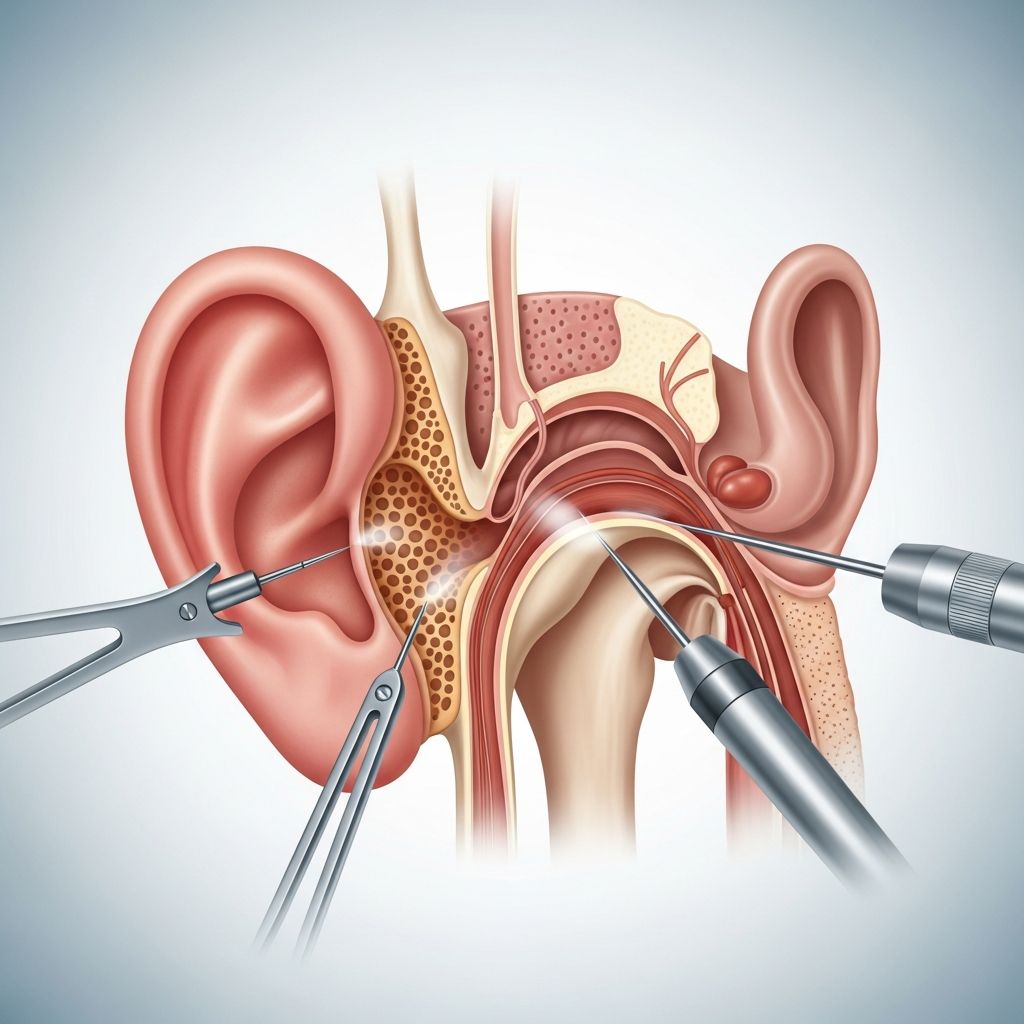
A mastoidectomy is a surgical procedure designed to remove an infection from the mastoid bone, which is located directly behind the ear. The mastoid bone has a unique honeycomb-like structure with air-filled spaces that connect to the middle ear. When ear infections spread from the middle ear to these air cells, a bacterial infection called mastoiditis can develop. This condition requires prompt medical attention, and in cases where antibiotics prove ineffective, mastoidectomy becomes a necessary intervention to prevent serious complications and preserve hearing function.
What Is the Mastoid Bone?
The mastoid bone is a critical part of your temporal bone, located behind your ear. Its honeycomb-like structure contains numerous air-filled cavities that are connected to your middle ear space. This anatomical connection, while normal, creates a pathway for infections to spread from the middle ear to the mastoid bone itself. The mastoid bone serves important functions in hearing and balance, which is why preservation of this structure and surrounding tissues is a key consideration during surgical planning.
Indications for Mastoidectomy Surgery
Your doctor will recommend a mastoidectomy if you meet certain clinical criteria. Understanding these indications helps explain why your physician may suggest this procedure.
- Acute mastoiditis that has not responded to antibiotic therapy
- Chronic mastoiditis with persistent symptoms and recurrent infections
- Complications of mastoiditis, including meningitis or sepsis risk
- Cholesteatoma, an abnormal collection of skin cells in the middle ear that can erode bone
- Severe hearing loss risk from progressive infection
- Facial nerve paralysis caused by mastoid infection
- Subperiosteal abscess formation requiring drainage
Types of Mastoidectomy Procedures
Several types of mastoidectomy exist, each varying in extent and surgical complexity. Your surgeon will recommend the most appropriate type based on your specific condition, anatomy, and hearing preservation goals.
Simple Mastoidectomy
In a simple mastoidectomy, the surgeon opens the mastoid bone and removes only the infected area. This is the least invasive option and is used when infection is limited to specific air cells. The procedure preserves the ear canal structure and typically has minimal impact on hearing function.
Canal Wall Up Mastoidectomy
This procedure removes more bone than a simple mastoidectomy to provide better access to the middle ear while maintaining the integrity of the ear canal wall. Surgeons use this approach when they need improved visualization to completely remove infection or disease while preserving normal ear canal anatomy.
Canal Wall Down (Radical) Mastoidectomy
A canal wall down mastoidectomy becomes necessary when severe infection has significantly damaged the ear canal. In this procedure, the surgeon removes the canal wall, creating a common cavity between the ear canal and mastoid. While this approach effectively eliminates infection, it typically results in some degree of hearing loss and requires lifelong ear precautions to prevent water entry during swimming or bathing.
Modified Radical Mastoidectomy
In a modified radical mastoidectomy, the surgeon leaves some middle ear bones in place and reconstructs the eardrum. This approach offers a middle ground between canal wall up and canal wall down procedures, providing disease eradication while attempting to preserve better hearing function than radical procedures. The preserved ossicles and reconstructed eardrum may allow for improved hearing outcomes compared to full radical mastoidectomy.
Related Stories



Factors Influencing Procedure Selection
Your surgeon considers multiple factors when determining which mastoidectomy type is most appropriate for your situation:
- Your individual ear anatomy and bone pneumatization patterns
- The extent and severity of the infection or disease
- Risk assessment for hearing loss and balance problems
- Your ability to comply with post-operative follow-up care requirements
- Presence of complications such as facial nerve involvement
- Previous ear surgeries or scarring
Potential Risks and Complications
Like any surgical procedure, mastoidectomy carries certain risks that you should understand before proceeding. Your surgeon will discuss these with you during your pre-operative consultation.
- Hearing loss or worsening of existing hearing problems
- Dizziness or vertigo from inner ear disturbance
- Facial nerve injury causing facial weakness or paralysis
- Infection at the surgical site
- Bleeding or hematoma formation
- Cerebrospinal fluid leak if the procedure extends near the brain
- Chronic ear drainage in canal wall down procedures
- Tinnitus or ringing in the ear
- Taste changes from chorda tympani nerve involvement
- Anesthesia-related complications
Pre-Operative Preparation
Proper preparation before your mastoidectomy is essential for ensuring a smooth surgical experience and optimal recovery. Your healthcare team will provide specific instructions tailored to your situation.
Pre-Operative Instructions
In the weeks leading up to your surgery, follow all instructions provided by your surgical team. These typically include stopping certain medications that might interfere with anesthesia or increase bleeding risk. Inform your doctor about all medications, supplements, and herbal remedies you’re taking. Do not eat or drink after midnight on the night before your surgery, as general anesthesia requires an empty stomach to prevent aspiration complications.
Arranging Transportation
Since general anesthesia will be used during the procedure, you cannot drive yourself home afterward. Arrange for a trusted friend or family member to pick you up and stay with you for the remainder of the day. This person should be available to help you with daily activities as you recover from the anesthesia’s effects.
Medical Clearance
Your surgeon may recommend pre-operative testing such as blood work, electrocardiogram, or pulmonary function tests, depending on your age and medical history. Ensure all recommended tests are completed before your surgery date.
What Happens During the Mastoidectomy Procedure
Understanding the surgical process can help reduce anxiety and set appropriate expectations for your experience.
Anesthesia Administration
Upon arrival at the surgical facility, an anesthesiologist will place an intravenous line and administer general anesthesia. You will be completely asleep during the entire procedure and will not feel any pain. The anesthesia team monitors your vital signs throughout the surgery to ensure your safety.
Surgical Technique
Your surgeon will make a small incision directly behind your ear, typically measuring one to two inches. Using an operating microscope and specialized instruments, the surgeon carefully opens the mastoid bone. The surgeon then identifies and removes the infected portions of bone or ear tissue using precision drilling techniques. The specific extent of bone removal depends on the type of mastoidectomy being performed and the disease severity.
Closure and Recovery Preparation
After removing all infected tissue, your surgeon closes the incision with absorbable or removable stitches and applies a sterile bandage to protect the surgical site. The entire procedure typically takes two to three hours, though complexity and extent may cause some variation in operative time.
Post-Operative Recovery
Recovery from mastoidectomy is generally straightforward, though patience and proper self-care are essential for optimal healing.
Hospital Stay
Most patients remain in the hospital overnight following their procedure. The medical team monitors your recovery and manages any immediate post-operative symptoms. You’ll typically be discharged the next morning once your surgeon confirms satisfactory progress and you’re stable enough for home recovery.
Early Recovery Period
During the first week after surgery, you may experience mild discomfort, headache, or pressure sensation in the ear region. This is normal and manageable with prescribed pain medications. Some patients experience temporary dizziness, which usually resolves within a few days as the inner ear adjusts. Keep the surgical incision dry and protected as directed by your surgeon.
Activity Restrictions
Avoid strenuous activities, heavy lifting, and vigorous exercise for at least two to three weeks following surgery. Refrain from swimming or allowing water to enter your ear until your surgeon confirms complete healing. Follow specific instructions regarding when you can return to work and normal activities.
Post-Operative Medications
Your surgeon will prescribe antibiotics to prevent infection and pain medications to manage discomfort. Take all medications exactly as directed, completing the full antibiotic course even if you feel better. Some patients require ear drops if the surgical site includes ear canal modifications.
Follow-Up Appointments
Attend all scheduled follow-up appointments, which typically occur at one to two weeks post-operatively and then at six weeks and three months. During these visits, your surgeon examines the surgical site, verifies proper healing, and assesses your hearing and balance function. More extensive procedures like radical or modified radical mastoidectomies require additional follow-up appointments for professional mastoid cleanings to maintain ear health.
Mastoidectomy Outlook and Prognosis
Understanding expected outcomes helps establish realistic expectations for your surgical results.
Success Rates
In the majority of cases, mastoidectomy successfully eliminates the infection in your mastoid bone. Research demonstrates that mastoidectomy achieves an estimated 99.7% success rate for treating acute mastoiditis when compared to medical therapy alone, which has a 72.9% success rate. Complete infection resolution is the expected outcome for most patients.
Hearing Outcomes
Hearing preservation varies depending on the procedure type and pre-operative hearing status. Simple mastoidectomy and canal wall up procedures typically preserve existing hearing function. However, canal wall down and radical mastoidectomy procedures commonly result in some degree of hearing loss due to eardrum and ossicle removal or modification. Your surgeon will discuss specific hearing expectations based on your procedure type and individual circumstances.
Long-Term Management
Following successful mastoidectomy, most patients experience complete resolution of mastoiditis symptoms. However, the type of procedure performed may affect long-term ear care. Patients who undergo canal wall down procedures require lifelong water precautions and may need periodic professional ear cleaning. Your surgeon will provide specific long-term care instructions based on your particular procedure.
Special Considerations and Complications
In some cases, mastoidectomy may be performed alongside other procedures. For instance, cholesteatoma—an abnormal collection of skin cells within the middle ear—often requires mastoidectomy in combination with tympanoplasty for complete treatment. The modified radical mastoidectomy and retrograde mastoidectomy are specialized approaches that enhance visualization while minimizing surgical extent, offering favorable recidivism rates and good postoperative hearing outcomes for appropriate candidates.
Frequently Asked Questions About Mastoidectomy
Q: How long does it take to recover from mastoidectomy?
A: Initial recovery typically takes one to two weeks, with full healing occurring within six to eight weeks. However, you may need several weeks before returning to all normal activities, especially strenuous exercise and water exposure.
Q: Will I lose my hearing after mastoidectomy?
A: Hearing outcomes depend on the procedure type. Simple and canal wall up procedures typically preserve existing hearing. Canal wall down and radical procedures may result in some hearing loss. Your surgeon will discuss specific hearing risks based on your individual situation.
Q: Can mastoidectomy be performed on children?
A: Yes, mastoidectomy can be performed on children and is effective for treating acute mastoiditis in pediatric patients. The surgical technique may be adapted to accommodate smaller anatomy.
Q: What are the alternatives to mastoidectomy?
A: Medical treatment with antibiotics and myringotomy (eardrum ventilation) may be attempted first. These treatments succeed in approximately 72% of cases. Mastoidectomy is reserved for cases that fail medical management or present with severe complications.
Q: Will I need to keep my ear dry after surgery?
A: Yes, particularly for canal wall down procedures. You should avoid swimming and shower with ear protection until your surgeon confirms complete healing and provides clearance for water exposure.
Q: How much pain should I expect after mastoidectomy?
A: Most patients experience mild discomfort rather than severe pain after mastoidectomy. Prescribed pain medications effectively manage post-operative discomfort in most cases.
References
- What Is a Mastoidectomy? Types, Indications, and More — WebMD. 2024. https://www.webmd.com/cold-and-flu/ear-infection/what-is-mastoidectomy
- Modified Radical and Retrograde Mastoidectomy — PubMed/National Center for Biotechnology Information. 2024. https://pubmed.ncbi.nlm.nih.gov/39244463/
- Medical Versus Surgical Treatment of Pediatric Acute Mastoiditis — The Laryngoscope, PubMed. 2019. https://pubmed.ncbi.nlm.nih.gov/30284265/
- Cholesteatoma: Symptoms, Causes & Treatment — Cleveland Clinic. 2024. https://my.clevelandclinic.org/health/diseases/21535-cholesteatoma
- Mastoiditis: Symptoms, Causes & Treatment — Cleveland Clinic. 2024. https://my.clevelandclinic.org/health/diseases/24469-mastoiditis
Similar Articles








Read full bio of medha deb