Mastoiditis: Causes, Symptoms, Diagnosis & Treatment
Comprehensive guide to mastoiditis: understanding ear bone infections, symptoms, and effective treatment options.
Understanding Mastoiditis: A Complete Overview
Mastoiditis is a bacterial infection of the mastoid bone, which is the prominent bone located directly behind your ear. This condition represents a serious complication that typically develops when acute otitis media (middle ear infection) goes untreated or is inadequately managed, allowing the infection to spread from the middle ear into the surrounding mastoid bone tissue. Understanding this condition is essential for recognizing symptoms early and seeking appropriate medical care to prevent potentially serious complications.
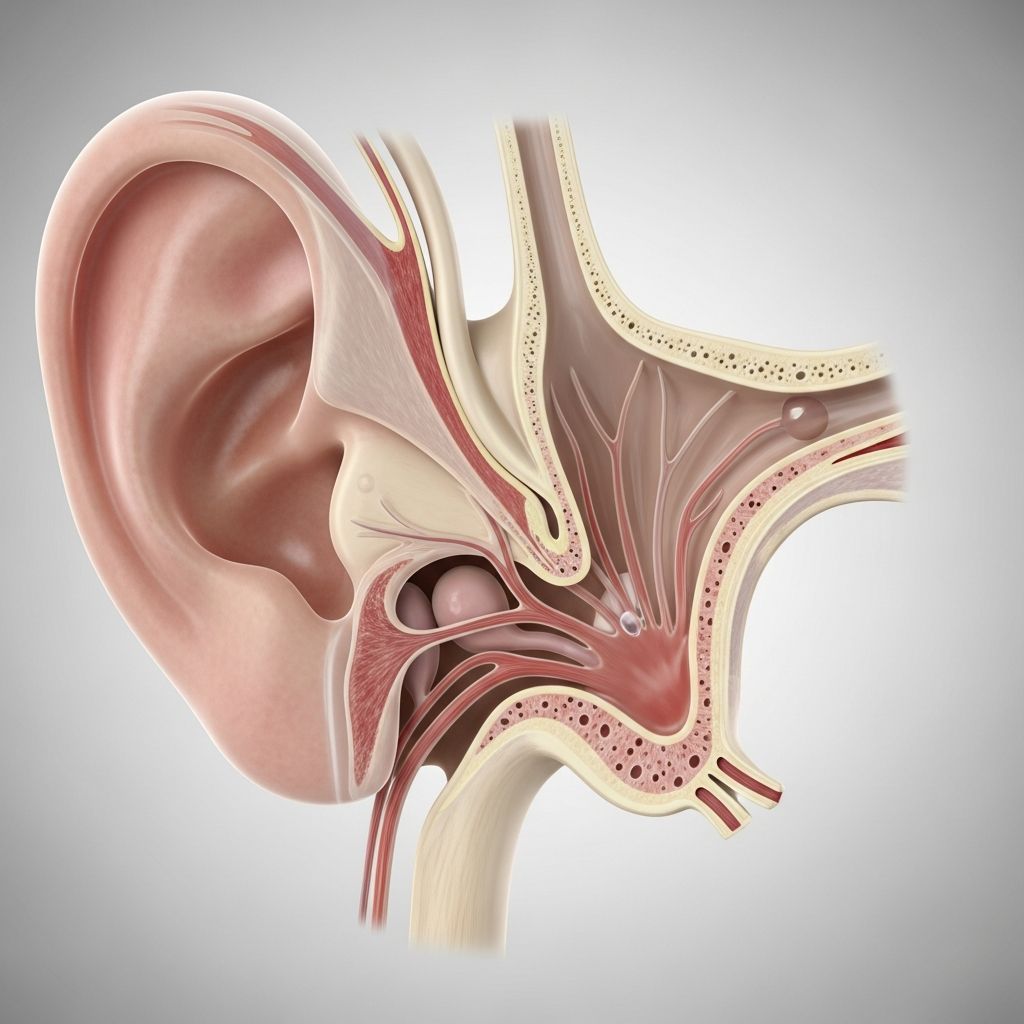
The mastoid bone is part of the temporal bone, which forms a crucial part of your skull structure. Within this bone are numerous air-filled spaces called mastoid air cells, which are lined with epithelium. When bacteria invade these air cells, they can cause significant inflammation and damage to the bone structure itself. While mastoiditis is relatively uncommon today thanks to pneumococcal conjugate vaccines and improved antibiotic treatments, it remains a condition that requires prompt medical attention and specialized care.
What Causes Mastoiditis?
Mastoiditis typically develops as a consequence of untreated or inadequately treated acute otitis media. When middle ear infections are not properly managed with appropriate antibiotics or when treatment is incomplete, bacteria can penetrate the mastoid bone. The most common bacterial culprit is pneumococcus bacteria, though other pathogens frequently responsible for mastoiditis include Streptococcus pneumoniae, Group A beta-hemolytic streptococci, Staphylococcus aureus, Streptococcus pyogenes, and Haemophilus influenzae.
Risk factors that increase susceptibility to mastoiditis include:
- Delayed or inadequate treatment of middle ear infections
- Chronic otitis media (persistent middle ear infection)
- Compromised immune system
- Young age, particularly in children
- Anatomical factors that predispose to ear infections
- History of recurrent ear infections
Types of Mastoiditis
Healthcare providers recognize two primary classifications of mastoiditis, each with distinct characteristics and clinical implications:
Incipient Mastoiditis
This initial stage involves infection of the mastoid air cells alone, without continuation into the middle ear cavity. This represents the earliest form of the disease and may respond well to aggressive antibiotic therapy if caught early.
Acute Coalescent Mastoiditis
This is the most common presentation of mastoiditis and represents a more advanced stage. In this form, inflammation affects the epithelial lining, and the infection causes erosion through the bony septations that normally separate the individual mastoid air cells. This erosion can progress to intracavity abscess formation, which can extend further to adjacent structures including surrounding bone, soft tissue, and potentially life-threatening locations such as the brain.
Recognizing the Symptoms
The symptoms of mastoiditis can develop gradually and may initially resemble a typical ear infection. Patients typically experience:
- Persistent ear pain or otalgia
- Fever, often high and persistent
- Drainage from the ear, sometimes pus-like
- Postauricular swelling and redness (behind the ear)
- Postauricular tenderness to touch
- Headaches
- Hearing loss or decreased hearing ability
- Displaced ear (protrusion outward and downward)
- Possible neurological symptoms in advanced cases
It is crucial to seek emergency medical attention if you notice postauricular swelling, persistent high fever despite treatment, or any neurological symptoms such as confusion, severe headache, or altered consciousness, as these may indicate complications.
Related Stories



How Doctors Diagnose Mastoiditis
A thorough evaluation is essential for accurate diagnosis, as several conditions can mimic mastoiditis and lead to missed diagnoses if not carefully distinguished.
Clinical Evaluation
Doctors begin with a comprehensive history and physical examination, looking specifically for postauricular swelling, tenderness, and signs of middle ear infection. They assess for fever and evaluate neurological status.
Imaging Studies
Computed tomography (CT) imaging is the gold standard for confirming mastoiditis diagnosis. CT scans can reveal characteristic findings that definitively establish the diagnosis, including:
- Fluid and/or mucosal thickening in the middle ear
- Mastoid condensation (abnormal bone density)
- Loss of definition of the bony septae that normally define individual mastoid air cells
- Destruction of the normal irregularity of the mastoid cortex
- Evidence of bone erosion and potential spread of infection
Bacterial Culture
To identify the specific bacteria causing the infection, doctors obtain samples of ear discharge for laboratory culture. If no discharge is present, they may perform myringotomy (needle aspiration through the eardrum) or make a small incision to sample fluid from the middle ear. This allows for targeted antibiotic selection based on the specific pathogen identified.
Differential Diagnosis Considerations
Conditions that can mimic mastoiditis and must be ruled out include cellulitis of the mastoid region, otitis externa (external ear canal infection), cervical lymphadenopathy, trauma to the area, and occasionally tumors. Case reports have documented instances where malignancies such as rhabdomyosarcoma, Ewing sarcoma, and myofibroblastic tumors were initially confused with mastoiditis, emphasizing the importance of careful diagnostic evaluation.
Treatment Approaches for Mastoiditis
Treatment of mastoiditis varies based on disease severity and patient factors, ranging from conservative medical management to surgical intervention.
Antibiotic Therapy
Antibiotics form the cornerstone of mastoiditis treatment. However, research shows that antibiotics alone result in an 8.5% complication rate, indicating the necessity of additional measures in many cases. For patients without chronic otitis media, intravenous vancomycin is typically the antibiotic of choice, providing coverage against the most common pathogens including Streptococcus pneumoniae. Treatment is usually administered in the hospital setting with close monitoring.
Uncomplicated Mastoiditis Management
Patients with uncomplicated mastoiditis (no significant past medical history and minimal physical examination findings) may occasionally be treated on an outpatient basis with daily intravenous ceftriaxone infusions, though most are admitted to the hospital. Uncomplicated inpatient cases are typically managed with high-dose intravenous antibiotics, high-dose intravenous corticosteroids, and myringotomy with placement of tympanostomy tubes (ear tubes).
Myringotomy and Tympanostomy Tubes
Myringotomy involves creating a small incision in the eardrum to allow infected fluid to drain from the middle ear. Tympanostomy tubes (also called ear tubes or grommets) are small tubes inserted through this opening to maintain drainage and ventilation of the middle ear during the healing process, preventing fluid reaccumulation.
Mastoidectomy Surgery
If mastoiditis does not improve within 48 hours of initiating appropriate treatment, or if imaging shows significant bone erosion, mastoidectomy becomes indicated. This surgical procedure removes diseased cells and infected bone from the mastoid air cells. Several types of mastoidectomy exist:
- Simple Mastoidectomy: Treats disease in the mastoid while leaving the ear canal and middle ear structures completely intact
- Canal-Wall-Up Mastoidectomy (Tympanomastoidectomy): Removes more bone to gain access to middle-ear space and the ossicles (tiny bones that transmit sound), while keeping the ear canal intact
- Radical or Modified Mastoidectomy: Reserved for extensive or recurrent disease that has failed limited surgery, involves enlarging the ear canal opening to facilitate future cleaning of the mastoid cavity
Monitoring and Follow-up Care
Serial physical examinations are necessary during treatment, as patient clinical status can deteriorate rapidly. Close monitoring is particularly critical during the first 48 hours of treatment, as this is the period when complications are most likely to develop.
Potential Complications Without Treatment
Inadequately treated mastoiditis can lead to serious, life-threatening complications, including:
- Permanent hearing loss or deafness
- Sepsis (bloodstream infection)
- Meningitis (infection of the brain and spinal cord membranes)
- Brain abscess
- Facial paralysis
- Intracranial abscess
- Death
These complications underscore the critical importance of prompt diagnosis and appropriate treatment.
Prognosis and Outcomes
The majority of patients with uncomplicated acute mastoiditis achieve resolution of symptoms through conservative measures, including antibiotics, corticosteroids, and myringotomy, without requiring mastoidectomy. However, individual outcomes vary based on disease severity, patient factors, and response to initial treatment. Research comparing conservative versus invasive treatment approaches for acute mastoiditis remains limited, making individualized assessment essential.
Full recovery from mastoiditis can take several weeks to months, depending on the severity and treatment approach. Most patients see significant improvement within the first two weeks of appropriate treatment, though complete resolution may take longer.
Prevention and Risk Reduction
Preventing mastoiditis begins with appropriate management of ear infections:
- Seek prompt medical care for ear infections
- Complete the full course of prescribed antibiotics
- Follow up with your healthcare provider to ensure complete resolution
- Ensure children receive pneumococcal conjugate vaccines as recommended
- Manage chronic ear infections under specialist care
- Avoid water exposure during active ear infections
- Don’t delay or self-treat significant ear symptoms
When to Seek Emergency Care
Seek immediate emergency care if you experience:
- High fever (temperature above 102°F or 39°C) that persists despite treatment
- Severe postauricular swelling or redness
- Severe, persistent ear pain unresponsive to pain medication
- Drainage of pus from the ear
- Neurological symptoms such as confusion, severe headache, stiff neck, or altered consciousness
- Signs of sepsis such as chills, extreme fatigue, or rapid heartbeat
Frequently Asked Questions About Mastoiditis
Q: Is mastoiditis common?
A: Mastoiditis is uncommon in developed countries today due to pneumococcal conjugate vaccines and improved antibiotic treatment. However, it remains a serious concern in cases of inadequately treated ear infections.
Q: Can mastoiditis be treated without surgery?
A: Many cases of uncomplicated mastoiditis respond well to aggressive antibiotic therapy, corticosteroids, and myringotomy without requiring mastoidectomy. However, surgery becomes necessary if the infection does not improve within 48 hours or shows signs of bone erosion.
Q: What is the recovery time after mastoidectomy?
A: Full recovery typically takes 6 to 12 weeks, though most people can return to work and routine activities within 1 to 2 weeks after surgery.
Q: Will mastoiditis cause permanent hearing loss?
A: Mastoiditis can cause temporary or permanent hearing loss depending on the severity and whether the infection damages hearing structures. Early treatment may help minimize this risk.
Q: Can mastoiditis spread to other parts of the body?
A: Yes, untreated mastoiditis can spread to surrounding tissues and potentially cause serious infections including meningitis, brain abscess, and sepsis, making prompt treatment essential.
Q: How is mastoiditis different from a regular ear infection?
A: Regular ear infections involve the middle ear space, while mastoiditis involves infection of the bone tissue itself. Mastoiditis is a more serious complication that develops when middle ear infection spreads.
References
- Mastoiditis — National Center for Biotechnology Information (NCBI) StatPearls. 2024. https://www.ncbi.nlm.nih.gov/books/NBK560877/
- Mastoiditis: Ear, Nose, and Throat Disorders — Merck Manuals. 2024. https://www.merckmanuals.com/home/ear-nose-and-throat-disorders/middle-ear-disorders/mastoiditis
- Mastoidectomy: Definition, Surgery & Recovery — Cleveland Clinic. 2024. https://my.clevelandclinic.org/health/treatments/22593-mastoidectomy
- Mastoiditis | Childrens Hospital of Philadelphia — Childrens Hospital of Philadelphia. 2024. https://www.chop.edu/conditions-diseases/mastoiditis
- Mastoiditis: Care Instructions — MyHealth Alberta. 2024. https://myhealth.alberta.ca/Health/aftercareinformation/pages/conditions.aspx?hwid=abo9094
Similar Articles








Read full bio of medha deb