Matcha vs. Green Tea: Which Is Healthier?
Discover the key differences between matcha and green tea, from nutrition and health benefits to preparation and which one might be better for you.
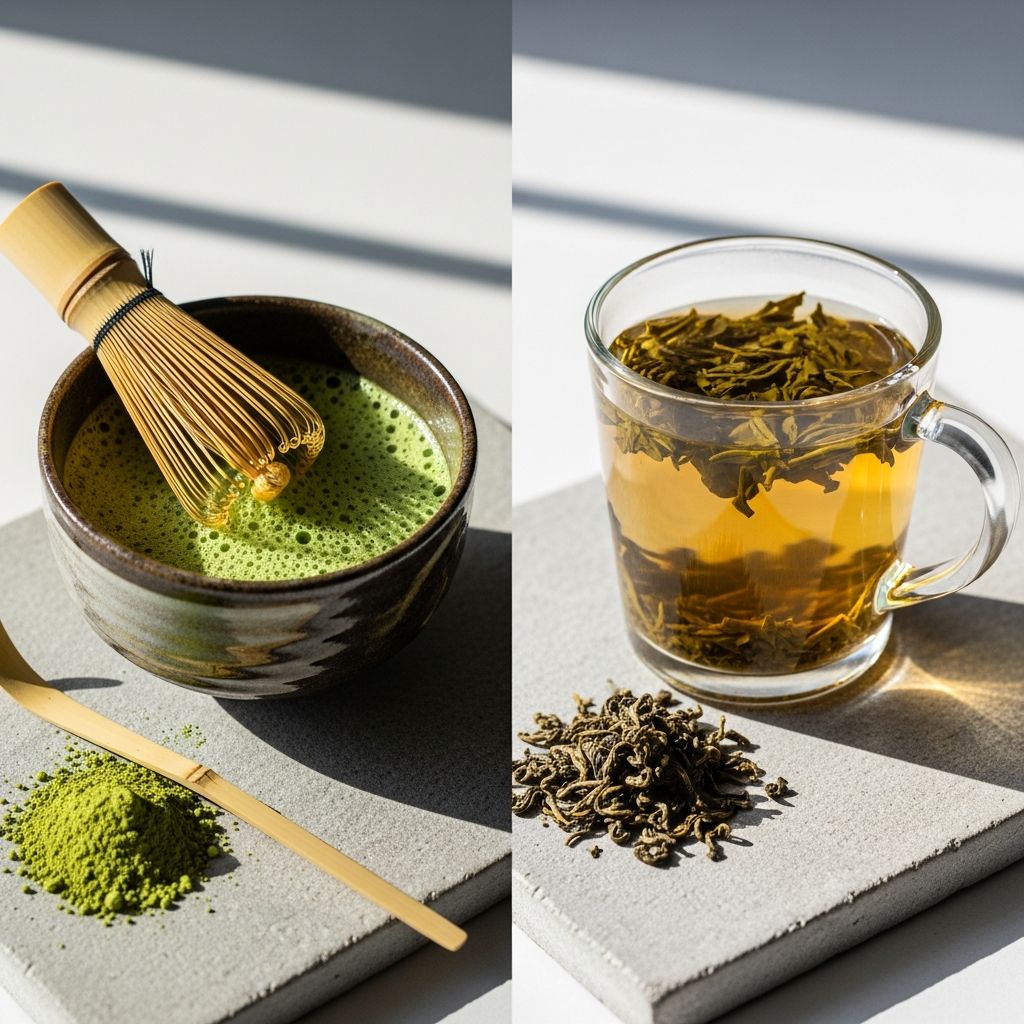
Both matcha and green tea originate from the Camellia sinensis plant and are celebrated for their antioxidant-rich profiles and potential health benefits. Matcha, a powdered form of specially grown green tea leaves, may offer higher concentrations of certain nutrients because you consume the entire leaf, while traditional green tea involves steeping leaves or bags, extracting only water-soluble compounds.
This comprehensive comparison explores their differences in production, nutrition, health effects, taste, cost, and more to help you decide which fits your lifestyle.
What Is Matcha?
Matcha is a finely ground powder made from shade-grown green tea leaves, primarily from Japan. The plants are covered 20–30 days before harvest to boost chlorophyll,
L-theanine
, andcatechins
like EGCG (epigallocatechin gallate), the most potent antioxidant in green tea.After harvest, leaves (tencha) are steamed, dried, destemmed, and stone-ground into vibrant green powder. Traditional preparation involves whisking 1–2 grams in hot water (not boiling, around 175°F) for a frothy suspension, ensuring full nutrient intake.
Matcha grades include ceremonial (highest quality, shade-grown longest) and culinary (for lattes or baking). Its umami-rich, grassy flavor stems from elevated amino acids.
What Is Green Tea?
Green tea encompasses varieties like sencha, gyokuro, and bancha from steamed or pan-fired Camellia sinensis leaves. Leaves are harvested, quickly heated to prevent oxidation, rolled, and dried into loose leaf or bags.
Brewed by steeping 2–3 grams in 8 oz hot water (175–185°F) for 1–3 minutes, it yields a light, refreshing infusion. Only soluble compounds transfer to the water, leaving fiber and some antioxidants in discarded leaves.
Green tea’s flavor varies: sencha is vegetal, dragonwell nutty. It’s the world’s second-most consumed beverage after water, with deep roots in Chinese and Japanese culture.
Matcha vs. Green Tea: Key Differences
While both deliver catechins, caffeine, and L-theanine, matcha’s whole-leaf consumption amplifies nutrient density. Shade-growing enhances beneficial compounds absent in standard green tea.
| Aspect | Matcha | Green Tea |
|---|---|---|
| Form | Fine powder (whole leaf) | Loose leaves or bags |
| Preparation | Whisked in water | Steeped/infused |
| Growing Method | Shade-grown | Sun-grown |
| Nutrient Intake | 137x EGCG vs. steeped tea | Extracted compounds only |
| Flavor | Rich, umami, grassy | Light, vegetal |
| Caffeine (per cup) | ~70mg | ~30mg |
Matcha provides up to
10 times more antioxidants
than brewed green tea due to full leaf ingestion.Nutritional Comparison
Per 8 oz serving (standardized for fairness):
- Calories: Matcha ~5; Green tea ~2
- Caffeine: Matcha 70mg (varies by quality); Green tea 20–45mg
- L-Theanine: Matcha 3–4x higher, promoting calm focus
- Antioxidants (Catechins/EGCG): Matcha up to 137mg EGCG/g vs. 2.4mg/g in steeped sencha
- Fiber: Matcha ~1g (from leaves); Green tea 0g
- Vitamins/Minerals: Both rich in vitamin C, K, potassium; matcha higher due to concentration
Matcha equates nutritionally to 10 cups of green tea per cup.
Health Benefits of Matcha and Green Tea
Both teas combat oxidative stress via catechins, but matcha’s potency may amplify effects.
Related Stories



Antioxidant Power
EGCG in matcha/green tea neutralizes free radicals, potentially reducing chronic disease risk. Matcha contains
3x more antioxidants
than high-quality green tea; 2 cups matcha = 20 cups green tea in compounds.Heart Health
Green tea drinkers show 31% lower heart disease risk via lowered LDL cholesterol, triglycerides, blood pressure. Matcha strengthens blood vessels, improves metabolic markers.
Brain Function and Relaxation
L-theanine + caffeine in matcha boosts alpha waves for alert calm without jitters, enhancing memory, mood. Studies link powdered green tea to less age-related cognitive decline.
Metabolic and Weight Management
Catechins may boost fat oxidation, improve insulin sensitivity. Matcha aids metabolic health markers. Animal studies suggest liver/kidney protection, lower blood sugar.
Anti-Cancer Potential
EGCG suppresses tumor growth, fights inflammation. Matcha may enhance gut tumor inhibition. Human trials limited; more research needed.
Other Benefits
- Liver protection, gut bacteria improvement
- UV skin damage reduction
- Anti-bacterial effects
Caffeine Content: Matcha vs. Green Tea
Matcha: ~70mg per gram (half coffee’s 95mg/8oz). Sustained energy from L-theanine synergy.
Green tea: 30–50mg per cup. Lower risk of jitters.
Sensitive individuals: Opt for decaf green tea or limit matcha to 2 cups/day.
Taste and Preparation
Matcha: Thick, creamy, vegetal. Whisk with bamboo whisk (chasen) for foam.
- 1 tsp matcha + 2 oz 175°F water
- Whisk vigorously in W pattern
- Add more water for usucha (thinner)
Green Tea: Delicate, astringent. Over-steeping = bitterness.
- 1 tsp leaves/1 bag per 8 oz
- Steep 1–2 min
Price and Accessibility
Matcha: $1–$3 per serving (ceremonial $20–100/30g). Labor-intensive.
Green tea: $0.10–$0.50 per cup. Everyday affordable option.
Which Is Healthier: Matcha or Green Tea?
**Matcha edges out** for nutrient density—more EGCG, L-theanine, fiber. Ideal for potent benefits.
Green tea suffices for most, with proven absorption advantages per some experts (polyphenols better utilized). Both healthy; neither inferior.
Choose matcha for max antioxidants; green tea for mild caffeine, budget.
Potential Downsides and Precautions
Matcha: High antioxidants may cause liver strain >2–3 cups/day (rare). Lead contamination risk in low-quality imports—choose tested brands.
Both: Caffeine sensitivity, tannins inhibit iron absorption. Pregnant: Limit 200mg caffeine/day.
Moderation key.
Frequently Asked Questions (FAQs)
Is matcha healthier than green tea?
Yes, matcha generally provides more antioxidants and nutrients since you ingest the whole leaf, equivalent to multiple cups of green tea.
Does matcha have more caffeine than green tea?
Matcha has about twice the caffeine (~70mg vs. 30–50mg per cup) but paired with L-theanine for smoother energy.
Can I drink matcha every day?
1–2 cups daily is safe for most, offering benefits without excess.
Is matcha just green tea?
Matcha is green tea—but powdered, shade-grown, and fully consumed.
How do I choose quality matcha?
Look for vibrant green color, ceremonial grade, Japanese origin, third-party tested for purity.
References
- Matcha vs. green tea: Differences and benefits — Medical News Today. 2023-10-12. https://www.medicalnewstoday.com/articles/matcha-vs-green-tea
- Green Tea Vs. Matcha – Is there a difference? — Three Leaf Tea. 2023. https://threeleaftea.com/blogs/blog/green-tea-vs-matcha-is-there-a-difference
- Matcha — Even More Powerful Than Regular Green Tea? — Healthline. 2023-07-01. https://www.healthline.com/nutrition/matcha-green-tea
- Is Matcha Good For You? Green Tea vs Matcha Showdown! — Dr. Gundry (YouTube). 2024. https://www.youtube.com/watch?v=L-jP-u7OTzY
- The therapeutic potential of matcha tea: A critical review — PMC (NIH). 2022-12-28. https://pmc.ncbi.nlm.nih.gov/articles/PMC9792400/
Similar Articles








Read full bio of Sneha Tete