Mini-Fridge Food Safety: 8 Essential Tips For College Students
Essential tips for college students and small-space dwellers to keep food safe and fresh in dorm mini-fridges.
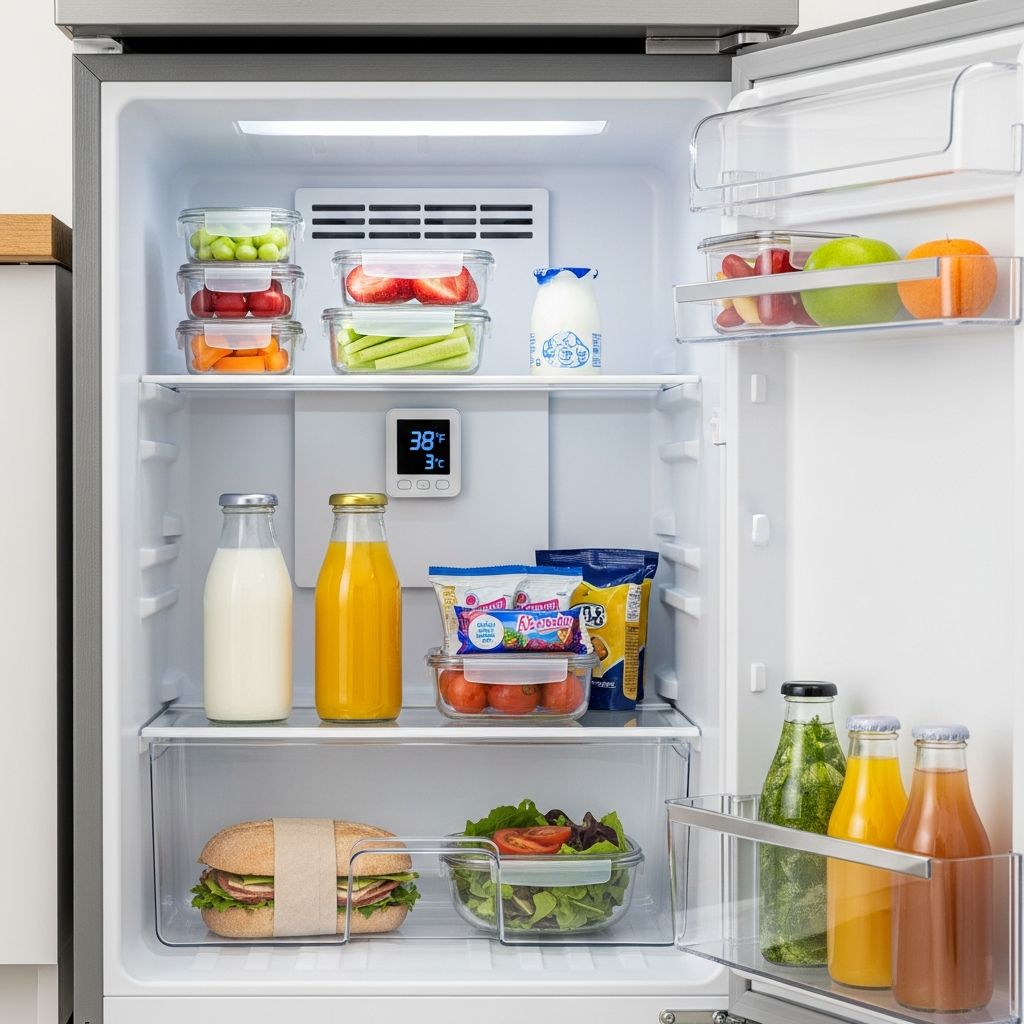
College life brings excitement but also challenges like limited kitchen space and reliance on dorm-size mini-fridges. These compact units, often much smaller than home refrigerators, demand the same rigorous food safety practices to prevent bacterial growth and food poisoning. Even in a mini-fridge, maintaining proper temperatures, organization, and handling is crucial for keeping perishables safe.
Mini-fridges typically range from 1 to 4 cubic feet, making efficient use essential. Overlooking basics like temperature monitoring or door storage can lead to spoilage. This guide covers refrigerator tips tailored for students, emphasizing quick refrigeration, clean habits, and strategic storage to ensure meals stay fresh and safe.
Refrigerator Tips for College Students
Whether in a dorm, office, or small apartment, mini-fridge users must prioritize food safety fundamentals. Bacteria thrive between 40°F and 140°F (the danger zone), so rapid cooling and proper setup are non-negotiable. Follow these evidence-based strategies to minimize risks.
- Set and monitor temperature: Keep the refrigerator at
40°F (4°C) or below
; freezer at 0°F (-18°C) or lower. Use an appliance thermometer, as built-in dials may be inaccurate. Check daily, especially in warm environments. - Avoid overpacking: Cool air must circulate freely. Limit to 75-80% capacity, leaving space between items for even cooling. Overcrowding raises temperatures and promotes uneven chilling.
- Minimize door openings: Each open raises internal temperature. Plan grabs in advance and keep the door closed as much as possible to maintain cold air.
- Store perishables centrally: Avoid the door for milk, eggs, or meats—it’s warmer due to frequent access and external heat. Place them in the center or back for stability.
- Refrigerate promptly: Chill perishables, including leftovers, within
2 hours
(1 hour if ambient temperature exceeds 90°F/32°C). Hot food warms the fridge, fostering bacteria. - Use proper containers: Seal in airtight, shallow containers (glass or BPA-free plastic) to prevent moisture loss, odor absorption, and spills. Cover opened cans immediately.
- Clean regularly: Wipe shelves weekly with mild soap; discard moldy or outdated items. Deep clean monthly or after spills to halt bacterial buildup.
- Consume leftovers timely: Use within
3-4 days
for safety and quality. Label with dates.
Implementing these tips reduces foodborne illness risks significantly. For instance, proper temperature control alone prevents pathogens like Salmonella from multiplying.
Choosing a Safe Mini-Fridge
Not all mini-fridges suit food storage. Beverage coolers often hover above 40°F, unsuitable for perishables. Opt for compressor-based models with adjustable thermostats and at least 2 cubic feet capacity. Verify specs: must reach ≤40°F consistently. Thermoelectric units struggle with reliability.
| Feature | Recommended | Why It Matters |
|---|---|---|
| Temperature Range | ≤40°F (4°C) | Prevents danger zone bacterial growth |
| Cooling Type | Compressor | More consistent than thermoelectric |
| Capacity | 2-4 cu ft | Allows air flow without overpacking |
| Extras | Adjustable shelves, thermometer | Optimizes organization and monitoring |
Proper Food Storage Order
Organize by cooking temperature to avoid cross-contamination: highest-risk (raw poultry) on bottom, ready-to-eat on top. Juices from raw items can’t drip onto cooked foods.
| Shelf Level | Foods | Cooking Temp |
|---|---|---|
| Top | Ready-to-eat (deli meats, drinks) | N/A |
| Upper Middle | Dairy, leftovers | 145°F (63°C) |
| Lower Middle | Ground meats, eggs | 155°F (68°C) |
| Bottom | Raw poultry, fish | 165°F (74°C) |
Note: Never store raw meats in mini-fridges without barriers; their limited space amplifies drip risks. Use sealed containers always.
What NOT to Store in a Mini-Fridge
Mini-fridges excel for short-term perishables but falter with certain items due to inconsistent cooling.
- Raw meats/fish: Uneven temps allow bacteria; reserve for full fridges.
- Highly perishable seafood/sushi: Needs precise cold; risk of spoilage high.
- Freezer items like ice cream: May thaw in small freezers.
- Hot foods directly: Cool 20-30 minutes first to avoid temp spikes and condensation.
- Unsealed items: Odors spread quickly in tight spaces.
Related Stories



Maintenance and Troubleshooting
Regular upkeep ensures longevity and safety. Provide 2-3 inches ventilation clearance. Defrost manual models often. In power outages, food is safe if fridge stays ≤41°F for up to 4 hours. Clean spills instantly. For high-risk foods, adhere to 5°C or below.
Frequently Asked Questions (FAQs)
Is it safe to store cooked meals in a mini-fridge?
Yes, if at ≤40°F (4°C) in airtight containers. Consume within 3-4 days.
Can I use a hotel mini-fridge for meal prep?
Only if confirmed as a true refrigerator (≤40°F). Many are beverage coolers; use main kitchen otherwise.
How do I check if my mini-fridge is cold enough?
Place a standalone thermometer in the center; verify ≤40°F after 24 hours.
Should I let food cool before refrigerating?
Yes, up to 30 minutes to prevent warming the fridge and condensation.
What if power goes out?
Keep door closed. Safe if ≤41°F upon restoration.
Are mini-fridges good for raw meat?
No, due to poor temp control and contamination risks.
How often should I clean my mini-fridge?
Weekly wipes; monthly deep clean.
By following these guidelines, mini-fridge users can enjoy safe, nutritious meals without worry. Prioritize temperature vigilance and organization for optimal results.
References
- Is It Safe to Put Food in a Mini Fridge? A Complete Guide — Alibaba Wellness. 2023. https://wellness.alibaba.com/nutrition/mini-fridge-meal-prep-safety-guide
- Maximize Food Safety in a Mini-Fridge — Academy of Nutrition and Dietetics. 2023-10-01. https://www.eatright.org/food/home-food-safety/safe-food-storage/maximize-food-safety-in-a-mini-fridge
- What NOT to Store in a Mini Fridge (And Why It Matters) — Crownful. 2024. https://crownful.com/blogs/tips/what-not-to-store-in-a-mini-fridge-and-why-it-matters
- Food Safety and Storage — Better Health Channel (Vic.gov.au). 2024. https://www.betterhealth.vic.gov.au/health/healthyliving/food-safety-and-storage
- Fridge Storage for Food Safety — StateFoodSafety. 2023. https://www.statefoodsafety.com/Resources/Resources/fridge-storage-for-food-safety
Similar Articles








Read full bio of Sneha Tete