McRoberts Maneuver: Emergency Childbirth Technique
Understanding the McRoberts maneuver: A critical emergency technique for managing shoulder dystocia during childbirth.
McRoberts Maneuver: Managing Shoulder Dystocia During Childbirth
The McRoberts maneuver is a critical obstetric procedure used during vaginal delivery to address shoulder dystocia, a potentially serious childbirth complication where the baby’s anterior shoulder becomes lodged against the mother’s pubic bone. This emergency technique has become a standard first-line intervention in obstetric care, helping healthcare providers safely resolve this delivery obstruction and reduce the risk of neonatal injury. Understanding this maneuver is essential for expectant parents and healthcare professionals alike, as its proper execution can mean the difference between a safe delivery and serious complications for both mother and baby.
What Is Shoulder Dystocia?
Shoulder dystocia occurs when the baby’s shoulders become stuck during the delivery process, preventing the infant from passing through the birth canal after the head has already emerged. This complication affects approximately 0.5 to 3% of all vaginal deliveries and represents one of the most urgent situations in obstetric medicine. When the anterior (front) shoulder wedges underneath the mother’s pubic symphysis, it creates a mechanical obstruction that requires immediate, decisive intervention. The condition demands rapid response because prolonged obstruction can lead to oxygen deprivation, brachial plexus injuries affecting the baby’s arms and shoulders, clavicular fractures, and other serious neonatal complications.
The urgency of shoulder dystocia cannot be overstated. Once recognized, healthcare providers must act quickly and systematically to relieve the obstruction before neonatal injury occurs. This is where the McRoberts maneuver becomes invaluable as the first-line intervention in the management algorithm.
Understanding the McRoberts Maneuver
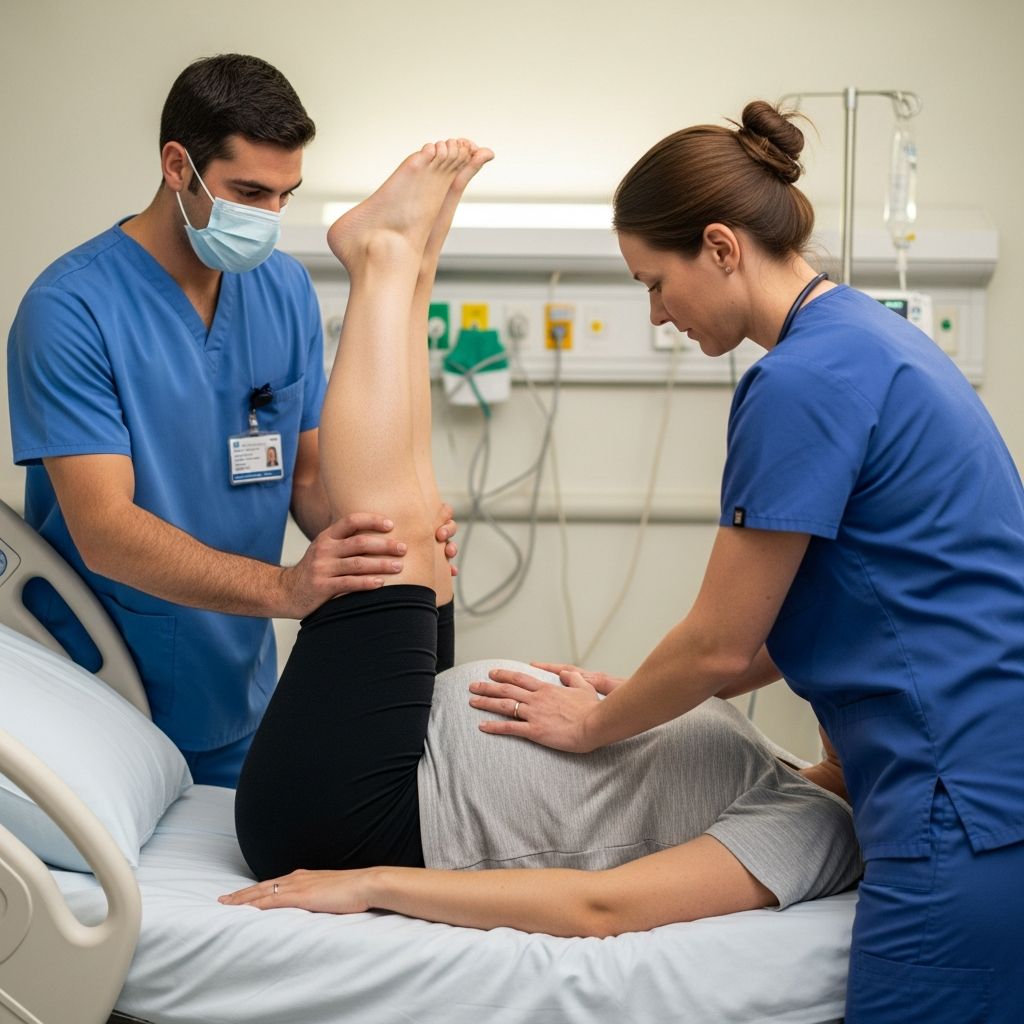
The McRoberts maneuver is a positioning technique that fundamentally changes the geometry of the maternal pelvis to create more space for delivery. The procedure involves hyperflexing the mother’s thighs against her abdomen while she lies on her back in the dorsal lithotomy position. This movement accomplishes several biomechanical changes simultaneously, which together widen the pelvic outlet and rotate the pelvis in ways that can dislodge the baby’s shoulder from the obstruction.
When properly executed, the McRoberts maneuver increases the anteroposterior diameter of the pelvic outlet and changes the angle of the pubic symphysis, effectively creating more space below the pubic bone where the baby’s shoulder is trapped. This simple yet elegant solution to a complex problem has revolutionized the management of shoulder dystocia since its introduction.
How the McRoberts Maneuver Works
The mechanics of the McRoberts maneuver involve precise positioning. The mother is placed in a supine position, and her thighs are flexed back toward her abdomen as far as comfortably possible. This hyperflexion of the maternal thighs accomplishes two critical objectives. First, it rotates the symphysis pubis, flattening the sacral promontory curve and effectively increasing the space in the lower pelvis. Second, it straightens the sacral curve, which further enlarges the obstetric outlet where the baby’s shoulders must pass.
The maneuver works by changing the angle at which the pelvic canal is oriented relative to the baby’s body. By bringing the mother’s thighs toward her chest, the entire pelvic outlet opens up, often allowing the baby’s anterior shoulder to slip free from beneath the pubic symphysis. Studies have shown that this maneuver succeeds in relieving shoulder dystocia in a significant percentage of cases when used as the initial intervention.
When Is the McRoberts Maneuver Used?
The McRoberts maneuver is the first intervention healthcare providers employ when shoulder dystocia is suspected or diagnosed during vaginal delivery. Recognition of shoulder dystocia typically occurs when the baby’s head has delivered but the shoulders do not advance with the next contraction, creating a distinctive “turtle sign” appearance. Once this complication is recognized, the delivery team immediately calls for additional assistance and initiates the McRoberts maneuver as part of the HELPERR algorithm, which provides a systematic approach to managing this emergency.
Related Stories



Clinical data shows that approximately 100% of hospitals and birthing centers use the McRoberts maneuver as a primary intervention in shoulder dystocia cases, reflecting its proven effectiveness and safety profile. The maneuver is typically combined with suprapubic pressure, another first-line intervention that adds additional mechanical advantage in relieving the obstruction.
Effectiveness of the McRoberts Maneuver
The McRoberts maneuver has demonstrated significant effectiveness in resolving shoulder dystocia without requiring more invasive procedures. Research comparing various obstetric maneuvers has shown that when the McRoberts maneuver is combined with suprapubic pressure as the initial management approach, it successfully resolves shoulder dystocia in the majority of cases. These two first-line interventions are associated with low rates of neonatal injury compared to cases requiring additional, more technically complex maneuvers.
Clinical studies have documented that the McRoberts maneuver alone resolves shoulder dystocia in approximately 40-60% of cases, while its combination with suprapubic pressure increases success rates considerably. This high rate of success, particularly when combined with other initial interventions, has established the McRoberts maneuver as the gold standard first step in shoulder dystocia management protocols worldwide.
The HELPERR Algorithm and McRoberts Maneuver
The McRoberts maneuver is a central component of the HELPERR mnemonic, a systematic approach designed to guide healthcare providers through shoulder dystocia management:
- H (Help): Call for additional assistance from obstetrics, pediatrics, and anesthesiology staff
- E (Evaluate): Perform or consider an episiotomy to increase vaginal space
- L (Legs): Perform the McRoberts maneuver by hyperflexing maternal thighs
- P (Pressure): Apply suprapubic pressure to rotate and dislodge the anterior shoulder
- E (Enter): Use internal rotation maneuvers like the Rubin or Woods corkscrew technique
- R (Remove): Remove the posterior arm using Jacquemier’s maneuver
- R (Roll): Roll the mother to hands and knees for the Gaskin maneuver if previous steps fail
This systematic approach ensures that interventions progress from least to most invasive, with the McRoberts maneuver serving as the essential first mechanical intervention after the team is assembled and communication established.
Risks and Complications
The McRoberts maneuver itself is considered a safe procedure with minimal direct risks to the mother. Unlike more invasive interventions, hyperflexing the maternal thighs does not damage maternal tissues or cause uterine rupture. However, there are important considerations regarding overall shoulder dystocia management:
- Incomplete Resolution: The primary risk is that the McRoberts maneuver alone may not relieve the obstruction, necessitating additional maneuvers
- Cumulative Injury Risk: Research indicates that neonatal injury rates increase with each additional maneuver performed, reinforcing the importance of rapid progression through the algorithm if initial interventions fail
- Potential Maternal Discomfort: While safe, the extreme leg flexion may cause temporary muscular discomfort, particularly if the mother has existing orthopedic limitations
- Need for Additional Interventions: If the McRoberts maneuver does not resolve the dystocia within 30-60 seconds, healthcare providers must move expeditiously to additional maneuvers
Recovery and Aftercare
Recovery following successful shoulder dystocia relief with the McRoberts maneuver typically follows normal postpartum protocols. After the baby has been delivered, the mother is returned to a comfortable position, and the delivery team completes standard postpartum care including placenta delivery, assessment of maternal bleeding, and evaluation of any necessary repairs to the perineum.
The baby will undergo thorough examination by pediatric staff to assess for any injuries sustained during the delivery complication. This includes evaluation of the brachial plexus, shoulders, and clavicles through physical examination and potentially imaging studies if injuries are suspected. Most babies delivered with successful shoulder dystocia resolution experience no lasting complications, though healthcare providers monitor carefully during the immediate postnatal period.
Mothers should be informed about what occurred during their delivery and educated about implications for future pregnancies. Documentation of shoulder dystocia should be thorough, including which maneuvers were used and the timeline of events, as this information is important for managing subsequent pregnancies.
Prevention and Risk Reduction
While shoulder dystocia cannot be reliably predicted or prevented entirely, certain risk factors increase the likelihood of this complication. Maternal diabetes, maternal obesity, advanced maternal age, and fetal macrosomia (large baby) are associated with increased shoulder dystocia risk. Healthcare providers may use prophylactic McRoberts positioning in high-risk deliveries, positioning the mother with her thighs flexed from the beginning of the second stage of labor.
Careful management of the second stage of labor, appropriate pushing techniques, and avoiding excessive fundal pressure all contribute to reducing shoulder dystocia risk. Additionally, controlled delivery of the fetal head, avoiding excessive traction, and allowing spontaneous shoulder delivery when possible help minimize obstruction.
Comparison of Shoulder Dystocia Maneuvers
| Maneuver | Mechanism | Success Rate | Complexity | Primary Timing |
|---|---|---|---|---|
| McRoberts | Maternal leg hyperflexion | 40-60% | Low | First-line |
| Suprapubic Pressure | External pressure on anterior shoulder | High when combined | Low | First-line |
| Rubin Maneuver | Internal anterior shoulder rotation | Moderate | Moderate | Second-line |
| Woods Corkscrew | Internal posterior shoulder rotation | Moderate | Moderate | Second-line |
| Posterior Shoulder Delivery | Delivery of baby’s back arm first | Highest overall | Moderate | Second-line |
| Gaskin Maneuver | Maternal position change to hands-knees | Moderate to High | Moderate | Alternative/Third-line |
Communication and Team Coordination
Successful shoulder dystocia management, including proper execution of the McRoberts maneuver, depends critically on effective team communication. The first step in the HELPERR algorithm is calling for help, as coordination between obstetrics, pediatrics, and anesthesiology is essential. Clear communication about which maneuvers are being performed, their timing, and the baby’s status helps ensure coordinated care and appropriate documentation.
Healthcare providers should use standardized terminology when discussing the McRoberts maneuver and other interventions to avoid confusion. The procedure should be performed smoothly and deliberately rather than hesitantly, as confident execution often translates to better outcomes and reduced anxiety for the delivery team.
Frequently Asked Questions
Q: How long does the McRoberts maneuver take to perform?
A: The McRoberts maneuver should be initiated immediately upon recognition of shoulder dystocia. The positioning itself takes only seconds to accomplish. If relief has not occurred within 30-60 seconds, healthcare providers proceed to additional maneuvers.
Q: Can the McRoberts maneuver harm the baby?
A: The McRoberts maneuver itself does not cause direct injury to the baby. It is a positioning technique that relieves mechanical obstruction. No traction or manipulation of the baby is involved in this initial step.
Q: Is the McRoberts maneuver painful for the mother?
A: The extreme leg flexion may cause temporary discomfort, but it is generally well-tolerated by mothers. Any maternal discomfort is secondary to the urgency of relieving the shoulder dystocia obstruction.
Q: What if the McRoberts maneuver doesn’t work?
A: If shoulder dystocia persists after McRoberts maneuver and suprapubic pressure, healthcare providers systematically progress through additional maneuvers including internal rotations, posterior arm delivery, or the Gaskin maneuver. In rare cases, emergency cesarean delivery may be necessary.
Q: Should I be informed before my provider uses the McRoberts maneuver?
A: During an active shoulder dystocia emergency, providers will act immediately without waiting for formal consent, as this is a life-saving intervention. However, post-delivery discussion and education about what occurred is important for your understanding and future pregnancies.
Q: Can shoulder dystocia happen again in future pregnancies?
A: Yes, there is an increased recurrence risk in subsequent pregnancies, particularly if maternal risk factors persist. Your healthcare provider should discuss management plans for future deliveries, which may include scheduled cesarean delivery or heightened vigilance with planned prophylactic positioning.
References
- A Comparison of Obstetric Maneuvers for the Acute Management of Shoulder Dystocia — National Center for Biotechnology Information (NCBI). 2011. https://pmc.ncbi.nlm.nih.gov/articles/PMC3101300/
- Shoulder Dystocia – Gynecology and Obstetrics — Merck Manuals Professional Edition. 2024. https://www.merckmanuals.com/professional/gynecology-and-obstetrics/intrapartum-complications/shoulder-dystocia
- Shoulder Dystocia: Signs, Causes, Prevention & Complications — Cleveland Clinic. 2024. https://my.clevelandclinic.org/health/diseases/22311-shoulder-dystocia
- Gaskin Maneuver: All Fours Position, Purpose & Risks — Cleveland Clinic. 2024. https://my.clevelandclinic.org/health/treatments/gaskin-maneuver
- American College of Obstetricians and Gynecologists (ACOG) Guidelines on Shoulder Dystocia — ACOG. 2023. https://www.acog.org
Similar Articles








Read full bio of Sneha Tete