Measles: Complete Guide To Symptoms, Risks, And Prevention
Highly contagious viral infection causing fever, characteristic rash, and potential severe complications; preventable by MMR vaccination.
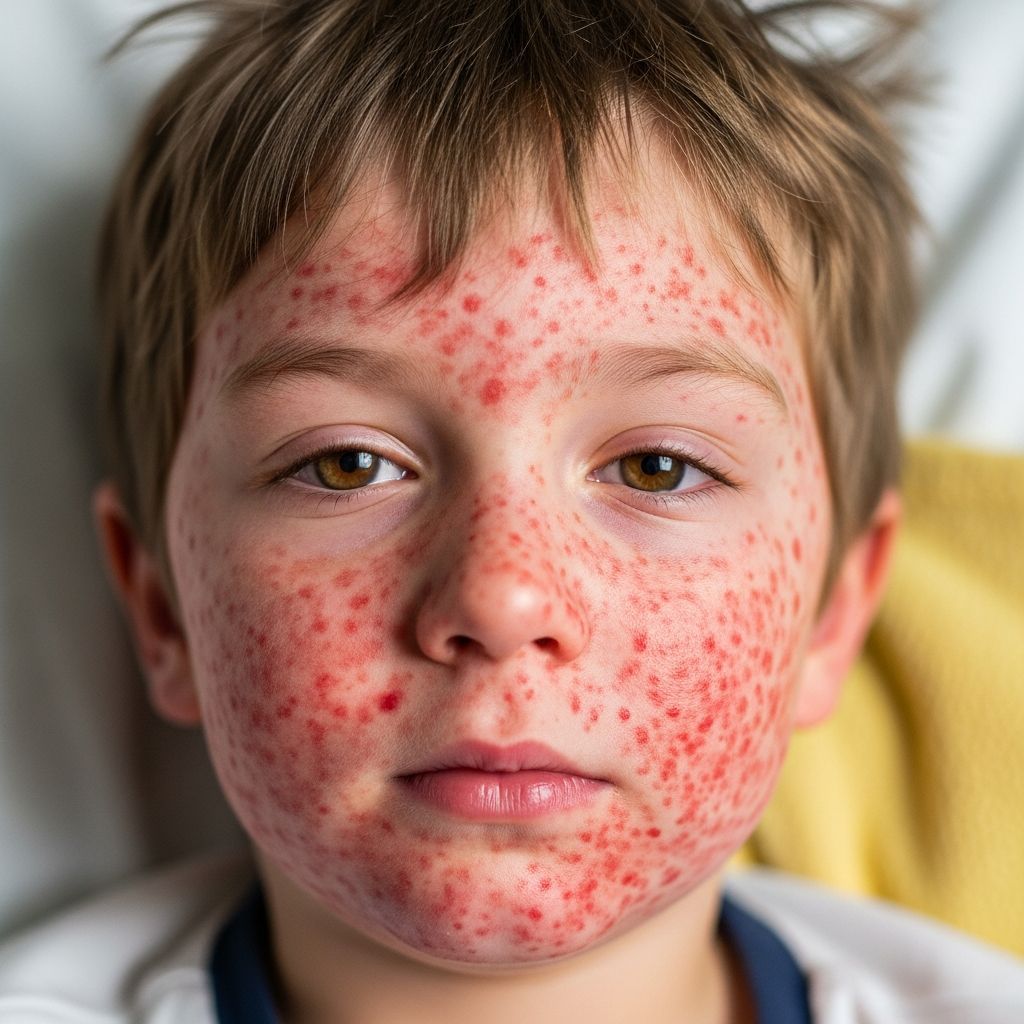
Measles, also known as English measles, rubeola or morbilli, is a highly contagious viral infection causing fever and a characteristic rash. Measles is a notifiable disease.
What is measles?
Measles is caused by the measles virus, which belongs to the morbillivirus family in the Paramyxoviridae. Before widespread immunisation in industrialised countries, measles was a common childhood disease with a high death rate. In countries with routine immunisation programmes, such as New Zealand, the incidence is low, but recent trends in vaccine hesitancy have increased cases and complications.
The virus spreads easily via airborne respiratory droplets from coughing, sneezing, or breathing by an infected person. An individual is contagious from 2 days before symptoms appear until at least 5 days after the rash onset. The incubation period is typically 10–14 days (range 7–23 days). Acute infection usually confers lifelong immunity.
Who is at risk?
Individuals at particular risk include:
- Unvaccinated children and adults
- Infants under 12 months
- Immunocompromised persons
- Pregnant women
- Travellers to endemic areas
The greatest risk for severe measles and complications occurs in:
- Infants
- Adults over 20 years
- Malnutrition
- Immunodeficiency (e.g., HIV)
- Vitamin A deficiency
Signs and symptoms
Measles progresses through distinct stages.
Prodrome (2–4 days after incubation)
Early symptoms, known as the ‘3 Cs’:
- Cough
- Coryza (runny nose, sore throat)
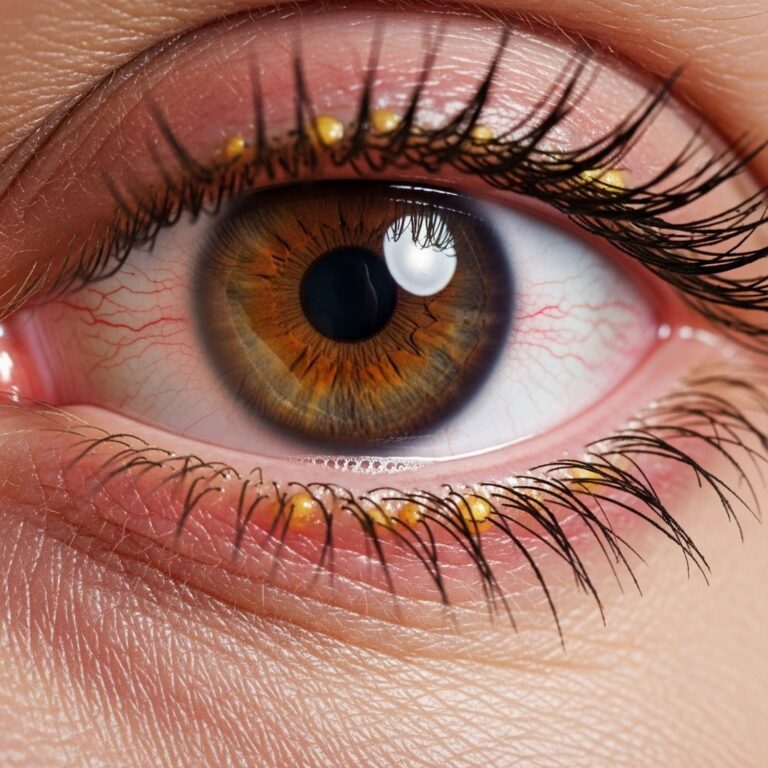
- Conjunctivitis (red, watery eyes, photophobia)
Additional features: high fever (>38°C, often >40°C), malaise, anorexia. Fever peaks with rash onset.
Enanthema (Koplik spots)
Pathognomonic 1–2 mm white spots on bright red buccal mucosa, opposite molars, 1–2 days before rash. Appear as grain-of-salt or rice kernel spots; last 1–3 days.
Exanthem (rash, 7–18 days post-exposure)
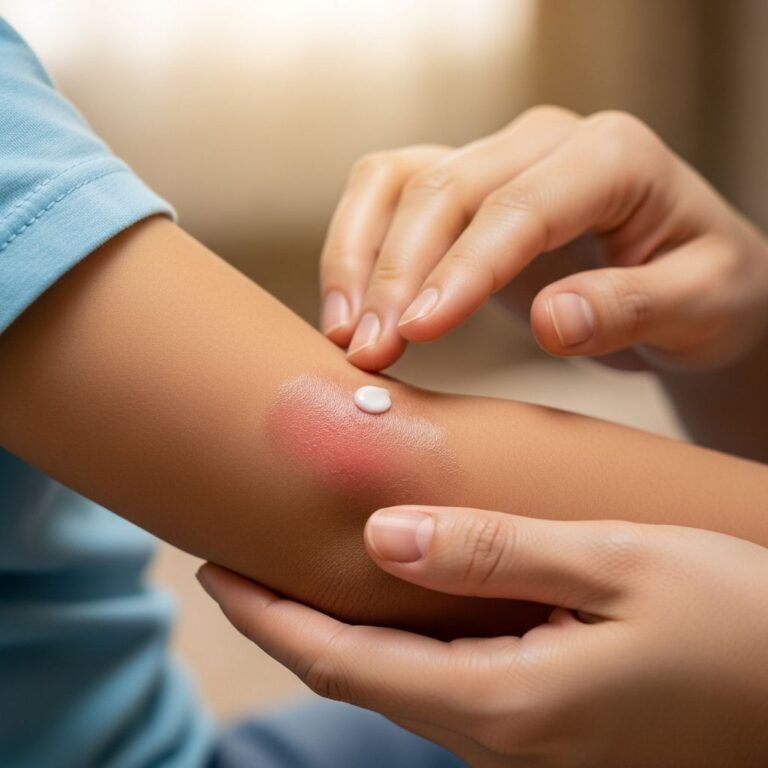
Rash starts as flat red macules on face/neck, spreads cephalocaudally to trunk, arms, legs, feet over 3 days. Macules coalesce into blotchy patches; blanches initially. Spares palms/soles. Lasts 5–6 days; desquamates (peels) during resolution. High fever accompanies rash onset.
Note: Rash may be subtler on darker skin tones, appearing as erythematous patches or papules.
| Feature | Measles | Chickenpox (Differential) | Mpox (Differential) |
|---|---|---|---|
| Rash Development | Rapid, starts face spreads down | Rapid, torso concentrated | Slow, face concentrated |
| Distribution | Face to trunk/ limbs; spares palms/soles | Torso; palms/soles often involved | Face; palms/soles common |
| Morphology | Maculopapular, coalescing | Vesicles on red base | Monomorphic papules/pustules |
Diagnosis
Primarily clinical based on history (exposure, prodrome, Koplik spots, rash morphology) and exam. Laboratory confirmation required in low-incidence areas or atypical cases.
- Serology: Measles IgM (positive after 3 days symptoms); IgG (recovery phase).
- PCR: Throat/nasopharyngeal swabs, urine for viral RNA (gold standard).
- Culture/IFA: For immunocompromised.
Differential: Rubella, scarlet fever, Kawasaki, drug eruption, parvovirus.
Treatment
Supportive care: Fever management (acetaminophen/ibuprofen), hydration, rest, vitamin A supplementation (esp. children, reduces severity). Antivirals not routinely used; ribavirin considered for severe immunocompromised cases. Isolation: airborne precautions until 4 days post-rash.
Related Stories



Complications
Occur in 30%; more common in adults, malnourished, immunocompromised.
- Common: Otitis media, pneumonia (leading cause of death), diarrhoea, croup.
- Neurologic (0.5–0.1%): Acute encephalitis (days 2–6 rash), SSPE (7–10 yrs later, fatal).
- Ocular: Keratitis, corneal ulceration.
- Immune: Secondary bacterial infections, immunosuppression up to 3 years.
Mortality: 1–2 per 1,000 cases in developed countries; up to 10% in malnourished.
Prevention
Vaccination: Live attenuated measles vaccine, single or MMR/MMRV. Routine: 12–15 months (dose 1), 4–6 years (dose 2). 93% efficacy dose 1, 99% dose 2.
- Born before 1969: Likely immune (natural infection).
- 1969–2004: Check records; may need 2nd dose.
- Post-1969: Require 2 documented doses post-12 months.
Outbreak control: Post-exposure MMR (within 72h), IVIG (within 6 days). Herd immunity: 95% coverage.
Frequently Asked Questions
What are Koplik spots?
Small white lesions on buccal mucosa preceding rash by 1–2 days; diagnostic of measles.
How contagious is measles?
Extremely; R0 12–18. Airborne spread; infectious 2 days pre-symptom to 5 days post-rash.
Is one MMR dose enough?
No; 93% protection. Two doses needed for 99% immunity.
Can measles rash be on palms?
Typically spares palms/soles, unlike some differentials.
What if exposed but vaccinated?
Monitor; breakthrough rare with 2 doses. Unimmune contacts excluded 7–14 days.
Does measles give lifelong immunity?
Yes, natural infection does; vaccine-induced may wane rarely.
References
- Clinical information – Measles — American Academy of Dermatology. 2025. https://www.aad.org/member/clinical-quality/clinical-care/emerging-diseases/measles/clinical-information
- Specific viral exanthems — DermNet NZ. 2025. https://dermnetnz.org/cme/viral-infections/specific-viral-exanthems
- Measles: A guide for education settings — Health New Zealand | Te Whatu Ora. 2025. https://www.tewhatuora.govt.nz/for-health-professionals/clinical-guidance/diseases-and-conditions/measles/measles-education-settings
- Measles (morbilli) — DermNet NZ. 2025. https://dermnetnz.org/topics/measles
- Skin Assessment Guidance: Measles — Johns Hopkins Bloomberg School of Public Health. 2025-04-07. https://publichealth.jhu.edu/sites/default/files/2025-04/Skin-Assessment-Guidance_Measles-4.7.2025.pdf
Similar Articles








Read full bio of medha deb