Mechanical Ventilation: Purpose, Types & Complications
Comprehensive guide to mechanical ventilation therapy, types, and management for respiratory support.
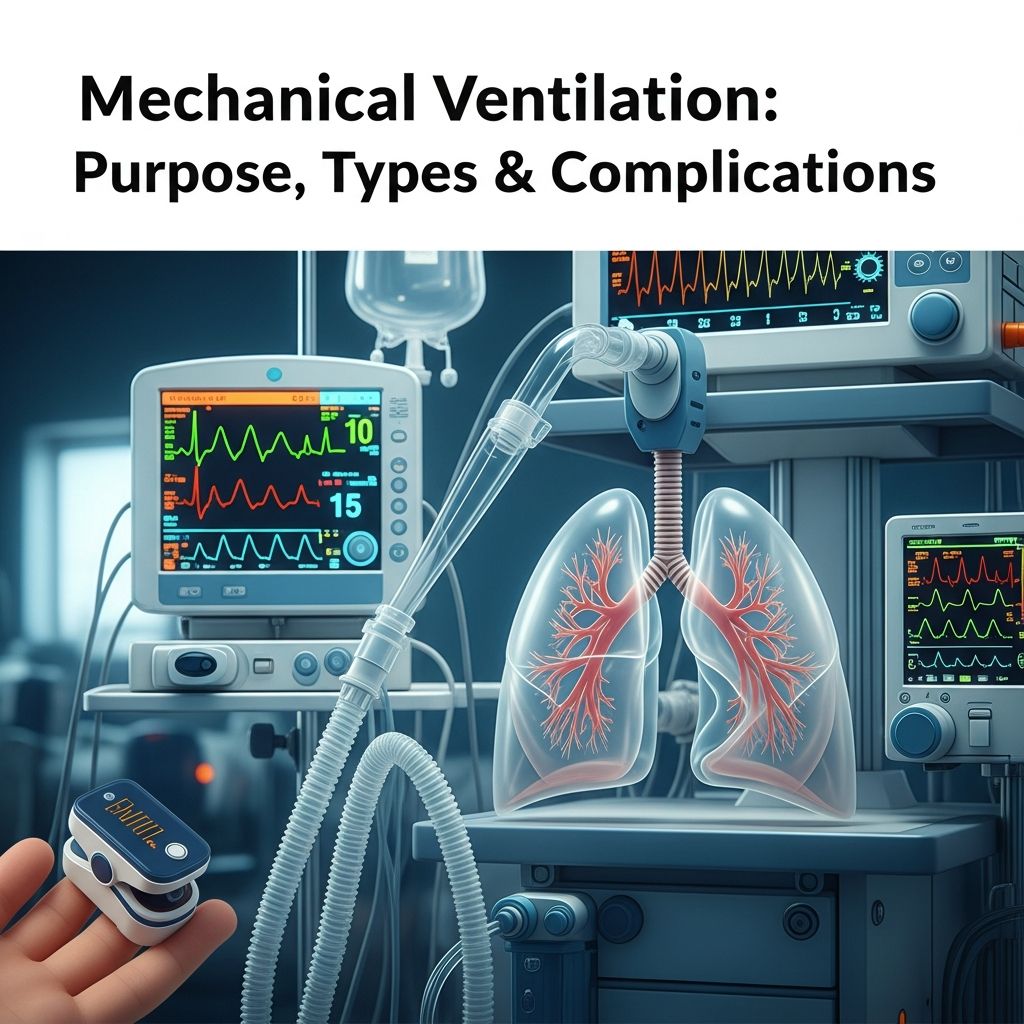
Mechanical ventilation is a type of therapy that helps you breathe or breathes for you when you can’t breathe on your own. You might be on a ventilator during surgery or if your lungs aren’t working properly. Mechanical ventilation keeps your airways open, delivers oxygen and removes carbon dioxide from your body. This life-supporting intervention is managed by a team of healthcare professionals in intensive care units and other clinical settings to ensure patient safety and optimal outcomes.
What Is Mechanical Ventilation?
Mechanical ventilation is a medical intervention that provides respiratory support to patients who cannot breathe adequately on their own. Modern mechanical ventilators use positive pressure to push air into your lungs, allowing oxygen to reach the alveoli where gas exchange occurs. This positive pressure ventilation can be delivered through two primary methods: invasive ventilation, which uses tubes placed in the airway, or noninvasive ventilation, which uses masks or other external devices. The ventilator essentially provides support to your respiratory muscles, reducing the work they must perform and allowing your body to conserve energy during recovery from illness or injury.
How Mechanical Ventilators Work
A mechanical ventilator operates by delivering positive pressure to push air into your lungs, allowing oxygen to enter your respiratory system while simultaneously removing carbon dioxide, which is a waste product of metabolism. The ventilator can be adjusted to deliver the same amount of air your muscles would generate naturally, or it can be programmed to provide larger breaths or faster breathing rates depending on your clinical needs. This flexibility allows healthcare providers to support both your oxygen function and gas exchange, maintaining your body’s oxygen and carbon dioxide levels within normal ranges. The machine works in coordination with your body’s natural breathing patterns, and modern ventilators can be set to various modes that support different levels of spontaneous breathing effort.
When Do You Need Mechanical Ventilation?
Providers use mechanical ventilators to support your breathing when you can’t breathe on your own. Mechanical ventilation helps keep your airways open, delivers oxygen to your blood, removes carbon dioxide from your body, and reduces the work your respiratory muscles must perform. Several specific conditions might require mechanical ventilation, including:
- Severe pneumonia or lung infections that compromise oxygen exchange
- Acute respiratory distress syndrome (ARDS)
- Chronic obstructive pulmonary disease (COPD) exacerbations with respiratory failure
- Trauma or injury to the chest or lungs
- Post-surgical complications affecting breathing
- Neurological conditions affecting respiratory muscle function
- Heart failure leading to pulmonary edema
- Sepsis with multi-organ involvement affecting lung function
- Drug overdose or poisoning affecting respiratory drive
- Status asthmaticus or severe acute asthma attacks
The decision to place a patient on mechanical ventilation is made by the intensive care team based on careful assessment of the patient’s respiratory status, oxygen levels, and ability to protect their airway.
Types of Mechanical Ventilation
There are two main approaches to mechanical ventilation: invasive and noninvasive methods. Each approach has specific indications, benefits, and considerations that guide clinical decision-making.
Noninvasive Positive Pressure Ventilation (NPPV)
Noninvasive mechanical ventilation delivers positive pressure through a tight-fitting mask that goes over your face, pushing air in to help you breathe without requiring a tube in your airway. This method is frequently used in hospital settings for patients with conditions such as COPD, emphysema, and other obstructive lung diseases. Noninvasive ventilation is particularly beneficial for patients whose lungs are compromised but who don’t have severe acute conditions requiring intubation. Healthcare providers use noninvasive ventilation when patients have infections or disease progression but retain some ability to breathe spontaneously. The advantage of this approach is that it can be removed and reapplied without the risks associated with placing a tube through the mouth, which requires sedation and sometimes paralysis. Noninvasive ventilation allows for better patient communication and comfort, as patients can speak and eat, though with limitations.
Related Stories



Invasive Mechanical Ventilation
Invasive mechanical ventilation involves placing a tube through your mouth, into your throat, and into your lungs to deliver air directly into your respiratory system. This method is used in more severe cases where noninvasive ventilation is inadequate. Conditions that warrant invasive ventilation include pneumonia, direct lung injury, and situations where other organs are failing and manifesting in the lungs, such as when heart failure causes fluid accumulation in lung tissue, making breathing significantly more difficult. Once a patient has been on an endotracheal tube for approximately two weeks, healthcare providers typically switch to a tracheostomy, which is a surgical opening in the neck that allows the breathing tube to be placed directly into the trachea. This transition reduces patient discomfort, improves oral hygiene, reduces the risk of dental and throat damage, and facilitates long-term ventilator management and weaning.
Starting Mechanical Ventilation: The Procedure
To start invasive mechanical ventilation, a healthcare provider will follow specific steps to ensure safe placement and appropriate settings. The provider will first sedate you to make the procedure tolerable and often administer medications to temporarily paralyze your muscles, making tube placement easier and safer. Once sedated, the provider uses a laryngoscope to visualize your vocal cords and carefully passes an endotracheal tube through your mouth, past your vocal cords, and into your trachea. After confirming proper placement through physical examination, chest X-ray, or other imaging, the provider secures the tube and connects it to the ventilator. The ventilator is then programmed with specific settings tailored to your condition, including the respiratory rate, volume of each breath, oxygen concentration, and the mode of ventilation that best suits your clinical needs. These initial steps may vary slightly depending on your specific situation, especially in emergency circumstances where speed and efficiency are critical.
Care While on a Mechanical Ventilator
While you’re on a ventilator, the ICU team performs multiple procedures and interventions to treat your underlying condition and prevent complications. Your provider will connect you to additional monitoring machines that track how your body is working, including your heart rate and rhythm, blood pressure, oxygen saturation levels, and carbon dioxide levels. Chest X-rays and blood tests may be performed regularly to assess your lungs’ condition and your body’s gas exchange status.
Airway Suctioning
Suctioning is an important procedure for keeping your airways clear of mucus and secretions. A provider will insert a thin tube called a catheter into your breathing tube to help remove accumulated mucus, which can interfere with oxygen delivery and increase infection risk. This procedure might cause you to cough or gag, and loved ones may find it uncomfortable to witness, but it’s essential for maintaining airway patency and preventing respiratory infections.
Medication Administration
Your provider might give you aerosolized (spray) medications through your breathing tube. These medications work best when you breathe them directly into your airways and lungs, allowing for direct delivery to the affected tissue. Additionally, you’ll receive medications through an intravenous line in your vein, allowing systemic medication delivery for treating your underlying condition and managing symptoms like pain, anxiety, and agitation.
Nutrition and Hydration
You can’t eat or drink normally while you’re on a ventilator and intubated. Your provider will give you liquid nutrition, usually through a nasogastric tube that goes through your nose and into your stomach, ensuring you receive adequate calories and nutrients for healing. Fluids are also provided through an intravenous line in your vein to maintain hydration and electrolyte balance. Some patients may transition to a percutaneous endoscopic gastrostomy (PEG) tube or similar long-term feeding methods if they require extended ventilator support.
Duration of Mechanical Ventilation
The time you need mechanical ventilation depends on the reason for its use and how well your underlying condition responds to treatment. It could be hours (such as following routine surgery), days (for acute infections or injuries), weeks (for more severe conditions), or, rarely, months or years for patients with chronic respiratory failure. Ideally, you’ll only stay on a ventilator for as little time as possible to minimize complications and promote recovery. Your providers will test your ability to breathe unassisted daily or more often to determine when you might be ready to begin the weaning process. The goal from the moment a patient is placed on a ventilator is to focus on how to get them off the ventilator, with providers starting to decrease ventilatory support as soon as clinically appropriate.
Weaning from Mechanical Ventilation
Weaning is the process of gradually decreasing ventilator support as your respiratory function improves. In many cases, patients can be completely removed from the ventilator and allowed to breathe on their own once they’ve recovered sufficiently. However, if patients become tired or their condition deteriorates, they can be placed back on the ventilator without requiring the entire reintubation process. For patients who need longer-term ventilator support, they may be transferred to long-term acute care or weaning facilities where specialized teams focus on decreasing the amount of support, optimizing nutrition, providing rehabilitation, and helping patients regain their functional abilities. Some patients require weeks or longer to wean from mechanical ventilation, and these specialized facilities provide the expertise and extended timeline necessary for successful liberation from the ventilator.
Tracheostomy Considerations
If a patient requires prolonged mechanical ventilation, typically two weeks or longer, a provider may recommend switching from an endotracheal tube to a tracheostomy, which is a tube placed directly into the trachea through a surgical opening in the neck. A tracheostomy can be removed, is often better tolerated for long-term use, prevents injury to the vocal cords and throat tissues, and makes it easier to care for the patient. The decision to proceed with tracheostomy is based on the patient’s goals of care and is made in consultation with the care team and the patient’s family.
Potential Complications of Mechanical Ventilation
While mechanical ventilation is life-saving, it carries several potential complications that healthcare teams work diligently to prevent. Ventilator-associated pneumonia can develop when bacteria colonize the lungs of patients on prolonged ventilation. Barotrauma or volutrauma can occur if excessive pressure or volume is delivered to delicate lung tissue. Sinusitis and middle ear infections may develop due to disruption of normal drainage pathways by the endotracheal tube. Laryngeal injury, vocal cord damage, and tracheal stenosis can result from prolonged tube placement or aggressive suctioning. Sedation-related complications, including delirium and muscle weakness, can occur with prolonged sedation. Additionally, patients may experience anxiety, agitation, and psychological stress related to the ventilator experience and critical illness. Proper sedation management, regular assessment for weaning readiness, and preventive care protocols help minimize these complications.
Key Takeaways About Mechanical Ventilation
Mechanical ventilation is not a permanent solution; it can be removed once patients improve. Providers place ventilators to prevent injury, improve treatment effectiveness, and facilitate easier care for seriously ill patients. After acute hospitalization, patients requiring prolonged ventilator support can transition to specialized long-term care facilities where dedicated teams focus on weaning and rehabilitation. With appropriate medical management, monitoring, and rehabilitation, many patients successfully transition off mechanical ventilation and return to meaningful functional abilities. There is hope for recovery, and outcomes vary based on underlying conditions, patient age, overall health status, and rehabilitation potential.
Frequently Asked Questions (FAQs)
Q: Is mechanical ventilation permanent?
A: No, mechanical ventilation is temporary support that can be removed once your respiratory function improves. The goal is to provide support during acute illness or recovery and transition you off the ventilator as soon as clinically appropriate.
Q: Can I communicate while on a ventilator?
A: With invasive ventilation, verbal communication is difficult because the endotracheal tube passes through your vocal cords, but you can often communicate through writing, gestures, or a speaking valve. With noninvasive ventilation, you can speak and communicate more easily.
Q: How long does it take to wean from a ventilator?
A: Weaning time varies widely depending on your underlying condition, lung function, muscle strength, and overall health. It could take days, weeks, or longer. Your healthcare team will assess your readiness daily.
Q: What happens after I’m discharged from the hospital?
A: If you require continued ventilator support at discharge, you’ll be transferred to a long-term acute care facility or home care program where specialized teams manage your ventilator, provide rehabilitation, and work toward further weaning if appropriate.
Q: Are there risks associated with mechanical ventilation?
A: Yes, potential complications include ventilator-associated pneumonia, airway injury, sinusitis, laryngeal damage, and psychological stress. Healthcare teams use preventive strategies and monitoring to minimize these risks.
References
- Mechanical Ventilation: Purpose, Types & Complications — Cleveland Clinic. 2024. https://my.clevelandclinic.org/health/treatments/15368-mechanical-ventilation
- Respiratory Therapy Services — Cleveland Clinic Department of Respiratory Therapy. 2024. https://my.clevelandclinic.org/departments/respiratory/depts/respiratory-therapy
- Mechanical Ventilation: How Ventilators Work, Who Needs One, and What to Expect — Cleveland Clinic Respiratory Institute. 2024. https://my.clevelandclinic.org/podcasts/respiratory-inspirations/mechanical-ventilation-how-ventilators-work-who-needs-one-and-what-to-expect
- The Complexities of Mechanical Ventilation: Toppling the Tower of Babel with Standardized Nomenclature — Critical Care Medicine. 2023. https://pmc.ncbi.nlm.nih.gov/articles/PMC10208993/
- Alternative Modes of Mechanical Ventilation — Cleveland Clinical Journal of Medicine. 2007. https://www.ccjm.org/content/ccjom/76/7/417.full.pdf
- Fundamentals of Mechanical Ventilation — Cleveland Clinic Respiratory Department. 2024. https://my.clevelandclinic.org/-/scassets/files/org/respiratory/fundamentals-of-mechanical-ventilation.pdf
- SEVA Program: Standardized Education in Ventilation and Acute Respiratory Support — Cleveland Clinic Center for Continuing Education. 2024. https://clevelandclinicmeded.com/live/courses/seva/default.asp
Similar Articles








Read full bio of medha deb