Meckel’s Diverticulum: Causes, Symptoms, and Treatment
Complete guide to Meckel's diverticulum: understanding symptoms, diagnosis, and surgical treatment options.
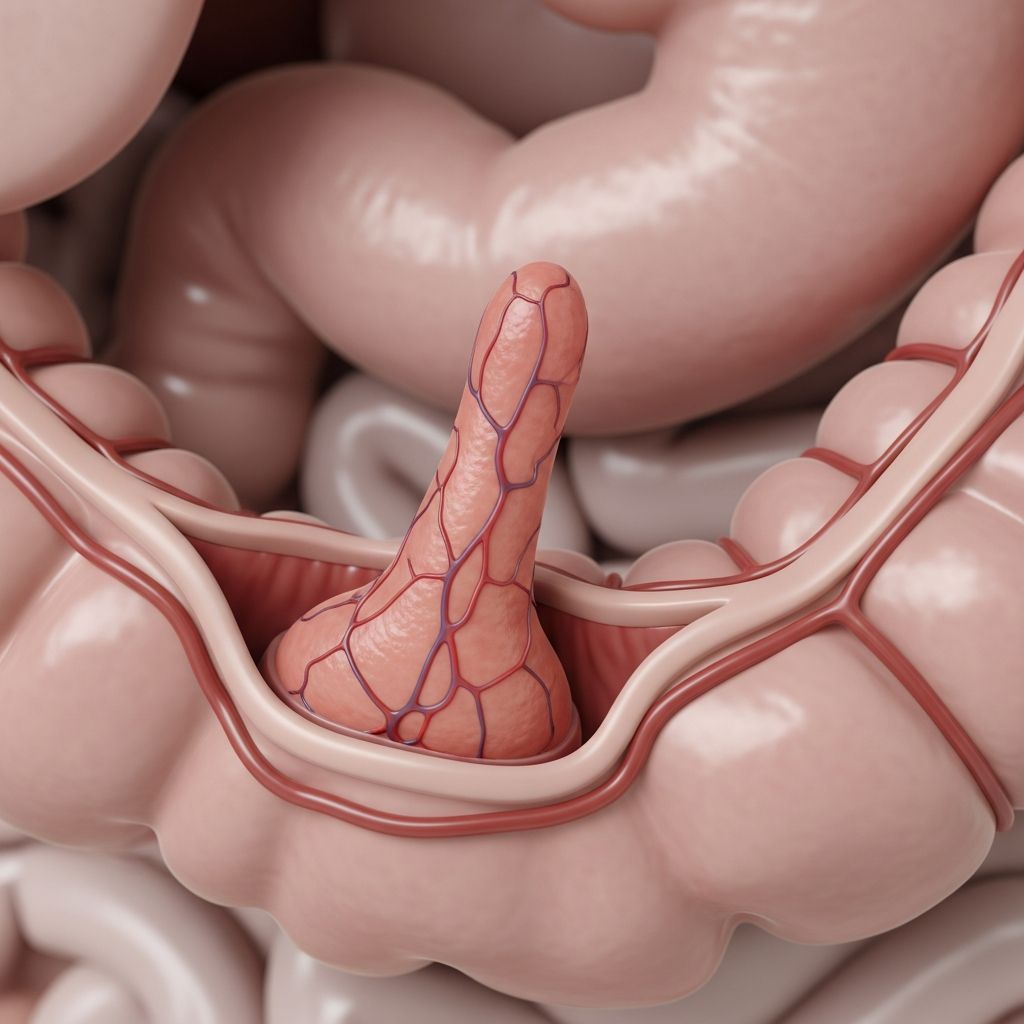
Meckel’s Diverticulum: Understanding a Common Congenital Condition
Meckel’s diverticulum is one of the most frequently encountered congenital anomalies of the gastrointestinal tract, present in approximately 2% of the general population. Despite its prevalence, the majority of individuals with this condition remain asymptomatic throughout their lives. However, when symptoms do develop, they can range from mild abdominal discomfort to severe life-threatening complications requiring emergency surgical intervention. Understanding this condition is crucial for both healthcare providers and patients, as early recognition and appropriate management can prevent serious complications.
What is Meckel’s Diverticulum?
Meckel’s diverticulum is an outpouching or small pouch that forms in the small intestine, typically located at the terminal end near the ileocecal valve. This condition results from incomplete obliteration of the vitelline duct, also known as the omphalomesenteric duct, which normally connects the developing intestines to the yolk sac during fetal development. When this duct fails to fully close during embryonic development, it leaves behind an abnormal tissue remnant that can cause various complications later in life.
The blood supply to Meckel’s diverticulum originates from a remnant of the vitelline artery, which branches from the superior mesenteric artery. This unique vascular anatomy is important to understand when complications develop, as it can lead to bleeding or obstruction.
The Rule of 2’s: Key Characteristics
Meckel’s diverticulum follows a distinctive pattern known as the “rule of 2’s,” which healthcare providers use to remember its key characteristics:
- Occurs in approximately 2% of the population
- About 2% of affected individuals become symptomatic
- Located approximately 2 feet from the ileocecal valve
- Symptoms typically develop before age 2 years (though can occur at any age)
- Ectopic tissue is present in approximately 1 out of 2 cases
- Average length is approximately 2 inches
- Male-to-female incidence ratio is approximately 2 to 1
Causes and Development
Meckel’s diverticulum develops as a result of embryologic developmental abnormality. During normal fetal development, the vitelline duct connects the yolk sac to the developing intestines. This duct is supposed to obliterate completely by approximately the eighth week of gestation. When this process fails to occur properly, remnants of the vitelline duct persist, ultimately leading to the formation of Meckel’s diverticulum.
The condition is congenital, meaning individuals are born with it. However, its presence alone does not guarantee that symptoms will develop. The majority of people with Meckel’s diverticulum live their entire lives without experiencing any complications or symptoms.
Symptoms and Complications
While most individuals with Meckel’s diverticulum remain asymptomatic, approximately 4% of those with this condition experience symptoms at some point in their lives. When symptoms do develop, they can vary significantly depending on the underlying complication.
Common Presenting Symptoms
The most frequently reported symptoms include:
- Painless gastrointestinal bleeding, often presenting as dark or tarry stools (melena)
- Abdominal pain, which may be vague or localized
- Nausea and vomiting
- Abdominal distension
- Constipation or changes in bowel habits
- Anemia resulting from chronic blood loss
Potential Complications
The most serious complications associated with Meckel’s diverticulum include small bowel obstruction and bleeding secondary to ectopic gastric or pancreatic tissue. Small bowel obstruction can occur through several mechanisms, including diverticulitis, intussusception (where one portion of bowel slides into another), or through mesodiverticular band obstruction, where a band of tissue connecting the diverticulum to the mesentery causes bowel loops to become strangulated or mechanically obstructed.
Related Stories



Ectopic gastric mucosa, present in up to 50% of cases with Meckel’s diverticulum, can secrete stomach acid, leading to ulceration and bleeding. Similarly, ectopic pancreatic tissue can cause inflammation and obstruction. In rare cases, malignant transformation can occur, with carcinoid tumors being the most common malignancy, followed by leiomyosarcoma, adenocarcinoma, and gastrointestinal stromal tumors.
Diagnosis and Diagnostic Imaging
Diagnosing Meckel’s diverticulum can be challenging, as its symptoms often overlap with other gastrointestinal conditions. However, several diagnostic approaches can help confirm the diagnosis.
Imaging Techniques
Several imaging modalities are utilized to diagnose Meckel’s diverticulum:
| Diagnostic Method | Description | Advantages | Limitations |
|---|---|---|---|
| Technetium-99m Pertechnetate Scan (Meckel’s Scan) | Nuclear medicine imaging that identifies ectopic gastric mucosa | Highly specific for ectopic tissue; non-invasive | May miss cases without ectopic tissue; false negatives possible |
| CT Scan | Cross-sectional imaging showing bowel anatomy and obstruction | Excellent for identifying obstruction and complications; identifies transition zones | Less specific for Meckel’s alone; radiation exposure |
| X-ray | Plain abdominal radiography | Initial imaging for obstruction; shows air-fluid levels | Low sensitivity; non-specific findings |
| MRI | Magnetic resonance imaging of abdomen | No radiation; good soft tissue visualization | May not clearly show small pouches; less commonly used |
Computed tomography remains the primary diagnostic tool for identifying intestinal obstruction and intussusception related to Meckel’s diverticulum. When CT imaging reveals a transition zone near the distal ileum or terminal ileum, combined with clinical presentation, it strongly suggests Meckel’s diverticulum as the underlying cause.
When Treatment is Necessary
The decision to surgically remove an incidentally discovered Meckel’s diverticulum remains controversial among medical professionals. Treatment recommendations have evolved over time, with current practice favoring a case-by-case approach rather than universal surgical resection.
Factors that favor surgical resection include:
- Younger age at presentation
- Palpable or visibly abnormal appearance of the diverticulum
- Previous symptoms potentially caused by the Meckel’s (obstruction or bleeding)
- Long diverticulum length
- Presence of ectopic tissue
Surgical resection involves diverticulectomy with primary small bowel anastomosis and appendectomy in most cases. The procedure is typically performed laparoscopically, which offers advantages including reduced recovery time and decreased surgical trauma compared to open surgery.
Surgical Management and Recovery
When surgical intervention becomes necessary, typically due to acute complications like obstruction or significant bleeding, the standard treatment is laparoscopic diverticulectomy. During this minimally invasive procedure, the surgeon removes the diverticulum and reattaches the bowel ends. In cases where a mesodiverticular band is identified as causing obstruction, the surgeon releases this band while removing the affected tissue.
Most patients experience prompt resolution of symptoms following successful surgical treatment. Recovery from laparoscopic surgery is typically faster than open abdominal surgery, with most patients able to resume normal activities within 2-3 weeks. Post-operative complications are relatively uncommon, occurring in approximately 8% of cases, with mortality rates around 1.2%.
Prognosis and Long-term Outlook
The prognosis for Meckel’s diverticulum depends on several factors. Most individuals with this condition have an excellent prognosis, as they remain asymptomatic throughout their lives. When complications do occur and are treated appropriately, outcomes are generally favorable.
For symptomatic cases undergoing surgical treatment, important prognostic factors include symptom duration, tumor size (if malignant transformation has occurred), and the absence of lymphatic or distant metastases. Early recognition and appropriate surgical intervention significantly improve outcomes and prevent serious complications.
Risk of Malignant Transformation
While malignant transformation of Meckel’s diverticulum is uncommon, occurring in only 0.5% to 3.2% of cases, the risk remains significantly higher than in other small bowel locations. Carcinoid tumors represent the most common malignancy, accounting for 33% to 44% of diverticular malignancies, followed by leiomyosarcoma (18-25%), adenocarcinoma (12-16%), and gastrointestinal stromal tumors (12%). Risk increases substantially with age, suggesting that older patients with Meckel’s diverticulum may warrant closer surveillance.
Distinguishing Features of Inverted Meckel’s Diverticulum
A rare variant known as inverted Meckel’s diverticulum presents additional diagnostic challenges. In this form, the diverticulum is inverted into the bowel lumen, creating an intraluminal blind-ending structure typically located in the mid to distal ileum. This variant can cause ileocolic intussusception and presents with recurrent intermittent abdominal pain, vomiting, and poor oral intake. Similar to standard Meckel’s diverticulum, treatment involves surgical intervention through either open abdominal surgery or laparoscopic approach, with segmental resection and anastomosis.
Frequently Asked Questions (FAQs)
Q: How common is Meckel’s diverticulum?
A: Meckel’s diverticulum occurs in approximately 2% of the general population, making it one of the most common congenital anomalies of the gastrointestinal tract. However, only about 4% of those with this condition ever develop symptoms.
Q: What are the early warning signs of symptomatic Meckel’s diverticulum?
A: Early warning signs include painless gastrointestinal bleeding (dark or tarry stools), unexplained anemia, recurrent abdominal pain, nausea, vomiting, and abdominal distension. Any combination of these symptoms warrants medical evaluation.
Q: Should all incidentally discovered Meckel’s diverticulum be surgically removed?
A: No, current medical practice recommends a case-by-case approach rather than universal surgical resection. Factors like age, symptom history, and tissue characteristics guide the decision for surgical intervention.
Q: What is the “rule of 2’s” in Meckel’s diverticulum?
A: The rule of 2’s is a mnemonic device that helps remember key characteristics: 2% prevalence, 2% symptomatic rate, located 2 feet from the ileocecal valve, average length of 2 inches, 2:1 male-to-female ratio, and symptoms before age 2 in affected children.
Q: Is laparoscopic surgery effective for treating symptomatic Meckel’s diverticulum?
A: Yes, laparoscopic diverticulectomy is effective and is now the preferred surgical approach for treating symptomatic Meckel’s diverticulum. It offers advantages including faster recovery, reduced surgical trauma, and comparable outcomes to open surgery.
Q: Can cancer develop from Meckel’s diverticulum?
A: While rare, malignant transformation can occur in 0.5% to 3.2% of cases. Carcinoid tumors are most common, followed by leiomyosarcoma, adenocarcinoma, and gastrointestinal stromal tumors. Risk increases with age.
References
- Meckel’s diverticulum causing acute intestinal obstruction: A case report — National Center for Biotechnology Information/PMC. 2022-06-15. https://pmc.ncbi.nlm.nih.gov/articles/PMC9110976/
- Inverted Meckel’s diverticulum: A case report and role of radiological imaging — Acquaint Publications. 2023. https://www.acquaintpublications.com/article/inverted_meckels_diverticulum_a_case_report_and_role_of_radiological_imaging
- Malignant neoplasms of Meckel’s diverticulum; an evidence based review — National Center for Biotechnology Information/PMC. 2019-07-10. https://pmc.ncbi.nlm.nih.gov/articles/PMC6582065/
Similar Articles








Read full bio of medha deb