Medications And Fall Risks In Seniors: Evidence-Based Tips
Discover how common medications heighten fall risks for older adults and learn strategies for safer prescribing and management.
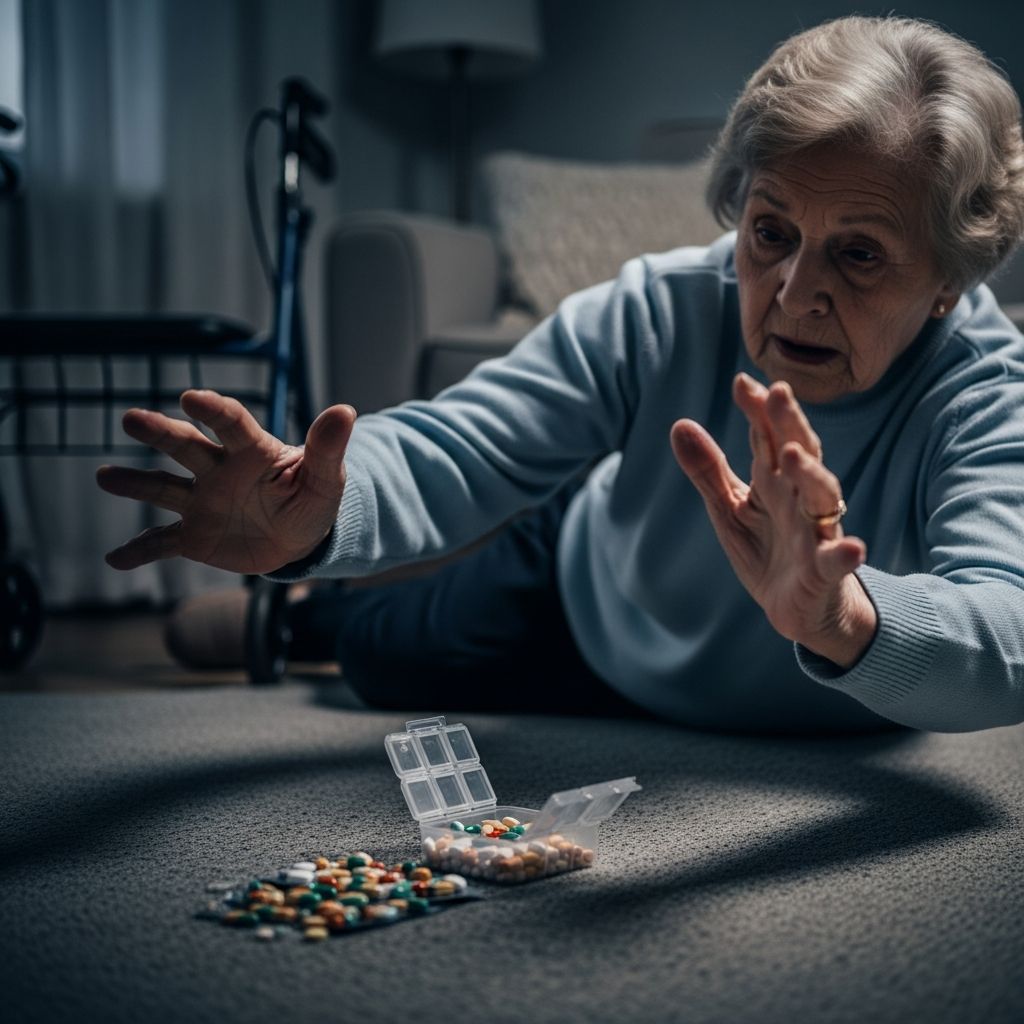
Falls represent a leading cause of injury among older adults, with certain medications significantly elevating this danger through side effects like dizziness, sedation, and balance disruption. Research consistently links specific drug classes to heightened fall probabilities, emphasizing the need for vigilant prescribing practices in geriatric care.
Why Medications Pose a Greater Threat to Older Adults
Aging bodies process drugs differently due to slower metabolism, reduced kidney and liver function, and heightened sensitivity to side effects. Polypharmacy—taking multiple medications—compounds these issues, as interactions amplify risks. Studies show that older adults on four or more drugs face dramatically higher fall chances, particularly in long-term care settings where 62% of residents use over two medications.
Physiological changes, such as orthostatic hypotension from antihypertensives or cognitive impairment from psychotropics, directly impair mobility and stability. Logistic analyses reveal odds ratios exceeding 1.8 for certain regimens, underscoring the urgency of routine medication reviews.
High-Risk Drug Categories Linked to Falls
Multiple peer-reviewed studies identify key medication groups associated with falls. Here’s a breakdown of the most concerning classes:
- Psychotropics: Antidepressants show the strongest correlation, with Bayesian odds ratios of 1.68 (95% CrI: 1.47-1.91), due to sedation and dizziness.
- Benzodiazepines and Sedatives/Hypnotics: These carry ORs of 1.41 (95% CrI: 1.20-1.71) and similar for sedatives, impairing balance and reaction times.
- Antihypertensives: Common in 59% of older patients, they contribute via blood pressure drops, with population studies confirming increased daily doses heighten risks.
- Opioids and Antiepileptics: Used by 21% and 6-17% respectively, linked to OR 1.84 for STOPPfall meds overall.
- Antidiabetics and Antipsychotics: Chi-square tests yield ORs of 2.08 and 2.07, significant in long-term care.
Nervous system drugs dominate signals in pharmacovigilance data, comprising 44.1% of 258 fall-associated agents from FAERS reports.
Evidence from Key Research Studies
Retrospective reviews of older adults demonstrate clear patterns. In one analysis, 37% on antidepressants and 17% on benzodiazepines showed significant fall associations (OR 1.84, p=0.044). Meta-analyses pooling 79,081 participants across 9 classes confirm sedatives, antidepressants, and benzodiazepines as top risks, with stratified results holding for high-quality studies.
Long-term care data highlights antidepressants (χ²=4.941, p=0.026) and antidiabetics (χ²=4.097, p=0.043), especially among women aged 70-89. Pharmacovigilance from 2004 onward flags antipsychotics, hypnotics, and anticonvulsants with high reporting odds ratios (ROR).
| Drug Class | Odds Ratio (95% CI/CrI) | Source |
|---|---|---|
| Antidepressants | 1.68 (1.47-1.91); 2.08 (0.61-1.76) | |
| Benzodiazepines | 1.41 (1.20-1.71) | |
| Sedatives/Hypnotics | Significant increase | |
| Antihypertensives | 1.84 overall (STOPPfall) | |
| Antidiabetics | 2.07 (1.01-4.22) |
Polypharmacy: The Compounding Danger
Using multiple drugs multiplies risks through additive effects and interactions. Systematic reviews note falls surge with four-plus medications, aligning with findings where 62% polypharmacy prevalence correlates with higher incidents. Clinicians must prioritize deprescribing unnecessary agents to mitigate this.
Strategies for Reducing Medication-Related Falls
Effective management involves multidisciplinary approaches:
- Conduct regular medication reconciliation, focusing on high-risk classes.
- Opt for lowest effective doses and monitor for side effects like hypotension or sedation.
- Explore non-drug alternatives, such as behavioral therapies for anxiety or sleep.
- Implement fall risk assessments using tools like STOPP/START criteria.
- Prioritize drugs with lower ROR in high-risk patients.
Related Stories



Interventions like dose adjustments and discontinuations reduce adverse events, as evidenced by improved outcomes in reviewed cohorts.
Role of Healthcare Providers in Prevention
Physicians, pharmacists, and nurses share responsibility. Routine screening for polypharmacy and fall history guides safer prescribing. Bayesian models stress caution with psychotropics, urging larger studies for community and facility settings. Pharmacovigilance advocates targeting nervous system drugs with monitoring.
Patient and Caregiver Tips for Safety
Older adults and families can act proactively:
- Keep a current medication list, including OTC and herbals, for every visit.
- Report dizziness, unsteadiness, or confusion promptly.
- Use aids like grab bars and ensure good lighting.
- Discuss deprescribing options during reviews.
Frequently Asked Questions (FAQs)
What are the most dangerous medications for falls?
Antidepressants, benzodiazepines, sedatives, antihypertensives, and antidiabetics top the list based on meta-analyses and cohort studies.
How does polypharmacy affect fall risk?
It increases falls dramatically, with ORs rising per additional drug, especially beyond four.
Can falls from medications be prevented?
Yes, through reviews, dose optimization, and alternatives, as supported by intervention research.
Should older adults avoid all psychotropic drugs?
Not necessarily, but use lowest doses with close monitoring, prioritizing lower-risk options.
Who is at highest risk from medication-induced falls?
Those over 70 in long-term care, on multiple drugs, or with conditions like diabetes.
Conclusion
Medication-related falls are preventable with informed practices. By understanding high-risk classes and applying evidence-based strategies, healthcare teams can safeguard seniors effectively. Ongoing research refines these approaches for better outcomes.
References
- Medication Use and Falls Risk in Older Adults — Oxford Academic. 2024. https://academic.oup.com/ageing/article/53/Supplement_4/afae178.192/7791317
- Medication use and fall risk among older adults in long-term care — PMC. 2024. https://pmc.ncbi.nlm.nih.gov/articles/PMC12435277/
- Meta-analysis of the Impact of 9 Medication Classes on Falls in Elderly — JAMA Internal Medicine. 2009-12-28. https://jamanetwork.com/journals/jamainternalmedicine/fullarticle/485251
- Drug-induced fall risk in older patients: A pharmacovigilance study — PMC. 2022. https://pmc.ncbi.nlm.nih.gov/articles/PMC9746618/
- Effect of number of medications on the risk of falls among community-dwelling older people — Wiley Online Library. 2023. https://onlinelibrary.wiley.com/doi/10.1111/ggi.14760
Similar Articles








Read full bio of Sneha Tete