Medicine Syringes Guide: 5 Types, Tips, And Safety
Explore essential types, safe usage, and best practices for medicine syringes in healthcare and home care settings.
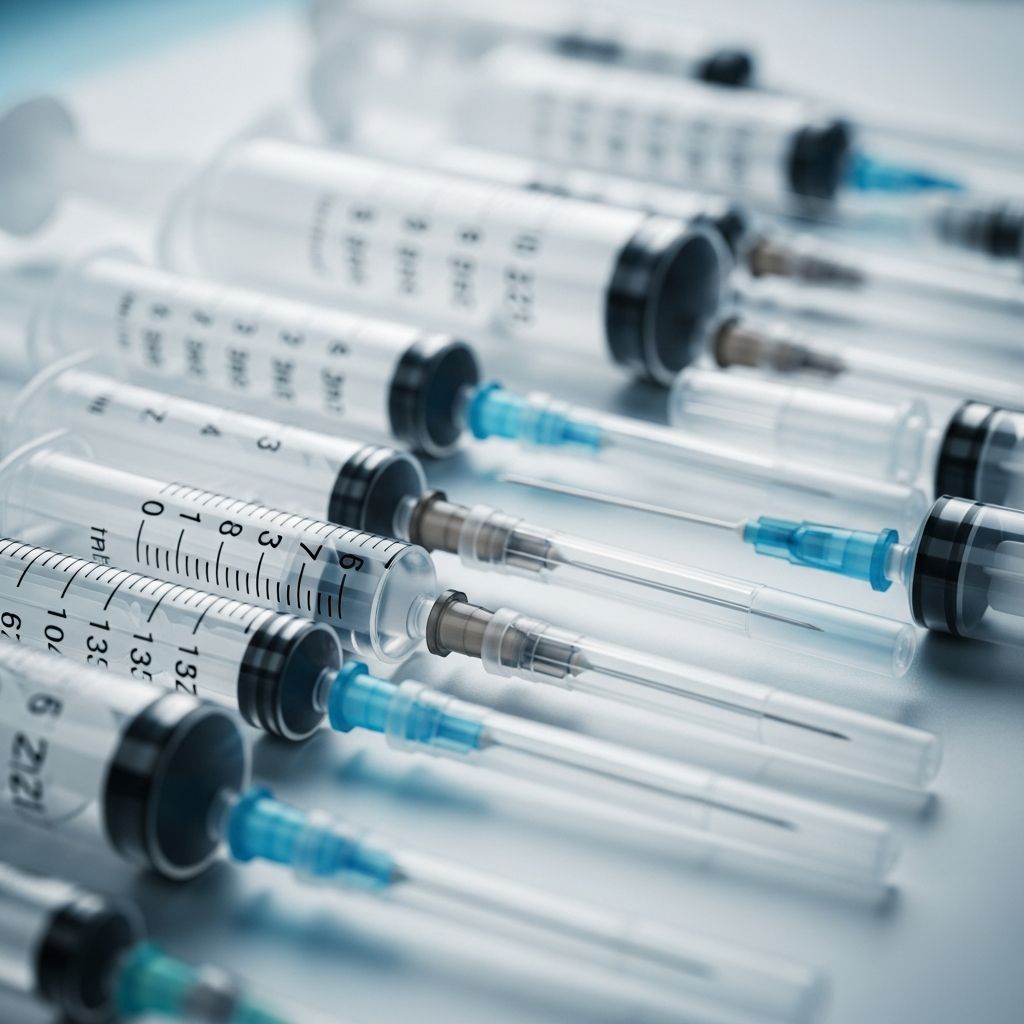
Medicine syringes are vital tools in healthcare, enabling precise delivery of medications, fluids, and treatments. These devices consist of a barrel, plunger, and tip, often paired with needles, and are designed for tasks ranging from injections to irrigation.
Core Components of a Medicine Syringe
Every syringe features three primary parts: the barrel holds the liquid with volume markings for accuracy; the plunger creates pressure or vacuum to draw or expel contents; and the tip connects to needles or tubing. Materials like plastic for disposables or glass for reusables affect durability and sterility.
- Barrel: Transparent with graduations for exact dosing.
- Plunger: Rubber-tipped for airtight seal.
- Tip: Varies by type for specific applications.
Classification by Intended Purpose
Syringes are tailored to medical needs, ensuring efficacy and safety. Understanding these categories helps in selecting the right tool.
Insulin Administration Syringes
These are compact, typically holding 0.3 to 1 mL, with fine-gauge needles and unit markings for diabetes management. They allow subcutaneous delivery of insulin to control blood glucose.
Oral Medication Delivery Syringes
Distinctly marked, often purple, these 5-10 mL syringes administer liquid drugs orally, ideal for pediatrics or pets. They prevent confusion with injectable types.
Tuberculin Testing Syringes
Small 1 mL capacity with precise graduations for intradermal injections, commonly used in TB skin tests.
Dental and Irrigation Syringes
Employed in dentistry for anesthetics or rinsing, these feature specialized tips for oral procedures.
Specialized Extraction Syringes
Venom extraction models create vacuum without puncturing skin, aiding first aid for bites.
| Purpose | Capacity | Key Feature |
|---|---|---|
| Insulin | 0.3-1 mL | Unit markings, fine needle |
| Oral | 5-10 mL | Purple plunger, no needle |
| Tuberculin | 1 mL | Precise intradermal |
| Dental | Varies | Anesthetic delivery |
Syringe Tip Variations and Their Applications
The tip design determines compatibility and function, influencing secure connections and procedural suitability.
Luer Slip Tips
Friction-based fit for quick needle attachment, used in IM, Sub-Q injections, sampling, and wound care. Easy but less secure.
Luer Lock Tips
Threaded for secure twisting, preventing dislodgement in critical IV or high-pressure uses. Audible confirmation ensures safety.
Catheter Tips
Tapered for tubing or catheters, perfect for flushing wounds, feeding tubes, or urinary irrigation. Provides tight seals.
Eccentric Tips
Off-center opening for skin-parallel injections like IV or ID, minimizing vessel penetration risks.
Toomey and Other Tips
Toomey tips suit surgical flushing; specialized ones like NRFit for anesthesia.
- Luer Slip: Fast for routine injections.
- Luer Lock: Secure for IV therapy.
- Catheter: Irrigation and enteral feeding.
Selecting the Appropriate Syringe
Choice depends on volume, viscosity, route, and sterility needs. Match capacity to dose: small for precision, larger for flushes. Consider patient factors like age or site.
Plastic disposables suit most clinical use; glass for labs requiring reuse after sterilization.
Step-by-Step Safe Usage Protocols
Proper technique minimizes risks like infections or air embolisms.
Related Stories



- Preparation: Wash hands, gather sterile supplies.
- Drawing Medication: Invert vial, insert needle at 45°, pull plunger slowly.
- Air Removal: Tap barrel, expel bubbles upward.
- Injection: Clean site, insert at correct angle (e.g., 90° IM).
- Post-Use: Withdraw steadily, apply pressure.
For IV: Use Luer lock, prime line to avoid air.
Safety Measures and Common Risks
Needlestick injuries and contamination are primary concerns. Always use safety-engineered devices, never recap needles.
- Avoid air injection into veins to prevent embolisms.
- Sterile single-use preferred over multi-dose.
- Color-coded plungers distinguish oral from parenteral.
Disposal and Environmental Considerations
Place used syringes in sharps containers immediately. Segregate for incineration or autoclaving to protect waste handlers.
Reduce waste with precise dosing; recycle glass where possible.
Applications Across Healthcare Settings
In hospitals, syringes support IV therapy, vaccines, and surgeries. Home care relies on insulin and oral types for chronic management. Labs use them for precise liquid handling.
Advancements in Syringe Technology
Safety syringes with retractable needles, prefilled units, and needleless injectors enhance usability and reduce hazards.
Frequently Asked Questions (FAQs)
What is the difference between Luer slip and Luer lock?
Luer slip pushes on via friction; Luer lock screws for security.
Can I reuse syringes at home?
No, single-use only to prevent infection.
How do I store syringes?
Cool, dry place; unopened sterile packaging.
Are glass syringes better than plastic?
Glass for reusability in labs; plastic for disposables.
What syringes for wound cleaning?
Catheter or Toomey tips.
References
- Syringes: What You Need To Know And The Different Types — UKMEDI. 2023. https://us.ukmedi.co.uk/blogs/articles/syringes-what-you-need-to-know-and-the-different-types
- Types of Syringe & Needle Tips + Their Uses — Chemyx Inc. 2023. https://chemyx.com/resources/knowledge-base/general-syringe-pump-info/guide-syringe-tip-types/
- Types of Syringes — Geeky Medics. 2024. https://geekymedics.com/types-of-syringes/
- Syringe — Massive Bio. 2024. https://massivebio.com/syringe-bio/
- Syringe — Wikipedia. 2024. https://en.wikipedia.org/wiki/Syringe
- Needle/Syringe Selection & Usage — USC Environmental Health & Safety. 2023. https://ehs.usc.edu/research/lab/needle-syringe-selection-usage/
- How to Choose a Syringe — World Precision Instruments. 2023. https://wpiinc.com/blogs/all/how-to-choose-a-syringe
Similar Articles








Read full bio of medha deb