Medulla Oblongata: Anatomy, Function & Health
Understanding the medulla oblongata: Essential brain anatomy controlling vital life functions.
What Is the Medulla Oblongata?
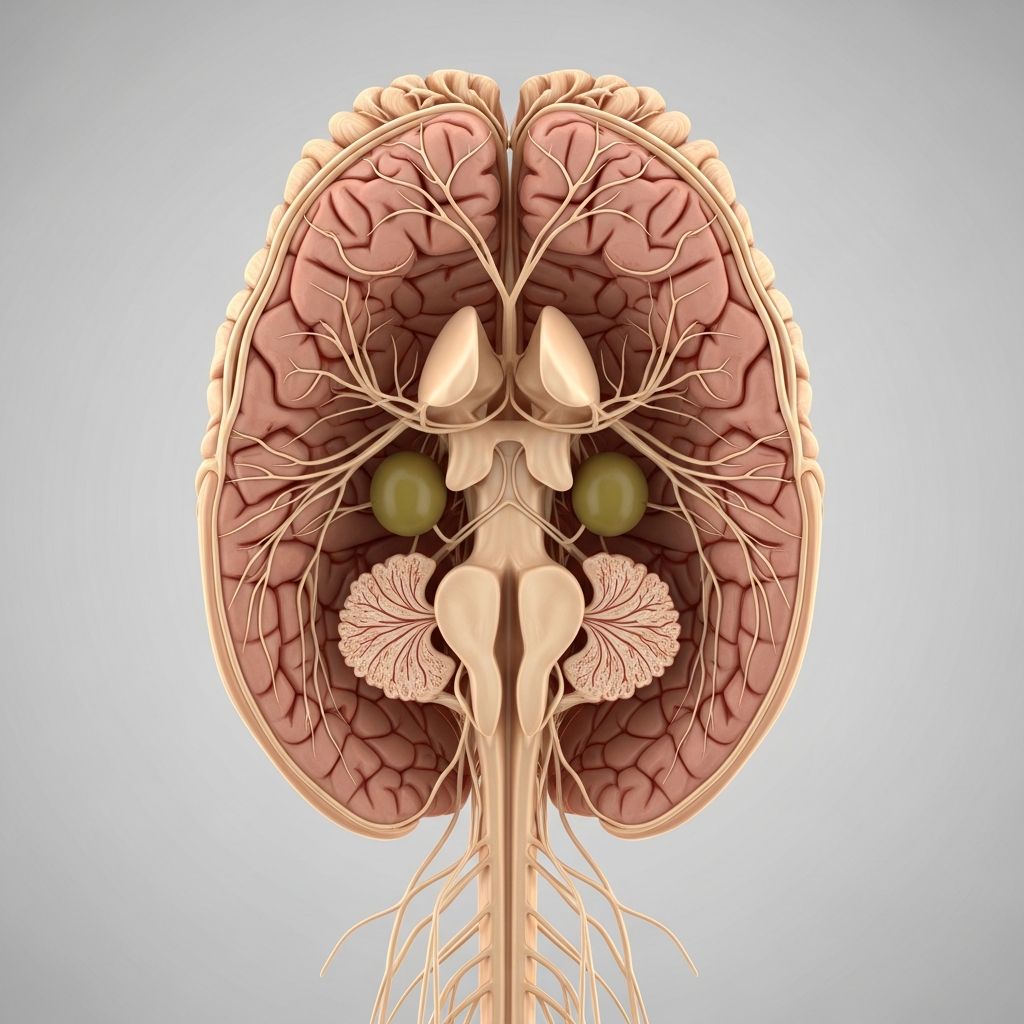
The medulla oblongata is the lowest part of your brain and represents the most inferior portion of the brainstem. It serves as a critical communication hub between your brain and spinal cord, acting as a gateway for vital signals that control your body’s most essential functions. Located at the base of your skull near the foramen magnum (an opening at the skull’s base where the spinal cord enters), the medulla oblongata is a relatively small but extraordinarily important structure. This pea-sized region contains specialized centers that regulate functions you don’t consciously control, such as your heartbeat, breathing patterns, and blood pressure.
The medulla oblongata is continuous with the spinal cord and connects superiorly to the pons and midbrain, forming the brainstem’s foundation. Its strategic position allows it to relay complex signals between your higher brain centers and your body, making it essential for survival itself. Understanding this structure provides valuable insights into how your nervous system maintains homeostasis and coordinates vital bodily functions.
Anatomy of the Medulla Oblongata
The medulla oblongata has a well-defined internal and external anatomy that reflects its diverse functional responsibilities. Anatomically, the medulla is divided into distinct regions and contains several key structures that facilitate its role as a neural relay station and control center.
Internal Divisions
The medulla oblongata is organized into three distinct laminae or layers, arranged from dorsal (back) to ventral (front):
The Tectum: This is the dorsal (posterior) layer that forms part of the floor of the fourth ventricle, a fluid-filled cavity within the brain.
The Tegmentum: This middle layer contains the inferior olivary nucleus and the nuclei of several cranial nerves (cranial nerves IX, X, XI, and XII).
The Basis: This is the most ventral (anterior) layer and contains the pyramids where motor tract decussation occurs.
Key Anatomical Structures
The Pyramids: The ventral medulla contains a pair of triangular structures called pyramids, which are prominent features on the brain’s undersurface. These pyramids contain the pyramidal tracts, composed of the corticospinal tract (carrying motor signals from the cerebral cortex to the spinal cord) and the corticobulbar tract (carrying signals from the motor cortex to cranial nerves).
Pyramidal Decussation: As motor fibers descend through the lower medulla, approximately 80 to 90 percent of corticospinal tracts cross from one side of the brain to the opposite side of the body at a point called the pyramidal decussation or decussation of the pyramids. This crossing is essential for coordinating motor control, which is why strokes affecting one side of the brain often result in weakness on the opposite side of the body.
Olivary Bodies: Located laterally on the pyramids, these paired structures are components of the olivocerebellar system and play important roles in motor coordination and learning.
The Reticular Formation: This netlike system of neurons extends throughout the medulla and all three zones of the brainstem. Within the medulla, it helps regulate blood pressure, heart rate, and respiration, while also participating in the transmission of motor and sensory impulses.
Related Stories



Location and Connections
The medulla oblongata occupies a unique anatomical position that makes it a crossroads for neural communication. It sits immediately above where the spinal cord enters the skull through the foramen magnum, positioning it as the final relay station before signals reach your higher brain centers. The anterior (front) surface features the median fissure, which is continuous with the spinal cord’s median fissure, while the posterior (back) surface has a median sulcus that also continues into the spinal cord.
The medulla connects to multiple critical brain and spinal cord structures:
Spinal Cord: This direct connection enables communication between the brain and body, facilitating both voluntary movements and reflex actions.
Pons and Midbrain: These superior brainstem structures allow integration of sensory and motor information across different brain levels.
Cerebellum: This structure receives input from the medulla to coordinate and refine motor movements.
Hypothalamus and Limbic System: These connections allow the medulla to participate in maintaining homeostasis and regulating stress responses.
Functions of the Medulla Oblongata
The medulla oblongata performs multiple critical functions that are essential for survival and maintaining bodily stability. These functions operate largely outside conscious awareness, making the medulla an indispensable component of your autonomic nervous system.
Autonomic Nervous System Control
The medulla plays a vital role in regulating the autonomic nervous system, which controls bodily functions that occur without your conscious effort. By interacting with both the sympathetic and parasympathetic nervous systems, the medulla helps your body respond appropriately to environmental changes. During stressful situations, it triggers the “fight or flight” response, while during restful periods, it promotes the “rest and digest” state.
Cardiovascular Regulation
The cardiac center within the medulla oblongata continuously monitors and adjusts your heart rate based on your body’s needs. When you’re resting, the medulla signals your heart to slow down. During physical activity or in response to stress, it commands the heart to beat faster, ensuring adequate oxygen-rich blood reaches your tissues. This automatic regulation ensures your heart rate harmonizes with your activity levels without requiring conscious attention.
Respiratory Control
The respiratory center in the medulla regulates the rhythm and depth of your breathing by continuously monitoring blood gas levels, including oxygen and carbon dioxide concentrations. When your body needs more oxygen or must eliminate excess carbon dioxide, the medulla automatically adjusts your breathing patterns. This sophisticated regulation maintains optimal blood gas balance and supports all bodily functions that depend on efficient oxygen delivery.
Blood Pressure Regulation
Working in conjunction with the cardiac and respiratory centers, the medulla helps regulate blood pressure through the autonomic nervous system, ensuring adequate circulation throughout your body.
Motor Control and Movement
The pyramidal tracts passing through the medulla carry motor signals from your brain to your spinal cord, controlling voluntary movements such as reaching, walking, and talking. The pyramidal decussation ensures that each brain hemisphere controls muscles on the opposite side of the body. Additionally, the medulla manages reflex centers that control swallowing, speaking, and facial expressions through cranial nerves XI and XII.
Reflex Management
The medulla houses specialized reflex centers that protect your body and maintain essential functions:
Swallowing Reflex: The medulla controls this reflex, safely directing food to your stomach.
Vomiting Reflex: This reflex expels harmful substances from your body to prevent ingestion of toxins.
Coughing and Sneezing: These protective reflexes clear airways of irritants and foreign materials.
Gag Reflex: This reflex prevents choking and protects your airway.
Sensory Signal Transmission
The medulla transmits sensory information from internal organs and manages four of your twelve cranial nerves (cranial nerves IX, X, XI, and XII), facilitating voice control, taste, swallowing, and neck movements.
Role of Cranial Nerves
Four cranial nerves pass through or originate from the medulla oblongata, each with specialized functions:
Cranial Nerve IX (Glossopharyngeal Nerve): Involved in taste sensation and swallowing.
Cranial Nerve X (Vagus Nerve): The longest cranial nerve, controlling heart rate, digestion, and other autonomic functions.
Cranial Nerve XI (Accessory Nerve): Controls neck and upper back muscles, allowing shoulder shrugging and head turning.
Cranial Nerve XII (Hypoglossal Nerve): Controls tongue muscles, enabling speech and swallowing.
Clinical Significance
The medulla oblongata’s critical role in regulating vital functions means that damage to this region can have severe health consequences. Understanding medullary function is essential for diagnosing and treating various neurological conditions.
Disorders and Conditions
Several conditions can affect the medulla oblongata, potentially disrupting vital functions:
Stroke: A medullary stroke can impair heart rate regulation, breathing, and other autonomic functions, potentially resulting in life-threatening complications.
Degenerative Diseases: Conditions like amyotrophic lateral sclerosis (ALS) can damage medullary neurons, affecting motor control and eventually respiration.
Medullary Syndrome: Lateral medullary syndrome (Wallenberg syndrome) can occur following stroke and results in loss of pain and temperature sensation on one side of the face and the opposite side of the body.
Increased Intracranial Pressure: Swelling or pressure in the skull can compress the medulla, potentially causing life-threatening complications.
Diagnostic Approaches
Modern diagnostic techniques have improved our ability to assess medullary function and identify disorders. Magnetic resonance imaging (MRI) and computed tomography (CT) scans can visualize medullary structure and identify lesions or abnormalities. Neurological examinations testing reflexes, swallowing, and other medulla-controlled functions help clinicians assess medullary integrity. Ongoing research into medullary involvement in various conditions continues to improve treatment options and patient care.
Understanding Medullary Functions: A Summary Table
| Function | Mechanism | Importance |
|---|---|---|
| Heart Rate Regulation | Cardiac center monitors and adjusts heart rate | Ensures adequate oxygen delivery to tissues |
| Respiratory Control | Respiratory center regulates breathing rhythm | Maintains blood gas balance |
| Blood Pressure Regulation | Autonomic nervous system coordination | Ensures proper circulation |
| Motor Control | Pyramidal tracts carry motor signals | Enables voluntary movement |
| Reflex Management | Specialized reflex centers | Protects body and maintains safety |
How the Medulla Works: The Brain-Body Connection
The medulla oblongata functions as the ultimate command center for involuntary functions, seamlessly integrating signals from higher brain regions with information about your body’s current state. When you exercise, for example, your muscles need more oxygen. Your body detects this increased oxygen demand, and the medulla receives signals indicating this need. It then automatically increases your heart rate and breathing depth without your conscious involvement. This elegant system ensures your body continuously adapts to changing demands.
The medulla’s design allows it to process information rapidly and make adjustments in real-time. Its reticular formation network extends connections throughout the brainstem, enabling coordination with other vital centers. Its proximity to the spinal cord ensures minimal delay in transmitting critical signals, making it an efficient control system for life-sustaining functions.
Frequently Asked Questions
Q: What happens if the medulla oblongata is damaged?
A: Damage to the medulla can severely disrupt vital functions. Depending on the extent and location of damage, it may impair heart rate regulation, breathing control, blood pressure management, and reflexes. Severe medullary damage can be life-threatening, potentially requiring intensive medical intervention.
Q: Can the medulla oblongata repair itself?
A: The medulla oblongata has limited capacity for self-repair. Unlike other tissues, the brain cannot regenerate neurons. However, the brain exhibits some neuroplasticity—the ability to reorganize neural connections—which may allow some functional recovery after minor injuries through rehabilitation and therapy.
Q: Why is the pyramidal decussation important?
A: The pyramidal decussation, where motor fibers cross from one brain hemisphere to the opposite side of the body, is crucial for coordinated movement. This crossing means your left brain controls your right side and vice versa. Understanding this anatomy helps explain why a stroke on one side of the brain causes weakness on the opposite side of the body.
Q: How does the medulla regulate breathing automatically?
A: The medulla’s respiratory center continuously monitors blood oxygen and carbon dioxide levels through chemoreceptors. When these levels deviate from normal, the medulla automatically adjusts your breathing rate and depth to restore balance, allowing you to breathe without conscious thought.
Q: What is the relationship between the medulla and the vagus nerve?
A: The vagus nerve (cranial nerve X) originates from the medulla oblongata and is one of the longest cranial nerves. It carries parasympathetic signals that help regulate heart rate, digestion, and other autonomic functions, making it a critical conduit for medullary control of body systems.
Q: Can meditation or breathing exercises affect medullary function?
A: Yes, certain practices can influence medullary function. Controlled breathing exercises and meditation can affect your autonomic nervous system, allowing some conscious influence over normally automatic functions. These practices may help reduce stress responses and promote parasympathetic (relaxation) activation.
Key Takeaways
The medulla oblongata, though small, is one of your brain’s most critical structures. Located at the base of your brainstem where it connects to your spinal cord, this vital region controls essential functions you never consciously think about—your heartbeat, breathing, blood pressure, and protective reflexes. The medulla achieves these vital functions through specialized centers and neural pathways, including the pyramidal tracts for motor control and the reticular formation for autonomic regulation. Understanding the medulla’s anatomy and functions provides valuable insight into how neurological conditions affect health and why this brain region is essential for survival. As research continues to expand our knowledge of the medulla’s role in various conditions, new therapeutic approaches may emerge to better treat medullary-related disorders and improve patient outcomes.
References
- Medulla oblongata | Description, Anatomy, & Function — Britannica. Updated 2024. https://www.britannica.com/science/medulla-oblongata
- Understanding the Medulla Oblongata: Anatomy and Roles — Rupa Health. 2024. https://www.rupahealth.com/post/understanding-the-medulla-oblongata-anatomy-and-roles
- Medulla Oblongata: What to Know — WebMD. Updated 2024. https://www.webmd.com/brain/medulla-oblongata-what-to-know
- Neuroanatomy, Medulla Oblongata — StatPearls, NCBI National Center for Biotechnology Information. Updated 2024. https://www.ncbi.nlm.nih.gov/books/NBK551589/
- Brainstem: What It Is, Function, Anatomy & Location — Cleveland Clinic. Updated 2024. https://my.clevelandclinic.org/health/body/21598-brainstem
- Vagus Nerve: What It Is, Function, Location & Conditions — Cleveland Clinic. Updated 2024. https://my.clevelandclinic.org/health/body/22279-vagus-nerve
- Brain: Parts, Function, How It Works & Conditions — Cleveland Clinic. Updated 2024. https://my.clevelandclinic.org/health/body/22638-brain
Similar Articles








Read full bio of medha deb