Melanoma In Skin Of Color: Guide To Detection And Treatment
Understanding melanoma risks, presentations, diagnosis, and outcomes in darker skin tones for better detection and survival.
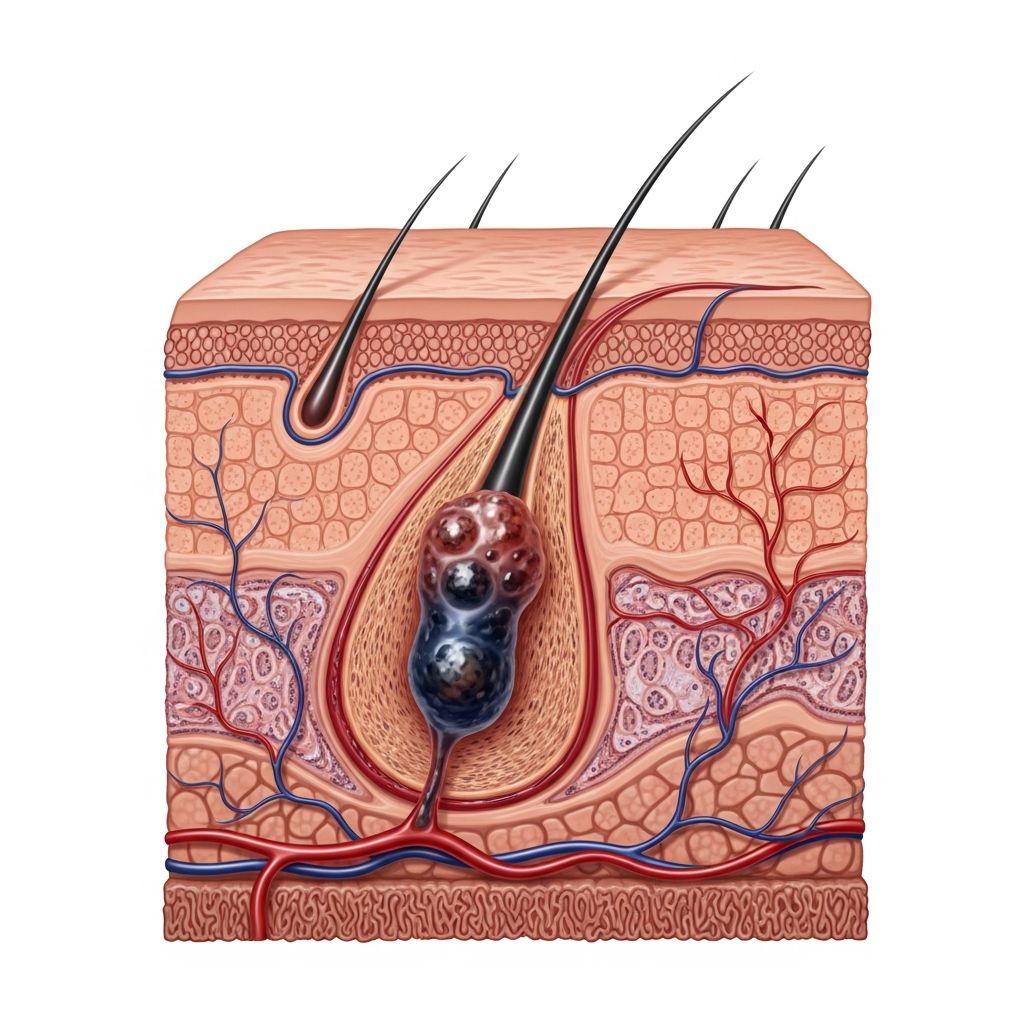
Melanoma is a serious form of skin cancer that arises from melanocytes, the pigment-producing cells in the skin. While less common in individuals with skin of colour, it often presents at advanced stages, resulting in higher mortality rates compared to lighter skin types.
What is melanoma?
Melanoma originates from the uncontrolled growth and replication of melanocytes, the cells responsible for skin pigmentation. These pigment cells can proliferate abnormally due to genetic mutations, leading to malignant tumours. Although melanoma can affect any skin type, its incidence is significantly lower in darker skin tones due to higher melanin content, which provides natural protection against ultraviolet (UV) radiation.
Who gets melanoma?
Melanoma primarily affects individuals with lighter skin, but people of all skin colours are at risk. ‘Skin of colour’ typically refers to Fitzpatrick skin phototypes IV–VI, encompassing brown or black skin tones common in African, Asian, South American, Pacific Island, Maori, Middle Eastern, and Hispanic populations.
Incidence rates vary markedly by ethnicity. In the United States from 1999–2006, among 288,741 advanced melanoma patients, only 1.4% were Black, 0.7% Asian/Pacific Islander, and 0.5% Hispanic, compared to 97% White. Globally, age-standardised incidence rates per 100,000 are 46.5 for White men, 32.9 for White women, 0.7 for Black men, and 0.6 for Black women. Despite lower incidence, mortality is disproportionately higher in skin of colour: Black patients have a 2–3-fold higher mortality rate than White patients.
| Group | Incidence | Mortality |
|---|---|---|
| White | High (e.g., 25/100,000) | Lower relative to incidence |
| Black | Low (1/100,000) | High (5-year survival ~70% vs 94% White) |
| Hispanic | Low | Intermediate |
| Asian | Low | High relative to incidence |
A family history of melanoma increases risk across all skin types due to genetic predisposition.
Causes
Melanoma results from progressive genetic transformations in melanocytic stem cells, often triggered by UV radiation from sun exposure, which damages DNA. Darker skin’s abundant melanin absorbs UV rays, offering protection and reducing the need for sunscreens specifically for melanoma prevention. However, melanomas in skin of colour frequently arise in non-sun-exposed areas, suggesting other triggers like trauma or genetic factors. Acral melanomas, common in darker skin, show distinct genetic profiles less linked to UV exposure.
Types of melanoma in skin of colour
In skin of colour, melanoma subtypes differ from those in White skin:
- Acral lentiginous melanoma (ALM): Most common (up to 70% of cases), occurring on palms, soles, or subungual sites. Often flat, dark patches that thicken over time.
- Mucosal melanoma: Affects mouth, genitals, or nasal cavities; higher rates in non-White groups.
- Chronic sun-damaged melanoma: Rare, on exposed areas.
- Other sites: Ocular or leptomeningeal melanomas occur more frequently.
Clinical features
Melanomas in skin of colour are harder to spot due to camouflage by surrounding pigmentation. They often appear on acral or mucosal sites with low sun exposure. Key features include:
- Asymmetry in shape or colour.
- Irregular, notched borders.
- Varied colours: black, brown, grey, blue, or amelanotic (pink/white).
- Diameter >6 mm, though smaller lesions can be malignant.
- Evolving size, shape, colour, or symptoms like itching/bleeding.
Common presentations:
- Dark streak under nail (ungual melanoma).
- Hyperkeratotic plaque on sole/palm.
- Amelanotic nodules.
- Ulcerated or pigmented mucosal lesions.
Melanoma may arise de novo or from precursors like acral naevi, dysplastic naevi, or lentigo maligna.
Diagnosis
Diagnosis involves clinical examination, dermoscopy, and biopsy. Lesions distinctive from a person’s other skin spots warrant scrutiny. Dermoscopy reveals atypical pigment networks, irregular globules, or blue-white veils not visible to the naked eye. Suspicious lesions undergo excisional biopsy with 2–3 mm margins; immunohistochemistry (e.g., S100, HMB45) confirms melanocytic origin.
Related Stories



Differential diagnosis
In skin of colour, mimics include:
- Naevi of special sites: Benign but histologically melanoma-like on palms/soles/genitals.
- Postinflammatory hyperpigmentation: Persistent darkening after injury/inflammation.
- Keloid scars: Raised, overgrown scars resembling desmoplastic melanoma.
- Blue naevus, dermatofibroma, or pyogenic granuloma.
- Basal cell carcinoma or squamous cell carcinoma: May present as pigmented nodules.
Prognosis
Prognosis in skin of colour is poorer due to late diagnosis, thicker tumours, and aggressive subtypes like ALM or nodular melanoma. Five-year survival for localized disease is ~90%, but drops to 20–30% for advanced stages. Key prognostic factors: AJCC stage, Breslow thickness, Clark level, ulceration, and lymph node involvement. Early detection improves outcomes significantly across all skin types.
Management
Treatment follows standard melanoma protocols:
- Early-stage: Wide local excision (1–2 cm margins based on Breslow depth).
- Advanced: Sentinel lymph node biopsy, immunotherapy (e.g., PD-1 inhibitors), targeted therapy (BRAF/MEK inhibitors if mutated), or chemotherapy.
- Regular follow-up with skin exams essential.
Prevention emphasises self-examination of acral/mucosal sites, avoiding trauma, and prompt reporting of changes, as sunscreen offers limited protection for non-UV sites.
Frequently asked questions
Does skin of colour protect against melanoma?
Yes, melanin reduces UV-induced risk, but acral/mucosal melanomas occur independently of sun exposure.
Where does melanoma appear in darker skin?
Commonly on palms, soles, nails, mouth, or genitals (70% acral).
Why is melanoma deadlier in skin of colour?
Late presentation leads to advanced stages at diagnosis; 5-year survival is lower (~70–80% vs 94% in Whites).
How is melanoma diagnosed?
By dermoscopy and excisional biopsy; immunohistochemistry aids confirmation.
Can melanoma be prevented?
Self-exams of high-risk sites and early medical review of changes are key.
References
- Melanoma in skin of colour — DermNet NZ. 2023. https://dermnetnz.org/topics/melanoma-in-skin-of-colour
- Melanoma: Does It Present Differently in Darker Skin Tones? — PMC/NCBI. 2023-04-28. https://pmc.ncbi.nlm.nih.gov/articles/PMC10166772/
- Finding skin cancer in darker skin tones — American Academy of Dermatology (AAD). 2024. https://www.aad.org/news/skin-cancer-in-skin-of-color
- The Skin of Color Revolution in Dermatology — Skin Cancer Foundation. 2024. https://provider.skincancer.org/ck/the-skin-of-color-revolution-in-dermatology-crucial-lessons-learned/
- Skin of Color — Melanoma Research Foundation. 2023. https://melanoma.org/melanoma-education/skin-of-color/
Similar Articles








Read full bio of Sneha Tete