Melanonychia: Essential Guide To Nail Pigmentation
Comprehensive guide to melanonychia: causes, diagnosis, clinical features, and management of nail pigmentation.
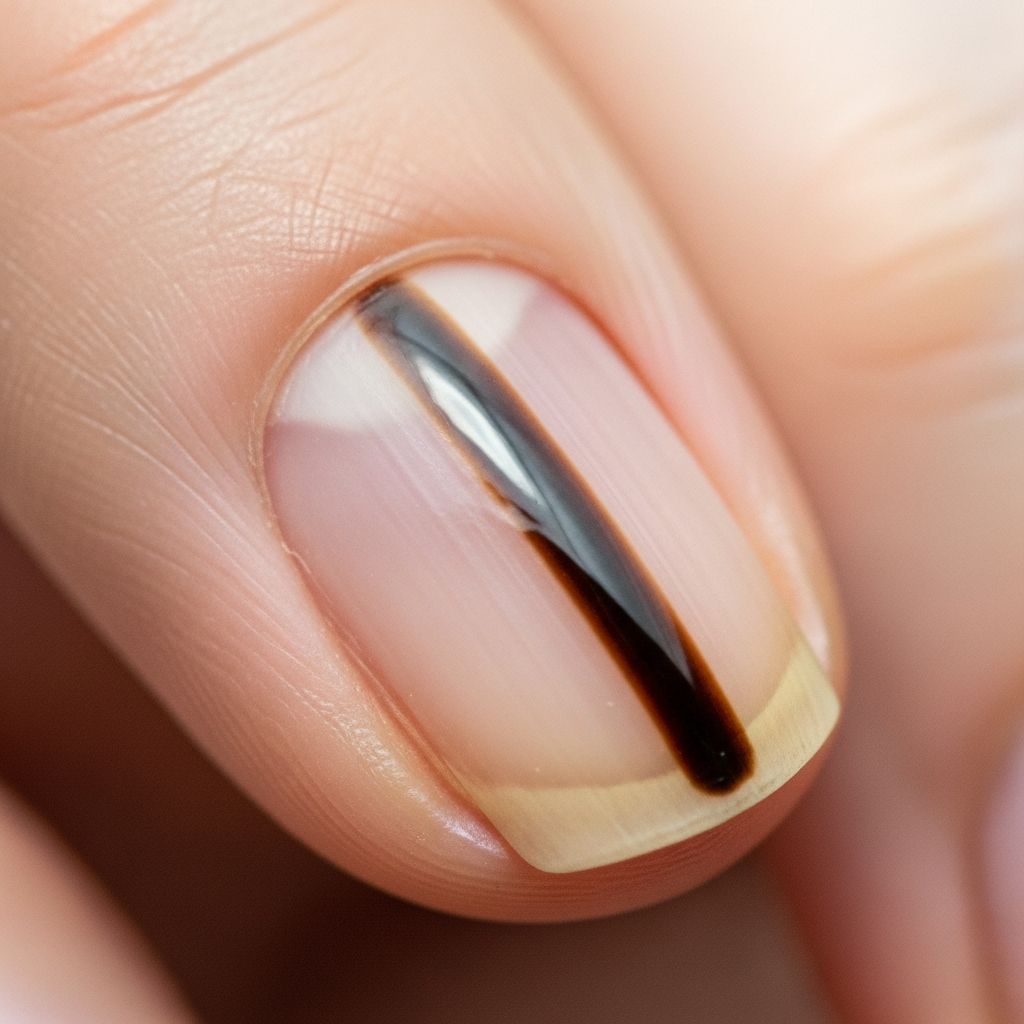
Melanonychia refers to brown-black pigmentation of the nail plate, often presenting as longitudinal bands but also in diffuse, transverse, or irregular patterns. It arises from melanin deposition due to melanocyte activation or proliferation in the nail matrix, ranging from benign physiological variations to serious conditions like subungual melanoma.
What is melanonychia?
The nail plate, composed of translucent keratin, is normally unpigmented. Melanocytes reside dormant in the proximal nail matrix. Activation leads to melanin transfer into nascent nail cells, forming visible pigmented bands known as longitudinal melanonychia when band-like. Melanonychia alarms patients due to melanoma association, though most cases are benign, especially in children, darker skin types, and multiple nails.
Who gets melanonychia?
Melanonychia affects all ages, races, and sexes but shows demographic patterns:
- Children: Often benign nail matrix nevi (50-70% of cases); low melanoma risk.
- Adults: Higher malignancy concern, particularly single longitudinal bands on thumb/index/great toe.
- Darker skin types: Physiological longitudinal melanonychia in 20-100% of African descent, 10-20% Asians.
- Males: Fungal melanonychia more common.
Prevalence rises with age; adults over 50 face 9x melanoma risk for longitudinal melanonychia versus under 50.
What causes melanonychia?
Two mechanisms drive melanonychia: melanocytic activation (normal melanocyte number, increased melanin) or proliferation (increased melanocytes, benign or malignant).
Melanocytic activation
Common, triggered by local/systemic factors:
- Physiological: Racial (e.g., Fitzpatrick IV-VI), pregnancy, puberty.
- Trauma/friction: Nail biting (onychophagia), picking (onychotillomania), sports, tight shoes.
- Inflammatory diseases: Psoriasis, lichen planus, chronic paronychia, radiation dermatitis.
- Systemic: Addison disease, Cushing syndrome, connective tissue diseases (scleroderma, SLE), vitamin B12/folate deficiency.
- Drugs: Chemotherapy (cyclophosphamide, doxorubicin), antimalarials, HIV antiretrovirals, hydroxyurea, psoralens, tetracyclines.
Melanocytic proliferation
- Benign: Nail matrix nevus, lentigo.
- Malignant: Melanoma in situ (Hutchinson melanoma), invasive subungual melanoma.
Non-melanin pigmentation mimics
Exogenous (smoke, tar, silver nitrate), subungual hematoma, infections (fungi: Trichophyton rubrum, Scytalidium; bacteria: Pseudomonas; viruses in HIV).
What are the clinical features of melanonychia?
Patterns include:
- Longitudinal melanonychia (LM): Band from proximal to distal nail; width >3mm, irregular borders raise concern.
- Diffuse: Entire nail; physiological, drugs, systemic.
- Transverse: Bands across nail; trauma, drugs.
- Apparent: Pigment stops at cuticle; matrix origin confirmed.
ABCDEF rule for malignancy risk:
- A: Age >50 years.
- B: Band >3mm, brown-black, irregular borders.
- C: Change in color/size.
- D: Digit: thumb, index, great toe.
- E: Extension to periungual skin (Hutchinson sign).
- F: Family/previous melanoma history.
Diagnosis of melanonychia
History (trauma, drugs, systemic disease) and exam guide approach:
- Non-melanin exclusion: Trauma history, hyponychium scraping (hematoma).
- Dermoscopy: Melanin shows parallel tracks; fungi irregular globules.
- Biopsy: Indicated for suspicious LM (ABCDEF); longitudinal excision biopsy preferred.
Related Stories



Algorithm: Multiple nails → benign/systemic; single adult LM → biopsy if ABCDEF positive; child LM → monitor.
Treatment of melanonychia
Cause-directed:
- Benign: Observation.
- Drugs/trauma: Discontinue, avoid triggers; fades 6-8 weeks post-drug.
- Infections: Antifungals/antibiotics.
- Melanoma: Wide local excision or amputation; sentinel node biopsy.
Frequently Asked Questions
Is melanonychia always cancer?
No, most cases benign, especially multiple/childhood/racial; single adult LM needs evaluation.
Does melanonychia go away?
Yes, if reversible cause (drugs, trauma); persistent in nevi/melanoma.
When to biopsy melanonychia?
ABCDEF criteria met, especially >3mm band in adults on first three digits.
Can nail polish cause melanonychia?
No, exogenous stains removable; true melanonychia from matrix.
Is longitudinal melanonychia common in Black people?
Yes, physiological in up to 100% of African descent.
Table: Common Causes of Melanonychia
| Category | Examples | Pattern | Risk |
|---|---|---|---|
| Melanocytic activation | Racial, trauma, psoriasis, drugs | LM, diffuse | Benign |
| Melanocytic proliferation | Nevus, lentigo, melanoma | LM | Benign/malignant |
| Infections | T. rubrum, Pseudomonas | LM, diffuse | Benign |
| Non-melanin | Hematoma, exogenous | Irregular | Benign |
References
- Melanonychia: Etiology, Diagnosis, and Treatment — PMC – NIH. 2020-01-28. https://pmc.ncbi.nlm.nih.gov/articles/PMC7001389/
- Understanding Longitudinal Melanonychia: Causes, Symptoms, and Treatment — Peak Skin Center. 2023-05-15. https://www.peakskincenter.com/understanding-longitudinal-melanonychia-causes-symptoms-and-treatment/
- Melanonychia: Causes, treatments, and diagnosis — Medical News Today. 2023-11-10. https://www.medicalnewstoday.com/articles/melanonychia
- What Is Melanonychia? Causes, Symptoms, and Treatment — WebMD. 2024-02-20. https://www.webmd.com/skin-problems-and-treatments/what-to-know-melanonychia
- Melanonychia — DermNet NZ. 2024-06-01. https://dermnetnz.org/topics/melanonychia
- Melanonychia | Diagnosis & Disease Information — Dermatology Advisor. 2023-09-12. https://www.dermatologyadvisor.com/ddi/melanonychia/
Similar Articles








Read full bio of medha deb