Melanosis Coli: Causes, Symptoms, Treatment
Understand melanosis coli: a harmless colon discoloration from laxatives, its causes, diagnosis, and reversal strategies.
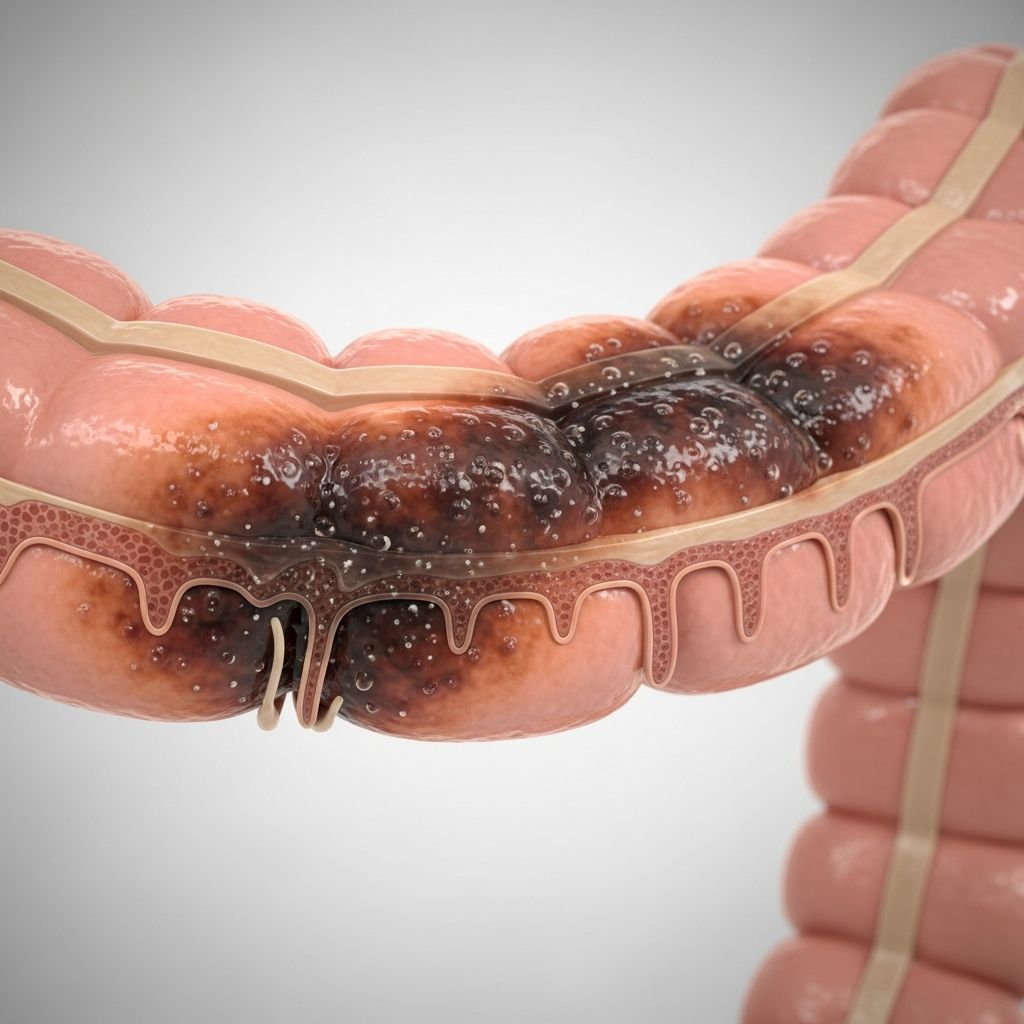
Melanosis coli is a benign condition characterized by dark brown or black pigmentation of the colon’s mucosal lining, typically resulting from chronic use of certain laxatives.This harmless change does not increase cancer risk and often reverses upon stopping the offending agents.
What Is Melanosis Coli?
Melanosis coli, also known as melanosis of the colon, involves the accumulation of lipofuscin—a brownish pigment—in the colon’s lining. Normally pink, the mucosa turns shades of brown or black due to damage to epithelial cells from laxatives, leading to apoptosis (cell death) and pigment buildup in macrophages.The condition affects the large intestine, from cecum to rectum, with varying intensity.
Discovered during colonoscopy, it appears as a snake-skin or crocodile-like pattern. Histologically, grades range from mild (pigment in monocytes) to severe (submucosal involvement). It’s prevalent in frequent laxative users, especially those with constipation.
Symptoms of Melanosis Coli
Melanosis coli is typically asymptomatic, meaning it produces no direct symptoms. The pigmentation is only visible during endoscopic procedures. Patients may experience underlying issues prompting laxative use, such as:
- Chronic constipation
- Abdominal discomfort or bloating from bowel irregularity
- Straining during bowel movements
Women are diagnosed more often, likely due to higher constipation rates—three times that of men—and greater laxative reliance.
Causes and Risk Factors
The primary cause is prolonged use of anthraquinone-containing laxatives, like senna, aloe, rhubarb, or cascara. These stimulate bowel motility but damage colon cells, triggering lipofuscin production. Studies show 70% of frequent users develop it within months.
Other risk factors include:
- Chronic constipation: Leading to habitual laxative use
- Female gender: Due to higher constipation prevalence
- Intestinal disorders: Slow transit or pelvic floor issues
- Rare non-laxative cases: Autoimmune conditions or idiopathic factors
Pathogenesis involves anthraquinones inducing apoptosis, reducing crypt numbers, and altering gene expression (e.g., GNG5, LPAR3). Pigments deposit in lamina propria macrophages, visible via stains like PAS or melanin.
How Is Melanosis Coli Diagnosed?
Diagnosis occurs incidentally during colonoscopy or sigmoidoscopy for unrelated issues like screening or constipation evaluation. Key features:
- Diffuse brown-black pigmentation, edematous mucosa
- Mild: Snake-like; Moderate: Granular; Severe: Uniform black
- Biopsy confirms lipofuscin-laden macrophages (negative for iron, melanoma markers)
Grading endoscopy: 0-3 per segment, summing for severity. Differential includes pseudomelanosis or malignancy (though rare).
Melanosis Coli and Colon Cancer Risk
Debate exists on cancer links, but evidence shows no increased risk. One study found 11.9% of cancer patients had melanosis coli, but incidence too low for causation. Conversely, the dark background enhances polyp/tumor visibility during colonoscopy.
It’s a benign marker of laxative abuse, not precancerous. Long-term studies confirm reversibility without oncogenic potential.
Treatment and Reversal
No specific treatment exists; management focuses on discontinuing anthraquinone laxatives. Pigmentation fades in 6-12 months as cells regenerate. Supportive steps:
- Dietary fiber increase: 25-30g daily (fruits, veggies, whole grains)
- Hydration: 8-10 glasses water/day
- Exercise: 30 min daily walking
- Alternative laxatives: Osmotic (polyethylene glycol) or stool softeners
- Probiotics for gut motility in select cases
Surgery only if malignancy coexists. Lifestyle changes prevent recurrence.
Prevention Tips
Prevent by addressing constipation root causes:
| Strategy | Benefits | Examples |
|---|---|---|
| Increase Fiber | Softens stool, promotes regularity | Oats, beans, apples |
| Stay Hydrated | Prevents hard stools | Water, herbal teas |
| Regular Exercise | Stimulates peristalsis | Brisk walking, yoga |
| Avoid Stimulant Laxatives | Prevents cell damage | Use osmotics instead |
| Probiotics | Balances gut flora | Yogurt, kefir |
Related Stories



Consult physicians for persistent constipation to rule out disorders like IBS or hypothyroidism.
When to See a Doctor
Seek care if:
- Constipation >3 weeks despite lifestyle changes
- Blood in stool, unexplained weight loss, anemia
- Abdominal pain, vomiting, or bowel habit changes
- Planning colonoscopy (incidental finding possible)
Early intervention prevents laxative dependency.
Outlook and Prognosis
Excellent—fully reversible, no complications. Most resolve post-laxative cessation. Regular screening advised for at-risk groups.
Frequently Asked Questions (FAQs)
What causes melanosis coli?
Primarily chronic anthraquinone laxative use (senna, aloe), leading to colon cell damage and pigment deposition.
Is melanosis coli dangerous?
No, it’s benign with no proven cancer link; may aid polyp detection.
How is melanosis coli treated?
Stop causative laxatives; reverses in 6-12 months. Use fiber, hydration, exercise.
Can melanosis coli be seen without colonoscopy?
No, asymptomatic; only detected endoscopically or via biopsy.
Who is at risk for melanosis coli?
Frequent laxative users, especially women with chronic constipation.
Does melanosis coli go away on its own?
Yes, after discontinuing anthraquinones, typically within a year.
References
- Melanosis Coli: Definition, Risk Factors, Treatment, and More — Healthline. 2023-10-15. https://www.healthline.com/health/melanosis-coli
- Melanosis coli: A comprehensive review — Elsevier (Gastroenterologia y Hepatologia). 2020-12-01. https://www.elsevier.es/en-revista-gastroenterologia-hepatologia-english-edition–382-articulo-melanosis-coli-a-comprehensive-review-S2444382420300547
- Melanosis coli: Symptoms, causes, treatment, and more — Medical News Today. 2023-05-20. https://www.medicalnewstoday.com/articles/melanosis-colon
- Melanosis Coli — NCBI Bookshelf (StatPearls). 2023-08-08. https://www.ncbi.nlm.nih.gov/books/NBK493146/
Similar Articles








Read full bio of Sneha Tete