Melasma Images: 12 Clinical Examples To Recognize Patterns
Authoritative collection of clinical images illustrating melasma patterns, types, and variations across skin tones.
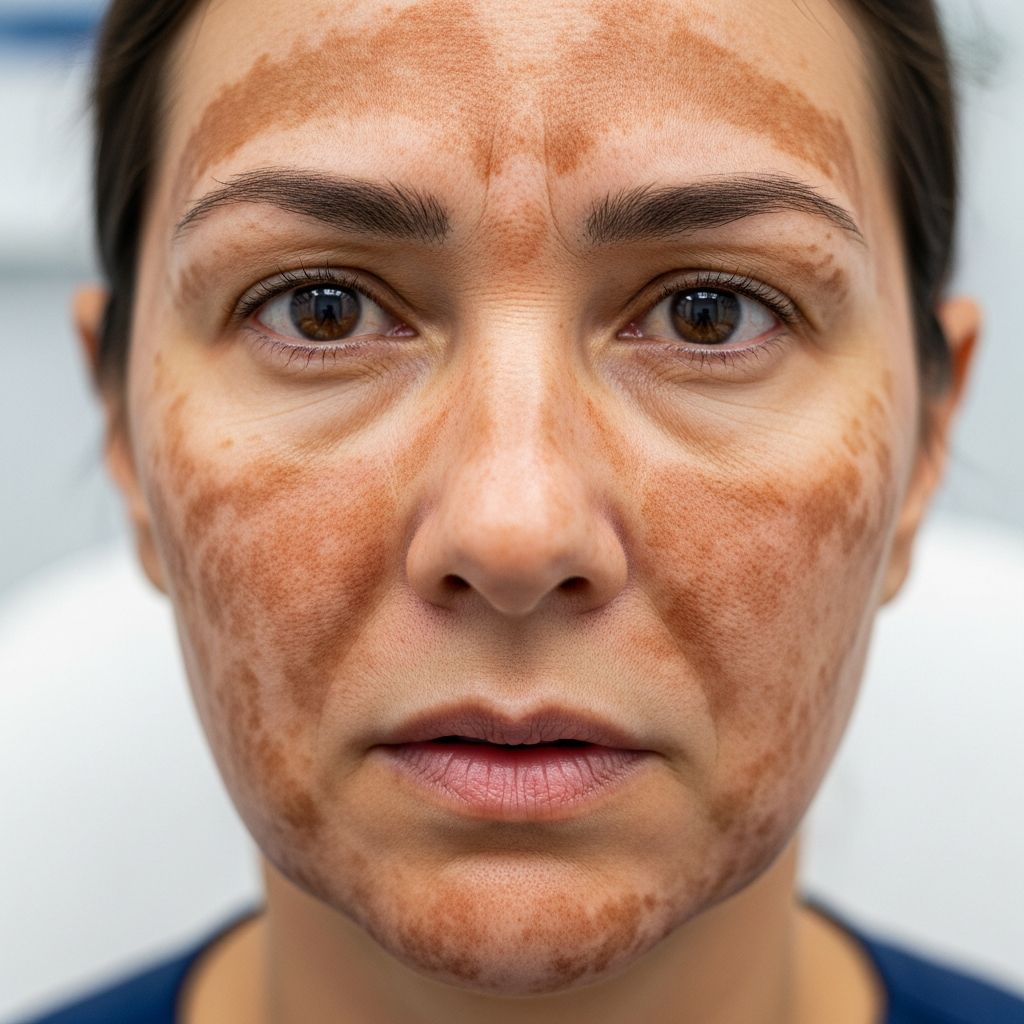
Melasma, also known as chloasma, is a common acquired dermatological condition characterized by bilateral, blotchy, brownish facial hyperpigmentation. It predominantly affects women, particularly those with Fitzpatrick skin types III–VI, and is often triggered by sun exposure, hormonal changes, or genetic predisposition. This article presents a curated collection of clinical images demonstrating the diverse presentations of melasma, including its classic patterns, histological types, and variations across different skin tones. These images aid in clinical diagnosis, patient education, and understanding treatment responses.
What is melasma?
Melasma manifests as light-to-dark brown macules or patches with irregular borders, typically on sun-exposed areas of the face. It is usually asymptomatic but can significantly impact quality of life due to its visibility and psychological burden. The condition is more prevalent in reproductive-age females, with associations to pregnancy (‘mask of pregnancy’), oral contraceptives, hormone replacement therapy, and ultraviolet radiation.
Key clinical features include:
- Bilateral and symmetrical distribution
- Blotchy, irregular pigmentation ranging from tan to dark brown, occasionally with bluish hues
- Predilection for cheeks, forehead, upper lip, nose, and chin
- Exacerbation with sun exposure and improvement with strict photoprotection
Histologically, melasma is classified into epidermal, dermal, and mixed types based on melanin distribution. Epidermal melasma shows increased melanin in the basal layer with enhanced melanocytes; dermal type involves perivascular macrophages with pigment in the dermis; mixed type combines both.
Patterns of melasma
Melasma exhibits three primary patterns:
- Centrofacial: Most common, affecting forehead, glabella, cheeks, upper lip, nose, and chin.
- Malar: Limited to cheeks and nose.
- Mandibular: Along the ramus of the mandible, more common in women and associated with hormonal triggers.
These patterns are illustrated in the images below, demonstrating their characteristic symmetry and distribution.
Epidermal melasma
Epidermal melasma is characterized by melanin deposition in the epidermis, visible as well-defined, light-to-medium brown patches with a reticulated or freckle-like pattern under dermoscopy. It responds better to topical lightening agents due to its superficial location.
- Image 1: Centrofacial epidermal melasma on Fitzpatrick type IV skin, showing uniform brown patches on cheeks and forehead.
- Image 2: Malar epidermal melasma with sharp borders enhanced by Wood’s lamp examination.
Wood’s lamp accentuates epidermal pigment, making it appear more prominent, which aids in subtype differentiation.
Dermal melasma
Dermal melasma features pigment in the dermis, appearing as grey-blue or ash-brown patches with blurred borders. It is more resistant to treatment as topical agents struggle to penetrate deeply. Dermoscopy reveals a ‘spaces between lattice lines’ pattern or perifollicular pigmentation.
- Image 3: Dermal melasma on the forehead with subtle bluish tint and indistinct margins.
- Image 4: Extensive dermal involvement in centrofacial distribution on darker skin tones.
Dermal pigment originates from epidermal melanocytes but accumulates via incontinence of melanin into the dermis, explaining partial responsiveness to prolonged epidermal inhibition.
Related Stories



Mixed melasma
The most prevalent subtype, mixed melasma combines epidermal and dermal features, presenting as heterogeneous brown-grey patches. It requires multimodal therapy for optimal outcomes.
- Image 5: Mixed malar melasma showing both brown epidermal spots and grey dermal haze.
- Image 6: Severe centrofacial mixed melasma covering multiple facial zones.
Melasma on different skin types
Melasma presentation varies by Fitzpatrick skin phototype:
| Skin Type | Typical Appearance | Image Example |
|---|---|---|
| II–III (Light brown) | Well-defined tan-brown patches | Cheek malar pattern |
| IV–V (Olive to brown) | Medium brown with reticular pattern | Centrofacial extensive |
| VI (Dark brown/black) | Dark brown-grey with blurred borders | Mandibular distribution |
Darker skin types exhibit more dermal involvement and poorer response to therapy, increasing post-inflammatory hyperpigmentation risk.
- Image 7: Melasma on Fitzpatrick type III skin – subtle freckle-like spots above upper lip.
- Image 8: Prominent hyperpigmentation on type V skin along jawline.
Melasma in men
Though less common (10% of cases), melasma in males often presents with mandibular pattern and is linked to chronic sun exposure or cosmetics. It tends to be more persistent.
- Image 9: Unilateral mandibular melasma in a male patient.
Treatment-related images
Images documenting treatment progress highlight the importance of combination therapy and sun protection.
- Image 10: Before-and-after triple combination cream (hydroquinone 4%, tretinoin 0.05%, fluocinolone 0.01%) showing 70% clearance after 3 months.
- Image 11: Post-laser relapse with increased dermal pigmentation.
- Image 12: Improvement with oral tranexamic acid adjunctive therapy.
First-line treatment involves strict sun avoidance (broad-spectrum SPF 30+ applied frequently) and topical triple combinations, achieving 60–80% improvement. Hydroquinone inhibits tyrosinase, tretinoin promotes turnover, and steroid reduces inflammation. Alternative topicals include azelaic acid, cysteamine, kojic acid, and vitamin C. Procedural options like chemical peels (glycolic/salicylic acid) and cautious lasers carry relapse risks.
Frequently Asked Questions
Who gets melasma?
Melasma primarily affects women of childbearing age, especially with skin of color. Risk factors include pregnancy, oral contraceptives, sun exposure, and family history.
Is melasma permanent?
Not always; epidermal type often resolves with treatment and sun protection, while dermal may persist longer. Recurrence is common without photoprotection.
How is melasma diagnosed?
Clinically via history, examination, Wood’s lamp (accentuates epidermal pigment), and dermoscopy. Biopsy is rarely needed.
What is the best treatment for melasma?
Combination hydroquinone/tretinoin/steroid cream plus rigorous sun protection. Expect gradual improvement over months.
Can lasers cure melasma?
Lasers like Q-switched Nd:YAG or IPL can help but risk worsening via post-inflammatory hyperpigmentation; pretreat with topicals.
Does melasma go away after pregnancy?
In 30–50% of cases, but sun exposure or hormonal contraceptives can cause persistence or recurrence.
Differential diagnosis
Melasma must be distinguished from:
- Postinflammatory hyperpigmentation
- Exogenous ochronosis (from hydroquinone overuse)
- Poikiloderma of Civatte
- Drug-induced pigmentation
- Nevi of Ota/Ito
- Discoid lupus erythematosus
Dermoscopy and history aid differentiation.
References
- Melasma – StatPearls — James et al., NCBI Bookshelf. 2023-07-17. https://www.ncbi.nlm.nih.gov/books/NBK459271/
- Melasma (Causes, Symptoms and Treatment) — Patient.info. 2024. https://patient.info/doctor/dermatology/melasma-chloasma-pro
- Melasma (facial pigmentation) — DermNet NZ. 2023. https://dermnetnz.org/topics/melasma
- Hydroquinone (bleaching cream) — DermNet NZ. 2023. https://dermnetnz.org/topics/hydroquinone
- Melasma: Treatment, Causes & Prevention — Cleveland Clinic. 2023-11-01. https://my.clevelandclinic.org/health/diseases/21454-melasma
- Melasma: Signs and symptoms — American Academy of Dermatology. 2023. https://www.aad.org/public/diseases/a-z/melasma-symptoms
Similar Articles








Read full bio of medha deb