Melasma: Diagnosis, Treatment, And Prevention Guide In 2025
Comprehensive guide to melasma: causes, symptoms, diagnosis, treatments, and prevention strategies for this common skin hyperpigmentation disorder.
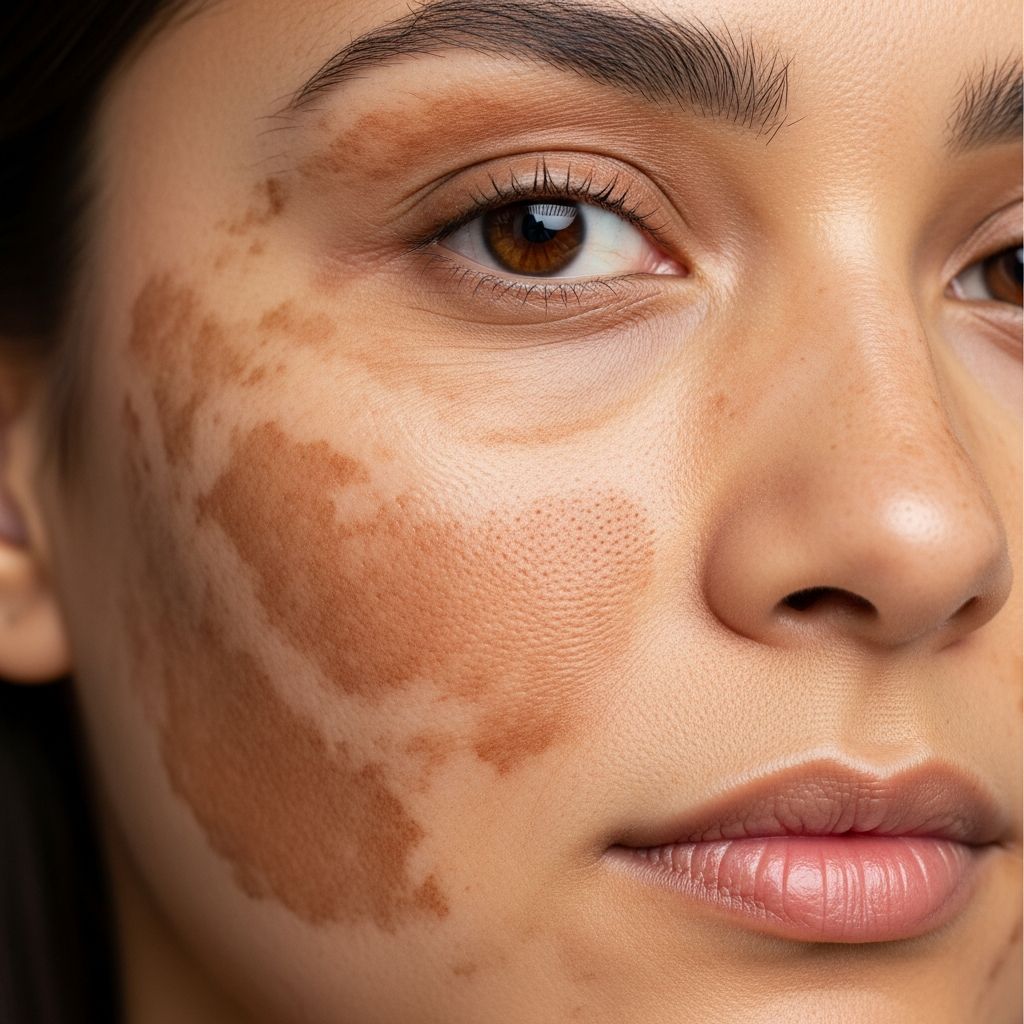
Melasma, also known as chloasma or the mask of pregnancy, is a common skin disorder characterised by irregular light to dark brown or grey macules, most commonly on the face. It predominantly affects women, particularly those with skin of colour from regions with high sun exposure, such as Latin America, the Indian subcontinent, and South-East Asia. Although melasma is asymptomatic and benign, it can cause significant emotional and psychological distress due to its visibility and resistance to treatment.
What is melasma?
Melasma manifests as symmetrical, blotchy, brownish facial pigmentation that enlarges slowly over time. It typically appears on sun-exposed areas, primarily the face, but can occasionally involve the neck and forearms. The condition is chronic and relapsing, often exacerbated by sun exposure, making lifelong management essential.
- Centre facial pattern: Forehead, cheeks, upper lip, nose, and chin — most common pattern.
- Malar pattern: Cheeks and nose.
- Mandibular pattern: Lower jawline and chin.
Melasma is classified histologically into epidermal (brown, with enhanced melanin), dermal (grey-blue, with melanin-laden macrophages), mixed, and inapparent types. Epidermal melasma responds better to treatment due to superficial pigment location.
Who gets melasma?
Melasma affects 1.5–33% of the global population, with higher prevalence in women (90% of cases) aged 20–40 years. Risk factors include:
- Women of reproductive age, especially during pregnancy (15–50% incidence, known as chloasma).
- Medium to dark skin tones (Fitzpatrick types III–VI), common in Latin, Asian, Black, and Native American heritage.
- Family history (approximately 50% report positive family history).
- Hormonal therapies like oral contraceptives or hormone replacement.
Men account for about 10% of cases, often linked to genetic predisposition without hormonal triggers.
What causes melasma?
The precise aetiology is multifactorial, involving genetic predisposition, ultraviolet (UV) radiation, hormonal influences, and other triggers. Sunlight is the most critical factor, with UV and visible light (320–700 nm) stimulating melanocytes to produce excess melanin via alpha-melanocyte-stimulating hormone (α-MSH), corticotropin, interleukin-1, and endothelin-1.
Key triggers:
- Sun exposure: UV-B (290–320 nm) and UV-A/visible light induce lipid peroxidation and free radicals, upregulating melanogenesis.
- Hormonal changes: Elevated estrogen, progesterone, and MSH during pregnancy, with oral contraceptives or hormone therapy implicated. Postmenopausal progesterone administration can induce melasma.
- Genetics: Familial cases in 50%, more common in high-sun regions.
- Other factors: Phototoxic drugs (e.g., antiseizure medications), cosmetics, thyroid disease (four-fold increased risk), stress (via cortisol), and heat/infrared radiation.
Melasma melanocytes show increased estrogen/progesterone receptors, heightened reactivity to UV, and vascular changes.
What are the clinical features of melasma?
Lesions are asymptomatic, symmetrical tan-brown to grey-black macules on sun-exposed skin, worsening with sunlight, pregnancy, or oral contraceptives. Patterns include centrofacial (most common), malar, and mandibular. Wood lamp accentuates epidermal melasma; dermal type appears unchanged.
| Pattern | Areas Affected | Prevalence |
|---|---|---|
| Centre facial | Forehead, cheeks, upper lip, nose, chin | Most common (63%) |
| Malar | Cheeks, nose | 21% |
| Mandibular | Ramus of mandible, chin | 16% |
Diagnosis
Melasma is diagnosed clinically based on characteristic history and appearance. Dermoscopy reveals reticular pigmentation, telangiectasias, and ‘horseshoe’ vessels in chronic lesions. Wood’s light examination aids subtype classification. Biopsy, if needed, shows increased melanin, melanophages, and solar elastosis.
Related Stories



Differential diagnoses include postinflammatory hyperpigmentation, actinic lentigines, drug-induced pigmentation, and exogenous ochronosis.
How is melasma treated?
Treatment is challenging due to melasma’s recalcitrant nature; goals are camouflage, depigmentation, and prevention of relapse. Sun protection is foundational.
Prevention and sun protection
Broad-spectrum sunscreen (SPF 50+, PA++++, iron oxide-tinted) daily, reapplying every 2 hours. Physical blockers (zinc oxide, titanium dioxide) preferred for blocking visible light/heat. Avoid peak sun (10am–4pm), wear hats, UPF clothing.
Topical therapies
- Hydroquinone (2–4%): First-line, inhibits tyrosinase; use 3–6 months, then maintenance.
- Triple combination cream: Hydroquinone 4% + tretinoin 0.05% + fluocinolone acetonide 0.01% — gold standard, 70–80% improvement in 8 weeks.
- Other agents: Azelaic acid 20%, kojic acid, cysteamine 5%, tranexamic acid 3–5%, vitamin C, retinoids.
Procedural treatments
- Chemical peels: Glycolic acid, Jessner, salicylic acid — for epidermal melasma.
- Lasers: Low-fluence Q-switched Nd:YAG (laser toning), picosecond lasers; cautious use due to rebound risk.
- Microneedling: Combined with topicals enhances penetration.
- Oral tranexamic acid: 250 mg twice daily, 85–90% response rate; monitor for thrombosis.
Combination therapy yields best results; recurrence common without maintenance.
Frequently asked questions
Can melasma be cured permanently?
No, melasma is chronic; treatments lighten it, but recurrence is common without strict sun avoidance.
Does melasma go away after pregnancy?
In 30% of cases, it fades postpartum, but persists in most without intervention.
Is melasma caused by birth control?
Yes, hormonal contraceptives can trigger or worsen it; switching to non-hormonal options may help.
What sunscreen is best for melasma?
Tinted mineral sunscreens with zinc oxide/titanium dioxide (SPF 50+) blocking UV and visible light.
Does melasma affect men?
Rarely (10%); often genetic/sun-related without hormonal triggers.
References
- Melasma – StatPearls – NCBI Bookshelf — National Center for Biotechnology Information. 2023-07-17. https://www.ncbi.nlm.nih.gov/books/NBK459271/
- Melasma: Causes – American Academy of Dermatology — AAD. 2023. https://www.aad.org/public/diseases/a-z/melasma-causes
- Melasma: Treatment, Causes & Prevention – Cleveland Clinic — Cleveland Clinic. 2023-09-05. https://my.clevelandclinic.org/health/diseases/21454-melasma
- Overview of Risk Factors and Prevention in Melasma — Dermatology Times. 2023. https://www.dermatologytimes.com/view/overview-of-risk-factors-and-prevention-in-melasma
- Melasma Causes, Symptoms, and Treatment Options — Suncoast Skin Solutions. 2023. https://www.suncoastskin.com/melasma-causes-symptoms-and-treatment-options/
Similar Articles








Read full bio of Sneha Tete