Melatonin For Eczema: Evidence-Based Guide To Relief
Discover how melatonin supports better sleep and reduces eczema symptoms through anti-inflammatory effects and microbiota balance.
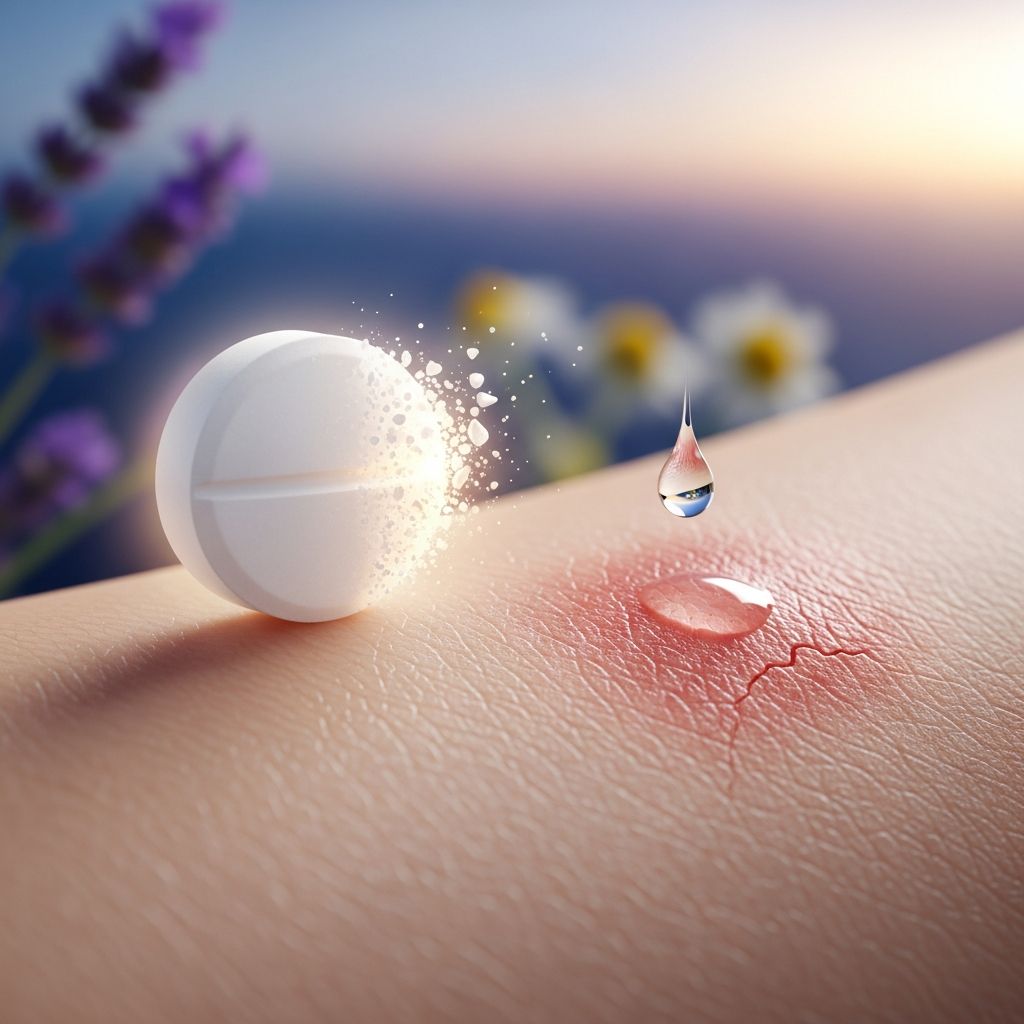
Melatonin, widely recognized for regulating sleep-wake cycles, shows promising potential in alleviating eczema symptoms. This hormone not only promotes restful sleep but also exhibits anti-inflammatory properties that may directly benefit skin health in individuals with atopic dermatitis.
Understanding Eczema and Its Challenges
Eczema, clinically known as atopic dermatitis, manifests as a chronic condition characterized by inflamed, itchy, and dry skin. It affects millions worldwide, often disrupting daily life through persistent discomfort and sleep disturbances. Triggers such as allergens, environmental changes, and stress exacerbate flares, leading to a cycle of scratching that worsens skin barrier integrity.
Sleep disruption is a hallmark issue for eczema sufferers. The intense itching peaks at night, interrupting rest and perpetuating inflammation. Research indicates that poor sleep quality correlates with heightened disease severity, making interventions that target both itch and sleep particularly valuable.
The Role of Melatonin in the Body
Naturally produced by the pineal gland, melatonin secretion ramps up in darkness, peaking around 3:00 AM to facilitate deep sleep. Beyond sleep regulation, it acts as a potent antioxidant, combating free radicals and modulating immune responses. Skin cells also synthesize small amounts of melatonin, suggesting a localized protective function.
In eczema patients, particularly children, melatonin levels often deviate from normal patterns. Studies reveal that up to 78% of affected children exhibit disturbed secretion, with lower levels during flares correlating to more severe symptoms and greater sleep disturbances.
Clinical Evidence: Melatonin Improves Sleep in Eczema
Multiple studies underscore melatonin’s efficacy in enhancing sleep for eczema patients. A randomized controlled trial involving children with atopic dermatitis administered 3 mg of melatonin nightly for four weeks. Participants experienced significantly shorter sleep-onset latency—falling asleep over 20 minutes faster than the placebo group—and reported better overall sleep quality.
This sleep enhancement breaks the itch-scratch cycle, where nocturnal itching prevents rest. By promoting faster sleep initiation and deeper repose, melatonin indirectly reduces scratching incidents, aiding skin recovery overnight.
Beyond Sleep: Anti-Inflammatory Effects on Skin
Melatonin’s benefits extend to direct skin modulation. It stimulates antioxidative pathways, protecting the skin barrier and curbing inflammation. In a key 2016 clinical trial published in JAMA Pediatrics, melatonin supplementation led to a mean SCORAD index reduction of 9.9 points over four weeks, indicating substantial improvement in disease severity. Even objective SCORAD measures, excluding subjective itch reports, confirmed these gains.
Experimental models further illuminate mechanisms. In mice with induced atopic dermatitis, oral melatonin reshaped skin microbiota, boosting beneficial propionic acid while decreasing harmful Staphylococcus aureus—a bacterium notorious for aggravating eczema.
- Key Microbiota Changes: Reduced Staphylococcus aureus populations.
- Increased Propionibacteria: Elevated production of anti-inflammatory short-chain fatty acids.
- Gut-Skin Axis Influence: Oral intake altered gut bacteria, influencing skin composition remotely.
Mechanisms Linking Melatonin to Eczema Improvement
Melatonin’s immunomodulatory actions suppress pro-inflammatory cytokines like IL-4 and reduce total serum IgE levels, critical in allergic responses underlying eczema. It also mitigates neuronal damage and neurotoxic cytokine expression in animal models, diminishing itch signals and scratching behavior.
Cortisol-melatonin interactions at night further dampen itch urges. Disrupted light exposure or dietary factors may underlie low melatonin in eczema patients, with room lighting suppressing production by over 50%.
Related Stories



| Study Aspect | Melatonin Effect | Control/Placebo | Source |
|---|---|---|---|
| SCORAD Reduction | 9.1-9.9 points | No significant change | |
| Sleep Latency | Reduced by 20+ min | Minimal improvement | |
| Skin Microbiota | ↓ S. aureus, ↑ propionic acid | No change | |
| Cytokine Levels | ↓ IL-4, IgE | Elevated |
Safety Profile and Dosage Considerations
Melatonin is generally well-tolerated, especially at low doses like 3 mg for children. The JAMA Pediatrics trial reported no serious adverse effects, supporting its safety for short-term use in pediatric eczema with sleep issues. Adults may require higher doses, but consultation with healthcare providers is essential to tailor amounts and monitor interactions.
Potential side effects include daytime drowsiness or headaches, though rare. Long-term data remains limited, necessitating caution for prolonged supplementation.
Practical Tips for Incorporating Melatonin
To maximize benefits:
- Administer 30-60 minutes before bedtime.
- Combine with eczema staples: frequent moisturizing, gentle cleansing, and trigger avoidance.
- Maintain sleep hygiene: dim lights, consistent routines.
- Melatonin-rich foods like cherries or nuts may offer mild support.
Consult dermatologists or pediatricians before starting, particularly for children or those on medications.
Future Directions in Research
While pediatric data is encouraging, human trials confirming microbiota effects and optimal adult dosing are needed. Ongoing studies explore melatonin’s role in severe cases and combination therapies. Its multi-faceted actions position it as a potential adjunct in eczema management protocols.
Frequently Asked Questions
Is melatonin safe for children with eczema?
Yes, studies show 3 mg nightly is safe and effective for short-term use in children, improving sleep and skin scores without major side effects.
Can adults with eczema benefit from melatonin?
Promising evidence from sleep and anti-inflammatory effects suggests benefits, though adult-specific trials are fewer. Start low under medical guidance.
How quickly does melatonin work for eczema symptoms?
Improvements in sleep and SCORAD scores appear within 4 weeks in trials.
Does melatonin cure eczema?
No, it manages symptoms like itch and sleep disruption but is not a cure. Use alongside standard treatments.
What if melatonin doesn’t help my eczema?
Individual responses vary; consult a doctor for alternatives like topical therapies or further diagnostics.
References
- Can Melatonin Help Eczema? New Research Reveals Surprising… — HealthCentral. 2023. https://www.healthcentral.com/news/eczema/could-melatonin-help-with-eczema
- Sleep, Eczema, and the Benefits of Melatonin — Integrative Dermatology Symposium. 2022-10-13. https://integrativedermatologysymposium.com/2022/10/13/sleep-eczema-and-the-benefits-of-melatonin/
- Melatonin Supplementation for Children With Atopic Dermatitis and… — JAMA Pediatrics. 2016. https://jamanetwork.com/journals/jamapediatrics/fullarticle/2470860
- Melatonin and sleep disorders in patients with severe atopic dermatitis — PMC. 2021. https://pmc.ncbi.nlm.nih.gov/articles/PMC8610046/
- Melatonin in Dermatologic Allergic Diseases and Other Skin… — PMC. 2023. https://pmc.ncbi.nlm.nih.gov/articles/PMC9967801/
Similar Articles








Read full bio of Sneha Tete