Meninges: Structure, Function & Protection
Understanding the three protective membranes that safeguard your brain and spinal cord.
What Are the Meninges?
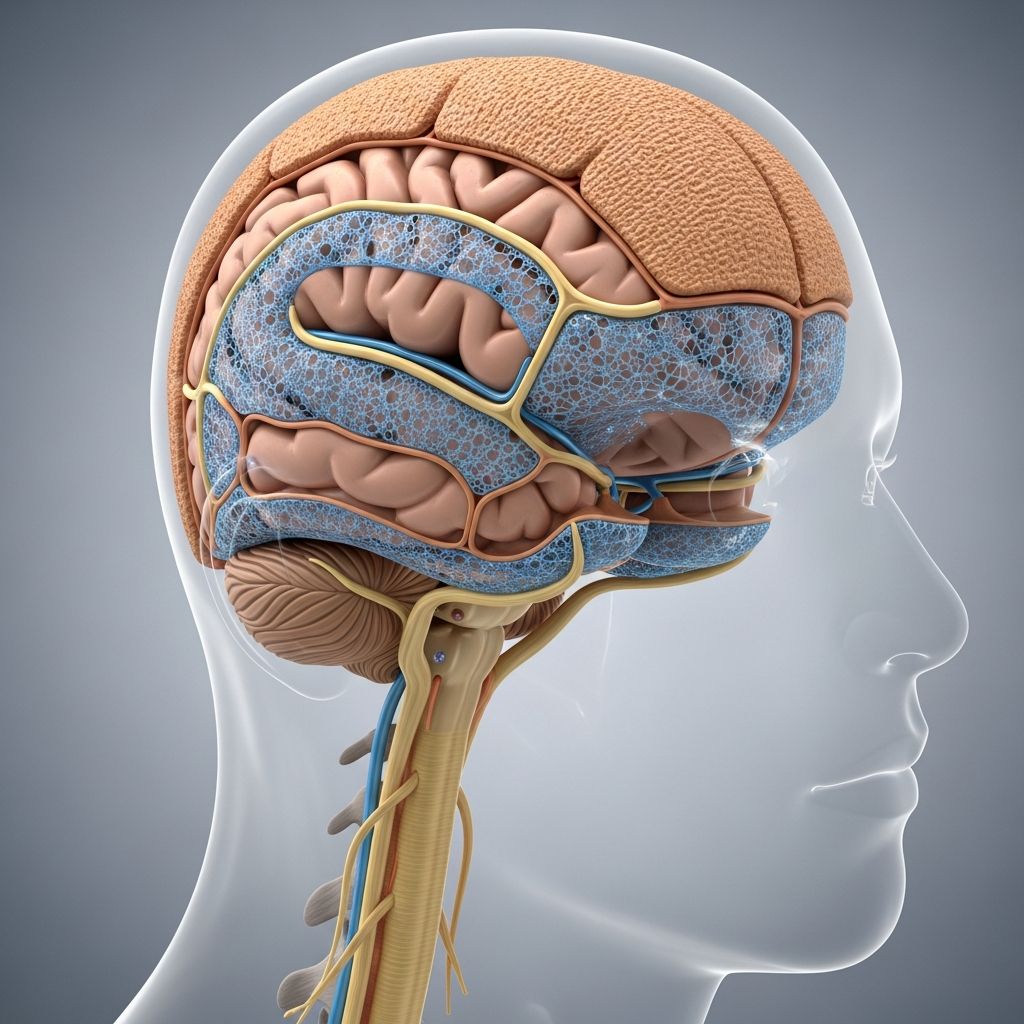
The meninges are three layers of protective membranes that surround your brain and spinal cord, collectively forming a critical component of your central nervous system’s defense system. These delicate but robust tissues work in concert with cerebrospinal fluid to shield the most vital organs of your nervous system from injury, infection, and physical trauma. The meninges are comprised of three distinct layers, each with specific structural characteristics and functional roles that contribute to overall neural protection.
Your meninges normally protect your brain and spinal cord from injury while containing nerves, blood vessels, and cerebrospinal fluid (CSF). When your meninges become inflamed, they swell too much and put pressure on your brain and/or spinal cord. Understanding the anatomy and function of the meninges is essential for recognizing conditions that affect these protective structures and appreciating how your body maintains the integrity of your nervous system.
The Three Layers of the Meninges
The meninges consist of three distinct membranous layers, each serving unique protective and supportive functions. These layers work together seamlessly to create an integrated protective envelope around your central nervous system.
Dura Mater
The dura mater is the outermost layer of the meninges, serving as the primary structural barrier between your brain and spinal cord and the surrounding skull and vertebrae. This tough, fibrous membrane lines your cranial vault—the bony cavity that contains your brain—and extends down to protect your spinal cord. The dura mater’s dense composition makes it the most resistant to penetration and provides significant mechanical protection. Its strength is comparable to the outer protective layers of other organs, creating a substantial defense against physical injury.
The dura mater contains blood vessels that supply nutrients to the meningeal layers and the outer portions of the brain. Additionally, it houses venous sinuses that collect deoxygenated blood from the brain and return it to the body’s venous circulation. The structural integrity of the dura mater is critical for maintaining proper cerebrospinal fluid pressure and preventing bacterial and viral pathogens from reaching the delicate neural tissue.
Arachnoid Membrane
The arachnoid is the middle layer of the meninges, positioned between the dura mater and the pia mater. This delicate membrane has a spider web-like appearance, which is reflected in its name—”arachnoid” derives from the Greek word for spider. The arachnoid membrane is thinner and more delicate than the dura mater but maintains sufficient structural integrity to serve important protective functions.
Between the arachnoid and the pia mater lies the subarachnoid space, which contains cerebrospinal fluid. This space is traversed by delicate fibrous connections that give the arachnoid its characteristic appearance under microscopic examination. The arachnoid serves as an important barrier to the passage of certain substances while allowing cerebrospinal fluid to circulate freely through the subarachnoid space.
Pia Mater
The pia mater is the innermost and most delicate layer of the meninges, adhering directly to the surface of the brain and spinal cord. This thin membrane follows the contours of every gyrus (ridge) and sulcus (groove) of the brain’s surface, ensuring intimate contact with neural tissue. The pia mater is pierced by blood vessels that penetrate into the brain tissue itself, serving as the gateway for nutrient delivery to cerebral neural structures.
Related Stories



Unlike the arachnoid, the pia mater is impermeable to cerebrospinal fluid, creating a barrier that maintains the separation between the fluid-filled subarachnoid space and the neural tissue itself. This selective permeability is crucial for maintaining proper fluid pressure gradients and protecting against harmful substances that might otherwise enter neural tissue.
Cerebrospinal Fluid and the Meninges
Cerebrospinal fluid (CSF) fills the ventricles of the brain and the space between the pia mater and the arachnoid, known as the subarachnoid space. This clear, colorless fluid serves multiple critical functions in conjunction with the meninges to protect and maintain the health of your central nervous system.
The primary function of the meninges and cerebrospinal fluid is to protect the central nervous system from physical injury. CSF acts as a cushioning medium, absorbing shock and distributing forces that might otherwise cause direct damage to delicate neural tissue. Additionally, cerebrospinal fluid transports nutrients to neural tissue, removes metabolic waste products, and helps maintain proper osmotic balance within the central nervous system. The meninges work with CSF to create an isolated compartment that regulates which substances can reach neural tissue, providing an additional layer of protection against harmful agents.
Functions of the Meninges
Mechanical Protection
The meninges provide crucial mechanical protection to your brain and spinal cord against physical trauma. The three-layer structure, combined with cerebrospinal fluid cushioning, creates a shock-absorbing system that protects neural tissue from impact injuries. The dura mater’s toughness ensures that external forces cannot easily penetrate to deeper layers, while the fluid-filled subarachnoid space distributes pressure evenly across the neural surface.
Support and Structure
Beyond protection, the meninges provide essential structural support to your brain and spinal cord. The meningeal layers maintain the shape and positioning of neural structures within their bony encasements. The attachments of the meningeal layers to the skull and vertebral column help suspend the brain and spinal cord within their protective cavities, preventing excessive movement that could cause damage.
Vascular and Nutritional Functions
The meninges contain an extensive network of blood vessels that supply oxygen and nutrients to both the meningeal tissue itself and the peripheral portions of the brain. These vessels also participate in maintaining the blood-brain barrier, a selective membrane system that prevents harmful substances from entering neural tissue while allowing necessary nutrients to pass through. The pia mater’s intimate contact with the brain surface and piercing by cerebral blood vessels makes it particularly important for nutrient delivery.
Immune and Lymphatic Functions
Recent research has revealed that the meninges contain lymphatic vessels that play an important role in immune function and the removal of waste products from the central nervous system. These meningeal lymphatics provide an immune gateway for the central nervous system, allowing immune cells to traffic and interact with neural tissue while maintaining the protective isolation necessary for proper brain function. This discovery has opened new theories regarding how the immune system protects the brain and spinal cord from infection and disease.
Location and Relationship to Other Structures
The meninges are positioned between your brain and spinal cord and the surrounding bone structures—the skull and vertebral column. Between your brain and skull, you have the three layers of the meninges (dura mater, arachnoid, and pia mater), with cerebrospinal fluid occupying the subarachnoid space between the arachnoid and pia mater. Your brain and spinal cord are held within bone structures, connective tissue (meninges), and fluid (cerebrospinal fluid), which work together to protect these vital organs.
The meninges extend from the top of the skull down the entire length of the spinal canal, terminating at the sacral region of the spine. This continuous protective envelope ensures that both the brain and spinal cord receive consistent protection throughout their entire extent.
Conditions Affecting the Meninges
When the meninges become inflamed or infected, serious medical conditions can develop that require immediate treatment. Understanding these conditions highlights the importance of the meninges’ protective role.
Meningitis
Meningitis is an inflammation of the meninges caused by bacterial, viral, fungal, parasitic, or noninfectious conditions. Infectious diseases, like viruses and bacteria, are the most common causes, though noninfectious conditions, like cancer and head injuries, can cause meningitis as well. Symptoms include fever, severe headache, and neck stiffness. Bacterial meningitis is the deadliest of the common forms, with about 1 in 6 people who get this type dying according to the World Health Organization.
Meningoencephalitis
Meningoencephalitis is a rare and life-threatening condition in which you have meningitis and encephalitis at the same time, meaning both your meninges and brain tissue are inflamed and/or infected. This condition requires immediate medical treatment and has serious potential complications. In survivors of cryptococcal meningoencephalitis, about 69% have cognitive and/or physical impairments 12 months after diagnosis. About 50% to 70% of people with herpetic meningoencephalitis experience permanent brain damage, neurological disorders, or coma.
Viral Meningitis
Viral meningitis is an inflammation of your meninges specifically caused by a viral infection, with enteroviruses and herpes simplex viruses being the most common causes. While viral meningitis is less likely to cause complications than bacterial meningitis, it still poses risks of serious short- and long-term effects, especially in young children. Viral meningitis usually resolves on its own within about a week, though some cases may require hospitalization.
Recognizing Meningeal Disorders
Key Symptoms
Recognizing symptoms of meningeal disorders is critical for obtaining prompt medical treatment. Common symptoms include:
- Severe headache
- High fever
- Stiff neck
- Sensitivity to light (photophobia)
- Nausea and vomiting
- Mental changes or confusion
- Seizures
If you or your child have these symptoms, seek immediate medical help. Meningitis and related conditions affecting the meninges are life-threatening, and early treatment is essential.
Diagnostic Testing
Healthcare providers diagnose meningeal disorders through several testing methods, including neurological examination and testing your cerebrospinal fluid (the fluid that surrounds your brain and spine). They may also obtain blood or stool samples, swab your nose or throat, or get imaging of your brain. A spinal tap (lumbar puncture) may be performed to collect cerebrospinal fluid for analysis, which can reveal signs of infection or inflammation.
Treatment Approaches
The treatment for conditions affecting the meninges depends on the underlying cause and severity. Most cases require treatment in a hospital with close monitoring by healthcare professionals. Treatments may include antibiotics for bacterial infections, antiviral medications for viral causes, antifungal medications for fungal infections, and supportive care to manage symptoms. Your healthcare team will continue to monitor you closely as you stay in the hospital, addressing any issues or complications you may experience.
For viral meningitis specifically, since there’s no specific cure, providers will most likely treat you with supportive care that manages your symptoms. Recovery from meningitis can be slow, with some patients requiring weeks to months to feel completely recovered.
Long-Term Effects and Recovery
The prognosis for people with meningeal disorders depends on the cause, its severity, and how quickly they receive treatment. Meningitis is a serious condition that can have long-term consequences. Unlike injuries or illnesses that affect your body, you can’t see or feel your meninges beginning to heal, and people may assume you’re completely recovered when you’re still working through issues, from hearing loss to thinking challenges.
Bacterial meningitis can result in severe complications in about 1 in 5 people who get this type. Some survivors may experience permanent neurological effects, hearing loss, cognitive difficulties, or other long-term health concerns. Prompt medical attention and appropriate treatment significantly improve outcomes and reduce the risk of lasting complications.
Frequently Asked Questions About the Meninges
Q: What is the main function of the meninges?
A: The primary function of the meninges and cerebrospinal fluid is to protect the central nervous system from physical injury, infection, and harmful substances while providing structural support and facilitating nutrient delivery to neural tissue.
Q: What are the three layers of the meninges?
A: The three layers are the dura mater (outermost, tough protective layer), the arachnoid (middle, spider web-like layer), and the pia mater (innermost, delicate layer adhering to brain and spinal cord surfaces).
Q: What is cerebrospinal fluid and how does it relate to the meninges?
A: Cerebrospinal fluid (CSF) is a clear fluid that fills the brain’s ventricles and the subarachnoid space between the arachnoid and pia mater layers, providing cushioning, nutrient transport, and waste removal for the central nervous system.
Q: How do I know if I have meningitis?
A: Common symptoms of meningitis include severe headache, high fever, stiff neck, light sensitivity, nausea, vomiting, and mental changes. Seek immediate medical attention if you experience these symptoms, as meningitis is life-threatening.
Q: Can you recover from meningitis?
A: Yes, you can recover from most forms of meningitis, but it’s a very serious illness requiring immediate treatment. Recovery time varies by type and severity, ranging from weeks to months for complete recovery.
Q: What’s the difference between viral and bacterial meningitis?
A: Both cause meningeal inflammation, but different infectious agents cause them. Viral meningitis usually resolves on its own within about a week, while bacterial meningitis can be fatal and requires aggressive antibiotic treatment.
References
- Meningoencephalitis: What It Is, Symptoms & Treatment — Cleveland Clinic. 2023-07-25. https://my.clevelandclinic.org/health/diseases/25157-meningoencephalitis
- Meningitis: Causes, Symptoms, Diagnosis & Treatment — Cleveland Clinic. https://my.clevelandclinic.org/health/diseases/14600-meningitis
- Viral Meningitis: Causes, Symptoms & Treatment — Cleveland Clinic. https://my.clevelandclinic.org/health/diseases/25188-viral-meningitis
- Meninges: Structure, Function & Location — Britannica. https://www.britannica.com/science/meninges
- Brain: Parts, Function, How It Works & Conditions — Cleveland Clinic. https://my.clevelandclinic.org/health/body/22638-brain
- Central Nervous System (CNS): What It Is & Function — Cleveland Clinic. https://my.clevelandclinic.org/health/body/central-nervous-system-cns
- Meningeal Lymphatics: An Immune Gateway for the Central Nervous System — PubMed Central. National Center for Biotechnology Information. https://pubmed.ncbi.nlm.nih.gov/34943894/
Similar Articles








Read full bio of Sneha Tete