Meningioma Symptoms: Comprehensive Guide To Signs And Diagnosis
Recognizing the signs of meningioma early can lead to timely diagnosis and effective treatment for this common brain tumor.
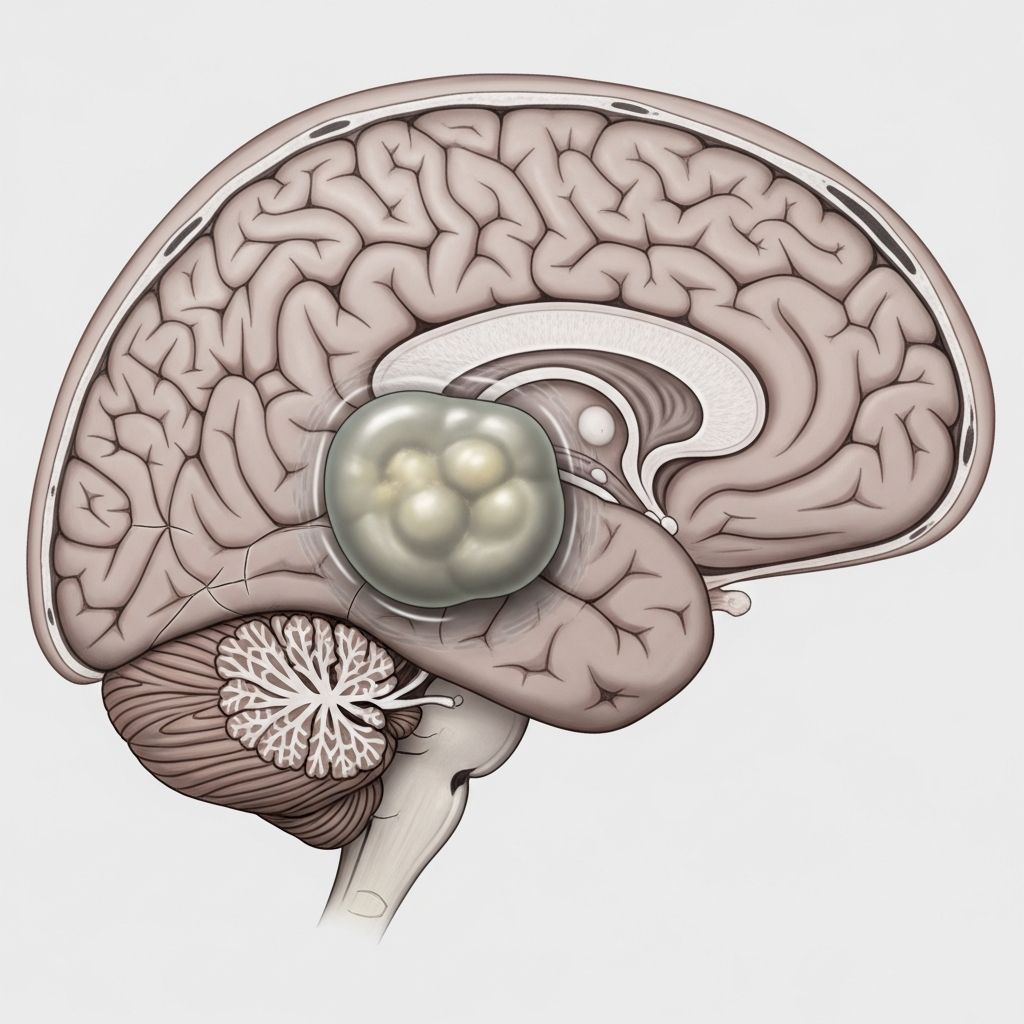
Meningiomas are tumors that originate in the meninges, the protective layers surrounding the brain and spinal cord. Most are benign and grow slowly, often remaining asymptomatic for years. However, when they cause symptoms, these depend heavily on the tumor’s size, growth rate, and location. Early recognition of symptoms like persistent headaches, seizures, or vision changes is crucial for prompt diagnosis via MRI and appropriate management, which may include observation, surgery, or radiation.
What Is a Meningioma?
A meningioma is a typically benign tumor arising from meningothelial cells in the meninges. They account for about 30-40% of primary brain tumors and are more common in adults, particularly women over 50. While many are discovered incidentally on imaging, symptomatic cases arise when the tumor compresses nearby brain tissue, nerves, or blood vessels. Risk factors include prior radiation exposure, neurofibromatosis type 2, and hormonal influences like progesterone receptor expression. Most require only monitoring, but symptomatic or growing tumors may need intervention.
Locations vary: supratentorial (e.g., convexity, parasagittal), skull base (e.g., sphenoid wing, olfactory groove), posterior fossa, or spinal. Intracranial meningiomas outnumber spinal ones, with symptoms reflecting the affected region.
Common Symptoms of Meningioma
Symptoms manifest based on tumor location and compression effects. Common presentations include:
- Persistent headaches: Often worse in the morning or with position changes, due to increased intracranial pressure.
- Seizures: Focal or generalized, more common in supratentorial tumors irritating cortical areas.
- Vision changes: Blurred vision, double vision, or field defects from optic nerve or pathway compression.
- Weakness or numbness: In limbs, from motor cortex or nerve involvement.
- Cognitive or personality changes: Memory issues, confusion, or mood swings from frontal or temporal lobe pressure.
Many patients are asymptomatic; up to 80% of meningiomas are found incidentally.
Headaches
Headaches are among the most frequent symptoms, reported in 30-70% of symptomatic cases. They result from tumor mass effect causing brain displacement or obstructive hydrocephalus. Characteristics include:
- Localized or diffuse pain, often frontal or temporal.
- Worsening with coughing, straining, or lying down.
- Accompanied by nausea, vomiting, or papilledema (optic disc swelling).
In parasagittal meningiomas, headaches may pair with leg weakness. Skull base tumors might cause atypical patterns. Persistent or progressive headaches warrant neuroimaging.
Seizures
Seizures occur in 20-60% of patients with supratentorial meningiomas, often as the presenting symptom. Tumors near the cortex disrupt electrical activity, leading to:
- Focal seizures: Affecting one body part, e.g., hand twitching from convexity tumors.
- Generalized seizures: Involving loss of consciousness.
- Status epilepticus: Prolonged seizures needing emergency care.
Risk is higher in convexity and parasagittal locations. Men have elevated seizure risk even with grade 1 tumors. Antiepileptic drugs manage this effectively pre- and post-treatment.
Vision Changes
Visual disturbances affect 10-30% of cases, especially skull base meningiomas. Compression of optic nerves, chiasm, or tracts causes:
- Blurred or double vision (diplopia).
- Peripheral field loss or hemianopia.
- Proptosis or papilledema in orbital/cavernous sinus tumors.
- Foster-Kennedy syndrome (anosmia, optic atrophy) in olfactory groove meningiomas.
Sphenoid ridge tumors may involve cranial nerves III-VI, causing ophthalmoplegia. Early ophthalmologic evaluation is key.
Related Stories



Weakness and Sensory Changes
Motor and sensory deficits arise from corticospinal tract or nerve root compression. Symptoms include:
- Unilateral limb weakness (paresis) or paralysis, contralateral to supratentorial tumors.
- Numbness, tingling, or reduced sensation.
- Hyperreflexia, clonus, or positive Babinski sign (upper motor neuron).
Parasagittal meningiomas classically cause leg weakness. Spinal meningiomas present with radiculopathy, pain, and lower motor neuron signs like hypotonia.
Mental Changes and Cognitive Issues
Frontal or temporal meningiomas impair cognition in 15-25% of cases:
- Memory loss, concentration difficulties.
- Personality alterations: apathy, irritability, disinhibition.
- Confusion or dementia-like symptoms from hydrocephalus.
Behavioral changes may precede other signs, mimicking psychiatric disorders. Neuropsychological testing aids assessment.
Cranial Nerve Deficits
Skull base locations affect cranial nerves:
| Location | Cranial Nerves Affected | Symptoms |
|---|---|---|
| Cavernous sinus | II, III, IV, V, VI | Vision loss, diplopia, facial pain/numbness |
| CP angle | V, VII, VIII | Hearing loss, tinnitus, facial weakness |
| Foramen magnum | IX-XII | Dysphagia, hoarseness, neck pain |
These deficits guide surgical planning.
Hearing Loss and Balance Problems
Posterior fossa or cerebellopontine angle meningiomas compress CN VIII:
- Unilateral hearing loss or tinnitus.
- Ataxia, vertigo from cerebellar involvement.
Balance issues hinder gait, increasing fall risk.
Other Symptoms
Less common include:
- Anosmia (olfactory groove).
- Facial pain/paresthesia (trigeminal involvement).
- Neck pain or bulbar palsy (spinal/posterior fossa).
Meningioma Symptoms by Location
Tumor site dictates presentation:
- Convexity: Seizures, hemiparesis.
- Parasagittal: Leg weakness, incontinence.
- Sphenoid wing: Vision loss, proptosis.
- Posterior fossa: Headache, ataxia, hydrocephalus.
- Spinal: Pain, myelopathy.
When to See a Doctor
Seek immediate care for new/worsening headaches, seizures, focal deficits, or vision/hearing changes. Incidental findings on imaging should prompt specialist review (neurosurgeon/neuro-oncologist). MRI is diagnostic gold standard.
Diagnosis
Diagnosis involves:
- Clinical history and neurologic exam.
- MRI (T1 hypointense, T2 hyperintense, avid enhancement).
- CT for bony involvement.
- Biopsy if atypical features.
Treatment Overview
Management is individualized:
- Observation: For asymptomatic, small, slow-growing tumors.
- Surgery: For symptomatic/large tumors (gross total resection ideal).
- Radiation: Post-resection or inoperable cases.
- Medications: For seizures/edema.
Prognosis is excellent for benign meningiomas (5-year survival >90%).
Frequently Asked Questions (FAQs)
What is the most common symptom of meningioma?
Headaches are the most frequent, but many are asymptomatic.
Are meningiomas cancerous?
Most (80-90%) are benign grade 1; 10-15% atypical grade 2; rare malignant grade 3.
Can meningiomas cause seizures?
Yes, especially convexity tumors; up to 60% of symptomatic cases.
How is meningioma diagnosed?
Primarily via brain MRI, showing characteristic dural-based enhancement.
Do all meningiomas need treatment?
No, asymptomatic ones often just need serial imaging.
Who is at risk for meningioma?
Women, age >50, radiation history, NF2 genetic syndrome.
References
- Meningioma Symptoms: 10 Key Signs and How They Affect the Brain — LIV Hospital. 2023. https://int.livhospital.com/meningioma-symptoms-10-key-signs-and-how-they-affect-the-brain/
- Meningioma – StatPearls — NCBI Bookshelf / NIH. 2023-10-27. https://www.ncbi.nlm.nih.gov/books/NBK560538/
- Ask the Doctors – How dangerous is a meningioma? — UCLA Health. 2023. https://www.uclahealth.org/news/article/ask-the-doctors-how-dangerous-is-a-meningioma
Similar Articles








Read full bio of Sneha Tete