Meningitis Overview: Causes, Symptoms & Treatment
Complete guide to meningitis: Understanding causes, symptoms, diagnosis, and treatment options.
What Is Meningitis?
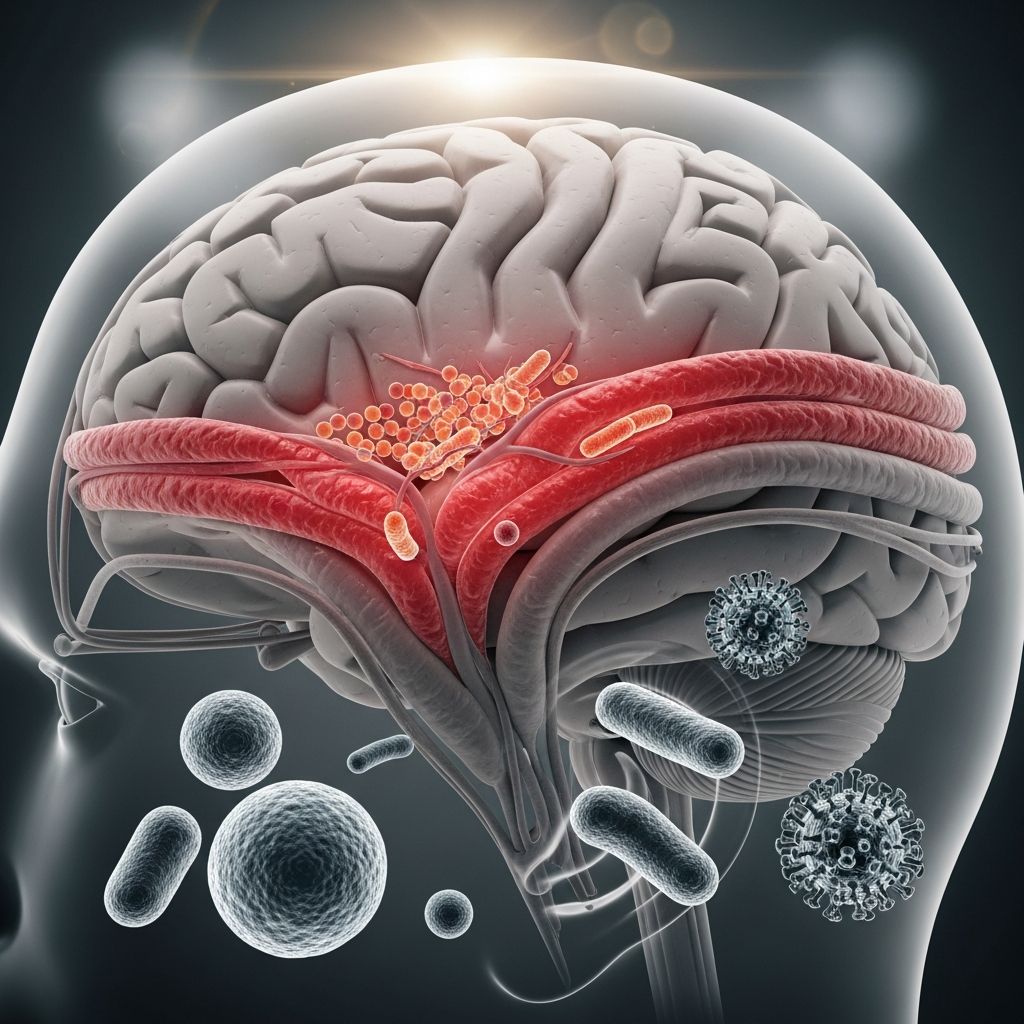
Meningitis is a serious medical condition characterized by inflammation of the tissues surrounding the brain and spinal cord. Specifically, it involves swelling of the meninges—three protective membrane layers that cover and protect the central nervous system. The meninges consist of three distinct layers: the dura mater (outermost layer), the arachnoid mater (middle layer), and the pia mater (innermost layer). The two inner layers, also called the leptomeninges, are separated by the subarachnoid space, which contains cerebrospinal fluid (CSF)—a crucial substance that protects and nourishes the brain and spinal cord.
While meningitis can originate from infectious or non-infectious causes, infectious meningitis remains the primary concern globally. This devastating disease can be deadly and often results in serious long-term health complications. Meningitis remains a significant global health threat, affecting people of all ages but with particular impact on young children, infants, and immunocompromised individuals.
Types of Meningitis
Meningitis can be classified based on its causative agent. Understanding the different types is essential for proper diagnosis and treatment:
- Bacterial Meningitis: The most serious form, caused by pathogenic bacteria. Around 1 in 6 people who develop bacterial meningitis die, and 1 in 5 experience severe complications. The four main bacterial causes include Neisseria meningitidis (meningococcus), Streptococcus pneumoniae (pneumococcus), Haemophilus influenzae, and Streptococcus agalactiae (group B streptococcus).
- Viral Meningitis: The most common type of aseptic meningitis, typically affecting young children. Viral meningitis is usually less severe than bacterial forms and is often self-limiting in adults.
- Fungal Meningitis: Caused by fungal organisms such as Cryptococcus species, particularly in immunocompromised individuals.
- Parasitic Meningitis: Caused by parasitic infections, including certain species of amoebae.
- Non-Infectious Meningitis: Resulting from injuries, cancers, or certain medications.
Causes of Meningitis
Viral Meningitis Causes
Enteroviruses are the most common causative agents of viral meningitis worldwide, with an estimated 75,000 new cases annually in the United States. Other important viral causes include herpesviruses, influenza viruses, parechoviruses, and arboviruses such as West Nile Virus. These viruses typically enter the body through respiratory secretions or the fecal-oral route, causing initial infection in the respiratory or gastrointestinal tract before progressing to secondary infection of the central nervous system.
Bacterial Meningitis Causes
The four main bacterial causes of acute meningitis are responsible for more than half of meningitis deaths globally. Additional important bacterial causes include Mycobacterium tuberculosis, non-typhoidal Salmonella species, and Listeria monocytogenes. These bacteria are often carried harmlessly in the human nose, throat, gut, or vagina, but can occasionally invade the body and cause severe disease.
Transmission and Risk Factors
Most bacteria causing meningitis, including meningococcus, pneumococcus, and Haemophilus influenzae, are spread from person to person by respiratory droplets or throat secretions. Group B streptococcus, often carried in the human gut or vagina, can spread from mother to child during birth.
Several factors increase susceptibility to meningitis:
- Compromised immunity or immunosuppression
- HIV infection or AIDS
- Young age (infants and children)
- Recent travel to endemic areas
- Close contact with infected individuals
- Living in crowded environments
- Certain chronic medical conditions
The African meningitis belt—a region stretching from Senegal to Ethiopia—experiences the highest global burden of meningitis disease and remains at high risk for recurrent epidemics.
Related Stories



Symptoms and Signs of Meningitis
Meningitis symptoms can vary based on the causative organism, disease progression speed, and presence of complications. However, certain common symptoms appear across most cases:
Common Symptoms in Adults and Older Children
- Fever
- Severe headache
- Neck stiffness or rigidity
- Confusion or altered mental status
- Sensitivity to light (photophobia)
- Nausea and vomiting
- Sensitivity to sound
Less Common but Serious Symptoms
- Seizures
- Coma
- Neurological deficits such as limb weakness
- Rash (particularly non-blanching rash in meningococcal sepsis)
Symptoms in Infants
Infants often display different symptoms compared to older individuals:
- Unusual behavior, such as decreased activity and difficulty waking
- Irritability and high-pitched or weak, continuous cry
- Poor feeding
- Bulging of the soft spot (fontanelle) on the head
- High fever
- Difficulty consoling
Some bacterial pathogens may cause additional symptoms resulting from bloodstream infection, including cold hands and feet, rapid breathing, and low blood pressure—signs that can quickly progress to sepsis.
Diagnosis of Meningitis
Early and accurate diagnosis is crucial for meningitis management, though the similar symptom presentation across different causative agents can make diagnosis challenging and lead to misdiagnosis. Meningitis symptoms can resemble other conditions such as encephalitis or brain abscess.
Diagnostic Methods
- Lumbar Puncture (Spinal Tap): The gold standard diagnostic test, involving collection and analysis of cerebrospinal fluid from the spinal canal to identify causative organisms and assess CSF parameters.
- Blood Cultures: Help identify bacterial pathogens in the bloodstream.
- Blood Tests: Complete blood count, metabolic panel, and inflammatory markers provide supporting diagnostic information.
- Imaging Studies: CT scans or MRI of the head may be performed to rule out contraindications to lumbar puncture or identify complications.
- Molecular Testing: PCR and other molecular techniques can rapidly identify viral and bacterial pathogens.
- Gram Staining and Culture: Microscopic examination and culture of CSF samples identify causative organisms.
Pathogenesis: How Meningitis Develops
Understanding the mechanisms by which pathogens cause meningitis is essential for developing effective treatments. The pathogenesis of viral meningitis begins when the causative agent enters the host through respiratory secretions or the fecal-oral route, causing primary infection in the respiratory or gastrointestinal tract. This is followed by secondary infection of the central nervous system, causing meningitis or other neurological problems.
Pathogens reach the cerebrospinal fluid through hematogenous spread by two primary mechanisms: infection of immune cells that carry the pathogen to the nervous system, or direct crossing of blood capillaries as free pathogens. The blood-brain barrier (BBB) normally provides protection, but certain pathogens can breach this critical defense mechanism through various routes, including infection of the choroid plexus epithelium, infection of lymphoid tissue, and induction of inflammation.
Viral infection of the central nervous system activates immune responses that, while intended to fight infection, can paradoxically cause tissue damage. This includes activation of signaling pathways that lead to actin formation and elevation of nitric oxide levels, resulting in CNS complications. In herpesviruses, latent infection can persist in brain endothelial cells, and stress can trigger viral reactivation with expression of pro-inflammatory cytokines and chemokines including IL-1, TNF-α, IL-12, and IL-18.
Treatment Approaches
Treatment for meningitis depends on the causative organism and requires urgent medical care. Bacterial meningitis typically requires intensive antibiotic therapy, often initiated before diagnostic confirmation when meningitis is suspected. Viral meningitis is usually supportive, as antibiotics are ineffective against viruses. Specific antiviral medications may be used for certain viral causes such as herpes simplex virus.
General supportive measures for all meningitis types include:
- Hospitalization and intensive monitoring
- Fever management
- Hydration and electrolyte management
- Pain control
- Seizure prevention or management
- Management of complications
Prevention and Vaccination
Vaccines are the most effective way to deliver long-lasting protection against meningitis. Vaccination strategies vary by organism and geographic region:
Meningococcal Vaccines
In the African meningitis belt, meningococcus serogroup A accounted for 80–85% of meningitis epidemics before the introduction of meningococcal A conjugate vaccine starting in 2010. In 2023, the first pentavalent meningococcal vaccine (Men5CV) protecting against serogroups A, C, W, Y, and X was prequalified by WHO and recommended for countries in the African meningitis belt. The rollout of Men5CV has the potential to eliminate meningitis epidemics in this region.
Pneumococcal Vaccines
Pneumococcal conjugate vaccines provide protection against Streptococcus pneumoniae, one of the leading bacterial causes of meningitis.
Haemophilus Influenzae Vaccines
The Hib vaccine has significantly reduced meningitis cases caused by Haemophilus influenzae type b in vaccinated populations.
Other Prevention Measures
- Prophylactic antibiotics for close contacts of bacterial meningitis cases
- Respiratory hygiene and hand washing
- Avoiding close contact with infected individuals
- Maintaining a healthy immune system
Complications and Long-Term Effects
Meningitis can result in serious long-term health consequences. Severe complications may develop, particularly in infants and children, including high fever, mental retardation, and death in some cases. Common complications include:
- Hearing loss
- Neurological damage and developmental delays
- Seizure disorders and epilepsy
- Cognitive impairment
- Limb weakness or paralysis
- Sepsis and organ failure
- Hydrocephalus
- Subdural empyema
WHO has developed an Intersectoral global action plan on epilepsy and other neurological disorders to address challenges in providing care and services for people with meningitis sequelae.
Global Health Impact
Meningitis remains a major global public health challenge affecting different age groups. Epidemics of meningitis occur across the world, particularly in sub-Saharan Africa. The disease’s impact varies by region, with developing countries often experiencing higher mortality rates due to delayed diagnosis and limited access to advanced medical care.
Frequently Asked Questions (FAQs)
Q: How quickly does meningitis develop?
A: Meningitis can develop rapidly, sometimes within hours of initial infection. This is why immediate medical attention is critical upon symptom onset. Some forms, like bacterial meningitis, progress faster than viral forms.
Q: Can meningitis be cured?
A: Yes, meningitis can be treated and cured with appropriate medical intervention. Bacterial meningitis requires immediate antibiotic treatment. Viral meningitis is usually self-limiting and managed with supportive care. Early diagnosis and treatment significantly improve outcomes.
Q: Is meningitis contagious?
A: Yes, meningitis can be contagious, particularly bacterial forms spread through respiratory droplets or throat secretions. Close contacts of infected individuals should seek medical evaluation and may require prophylactic treatment.
Q: Who is at highest risk for meningitis?
A: Infants, young children, immunocompromised individuals, people living with HIV, and those in crowded environments face elevated risk. Additionally, people living in or traveling to the African meningitis belt have increased exposure risk.
Q: What should I do if I suspect meningitis?
A: Seek emergency medical care immediately. Call emergency services or go to the nearest emergency department if you or someone else experiences symptoms such as severe headache, neck stiffness, high fever, confusion, or sensitivity to light, particularly if multiple symptoms occur together.
Q: Can meningitis be prevented?
A: Vaccination is the most effective prevention method against meningitis. Vaccines exist for meningococcus, pneumococcus, and Haemophilus influenzae. Additionally, maintaining good hygiene, avoiding close contact with infected individuals, and prophylactic antibiotics for contacts of meningitis cases help prevent transmission.
References
- Viral meningitis: an overview — PubMed Central/National Center for Biotechnology Information. 2021. https://pmc.ncbi.nlm.nih.gov/articles/PMC7779091/
- Meningitis — World Health Organization (WHO). 2024. https://www.who.int/news-room/fact-sheets/detail/meningitis
Similar Articles








Read full bio of Sneha Tete