Understanding the Meningitis Rash: Recognition and Response
Learn to identify the meningitis rash, understand its progression, and know when to seek emergency care immediately.
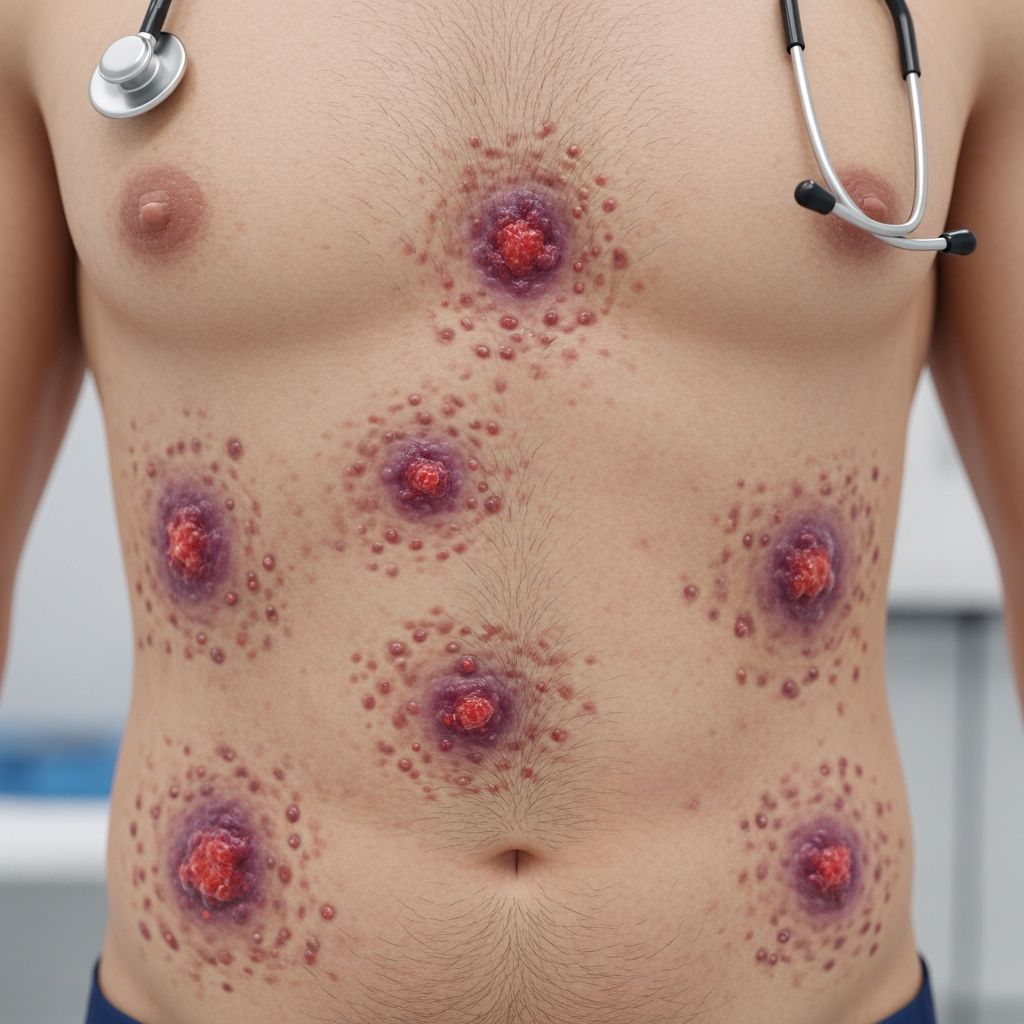
When meningitis is mentioned, many people immediately think of a distinctive red or purple rash on the body. This characteristic marking has become synonymous with meningococcal disease, yet the reality is more complex. The meningitis rash is not always present, can vary dramatically in appearance, and progresses at different rates depending on individual factors and the severity of infection. Understanding what the meningitis rash looks like, how it develops, and what immediate actions to take can be lifesaving.
What Causes the Meningitis Rash?
While meningitis and septicaemia can result from infection by various pathogens—including viruses and fungi—bacterial infections cause the most severe cases, particularly those caused by meningococcal bacteria. The meningococcal rash represents one of the clearest and most specific signs of this life-threatening disease.
The rash develops through a biological cascade of events. Once meningococcal bacteria invade the back of the nose and throat, they enter the bloodstream and multiply rapidly. During this process, these bacteria produce toxins that circulate throughout the body, causing widespread damage to blood vessels and organs. As blood vessels become compromised, blood begins to “leak” into the surrounding tissue, creating the characteristic appearance of a rash on the skin.
However, it is crucial to understand that the rash does not always appear, even in confirmed cases of meningitis. This reality contradicts common assumptions and underscores the importance of recognizing other warning signs of meningococcal disease.
Appearance and Types of Meningitis Rash
The meningitis rash can present in several distinct forms, and meningococcal rashes are extremely diverse in appearance and can look different depending on skin type. Understanding these variations is essential for rapid recognition.
Petechial Rash
A petechial rash appears as pin-prick red or purple spots on the skin, resembling flea bites. These individual spots are typically 1 to 2 millimetres in diameter and often appear in clusters, particularly in areas where pressure occurs from elastic clothing, such as around the waistband or where nappies or stockings create friction.
Purpuric Rash
A purpuric rash resembles bruising, displaying as reddish-purple areas on the skin. This type of rash indicates more extensive blood leakage and represents more severe disease. One parent in the meningitis community famously described a rapidly evolving purpuric rash as “like someone using a biro to draw all over the skin”—a vivid description of how quickly and extensively this rash can spread.
Progression and Severity
A rapidly evolving petechial or purpuric rash is a marker of very severe disease. The rate of progression varies considerably between individuals, with some cases developing slowly over hours while others spread dramatically within minutes. Isolated and dispersed pin-prick spots may first appear, making it essential to search the entire body for small petechiae, not just obvious areas.
The Meningitis Rash on Different Skin Types
Healthcare providers and parents must recognize that the rash can be more difficult to see on dark skin but may be visible in paler areas. When examining someone for potential meningococcal disease, particular attention should be paid to:
Related Stories



- The soles of the feet
- The palms of the hands
- The abdomen
- The inside of the eyelid
- The roof of the mouth
These locations often show the rash more clearly, particularly in people with darker complexions. This variation in visibility across skin tones underscores the importance of thorough examination and clinical awareness when meningitis is suspected.
The Glass Test: Understanding Blanching and Non-Blanching Rashes
The so-called “tumbler test” or “glass test” has become a commonly referenced tool for evaluating a potential meningitis rash. The procedure involves pressing a clear glass or plastic surface firmly onto the rash area to observe whether it disappears under pressure.
A blanching rash disappears when pressed with a glass, indicating that blood is being pushed away from the area temporarily. However, the meningitis rash can start as a blanching rash but nearly always develops into a non-blanching rash that does not disappear when pressed.
The development of a non-blanching red, purple, or brownish petechial rash or purpura is highly significant, as it indicates that blood has leaked into the tissue and will not blanch away with pressure. This transition from blanching to non-blanching is a critical clinical sign that requires immediate medical evaluation.
Severe Progression: Purpura Fulminans
In severe cases of meningococcal septicaemia, the disease can progress to a life-threatening condition called purpura fulminans. As the infection advances, the body mounts an overwhelming clotting response attempting to contain the infection. Paradoxically, this response stops oxygen from reaching the extremities, resulting in extensive purpuric areas that look like large, very dark bruises covering the skin.
The extremities are normally the worst affected—typically the feet and hands, though the condition can extend over entire limbs. In devastating cases, the ears, nose, or lips may also be affected. As extremities become starved of oxygen, they can become blackened, potentially leading to scarring and amputation if the patient survives the acute infection.
When There Is No Rash: Important Clinical Considerations
One of the most critical points for patients and families to understand is that a rash will not always appear, even in confirmed meningitis. In cases of meningitis without septicaemia, the rash can be very scanty, blanching, atypical, or completely absent.
While most patients with overwhelming meningococcal septicaemia do develop a rash—making it one of the clearest and most important signs to recognize—a very ill person needs medical help even if there are only a few spots, a rash that fades, or no rash at all. Many people have heard the message about recognizing the meningitis rash, but this awareness can create false reassurance if no rash appears.
Other Meningitis-Associated Rashes
While meningococcal rash is the most distinctive, other infectious agents causing meningitis can produce skin manifestations that may aid diagnosis. Understanding these variations helps clinicians identify the causative organism more rapidly:
- Rocky Mountain Spotted Fever: Produces erythematous macules beginning on the wrists, hands, and feet, quickly spreading to the trunk and face
- Lyme Disease: Presents with a characteristic “target” appearance rash, though chronic meningitis is more typical than acute presentation
- West Nile Virus and Enteroviruses: Produce erythematous macular or maculopapular rashes similar to those seen with Epstein-Barr virus
- Herpes Simplex Virus (HSV): Causes erythematous vesicular lesions that cluster in patches, primarily on mucosal surfaces
- Varicella-Zoster Virus (VZV): Produces erythematous vesicular lesions in a dermatomal (band-like) distribution
Skin changes in meningitis must always be evaluated in conjunction with clinical symptoms, signs, brain imaging, and laboratory abnormalities, particularly cerebrospinal fluid findings.
Warning Signs Requiring Immediate Medical Attention
Recognition of meningitis depends on understanding the constellation of symptoms, not relying solely on the presence or appearance of a rash. Seek medical help immediately if you or someone you know experiences:
- Fever accompanied by a stiff neck, severe headache, or photophobia (light sensitivity)
- A rash of any kind that rapidly evolves or spreads
- Confusion, altered consciousness, or unusual behaviour
- Severe muscle aches or joint pain
- Nausea, vomiting, or diarrhoea with fever
- A petechial or purpuric rash that does not blanch with pressure
- Signs of shock: pale or mottled skin, rapid pulse, weak perfusion
If you suspect meningitis or septicaemia, trust your instincts and get medical help immediately—rash or no rash. Someone with meningitis or septicaemia can become seriously ill very quickly, and delays in treatment significantly increase the risk of death or serious complications.
Diagnosis and Next Steps
When meningitis is suspected, medical professionals will perform a lumbar puncture (spinal tap) to obtain cerebrospinal fluid (CSF) for analysis. The appearance and cellular composition of the CSF help confirm diagnosis and identify the causative organism. Blood cultures and other laboratory tests support diagnosis and guide antibiotic therapy.
Emergency treatment typically begins before test results are available, as delays in antibiotics increase mortality risk. Modern antibiotics, supportive care, and management of complications have significantly improved outcomes compared to historical mortality rates.
Frequently Asked Questions (FAQs)
Q: Does everyone with meningitis develop a rash?
A: No. While most people with meningococcal septicaemia develop a rash, cases of meningitis without septicaemia may present with a very scanty, blanching, atypical, or completely absent rash. Never assume meningitis is not present if there is no rash.
Q: What is the difference between blanching and non-blanching rashes?
A: A blanching rash disappears when pressed with a glass, indicating blood is temporarily displaced. A non-blanching rash does not disappear when pressed, showing that blood has leaked into tissue. The meningitis rash can start as blanching but typically progresses to non-blanching, which is more concerning.
Q: Why is it harder to see the meningitis rash on dark skin?
A: Red and purple rashes are visually less distinct against darker skin tones. For this reason, examination should focus on paler areas including palms, soles, abdomen, inside of eyelids, and roof of mouth where rashes are more visible.
Q: What is purpura fulminans?
A: Purpura fulminans is a severe complication of meningococcal septicaemia where an overwhelming clotting response cuts off oxygen to the extremities, causing large dark bruise-like areas and potentially leading to blackening and necrosis of fingers, toes, and other extremities.
Q: How quickly should I seek medical attention if I suspect meningitis?
A: Immediately. Call emergency services (999 in the UK, 911 in the US) or go to the nearest emergency department without delay. Meningococcal disease can progress to life-threatening septicaemia within hours, and early treatment is critical for survival and preventing serious complications.
Conclusion: Trust Your Instincts
The meningitis rash remains an important clinical sign, but it should not be the sole basis for ruling out meningococcal disease. The absence of a rash does not mean someone does not have meningitis. Conversely, a rash may be the earliest sign of severe disease. In any situation where meningitis is suspected—whether a rash is present or not—immediate medical evaluation is essential. Medical professionals can perform appropriate tests and begin life-saving treatment quickly. When in doubt, seek help immediately. Early recognition and treatment save lives.
References
- What is the ‘meningitis rash’? — Meningitis.org. 2026. https://www.meningitis.org/news-and-blogs/what-is-the-meningitis-rash/
- Skin rash in meningitis and meningoencephalitis — Tsai, J., Nagel, M. A., & Gilden, D. National Center for Biotechnology Information, U.S. National Library of Medicine. 2013. https://www.ncbi.nlm.nih.gov/pmc/articles/PMC3719428/
Similar Articles








Read full bio of medha deb