Menstrual Cycle: 4 Phases Explained And What To Expect
Understanding your menstrual cycle: phases, hormones, and reproductive health explained.
Menstrual Cycle: An Overview
The menstrual cycle is a monthly process that prepares your body for the possibility of pregnancy. This complex biological cycle involves coordinated changes in your ovaries and uterus, driven by fluctuating hormone levels. Understanding your menstrual cycle is essential for tracking your reproductive health, recognizing abnormalities, and making informed decisions about your body. The menstrual cycle typically lasts between 21 and 35 days, with an average of 28 days, though variations are completely normal.
What Is Menstruation?
Menstruation, also called menses or your period, is the monthly shedding of the lining of your uterus. This process marks the beginning of your menstrual cycle, with day one defined as the first day of bleeding. During menstruation, the functional layer of the uterine lining (endometrium) breaks down and is shed through your vagina, resulting in bleeding that typically lasts between three and seven days. Menstrual blood is not pure blood but rather a combination of blood, tissue from the uterine lining, and other cellular material.
The amount of bleeding varies from person to person. Most people experience a menstrual flow that is heaviest during the first few days and gradually decreases. It is normal to pass small clots during this time. Understanding what is typical for your body helps you recognize when something may be different or concerning.
The Two Connected Cycles
The menstrual cycle actually consists of two interconnected and synchronized processes that occur simultaneously. These two cycles work together to create the complete monthly cycle:
The Ovarian Cycle
The ovarian cycle focuses on the development of follicles in the ovaries and the release of an egg through ovulation. This cycle has distinct phases where hormonal signals stimulate the growth and maturation of ovarian follicles, eventually leading to the release of a mature egg.
The Endometrial (Uterine) Cycle
The endometrial cycle, also called the uterine cycle, centers on the changes that occur in the uterine lining. The functional layer of the endometrium thickens and sheds in response to hormonal signals, preparing the uterus for potential pregnancy or, if pregnancy does not occur, shedding the lining during menstruation.
These two cycles are perfectly coordinated through hormonal communication, ensuring that the uterus is prepared to receive a fertilized egg at the optimal time in the ovarian cycle.
Phases of the Menstrual Cycle
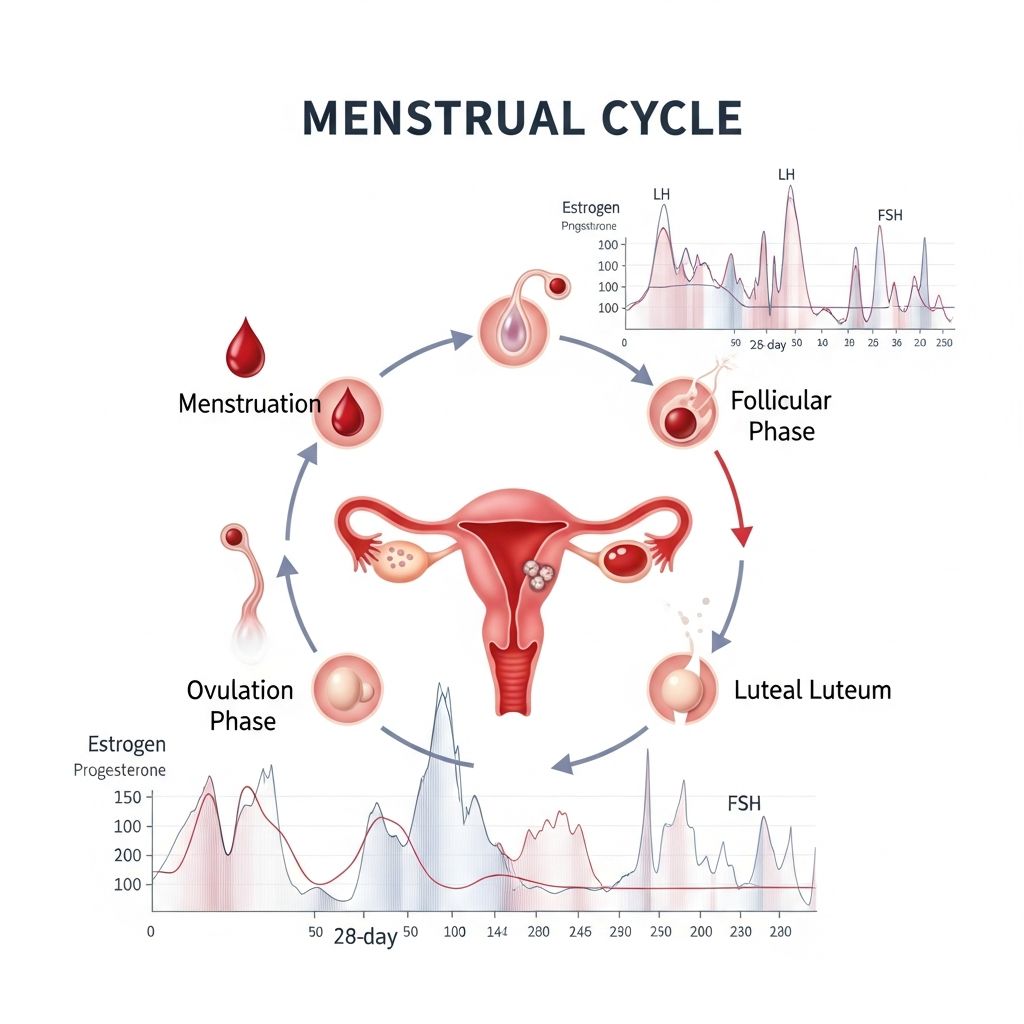
A standard 28-day menstrual cycle is divided into distinct phases, each with specific hormonal and physical characteristics. While cycle lengths vary among individuals, the sequence of phases remains consistent.
Phase 1: Menstrual Phase (Days 1-5)
The menstrual phase marks the beginning of your cycle and typically lasts approximately five days. During this time, progesterone and estrogen levels drop sharply, triggering the breakdown and shedding of the endometrial lining. This shedding produces the bleeding pattern known as menstruation. The menstrual phase represents the final stage of the previous cycle and the beginning of the new one. While menstruating, your ovaries are already beginning the process of preparing follicles for the next phase.
Related Stories



Phase 2: Follicular Phase (Days 1-14)
The follicular phase overlaps with and extends beyond the menstrual phase, typically lasting from day 1 through day 14 of a 28-day cycle. This phase is named for the follicles developing in your ovaries. At the beginning of this phase, the hypothalamus and pituitary gland release hormones that stimulate the ovaries. Specifically, follicle-stimulating hormone (FSH) triggers the growth and maturation of ovarian follicles, each containing an egg.
As follicles develop, they produce increasing amounts of estrogen. This rising estrogen stimulates the thickening of the endometrium, growth of endometrial glands, and the emergence of spiral arteries in the uterine lining. The uterus is actively preparing its lining to potentially receive a fertilized egg. Additionally, estrogen causes cervical mucus to become thin, clear, and stretchy—an environment favorable for sperm survival and transport.
Phase 3: Ovulation (Day 14)
Ovulation occurs around day 14 of a standard 28-day cycle, though the exact timing can vary. As estrogen levels rise to a critical threshold, they trigger a surge in luteinizing hormone (LH) from the pituitary gland. This LH surge, which typically occurs a day or two before ovulation, stimulates the rupture of the dominant follicle and the release of the mature egg (oocyte). The egg is then picked up by the fallopian tube and begins its journey toward the uterus.
Ovulation is a crucial moment in the cycle and marks the transition from the follicular to the luteal phase. After the egg is released, the empty follicle transforms into the corpus luteum, which begins producing progesterone.
Phase 4: Luteal Phase (Days 15-28)
The luteal phase follows ovulation and lasts approximately 14 days, extending to the beginning of menstruation. This phase is named for the corpus luteum, the hormone-secreting structure that forms from the remnants of the follicle after ovulation. The corpus luteum produces progesterone, which becomes the dominant hormone during this phase.
High progesterone levels signal the pituitary gland to reduce the production of FSH, and the corpus luteum itself inhibits further LH release. These hormonal changes prevent the development of additional follicles and prepare the endometrium to receive a fertilized egg. Progesterone causes the endometrial lining to become thick, rich in nutrients, and receptive to implantation. The cervical mucus becomes thick and less hospitable to sperm, effectively sealing the cervix.
If fertilization does not occur, the corpus luteum gradually degenerates, producing less progesterone and estrogen. This hormonal decline triggers the breakdown of the endometrial lining, leading to menstruation and the beginning of a new cycle.
Hormonal Regulation
Your menstrual cycle is controlled by a delicate balance of hormones produced by the brain, pituitary gland, and ovaries. The hypothalamus releases gonadotropin-releasing hormone (GnRH), which signals the pituitary gland to produce FSH and LH. These hormones act on the ovaries, stimulating follicle development and ovulation. In response, the ovaries produce estrogen and progesterone, which provide feedback to the hypothalamus and pituitary, regulating the release of FSH and LH.
This complex feedback system ensures that hormones rise and fall in a coordinated pattern, driving the changes that occur throughout your cycle. Any disruption in this hormonal communication can affect cycle regularity and fertility.
What Is Normal?
While the average menstrual cycle lasts 28 days, normal cycles can range from 21 to 35 days. Similarly, menstrual bleeding typically lasts three to seven days, though some variation is normal. Some people experience regular cycles, while others may have slight variations from month to month.
When you first start menstruating, it is common to have longer cycles or heavier periods. It can take up to three years for young people to develop regular, predictable cycles. Additionally, cycle length and flow can change throughout your reproductive years due to stress, illness, changes in weight or exercise, or other factors.
A normal menstrual cycle should be:
– Regular and predictable (though some variation is normal)- Free from excessive pain or discomfort beyond mild cramping- Not involving an unusually heavy or prolonged flow- Associated with minimal disruption to daily activities
Common Menstrual Symptoms
Many people experience symptoms in the days leading up to menstruation and during their period. The intensity of these symptoms varies widely and can change from month to month. Common menstrual symptoms include:
– Pelvic or abdominal cramping (caused by uterine contractions)- Breast tenderness or swelling- Bloating or water retention- Mood changes or irritability- Fatigue or low energy- Headaches- Changes in appetite or food cravings- Lower back pain or body aches
These symptoms, particularly those occurring in the week or two before menstruation, are often referred to as premenstrual syndrome (PMS). Most people find that symptoms improve once menstruation begins.
Cycle Variations and Changes
Your menstrual cycle can change significantly over your lifetime. During adolescence, cycles may be irregular as your reproductive system matures. During your reproductive years, cycles may become more regular, though variation is still normal. Factors that can affect cycle length and characteristics include:
– Stress and emotional changes- Significant weight gain or loss- Changes in exercise intensity or frequency- Illness or infection- Travel and time zone changes- Use of hormonal contraceptives- Certain medications or supplements- Approaching perimenopause (typically in your 40s and 50s)
As you approach perimenopause, your cycle may become irregular, with longer or shorter intervals between periods and changes in flow. Eventually, menstruation ceases entirely at menopause, typically occurring around age 50.
When to Seek Medical Attention
While variations in your menstrual cycle are normal, certain changes warrant a conversation with your healthcare provider. You should contact your doctor if you experience:
– Sudden changes in cycle length or pattern- Periods that last longer than seven days- Unusually heavy bleeding or soaking through one or more tampons or pads per hour- Severe cramping or pelvic pain- Absence of menstruation for three or more consecutive months- Bleeding between periods- Signs of infection during menstruation- Cycle changes accompanied by other symptoms like weight changes, mood disturbances, or hormonal changes
Irregular cycles can sometimes indicate an underlying health condition that benefits from medical evaluation and treatment. Your menstrual cycle provides valuable information about your overall reproductive health.
Frequently Asked Questions
Q: How long does a normal menstrual cycle last?
A: A normal menstrual cycle typically lasts between 21 and 35 days, with an average of 28 days. However, cycles ranging from 24 to 38 days can also be considered normal. What matters most is that your individual cycle is regular and predictable for you.
Q: Is it normal to have different cycle lengths each month?
A: Yes, slight variations in cycle length from month to month are completely normal and common. However, if your cycle changes dramatically or becomes significantly irregular, it is worth discussing with your healthcare provider.
Q: How many days should a period last?
A: A typical period lasts between three and seven days. Bleeding is usually heaviest during the first few days and gradually decreases. Periods lasting fewer than three days or longer than seven days may warrant medical evaluation.
Q: When does ovulation occur in the menstrual cycle?
A: In a standard 28-day cycle, ovulation typically occurs around day 14. However, the exact timing can vary depending on your individual cycle length and other factors. The luteal phase after ovulation is usually relatively consistent at about 14 days.
Q: What role does progesterone play in the menstrual cycle?
A: Progesterone is produced by the corpus luteum after ovulation and becomes the dominant hormone during the luteal phase. It prepares and maintains the uterine lining for potential pregnancy and signals the pituitary gland to stop producing FSH, preventing the development of new follicles.
Q: Can stress affect my menstrual cycle?
A: Yes, significant stress can affect your menstrual cycle, potentially causing irregular periods, delayed ovulation, or even temporary cessation of menstruation. Managing stress through relaxation techniques, exercise, and adequate sleep can help maintain cycle regularity.
Q: Why is my cycle irregular when I first start menstruating?
A: When you first begin menstruating, your hormonal system is still maturing and developing the regular patterns necessary for consistent cycles. It can take up to three years for cycles to become regular and predictable as your body adjusts.
References
- Physiology, Menstrual Cycle — National Center for Biotechnology Information (NCBI). 2024. https://www.ncbi.nlm.nih.gov/books/NBK500020/
- Menstrual Cycle (Normal Menstruation): Overview & Phases — Cleveland Clinic. 2024. https://my.clevelandclinic.org/health/articles/10132-menstrual-cycle
- Menstrual Disorders and Their Management — Johns Hopkins University. 2024. https://pure.johnshopkins.edu/en/publications/menstrual-disorders-and-their-management-4/
- The Menstrual Cycle — Osmosis. 2024. https://www.youtube.com/watch?v=7HlHGLr1hTA
Similar Articles








Read full bio of Sneha Tete