Mental Health Myths: 7 Facts That Expose The Stigma
Unraveling persistent misconceptions about mental health to foster understanding, reduce stigma, and encourage seeking help for better well-being.
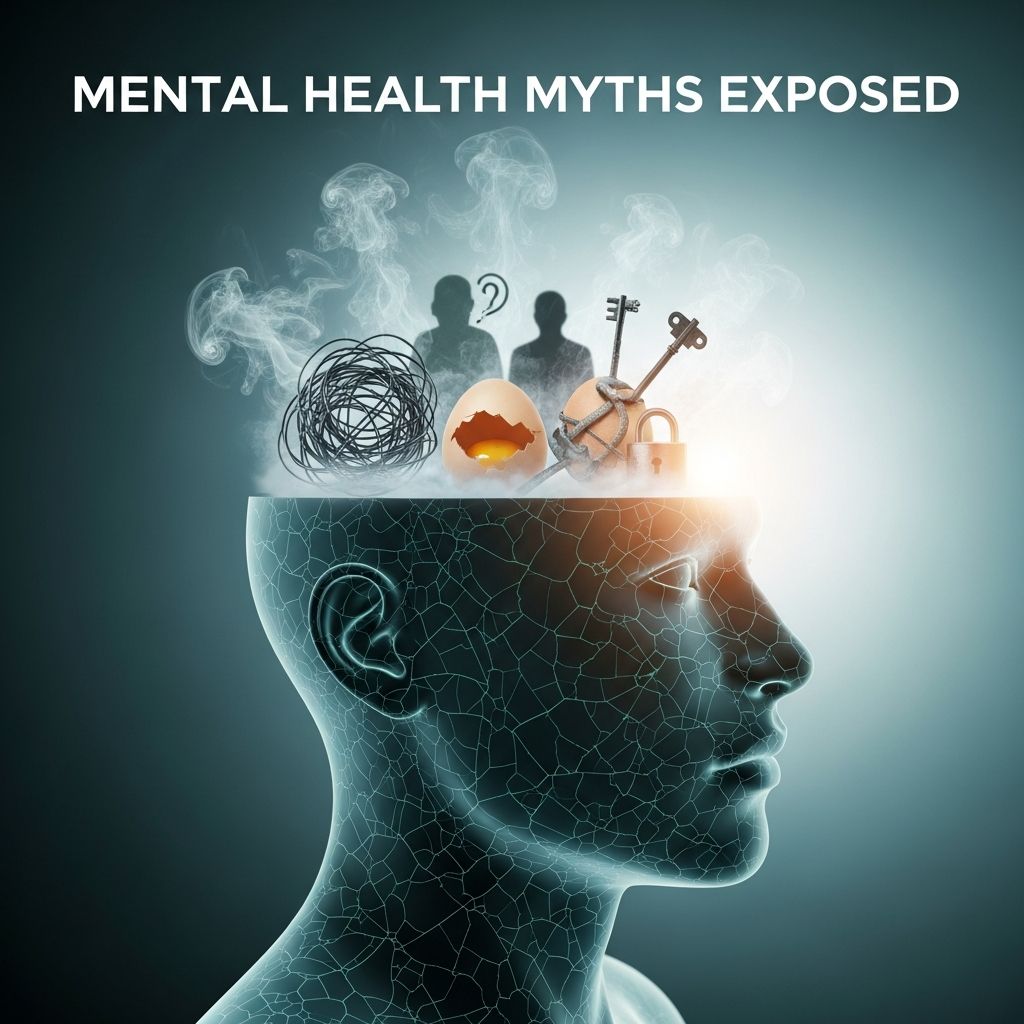
Mental health conditions affect millions worldwide, yet misconceptions persist, creating barriers to care and perpetuating stigma. This article dismantles key myths with evidence-based facts, empowering readers to support themselves and others effectively.
Understanding the Scope of Mental Health Challenges
Mental health issues are far more prevalent than many realize. In the United States, over one in five adults—approximately 23.1%—live with a mental health condition each year, according to recent data from the National Institute of Mental Health. This prevalence extends across all demographics, including children and adolescents, where nearly half of teens aged 13-18 have faced some form of mental illness. Globally, projections suggest half the world’s population may experience a mental disorder by age 75.
These statistics underscore that mental health struggles are a universal human experience, not isolated incidents. Factors like genetics, environment, trauma, and brain chemistry contribute to these conditions, making them medical realities rather than personal shortcomings.
Myth 1: Mental Illness Only Affects a Small Minority
A widespread belief holds that mental health problems are rare, touching only a fringe group. In truth, they impact everyday communities profoundly. For instance, anxiety affects nearly 20% of U.S. adults, while major depression impacts about 7% annually. The COVID-19 pandemic has further amplified these rates, highlighting their commonality.
- Prevalence in workplaces: Conditions do not preclude productivity; many individuals manage symptoms while excelling professionally.
- Youth impact: Even young children exhibit early signs, countering the idea that kids are immune.
Myth 2: Mental Health Issues Stem from Weakness or Poor Character
One of the most damaging falsehoods equates mental struggles with moral failings or lack of willpower. Mental disorders arise from complex interactions of biological, psychological, and social elements, akin to physical illnesses like diabetes. Environmental stressors, genetic predispositions, and life traumas play key roles, not character defects.
Viewing these challenges through a lens of weakness discourages help-seeking. Instead, recognizing them as treatable medical conditions promotes resilience. Seeking professional support demonstrates strength, much like consulting a doctor for a physical ailment.
| Myth | Reality | Supporting Evidence |
|---|---|---|
| Mental illness = weakness | Medical condition influenced by biology and environment | Genetics, trauma, brain chemistry |
| Can ‘snap out of it’ | Requires professional intervention | Therapy and meds effective |
Myth 3: Children and Teens Are Unaffected
The notion that mental health problems spare the young is false. Very young children can display warning signs, and adolescents face heightened risks during developmental stages. Nearly half of U.S. teens experience mental illness, often linked to school pressures, social media, and family dynamics.
Early intervention is crucial, as untreated issues can persist into adulthood. Parents and educators play vital roles by spotting changes in behavior, mood, or social withdrawal and encouraging professional evaluation.
Myth 4: Recovery Is Impossible for Those with Mental Illness
Despairing views claim lifelong suffering without hope. Evidence shows otherwise: with treatment, many achieve full recovery and fulfilling lives. Combining therapy, medication, and lifestyle adjustments yields optimal results. Research confirms psychotherapy matches medication efficacy, and their synergy enhances outcomes.
- Success stories abound in careers, arts, and leadership among those managing conditions.
- Early support boosts recovery odds, preserving relationships and goals.
Myth 5: Violence Is Inherent in Mental Illness
Related Stories



Media portrayals fuel the dangerous stereotype linking mental illness to violence. Most individuals with mental health conditions are not violent and are more likely to be victims. This myth harms by isolating people and justifying discrimination.
Facts reveal that factors like substance abuse or untreated severe cases contribute more to violence risks than mental illness alone. Education dispels this, fostering safer, more inclusive communities.
Myth 6: Therapy Is Ineffective; Only Medication Works
Dismissing talk therapy as a waste ignores its proven value. Therapy addresses root causes through behavioral changes, often outperforming meds alone for conditions like anxiety and depression. Personalized plans may integrate both, alongside mindfulness and exercise, for comprehensive care.
Patients worry meds alter personality, but they target symptoms precisely, with psychiatrists adjusting for minimal side effects via trial.
Myth 7: Mental Illness Is Easily Visible or Always Obvious
Unlike physical injuries, mental health struggles are often invisible. People mask symptoms due to stigma, maintaining functionality outwardly. Training like Mental Health First Aid helps identify subtle signs, enabling timely support.
Everyday Ways to Combat Stigma and Offer Support
Anyone can contribute without expertise. Simple actions make a difference:
- Listen actively without judgment.
- Educate yourself on conditions.
- Encourage professional help gently.
- Share personal stories to normalize discussions.
Talking openly breaks isolation; silence perpetuates shame. Workplaces benefit from supportive policies, as employees with managed mental health contribute effectively.
Barriers to Care and How to Overcome Them
Stigma, misinformation, and access issues hinder treatment. Policy changes, community programs, and awareness campaigns address these. Individuals can prioritize self-care: regular exercise, sleep, social connections, and routine check-ins with providers.
| Barrier | Solution |
|---|---|
| Stigma | Open conversations and education |
| Access | Telehealth, community clinics |
| Misinformation | Reliable sources like NIMH |
Frequently Asked Questions (FAQs)
Can mental health issues affect anyone?
Yes, regardless of age, background, or success. Over 23% of U.S. adults are affected annually.
Is medication always necessary?
No, therapy and lifestyle changes suffice for many; combinations work best.
Does talking about mental health worsen it?
No, dialogue reduces isolation and stigma.
Are people with mental illness dangerous?
Rarely; they’re more often victims.
Can children have mental health problems?
Absolutely, with early signs possible.
Steps Toward a Stigma-Free Future
Collective action—through policy advocacy, workplace initiatives, and personal outreach—transforms perceptions. Celebrities and leaders sharing experiences normalize help-seeking, proving mental health management enables thriving. Resources from organizations like SAMHSA and APA provide further guidance.
By replacing myths with facts, we build empathetic societies where mental health receives the attention it deserves, equal to physical health.
References
- Common Mental Health Myths | Learn the Facts vs. the Fiction — Vital Alabama. Accessed 2026. https://vitalalabama.com/resources/helpful-information/mental-health/myths/
- Fact Sheet: Common Mental Health Myths and Misconceptions — Mental Health Commission of Canada. Accessed 2026. https://mentalhealthcommission.ca/resource/fact-sheet-common-mental-health-myths-and-misconceptions/
- Debunking 6 myths about mental health — HealthPartners. 2022. https://www.healthpartners.com/blog/mental-health-myths/
- Breaking the Stigma: Mental Health Myths Debunked — NORCENTRIC Health Centre. 2025-10. https://www.norcen.org/about-us/news/2025/october/breaking-the-stigma-mental-health-myths-debunked/
- Debunking common myths about mental health — Vanderbilt University News. 2025-05-05. https://news.vanderbilt.edu/2025/05/05/debunking-common-myths-about-mental-health/
- Myths and Facts About Mental Health — American Psychiatric Association. Accessed 2026. https://www.psychiatry.org/news-room/apa-blogs/myths-and-facts-about-mental-health
- Mental Health: Get the Facts — SAMHSA (U.S. Gov). Accessed 2026. https://www.samhsa.gov/mental-health/what-is-mental-health/facts
Similar Articles








Read full bio of Sneha Tete