Mental Health vs Mental Illness: Key Differences
Understand the crucial distinctions between mental health and mental illness for better wellbeing.
Mental Health vs Mental Illness: Understanding the Differences
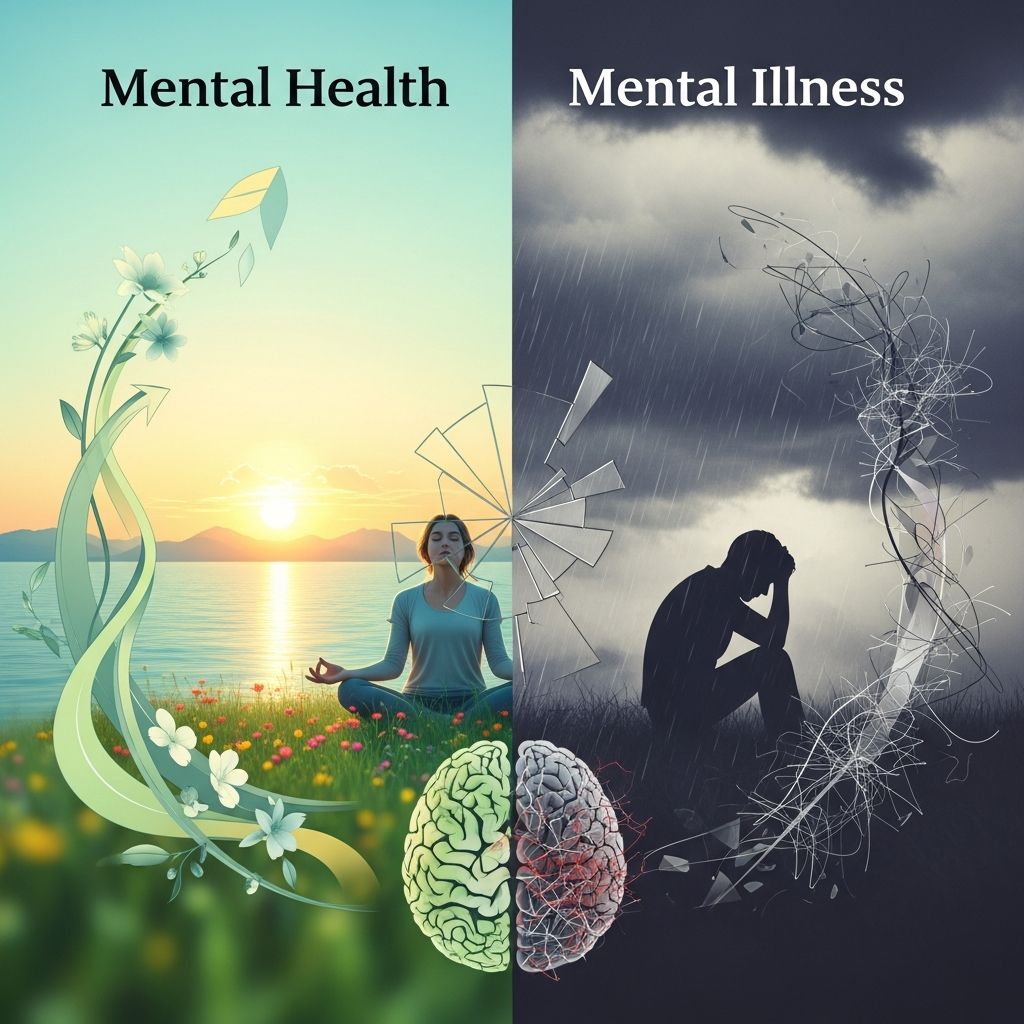
The terms “mental health” and “mental illness” are often used interchangeably in everyday conversation, but they represent distinct and important concepts. While there is overlap between the two, understanding their differences is crucial for better health literacy and reducing stigma. Everyone has mental health, much like everyone has physical health, but not everyone experiences a mental illness. This distinction can significantly change how we understand and address various mental health issues.
What Is Mental Health?
Mental health refers to our emotional, psychological, and social well-being. It encompasses how we think, feel, and act, and it helps determine how we handle stress, relate to others, and make decisions. According to the World Health Organization (WHO), good mental health means being able to realize your potential, cope with normal stressors, and contribute to your community in a productive way.
Mental health is a neutral, continuous spectrum rather than a binary state of “good” or “bad.” It is a fundamental aspect of overall health and quality of life, influencing our thoughts, emotions, and actions on a daily basis. Good mental health allows individuals to function effectively in daily activities, build healthy relationships, and adapt to life changes.
The key characteristics of mental health include:
- Emotional well-being and stability
- Ability to cope with life’s challenges and stressors
- Healthy relationships and social connections
- Capacity to learn, work, and contribute meaningfully
- Psychological resilience and adaptability
- Overall physical, mental, and social well-being
What Is Mental Illness?
Mental illness refers to a specific, diagnosable condition involving changes in emotion, thinking, or behavior that can be associated with distress and problems functioning in social, work, or family activities. Unlike mental health, which everyone possesses to varying degrees, mental illness is not universal—not everyone experiences a mental illness.
Mental illnesses are diagnosable disorders with standardized criteria for diagnosis. They can be caused by various factors including genetics, brain chemistry imbalances, trauma, environmental stressors, and life experiences. According to the National Institute of Mental Health, in the United States, approximately 1 in 4 adults experience a diagnosed mental illness each year.
Key characteristics of mental illness include:
- Specific, diagnosable conditions with established diagnostic criteria
- Affects mood, thinking, behavior, and perception
- Can impact daily functioning and quality of life
- Range in severity from mild to severe and debilitating
- Have evidence-based treatment options available
- May require professional intervention and medical treatment
Key Differences Between Mental Health and Mental Illness
| Aspect | Mental Health | Mental Illness |
|---|---|---|
| Definition | A state of emotional, psychological, and social well-being | A diagnosable condition affecting mood, thinking, or behavior |
| Universality | Everyone has mental health | Not everyone experiences mental illness |
| Nature | A continuous spectrum from good to poor | Specific, identified disorders with criteria |
| Diagnosis | Not diagnosed; self-assessed or evaluated informally | Requires professional diagnosis |
| Treatment | Supported through lifestyle choices and wellness practices | Treated with therapy, medication, or other clinical interventions |
| Causes | Affected by daily stressors and life events | May have genetic, biological, or environmental causes |
Related Stories



The Relationship Between Mental Health and Mental Illness
While mental health and mental illness are distinct concepts, they are interconnected. Poor mental health does not always indicate the presence of a mental illness, and having a mental illness does not necessarily mean poor mental health.
Someone may experience temporary poor mental health due to life stressors such as:
- Loss of a loved one
- Job loss or career challenges
- Relationship difficulties
- Financial stress
- Major life transitions
Conversely, individuals with a diagnosed mental illness, when properly treated and supported, can maintain good mental health and live productive, fulfilling lives. With appropriate treatment interventions—such as therapy, medication, lifestyle changes, and social support—many people with mental illnesses achieve positive mental health outcomes.
Common Types of Mental Illness
Mental illnesses come in many forms, each with distinct symptoms and treatment approaches. Understanding these categories helps recognize when professional support may be needed:
Anxiety Disorders
Anxiety disorders are among the most common mental illnesses. They involve persistent worry, tension, and nervousness that can impact sleep, concentration, and daily functioning. Symptoms may include panic attacks, difficulty concentrating, and physical symptoms such as rapid heartbeat.
Mood Disorders
Mood disorders affect an individual’s emotional state and emotional regulation. Common examples include:
- Depression: Persistent low mood, loss of interest in activities, difficulty concentrating, fatigue, and social withdrawal. Unlike occasional sadness, clinical depression is a pervasive condition affecting how a person thinks, feels, and functions.
- Bipolar Disorder: Characterized by severe shifts in mood, energy, and concentration. Individuals may experience manic episodes (elevated mood and energy) followed by depressive episodes (low mood and reduced energy).
- Seasonal Affective Disorder: A type of depression linked to seasonal changes.
Personality Disorders
Personality disorders involve long-term patterns of thinking and behavior that make it difficult to function in daily life. Individuals may experience unpredictable thinking and behavior or extreme emotional responses.
Psychotic Disorders
Psychotic disorders involve a loss of touch with reality. The most common type is schizophrenia, which affects a person’s ability to think clearly, manage emotions, and relate to others, often involving hallucinations and delusions.
Substance Abuse Disorders
Addiction and substance abuse can have direct impacts on mental health. Using substances can trigger changes in brain structure and function, affecting overall wellbeing and functioning.
Why the Distinction Matters
Understanding the difference between mental health and mental illness is essential for several reasons:
- Reducing Stigma: Recognizing that mental health is universal while mental illness is specific helps reduce misconceptions and stigma surrounding mental conditions.
- Appropriate Interventions: Poor mental health may be addressed through wellness practices, stress management, and lifestyle changes, while mental illness typically requires professional treatment.
- Better Communication: Using precise terminology facilitates clearer conversations between healthcare providers, patients, and the public about mental wellbeing.
- Preventive Care: Understanding mental health allows for proactive steps to maintain wellbeing and potentially prevent mental illness.
- Individualized Care: Recognizing that individuals can have mental illness while maintaining good mental health encourages person-centered treatment approaches.
Supporting Mental Health and Treating Mental Illness
Everyone can take steps to support their mental health, regardless of whether they have a diagnosed mental illness:
- Maintain regular physical exercise and healthy sleep habits
- Develop strong social connections and relationships
- Practice stress-management techniques such as meditation or mindfulness
- Engage in meaningful activities and hobbies
- Seek professional help when experiencing persistent difficulties
- Maintain a balanced diet and limit substance use
For those with a diagnosed mental illness, treatment options may include:
- Psychotherapy or talk therapy
- Medication management
- Cognitive behavioral therapy (CBT)
- Lifestyle modifications
- Support groups and community resources
- Crisis intervention services when needed
Frequently Asked Questions
Q: Can someone with a mental illness have good mental health?
A: Yes. With proper treatment, support, and management strategies, individuals with mental illnesses can achieve and maintain good mental health and live fulfilling, productive lives.
Q: Is poor mental health the same as having a mental illness?
A: No. Poor mental health can result from temporary stressors or life challenges and does not necessarily indicate a diagnosable mental illness. However, untreated mental illness can negatively affect mental health.
Q: Does everyone have mental health?
A: Yes. Everyone has mental health, just as everyone has physical health. Mental health exists on a spectrum and can fluctuate based on life circumstances and stressors.
Q: When should I seek professional help for mental health concerns?
A: Consider seeking professional help if you experience persistent symptoms that interfere with daily functioning, ongoing stress that affects relationships or work, or significant changes in mood, behavior, or thoughts.
Q: What are the main causes of mental illness?
A: Mental illnesses can result from various factors including genetic predisposition, brain chemistry imbalances, trauma, chronic stress, environmental factors, and life experiences.
Q: Is mental illness treatable?
A: Yes. Most mental illnesses are treatable. Treatment effectiveness varies depending on the condition, individual factors, and the appropriate combination of therapeutic and medical interventions.
References
- Mental Health or Mental Illness? Educational Primer — District Behavioral Health and Intellectual/Developmental Services (DBHIDS). 2023. https://dbhids.org/wp-content/uploads/2023/09/Mental-Health-v-Mental-Illness-Educational-primer__FINAL.pdf
- The Difference Between Mental Health & Mental Illness — Taylor Counseling Group. https://taylorcounselinggroup.com/blog/mental-health-vs-mental-illness/
- Mental Illness vs Mental Disorder: Understanding Mental Health — MPW Health. https://mpwhealth.com/mental-illness-vs-mental-disorder/
- What is the difference between mental health and mental illness? — Rethink Mental Illness. https://www.rethink.org/news-and-stories/commonly-asked-mental-health-questions/what/what-is-the-difference-between-mental-health-and-mental-illness/
- Mental Health vs. Mental Illness — Blue Cross Blue Shield of Michigan. https://bcbsm.mibluedaily.com/stories/health-and-wellness/mental-health-vs-mental-illness
- Mental Health vs. Mental Illness: Understanding the Differences — Healthline. https://www.healthline.com/health/mental-health/mental-health-vs-mental-illness
- Mental Health Conditions — National Alliance on Mental Illness (NAMI). https://www.nami.org/about-mental-illness/mental-health-conditions/
Similar Articles








Read full bio of Sneha Tete