Metabolic Myopathy: Causes, Symptoms, and Treatment
Understanding metabolic myopathy: genetic muscle disorders affecting energy production.
Understanding Metabolic Myopathy
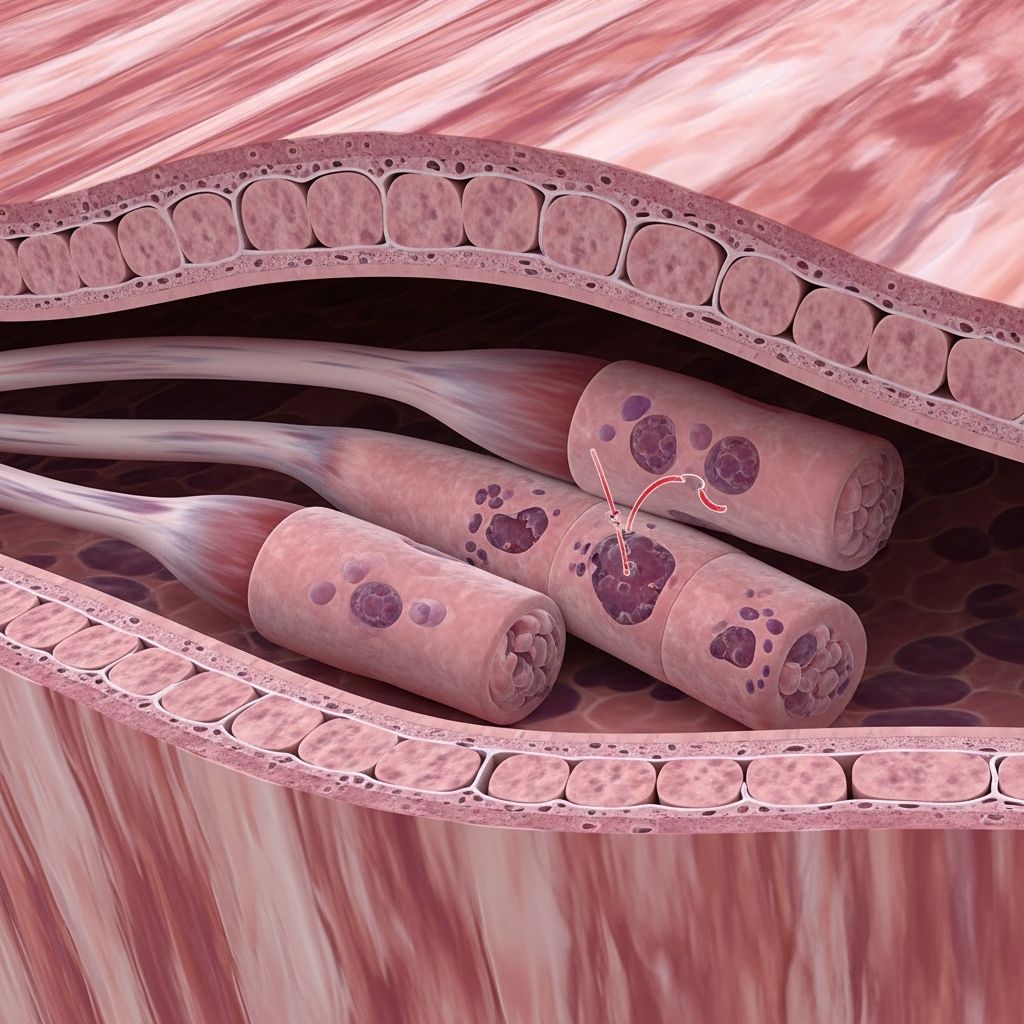
Metabolic myopathy refers to a group of inherited muscle disorders that result from defects in biochemical metabolism, specifically affecting the muscle’s ability to produce energy. These conditions are caused by genetic mutations that interfere with energy production at the cellular level, leading to inadequate adenosine triphosphate (ATP) reserves within muscle cells. ATP, often referred to as the “molecular unit of currency” for intracellular energy transfer, is essential for proper muscle function. When ATP production is compromised, muscles cannot function optimally, leading to various symptoms and complications.
Unlike inflammatory myopathies that result from immune system dysfunction, metabolic myopathies are primarily genetic in nature, representing inborn errors of metabolism. The severity and presentation of metabolic myopathy vary significantly among individuals, depending on the specific enzymatic defect, the affected metabolic pathway, and the age of onset.
Causes and Genetic Inheritance Patterns
Metabolic myopathies are fundamentally caused by genetic mutations that impair the body’s ability to produce sufficient ATP through various metabolic pathways. These mutations typically follow an autosomal recessive inheritance pattern, making these conditions relatively rare. However, they can also be inherited through autosomal dominant, X-linked, or mitochondrial patterns. In rare cases, metabolic myopathies can result from de novo mutations, meaning they arise spontaneously without being inherited from either parent.
The genetic defects can affect various metabolic pathways responsible for energy production in muscle cells. Understanding the specific genetic basis of metabolic myopathy is crucial for accurate diagnosis, genetic counseling, and determining appropriate treatment strategies.
Types of Metabolic Myopathies
Metabolic myopathies are categorized based on the metabolic pathway affected by the enzymatic or transport protein deficiency. The main types include:
Fatty Acid Oxidation Disorders (FAOD)
Fatty acid oxidation disorders involve defects in fat metabolism at any point along the pathway, from the muscle cell membrane through the mitochondrion. These defects can occur in the cell membrane, cytosol, mitochondrial membrane, or within the mitochondrion itself. The inability to properly metabolize fatty acids limits the muscle’s energy production capacity, particularly during periods requiring sustained energy.
Mitochondrial Myopathy
Mitochondrial myopathies result from defects in mitochondrial enzymes or transport proteins involved in oxidative phosphorylation, including the citric acid cycle and electron transport chain. These disorders exclude fatty acid oxidation defects and primarily affect the mitochondrial membrane or the interior of the mitochondrion. Muscle biopsies in mitochondrial myopathy typically reveal “ragged red” or “ragged blue” fibers, cytochrome C oxidase-negative fibers, and increased lipid accumulation.
Nucleotide Metabolism Disorders
Nucleotide metabolism disorders involve defects in purine nucleotide cycle enzymes, such as AMP deaminase deficiency. Since the purine nucleotide cycle is part of protein catabolism and occurs within the cytosol of muscle cells, these defects impair a critical energy-producing pathway. Interestingly, the majority of individuals with AMP deaminase deficiency remain asymptomatic due to the body’s ability to produce sufficient ATP through alternative metabolic pathways.
Symptoms and Clinical Presentation
The symptoms of metabolic myopathy vary considerably among affected individuals, depending on the severity of the enzymatic defect, which metabolic pathway is impaired, and the type and intensity of physical activity. A key distinguishing feature of many metabolic myopathies is that symptoms often appear during or shortly after exercise rather than being constant.
Related Stories



Common Symptoms
The following symptoms are commonly associated with metabolic myopathy:
- Exercise intolerance: Difficulty performing or completing physical activities that previously could be tolerated
- Muscle pain and cramps: Significant discomfort during or after exercise, sometimes lasting for hours
- Transient muscle contracture: Temporary muscle stiffness or cramping that can persist for extended periods, resembling severe muscle cramps
- Progressive muscle weakness: Gradual decline in muscle strength, though this is not universal in all cases
- Muscle swelling: Visible or palpable swelling of affected muscles
- Myoglobinuria: Dark or reddish-brown urine resulting from muscle tissue breakdown and myoglobin release into the bloodstream
- Pseudoathletic appearance: Apparent muscle enlargement (hypertrophy or pseudohypertrophy), particularly in the calf muscles
In extreme cases, metabolic myopathy can lead to rhabdomyolysis, a severe condition involving extensive muscle tissue breakdown. This complication requires immediate medical attention and aggressive treatment to prevent acute renal failure and other serious complications.
Diagnosis of Metabolic Myopathy
Accurate diagnosis of metabolic myopathy involves a comprehensive approach combining clinical evaluation, laboratory testing, and specialized muscle tissue analysis.
Clinical Evaluation
The diagnostic process begins with a detailed patient history, including the age of symptom onset, exercise tolerance patterns, family history of muscle disorders, and the specific circumstances under which symptoms occur. Healthcare providers assess whether symptoms appear during or after exercise, during rest, or in both situations.
Laboratory Testing
Blood tests are fundamental in the diagnosis of metabolic myopathy. Serum creatine kinase (CK) levels are typically elevated, indicating muscle damage. The degree of CK elevation can help differentiate metabolic myopathy from other muscle disorders. Additional laboratory tests may include:
- Metabolic panel assessment
- Urine myoglobin testing (particularly important if myoglobinuria is suspected)
- Genetic testing to identify specific mutations
- Enzyme assays on muscle tissue or plasma
Electromyography (EMG) and Muscle Biopsy
Electromyography can reveal characteristic patterns of muscle dysfunction. Muscle biopsies provide definitive evidence of metabolic myopathy by showing specific histological findings depending on the type. For example, mitochondrial myopathies show ragged red fibers and COX-negative fibers, while other types may reveal different pathological features. Markedly elevated CK combined with characteristic EMG changes and biopsy findings help establish the diagnosis.
Cellular Mechanism of Disease
At the cellular level, metabolic myopathies impair the normal process of ATP production and utilization. During muscle contraction, myosin proteins bind to actin filaments and pull to create movement. This process requires ATP energy. Without sufficient ATP supply, myosin cannot release from actin after the initial contraction, causing the muscles to remain in a rigid, contracted state. This explains the transient muscle contractures and cramping experienced by many patients with metabolic myopathy.
The severity of symptoms correlates with ATP demand during various activities. Different metabolic pathways produce ATP at different times during activity and rest, and at different rates depending on whether activity is anaerobic or aerobic and its intensity level. This explains why some patients experience symptoms primarily during intense exercise while others may have symptoms during light activity or even at rest.
Impact on Quality of Life
The impact of metabolic myopathy on daily life varies considerably among affected individuals. Some people develop sufficient symptom severity to limit professional and recreational activities, while others manage relatively minor restrictions. The variability in disease manifestation relates to factors such as:
- The specific genetic defect and its severity
- The affected metabolic pathway
- Individual genetic background and compensatory mechanisms
- Age of onset (symptoms during infancy tend to be more severe)
- Overall physical fitness and lifestyle factors
Some individuals with metabolic myopathy remain completely asymptomatic throughout life because their body produces sufficient ATP through alternative metabolic pathways to meet cellular energy demands.
Treatment and Management Strategies
While metabolic myopathies are genetic conditions without cures, several management strategies can improve symptoms and quality of life. Treatment approaches vary depending on the specific type of metabolic myopathy and individual patient factors.
Dietary Modifications
Dietary management is often a cornerstone of treatment for metabolic myopathy, particularly for conditions involving fatty acid metabolism disorders. Specific dietary recommendations may include:
- Frequent, small meals to maintain steady energy supply
- Increased carbohydrate intake during periods of increased activity
- Careful management of fat intake for FAOD patients
- Ensuring adequate protein consumption
- Maintaining proper hydration
Exercise and Activity Management
Physical activity should be carefully planned and monitored in metabolic myopathy. While complete exercise avoidance is not recommended, patients benefit from:
- Structured, moderate-intensity exercise programs tailored to individual tolerance
- Avoidance of intense, prolonged exercise that may trigger symptoms
- Adequate warm-up and cool-down periods
- Regular activity with planned rest days
- Professional guidance from physical therapists familiar with metabolic myopathies
Medication and Supportive Care
Specific medications may be recommended based on the type of metabolic myopathy. Some patients benefit from medications that enhance energy production or reduce symptoms. Additionally, avoiding medications known to worsen muscle function is important. Certain drugs can induce or exacerbate myopathic symptoms and should be avoided or used with caution.
Prognosis and Long-Term Outcomes
The prognosis for metabolic myopathy varies significantly based on the specific diagnosis, age of onset, and individual factors. Patients who develop metabolic myopathy during infancy typically have more severe disease. In contrast, those who develop symptoms in young adulthood or later tend to have more manageable symptoms responsive to dietary changes and exercise modification. With appropriate management and monitoring, many patients achieve good quality of life despite their underlying genetic condition.
Frequently Asked Questions
Q: Is metabolic myopathy curable?
A: No, metabolic myopathy is not curable as it is a genetic condition. However, symptoms can be effectively managed through dietary modifications, exercise management, and supportive care, allowing many patients to maintain good quality of life.
Q: Can metabolic myopathy develop later in life?
A: Yes, while many metabolic myopathies present in childhood, some individuals do not develop symptoms until young adulthood or later. Those with later onset typically experience milder, more treatable symptoms.
Q: What is the relationship between metabolic myopathy and rhabdomyolysis?
A: In severe cases, metabolic myopathy can progress to rhabdomyolysis, a serious condition involving extensive muscle breakdown. This is a medical emergency requiring immediate treatment with aggressive hydration and close monitoring of kidney function.
Q: How is metabolic myopathy different from inflammatory myopathy?
A: Metabolic myopathy is a genetic disorder affecting energy production, while inflammatory myopathy results from immune system dysfunction. They have different causes, presentations, and treatment approaches.
Q: Are there genetic tests available for metabolic myopathy?
A: Yes, genetic testing can identify specific mutations causing metabolic myopathy. This information is valuable for diagnosis, genetic counseling, and determining appropriate management strategies.
References
- Drug-related Myopathies of Which the Clinician Should Be Aware — National Center for Biotechnology Information (NCBI). 2011. https://pmc.ncbi.nlm.nih.gov/articles/PMC3092639/
- Metabolic myopathy — Wikimedia Foundation. 2024. https://en.wikipedia.org/wiki/Metabolic_myopathy
- Metabolic, drug-induced, and other noninflammatory myopathies — Johns Hopkins University. 2024. https://pure.johnshopkins.edu/en/publications/metabolic-drug-induced-and-other-noninflammatory-myopathies-4
Similar Articles








Read full bio of medha deb