Metabolism Myths And Facts: 9 Evidence-Based Truths
Debunk common metabolism myths with science-based facts to optimize your health and weight management strategies effectively.
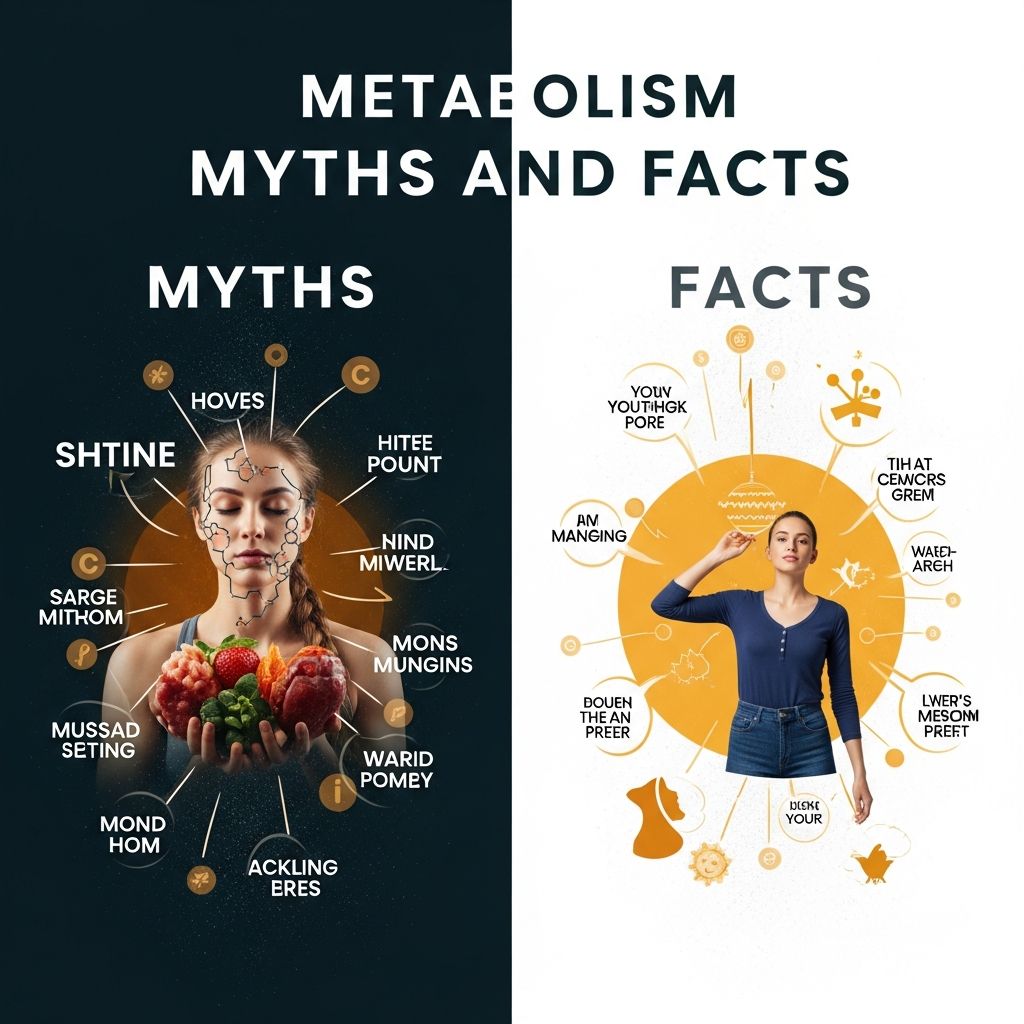
Your metabolism is the sum of chemical reactions in your body that convert food into energy. Understanding it is key to weight management, but misinformation abounds. This article debunks prevalent myths using evidence from credible health authorities and research, empowering you with actionable insights for a healthier metabolism.
What Is Metabolism?
Metabolism encompasses all processes that sustain life, including breaking down nutrients for energy (catabolism) and building molecules for growth and repair (anabolism). Your basal metabolic rate (BMR) accounts for 60-75% of daily calorie burn, influenced by age, sex, body composition, and genetics. Daily activities and exercise add to total energy expenditure.
A common analogy likens a fast metabolism to a hot furnace burning fuel quickly, while a slow one conserves energy. In reality, factors like muscle mass play a pivotal role in determining your metabolic efficiency.
Claim: Our Metabolic Rate Doesn’t Change
Many believe metabolic rate is fixed by genetics, unchangeable over time. While genetics set a baseline, lifestyle profoundly impacts it.
The truth: Metabolic rate evolves with age, muscle mass, and activity. Muscle is metabolically active, burning more calories at rest than fat. As we age, natural muscle loss (sarcopenia) slows metabolism, but strength training counteracts this by building lean mass. Studies show resistance exercises increase resting metabolic rate by 5-10%.
- Increase muscle through weightlifting 2-3 times weekly.
- Combine with protein-rich diet to support muscle synthesis.
- Expect gradual improvements; consistency yields 7% higher calorie burn over months.
Claim: Thinner People Have Faster Metabolisms
The stereotype persists that slim individuals effortlessly maintain weight due to superior metabolism. Larger bodies actually demand more energy for basic functions.
The truth: Resting metabolic rate scales with body size. A 200-pound person burns more calories walking a mile (106 calories) than a 125-pound person (67 calories). Thinner people often succeed via habits like portion control and activity, not inherently faster metabolism. Muscle mass, not thinness, drives efficiency.
| Body Weight | Calories Burned per Mile Walking | Implication for Metabolism |
|---|---|---|
| 125 lbs | 67 calories | Lower absolute burn but potentially efficient per pound |
| 200 lbs | 106 calories | Higher total burn due to mass |
Source: Comparative energy expenditure data.
Claim: Eating Frequent Small Meals Boosts Metabolism
Grazing on mini-meals is touted as a metabolic accelerator. Frequency sounds logical, but evidence disagrees.
The truth: Meal frequency minimally affects metabolic rate. The thermic effect of food (TEF) burns 10% of calories during digestion, regardless of meals per day. Frequent eating aids adherence by curbing hunger, preventing overeating—not by speeding metabolism. Total calorie intake matters most.
- 3 balanced meals suit most; adjust for lifestyle.
- Focus on nutrient density over timing.
- Avoid extremes; very frequent eating may spike insulin unnecessarily.
Claim: Breakfast Jumpstarts Metabolism
Skipping breakfast allegedly tanks metabolism all day. This myth fuels rigid routines.
Related Stories



The truth: Breakfast provides energy and nutrients but doesn’t significantly elevate metabolic rate. Intermittent fasting studies show no long-term slowdown from skipping. Consistency in total intake overrides timing. Eat when hungry for sustainability.
Claim: Green Tea, Chili Peppers, or Superfoods Turbocharge Metabolism
Ads promise spicy peppers or green tea as fat-burners. Small effects exist but overhyped.
The truth: Capsaicin in chilies and catechins in green tea slightly raise energy expenditure (4-5% short-term), more in higher-BMI individuals. No food dramatically boosts metabolism; effects fade quickly. Prioritize whole diet over gimmicks.
- Green tea: ~50-100 extra calories/day max.
- Chilies: Temporary thermogenesis, not sustained.
- Ginger/caffeine: Modest, BMI-dependent benefits.
Claim: Metabolism Slows Dramatically with Age
‘My metabolism died at 40’ is a common lament. Age alone isn’t the villain.
The truth: Muscle loss with inactivity slows BMR by ~2-8% per decade post-30. Strength training preserves or rebuilds muscle, maintaining rate. Active 60-year-olds match younger sedentary peers.
Claim: Starvation Diets or Skipping Meals Speed Up Metabolism
Extreme calorie cuts supposedly trick the body into fat-burning mode.
The truth: Very low-calorie diets trigger adaptive thermogenesis, slowing metabolism by 15-30% to conserve energy. Muscle loss compounds this. Sustainable 500-calorie deficits preserve muscle and rate.
Eating after 7 PM doesn’t halt metabolism; poor snack choices do. Body processes continue sleeping.
Claim: Exercise Provides Long-Lasting Metabolic Boost
‘Afterburn’ promises endless calorie burn post-workout.
The truth: Excess post-exercise oxygen consumption (EPOC) adds 6-15% extra burn for 1-2 hours max, mainly from high-intensity sessions. Strength training offers sustained benefits via muscle gain.
Claim: Metabolism Is Just Calorie Burning
Oversimplification ignores anabolism.
The truth: Metabolism balances breakdown (catabolism) and building (anabolism). Healthy equilibrium prevents extremes like yo-yo dieting.
How to Support a Healthy Metabolism
Evidence-based strategies:
- Build muscle: Resistance train 150 minutes/week.
- Eat adequately: 1.6g protein/kg body weight; avoid deficits below 1,200-1,500 calories.
- Stay active: NEAT (non-exercise activity) burns 15-30% daily calories.
- Sleep well: 7-9 hours; deprivation slows BMR 5-20%.
- Hydrate: Water boosts TEF slightly.
Fats aren’t villains; healthy ones (avocados, nuts) aid satiety and nutrient absorption. Low-fat often means high-carb, risking gain.
Frequently Asked Questions
Can I change my metabolism?
Yes, through muscle-building, activity, and balanced eating. Genetics set baseline, but lifestyle optimizes it.
Does eating late cause weight gain?
No, total calories matter; late snacks often poor quality.
Are juice cleanses metabolic boosters?
No, they slow metabolism via calorie restriction; body detoxes naturally.
What’s the best meal frequency?
Personal preference; 3 meals or 5-6 small ones if it prevents overeating.
Do women have slower metabolisms than men?
Generally yes, due to less muscle mass, but trainable.
References
- Metabolism Myths and Facts — Academy of Nutrition and Dietetics. 2023. https://www.eatright.org/health/wellness/weight-and-body-positivity/metabolism-myths-and-facts
- Top 5 Myths About Metabolism — Santiam Hospital. 2023. https://santiamhospital.org/top-5-myths-about-metabolism/
- Metabolism Truths and Myths — Physicians for Women. 2024. https://mscwomenshealth.com/blog/metabolism-truths-and-myths/
- 4 Metabolism Myths, Busted — International Food Information Council (IFIC). 2023. https://ific.org/resources/articles/myths-about-your-metabolism/
- Can you boost your metabolism? — MedlinePlus (U.S. National Library of Medicine). 2025-01-15. https://medlineplus.gov/ency/patientinstructions/000893.htm
Similar Articles








Read full bio of medha deb