Metastatic Adenocarcinoma Pathology: Diagnostic Guide
Understanding histopathological patterns and diagnostic approaches in cutaneous metastatic adenocarcinoma.
Metastatic Adenocarcinoma Pathology: A Comprehensive Overview
Metastatic adenocarcinoma represents a significant diagnostic challenge in dermatopathology, requiring careful histological examination and immunohistochemical analysis to accurately identify the site of origin and distinguish these lesions from primary cutaneous neoplasms. Understanding the diverse pathological patterns and diagnostic approaches is essential for pathologists and clinicians managing patients with cutaneous metastases.
Histological Patterns and Microscopic Features
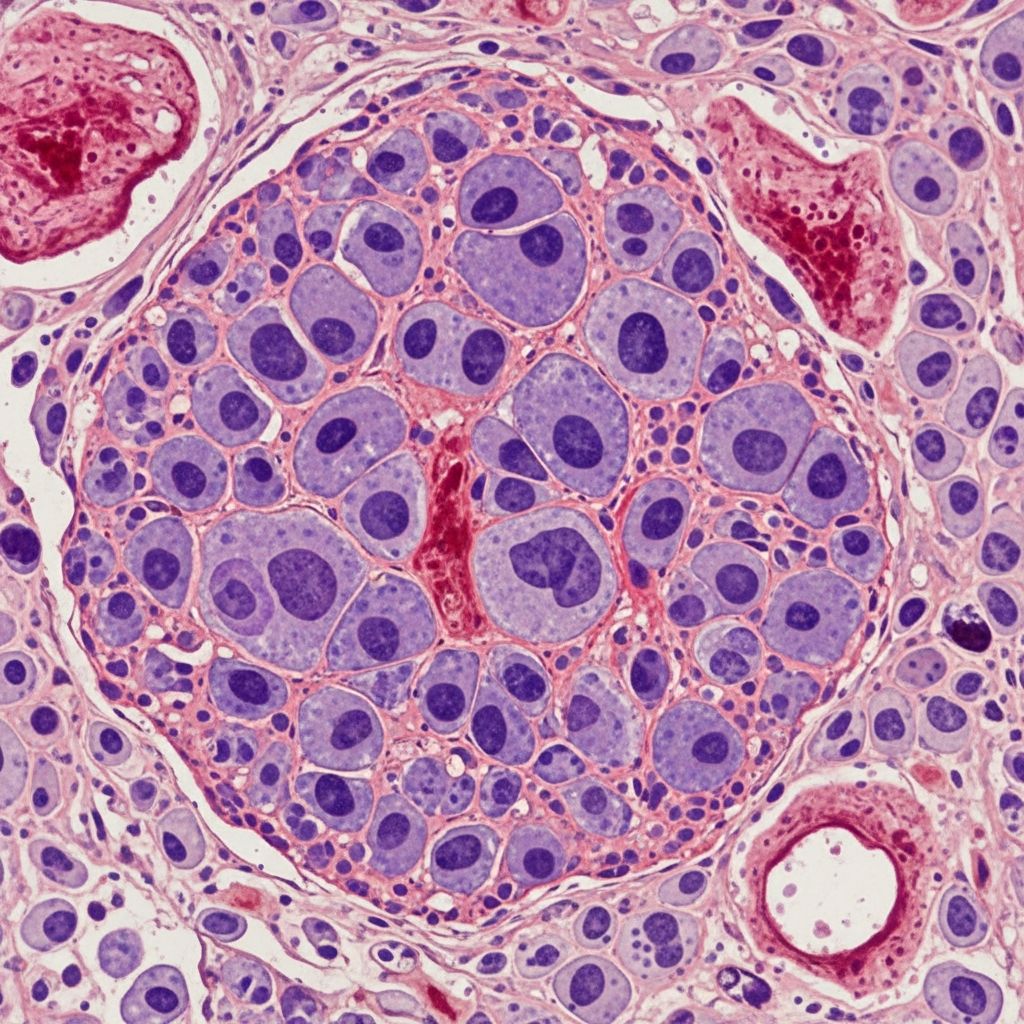
The histological presentation of metastatic adenocarcinoma is highly variable and depends on the primary tumor site, degree of differentiation, and host factors. Low-power microscopic examination typically reveals a poorly circumscribed, infiltrating tumor that is predominantly centered within the dermis. This infiltrative pattern frequently extends beyond the apparent gross margins of the lesion, reflecting the aggressive nature of metastatic disease.
At intermediate power magnification, the tumor often displays cords and nodules of atypical epithelial cells dissecting through and around collagen bundles in characteristic patterns. These cellular aggregates frequently demonstrate cytological atypia, including enlarged nuclei, coarse chromatin patterns, and increased mitotic activity. The degree of cellular differentiation varies considerably, with some lesions showing well-formed glandular structures while others may appear more solid and undifferentiated.
Glandular and Ductal Formations
Many metastatic adenocarcinomas display evidence of duct or gland formation, which serves as a key diagnostic feature supporting an adenocarcinoma classification. These structures may range from well-formed, mucin-secreting glands resembling the primary tumor to poorly differentiated structures with minimal luminal formation. The presence of true ductal structures with central lumens lined by atypical epithelial cells is particularly supportive of adenocarcinoma diagnosis.
Mucinous Stroma Features
A characteristic finding in many metastatic adenocarcinomas is the presence of a mucinous or myxoid stroma surrounding the neoplastic cells. This mucinous background may be subtle or abundant, depending on the primary tumor type and the degree of mucin production by the neoplastic cells. The mucinous material can dissect between native collagen bundles and may be associated with a variable inflammatory response including lymphocytes, plasma cells, and occasionally eosinophils. This stromal component can help distinguish certain types of metastatic adenocarcinomas from other cutaneous lesions.
Vascular and Lymphatic Involvement
Vascular and lymphatic permeation represents an important diagnostic feature and prognostic indicator in metastatic adenocarcinoma. Neoplastic cells may be identified within dermal blood vessels and lymphatic channels, demonstrating the pathways through which tumor cells gain access to the skin. This finding is particularly evident in certain variants of breast cancer metastases, including the telangiectoides and erysipeloides forms, where dilated lymphatic channels filled with tumor cells create distinctive clinical appearances.
Lymphatic invasion specifically indicates aggressive tumor behavior and may correlate with the cutaneous manifestations observed clinically. The presence of intravascular tumor cells suggests active metastatic spread and warrants careful staging and systemic therapy consideration.
Immunohistochemistry in Diagnostic Evaluation
While clinical correlation and staging investigations remain essential, immunohistochemistry provides valuable clues to determine the primary site of origin and helps differentiate metastatic adenocarcinomas from primary cutaneous adnexal tumors. Although no single immunohistochemical panel is entirely specific, general principles and marker patterns can guide diagnostic reasoning.
General Immunohistochemical Principles
Immunohistochemical analysis should be approached systematically, beginning with markers confirming adenocarcinoma diagnosis and epithelial origin, followed by markers suggesting specific primary sites. The following markers are commonly employed:
Related Stories



- Cytokeratin Markers: Pan-cytokeratin (AE1/AE3) and various specific cytokeratin subtypes confirm epithelial differentiation and adenocarcinoma diagnosis
- Mucin-Related Markers: Mucicarmine histochemical stain and immunostains for mucins (MUC1, MUC2, MUC5AC) may help characterize mucinous differentiation
- Organ-Specific Markers: Various antigens including CEA, TTF-1, PSA, GCDFP-15, and others provide clues to the primary site origin
- Adenocarcinoma Subtype Markers: Specific markers such as CK7 and CK20 in combination can suggest certain primary sites following established patterns
Primary Site-Specific Immunohistochemical Patterns
Certain immunohistochemical patterns are more commonly associated with adenocarcinomas from specific primary sites. For breast adenocarcinomas, markers such as GCDFP-15, mammaglobin, and hormone receptors (estrogen and progesterone receptors) may be positive. Lung adenocarcinomas often express TTF-1 and napsin A, while colorectal adenocarcinomas typically show CK20 positivity and may express CDX2.
Prostate adenocarcinomas characteristically express PSA and PAP (prostatic acid phosphatase), with PSA being particularly useful in suspected prostate metastases. Gastric adenocarcinomas may show different marker patterns depending on histological subtype, while pancreatic adenocarcinomas express various markers including MUC1 and MUC5AC.
Differentiation from Primary Cutaneous Adnexal Tumors
A critical diagnostic challenge involves distinguishing metastatic adenocarcinomas from primary cutaneous adenocarcinomas arising from skin adnexae, including sweat gland carcinomas (eccrine and apocrine), sebaceous carcinomas, and other primary cutaneous malignancies. Several features aid in this differentiation:
- Depth and distribution: Metastatic tumors may involve full-thickness dermis and subcutis without involvement of overlying epidermis or connection to skin surface structures
- Clinical presentation: Metastatic disease typically occurs in context of known or subsequently identified primary malignancy
- Immunohistochemical profiles: Primary cutaneous tumors show patterns reflecting their cutaneous origin
- Associated findings: Vascular invasion and lymphatic involvement patterns may differ between metastatic and primary lesions
Clinical Correlation and Diagnostic Approach
Accurate diagnosis of metastatic adenocarcinoma requires integration of clinical history, physical examination findings, imaging results, and pathological features. Clinical correlation is paramount, as the histological appearance alone may be insufficient for diagnosis. Key clinical factors include:
- History of prior malignancy or current oncological diagnosis
- Location and characteristics of skin lesions
- Associated systemic symptoms or imaging findings
- Temporal relationship between skin lesions and other metastatic disease
- Performance status and overall clinical picture
Cutaneous Manifestations of Specific Metastatic Adenocarcinomas
Different primary adenocarcinomas present with characteristic cutaneous manifestations and pathological patterns. Breast cancer metastases to skin may present as nodules, plaques, or erythematous lesions with or without central ulceration. Cutaneous metastases from gastrointestinal adenocarcinomas typically appear as firm nodules, often with central umbilication. Lung adenocarcinoma metastases to skin are less common but may present as solitary or multiple nodules.
Special Cutaneous Presentations
Certain cutaneous presentations warrant specific consideration. The erysipeloides form, characterized by lymphedema and erythema with pathological evidence of lymphatic obstruction, is classically associated with breast cancer metastases. The telangiectoides variant presents with prominent vascular dilation and cutaneous erythema. These clinical presentations correlate with distinct histological findings of lymphatic and vascular involvement, guiding both clinical management and prognostic assessment.
Staging and Prognostic Considerations
The presence of cutaneous metastases in adenocarcinoma indicates advanced disease (Stage IV) and significantly impacts prognosis and treatment planning. Comprehensive staging investigations are essential to identify all sites of metastatic disease and guide therapeutic decisions. Imaging modalities including chest radiography, computed tomography of the abdomen and pelvis, and other studies as clinically indicated help establish disease extent.
Multiple metastatic sites indicate more aggressive disease biology compared to single metastatic lesions. However, occasional patients with solitary metastatic lesions may experience prolonged survival following local treatment when technically feasible, warranting aggressive management of isolated lesions when appropriate.
Pathological Reporting and Clinical Implications
Comprehensive pathological reporting of metastatic adenocarcinoma should include description of histological patterns, degree of differentiation, presence of special features such as mucinous differentiation or vascular invasion, and results of immunohistochemical studies. Clear identification of the likely primary site, when determinable, is essential for guiding clinical management and counseling patients regarding prognosis and treatment options.
Pathologists should communicate findings clearly with clinical teams, noting any limitations in determining primary site origin and recommending additional clinical or radiological investigations when necessary. Integration of pathological findings with clinical, radiological, and laboratory data optimizes diagnostic accuracy and patient management.
Frequently Asked Questions
Q: What is the most common histological pattern seen in metastatic adenocarcinoma?
A: The most common pattern is a poorly circumscribed infiltrating tumor centered in the dermis, with cords and nodules of atypical epithelial cells dissecting through collagen bundles, often accompanied by gland formation and mucinous stroma.
Q: How reliable is immunohistochemistry in determining the primary site of adenocarcinoma?
A: While immunohistochemistry provides valuable clues and can narrow the differential diagnosis, no single marker or panel is entirely specific. Results should always be interpreted in clinical context with imaging and clinical history.
Q: What distinguishes metastatic adenocarcinoma from primary cutaneous sweat gland carcinoma?
A: Key differences include depth of involvement, connection to skin surface structures (primary tumors typically extend from epidermis), clinical history of prior malignancy (metastatic disease), and distinct immunohistochemical patterns.
Q: What is the significance of vascular and lymphatic invasion in metastatic adenocarcinoma?
A: Vascular and lymphatic invasion indicates aggressive tumor behavior, ongoing metastatic spread, and warrants staging investigation and systemic therapy consideration. It has prognostic implications for patient management.
Q: Can a single metastatic skin lesion be cured?
A: While most patients with single metastatic lesions develop additional metastases, local treatment of solitary lesions may result in prolonged disease-free intervals. Resection combined with radiation when technically feasible should be considered.
References
- Metastatic Adenocarcinoma Pathology — DermNet NZ. Accessed January 2026. https://dermnetnz.org/topics/metastatic-adenocarcinoma-pathology
- Adenocarcinoma of Unknown Primary Site — National Center for Biotechnology Information (NCBI), National Institutes of Health. https://www.ncbi.nlm.nih.gov/books/NBK13804/
- Adenocarcinoma: How This Type of Cancer Affects Prognosis — Mayo Clinic. Accessed January 2026. https://www.mayoclinic.org/diseases-conditions/cancer/in-depth/adenocarcinoma/art-20580469
- Adenocarcinoma: Types, Stages & Treatment — Cleveland Clinic. Accessed January 2026. https://my.clevelandclinic.org/health/diseases/21652-adenocarcinoma-cancers
Similar Articles








Read full bio of Sneha Tete