Metastatic Crohn’s Disease Pathology: Diagnosis And Treatment
Exploring the histopathology, clinical features, and management of metastatic Crohn's disease, a rare cutaneous manifestation of IBD.
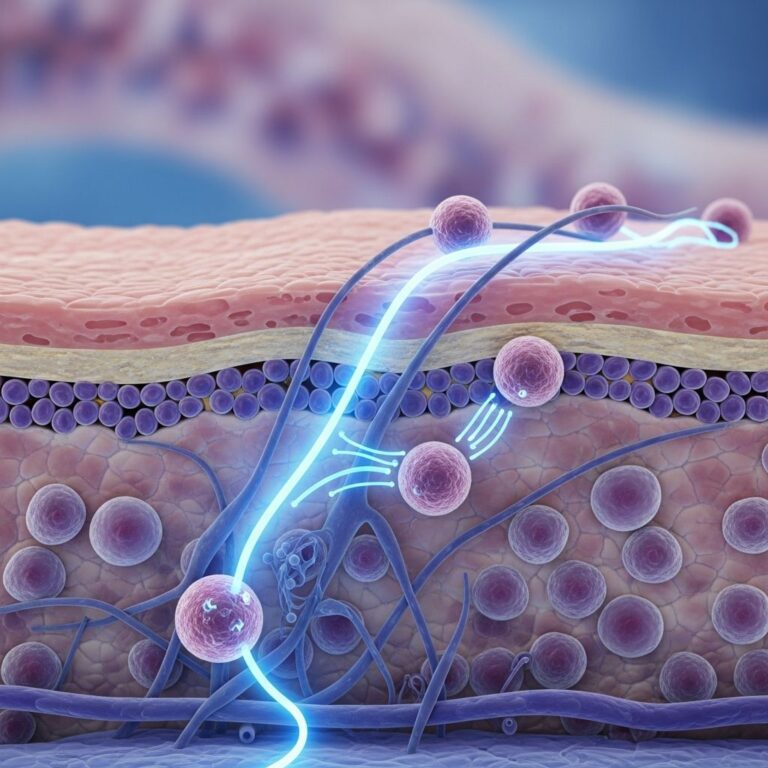
Metastatic Crohn’s disease (MCD) represents a rare and intriguing cutaneous manifestation of Crohn’s disease, characterized by sterile granulomatous inflammation in skin sites discontinuous from the gastrointestinal tract.
What is metastatic Crohn’s disease?
Metastatic Crohn’s disease is defined as the development of granulomatous skin lesions at sites separated from the gastrointestinal tract, without direct extension from the bowel. Unlike typical cutaneous Crohn’s disease, which involves contiguous spread to perianal or peristomal skin, MCD arises at distant locations such as the extremities, trunk, face, or intertriginous areas. This phenomenon highlights the systemic nature of Crohn’s disease, an inflammatory bowel disease (IBD) with potential for extraintestinal manifestations.
The term ‘metastatic’ does not imply malignant spread but rather a discontinuous granulomatous process mirroring the intestinal pathology. It is histologically confirmed by non-caseating granulomas in the dermis, often with associated perivascular inflammation. MCD can precede, coincide with, or follow the diagnosis of intestinal Crohn’s disease, complicating early recognition.
Who gets metastatic Crohn’s disease?
MCD predominantly affects individuals with established Crohn’s disease, though it may manifest before gastrointestinal symptoms in up to 25% of cases. It occurs across all age groups but is more common in young adults aged 20-40 years, aligning with the peak incidence of Crohn’s disease. There is no strong gender predilection, though some series report a slight female predominance.
Risk factors include active or severe intestinal Crohn’s disease, particularly with colonic involvement. Pediatric cases are documented, often presenting diagnostic challenges due to atypical features. Genetic predispositions linked to IBD, such as NOD2 mutations, may contribute, but specific triggers for MCD remain unclear.
Clinical features of metastatic Crohn’s disease
Cutaneous lesions in MCD exhibit versatile morphology, including nodules, plaques, ulcers, abscesses, and vegetative growths. Common sites include the legs, arms, trunk, face, genitals, and skin folds. Lesions are often tender, indurated, and may ulcerate with serpiginous borders or cribriform scarring.
- Nodular form: Firm, reddish-brown subcutaneous nodules, sometimes coalescing into plaques.
- Ulcerative form: Painful ulcers with undermined edges and granulating bases.
- Abscess-like: Fluctuant swellings mimicking infection.
- Genital/perianal: Though sometimes contiguous, true metastatic lesions are non-adjacent.
Systemic symptoms are uncommon unless linked to active bowel disease. Lesions may parallel intestinal flares or remain independent, underscoring the need for multidisciplinary evaluation.
Pathology of metastatic Crohn’s disease
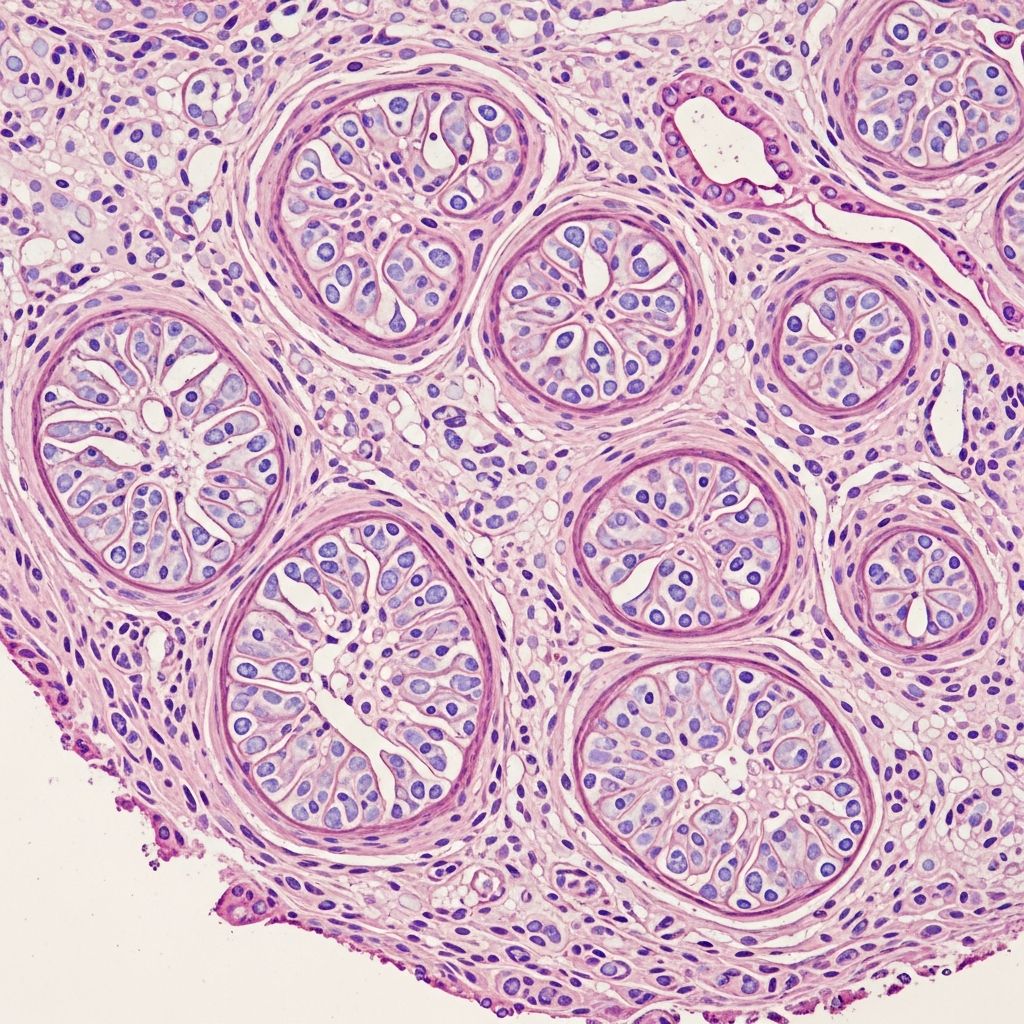
Histopathology is pivotal for diagnosis, revealing non-suppurative granulomatous dermatitis. Key features from a study of 12 cases include nodular or diffuse granulomata with lymphocyte cuffs and superficial/deep perivascular mixed infiltrates, often eosinophil-rich. Epidermal ulceration is frequent.
Microscopic findings:
- Non-caseating granulomas composed of epithelioid histiocytes and multinucleated giant cells.
- Perivascular and interstitial infiltrates of lymphocytes, plasma cells, and eosinophils.
- Fibrosis in chronic lesions; neural hyperplasia occasionally noted.
- Absence of suppuration or organisms on special stains.
These patterns distinguish MCD from mimics like sarcoidosis, which shows ‘naked’ granulomas without cuffing.
Histopathology images
Typical low-power views demonstrate dermal granulomatous nodules extending into subcutis. High-power reveals epithelioid clusters with Langerhans giant cells amid mixed inflammation. Fite and GMS stains are negative for mycobacteria and fungi.
Related Stories



Differential diagnosis
| Condition | Key Distinguishing Features |
|---|---|
| Cutaneous sarcoidosis | Naked granulomas; upper dermal predominance; no eosinophils or ulceration. |
| Infectious granuloma (TB, fungi) | Caseation, suppuration; positive stains/cultures. |
| Pyoderma gangrenosum | Neutrophilic infiltrate; no true granulomas; associated with IBD pathergy. |
| Foreign body reaction | Polarizable material; sarcoid-like granulomas around particles. |
| Lymphoma/Cutaneous T-cell lymphoma | Atypical lymphocytes; epidermotropism. |
Differential includes contiguous Crohn’s, hidradenitis suppurativa, and Sweet’s syndrome, requiring clinicopathologic correlation.
Investigations
Diagnosis relies on skin biopsy with clinicopathologic correlation. Essential tests include:
- Full-thickness punch biopsy for histopathology and special stains.
- Colonoscopy/endoscopy to assess bowel involvement.
- Serology for IBD markers (e.g., ASCA).
- Cultures and PCR to exclude infection.
Imaging (MRI/ultrasound) aids perianal disease assessment but is less useful for distant lesions.
Management of metastatic Crohn’s disease
Treatment is challenging due to limited evidence; approaches target inflammation and symptoms. No randomized trials exist, but case series guide therapy.
- Topical: Corticosteroids, tacrolimus for mild lesions.
- Systemic: Corticosteroids, immunomodulators (azathioprine, methotrexate), biologics (anti-TNF like infliximab, ustekinumab).
- Antibiotics: Metronidazole, ciprofloxacin for secondary infection.
- Surgery: Debridement for ulcers/abscesses; reserved for refractory cases.
Multidisciplinary care involving dermatology, gastroenterology, and nutrition optimizes outcomes. Dietary modification and smoking cessation support remission.
Frequently asked questions (FAQs)
Q: Is metastatic Crohn’s disease cancerous?
A: No, ‘metastatic’ refers to discontinuous granulomatous spread, not malignancy. It is a reactive inflammatory process.
Q: Can MCD occur without bowel symptoms?
A: Yes, skin lesions can precede intestinal Crohn’s by months to years in some cases.
Q: What is the prognosis for MCD?
A: Variable; many achieve remission with therapy, but it can be chronic and recurrent, paralleling IBD activity.
Q: How is MCD distinguished from infection?
A: Biopsy shows sterile non-caseating granulomas; negative cultures and special stains confirm.
Q: Are biologics effective for MCD?
A: Yes, anti-TNF agents like infliximab show high response rates in refractory cases.
Complications and prognosis
Untreated MCD leads to scarring, contractures, and secondary infection. Prognosis improves with early intervention; biologics induce remission in >70% of cases. Long-term monitoring is essential due to IBD associations.
This condition underscores Crohn’s systemic impact, necessitating vigilant dermatologic surveillance in IBD patients. Ongoing research into pathogenesis promises targeted therapies.
References
- Metastatic Crohn’s disease: a histopathologic study of 12 cases — PubMed/Lee et al. 2008-01-01. https://pubmed.ncbi.nlm.nih.gov/18261113/
- Metastatic Crohn’s disease: Symptoms, treatment, and FAQ — Medical News Today. 2023-10-01. https://www.medicalnewstoday.com/articles/metastatic-crohns-disease
- Metastatic Crohn’s disease: an underestimated entity — Wiley Online Library/Ickrath et al. 2021-07-05. https://onlinelibrary.wiley.com/doi/10.1111/ddg.14447
- A brief account of the pathology and pathogenesis of the cutaneous manifestations of Crohn’s disease — SICCR/Haboubi. 2015-08-01. https://www.siccr.org/wp-content/uploads/2015/08/ML_Haboubi_1.pdf
- Metastatic Crohn’s disease. Case report and review of the literature — PubMed. 1990-01-01. https://pubmed.ncbi.nlm.nih.gov/2185695/
Similar Articles








Read full bio of Sneha Tete