Metastatic Melanoma: Diagnosis, Staging And Treatment Guide
Advanced melanoma that spreads beyond the skin: symptoms, diagnosis, staging, treatments, and prognosis.
Revised: January 2026
What is metastatic melanoma?
Metastatic melanoma, also known as stage IV melanoma, occurs when melanoma cells spread from the original skin tumour to distant sites such as lymph nodes, lungs, liver, brain, or bones. This advanced form represents about 4% of melanoma diagnoses at presentation and is responsible for most melanoma deaths. Early detection of primary melanoma is crucial, as it is highly curable when localised, but once metastatic, it poses significant therapeutic challenges.
Melanoma arises from melanocytes, pigment-producing cells, often due to UV exposure. Approximately 50% of melanomas harbour BRAF mutations activating the MAPK pathway, making targeted therapies viable. Prognosis for stage IV disease has improved dramatically with immunotherapy and targeted agents, shifting median survival from months to over 2 years in many cases.
Who gets metastatic melanoma?
Metastatic melanoma affects individuals with fair skin, multiple naevi, previous melanomas, or genetic predispositions like CDKN2A mutations. Risk factors include intense UV exposure, sunburn history, and immunosuppression. Incidence peaks in ages 50–70, with males more affected. Globally, melanoma rates are rising, particularly in older populations.
- Fair skin types (Fitzpatrick I–II): Higher susceptibility to UV damage.
- Multiple dysplastic naevi: Increase primary melanoma risk.
- Family history: 10% familial cases linked to genetic mutations.
- Previous melanoma: 2–8% recurrence risk as metastases.
What causes metastatic melanoma?
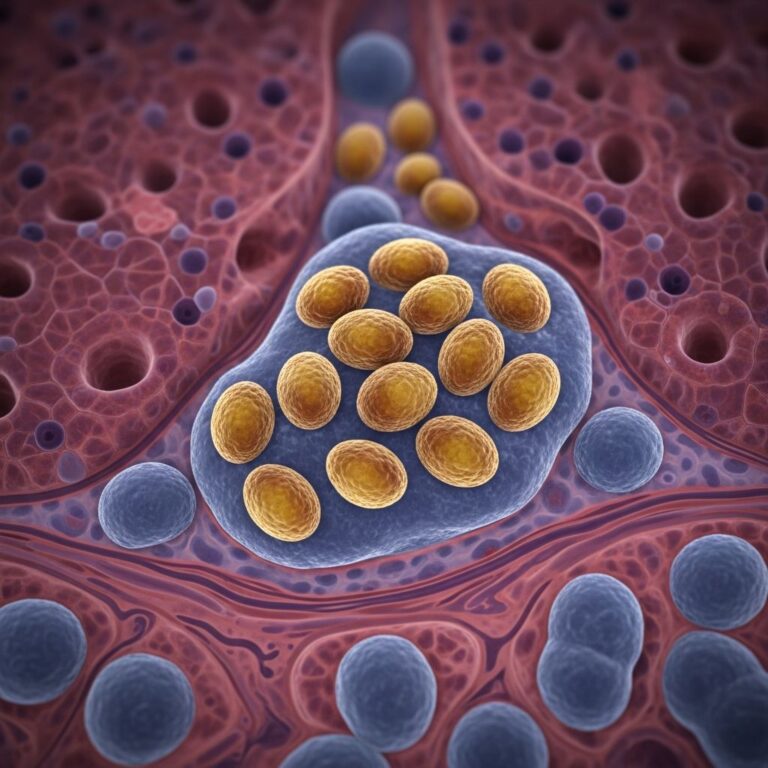
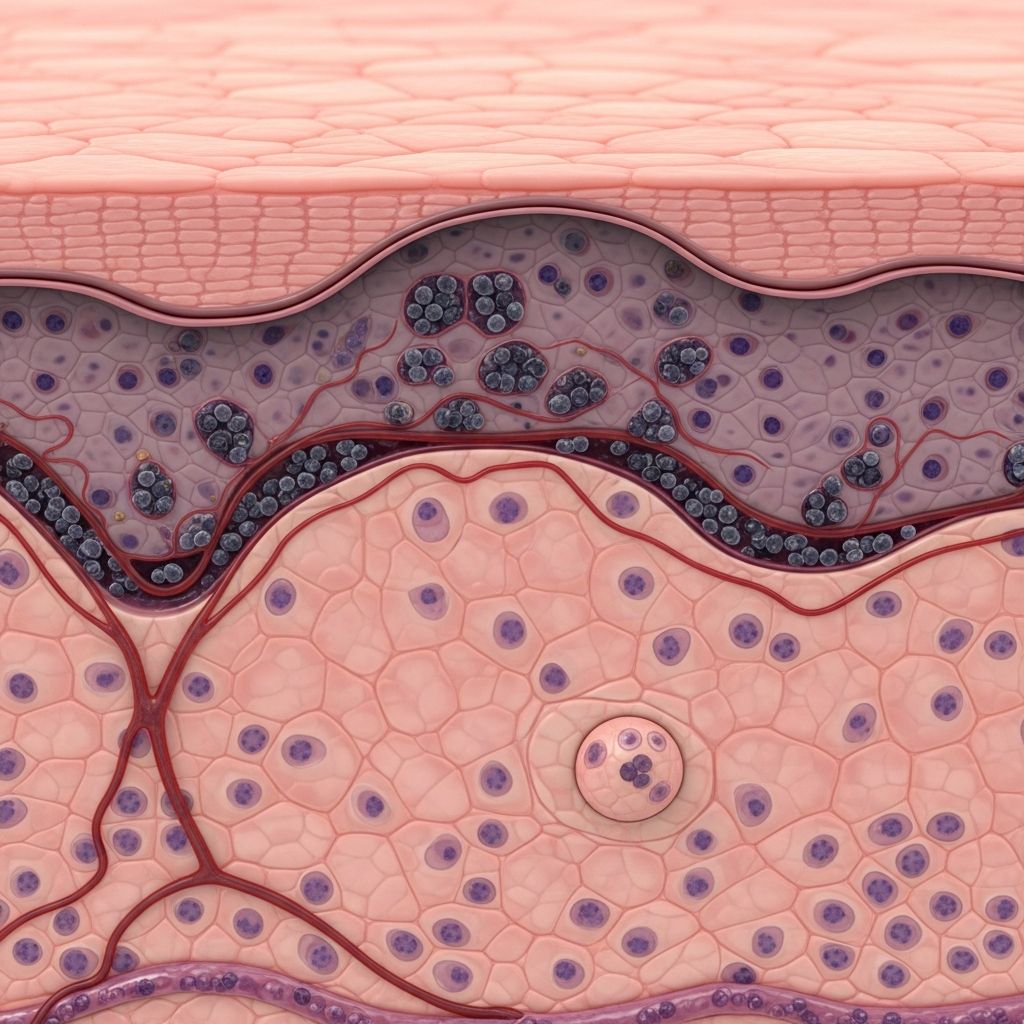
Primary melanoma metastasises via lymphatic or haematogenous routes. Key drivers include BRAF V600E mutations (40–50%), NRAS (15–20%), and NF1 alterations. Immune evasion via PD-L1 expression and T-cell exhaustion enables distant spread. UV-induced mutations accumulate, promoting invasion through basement membrane disruption and angiogenesis.
What are the clinical features of metastatic melanoma?
Symptoms vary by metastatic site. Cutaneous/subcutaneous nodules are common (visible pigmented lumps). Lymph node involvement causes swelling. Visceral spread leads to organ-specific signs.
Cutaneous and subcutaneous metastases
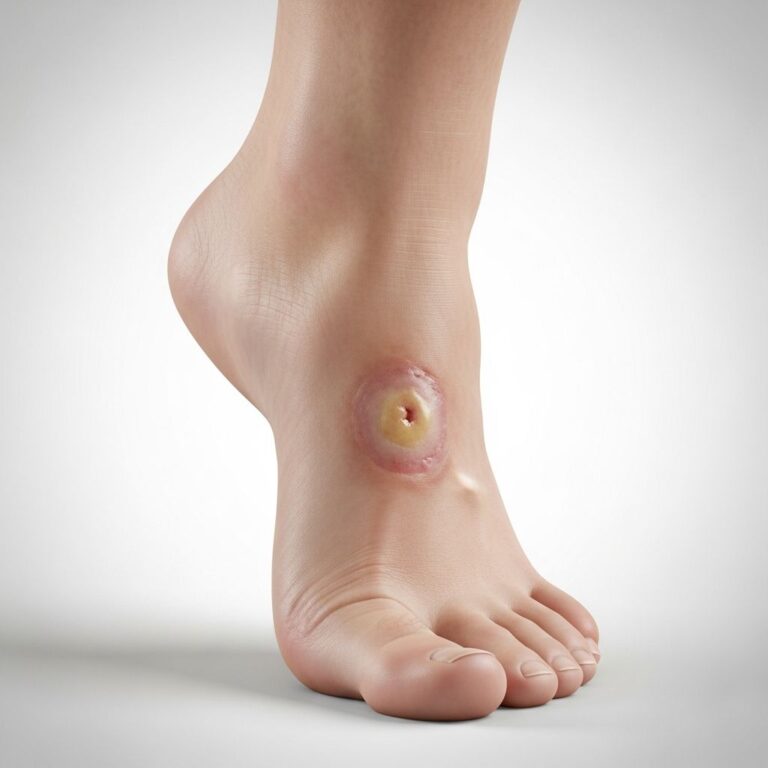
Most frequent (up to 90% of stage IV cases), appearing as firm, pigmented nodules 0.5–2 cm, often multiple and asynchronous. Primary site may be regressed.
Metastases to lymph nodes
Enlarged, firm nodes in regional basins; in-transit metastases occur between primary and nodes.
Visceral metastases
| Site | Frequency | Symptoms |
|---|---|---|
| Lung | 20–30% | Dyspnoea, cough, haemoptysis |
| Liver | 15–25% | Anorexia, jaundice, abdominal pain |
| Brain | 10–20% | Headaches, seizures, neurological deficits |
| Bone | 10–15% | Pain, fractures, hypercalcaemia |
| GIT | 5–10% | Obstruction, bleeding, perforation |
Systemic effects include fatigue, weight loss, elevated LDH (poor prognosis marker).
How is metastatic melanoma diagnosed?
Diagnosis combines histopathology, imaging, and biomarkers. Suspicious lesions undergo excisional biopsy for confirmation.
- Biopsy: Punch or excisional; shows atypical melanocytes, mitoses, ulceration.
- Sentinel lymph node biopsy (SLNB): Assesses nodal spread if not clinically evident.
- Blood tests: LDH, S100B, tyrosinase for staging/prognosis.
Related Stories



What is the staging of metastatic melanoma?
AJCC 8th edition uses TNM: T (thickness), N (nodes), M (metastases). Stage IV subdivided by site (M1a skin/M1b lung/M1c visceral/M1d CNS) and LDH.
| Stage | Description | 5-Year Survival |
|---|---|---|
| IIIA | Microscopic nodal mets | 70–80% |
| IV M1a | Skin/subcut | 50–60% |
| IV M1c | Visceral, normal LDH | 30–40% |
| IV M1d high LDH | CNS/elevated LDH | <20% |
What is the treatment for metastatic melanoma?
Multidisciplinary: surgery for oligometastatic, systemic therapy mainstay.
Surgery
Metastasectomy for resectable disease (lungs, brain); improves survival in selected cases.
Radiotherapy
Stereotactic body radiotherapy (SBRT) for oligomets; palliation of brain/bone lesions.
Systemic therapy
Immunotherapy: Anti-PD-1 (pembrolizumab, nivolumab) 40–50% response; anti-CTLA-4 (ipilimumab) combined boosts to 60%. Durable responses in 20–40%.
Targeted therapy: BRAF/MEK inhibitors (dabrafenib/trametinib, encorafenib/binimetinib) for BRAF-mutant (50%); rapid responses, PFS 12–18 months.
Oncolytic virus: T-VEC intralesional for injectables.
Prognosis and follow-up
Median OS 2–3 years; regular CT/PET, LDH monitoring. Resistance common, trials essential.
Frequently Asked Questions
What is the survival rate for metastatic melanoma?
5-year survival ~35%, varying by subtype and treatment; immunotherapy improves to 50%+ in responders.
Can metastatic melanoma be cured?
Rarely curative, but long-term remission possible with immunotherapy (10–20% complete responses).
What are side effects of immunotherapy?
Immune-related: colitis, pneumonitis, endocrinopathies; managed with steroids.
Is targeted therapy better than immunotherapy?
Depends on BRAF status; combinations sequenced for best outcomes.
How often is follow-up needed?
Every 3 months initially, with imaging; lifelong surveillance.
References
- Metastatic Melanoma – StatPearls — NCBI Bookshelf/StatPearls Publishing. 2023-07-17. https://www.ncbi.nlm.nih.gov/books/NBK470358/
- Metastatic Melanoma: Symptoms, Treatment, Outlook — Healthline. 2024-05-15. https://www.healthline.com/health/metastatic-melanoma
- Metastatic Melanoma Stage 3 and 4 — Cancer Treatment Centers of America. 2024-02-20. https://www.cancercenter.com/cancer-types/melanoma/types/metastatic-melanoma
- Melanoma Treatment – PDQ — National Cancer Institute. 2025-11-12. https://www.cancer.gov/types/skin/patient/melanoma-treatment-pdq
- Melanoma – Diagnosis and treatment — Mayo Clinic. 2025-08-05. https://www.mayoclinic.org/diseases-conditions/melanoma/diagnosis-treatment/drc-20374888
- Melanoma Stages 0, 1, 2, 3 and 4 Metastatic — Memorial Sloan Kettering Cancer Center. 2024-10-10. https://www.mskcc.org/cancer-care/types/melanoma/diagnosis/melanoma-stages
Similar Articles








Read full bio of Sneha Tete