Meyerson Naevus: Eczema Around Moles Explained
Understanding Meyerson naevus: causes, symptoms, and effective treatment options.
Understanding Meyerson Naevus
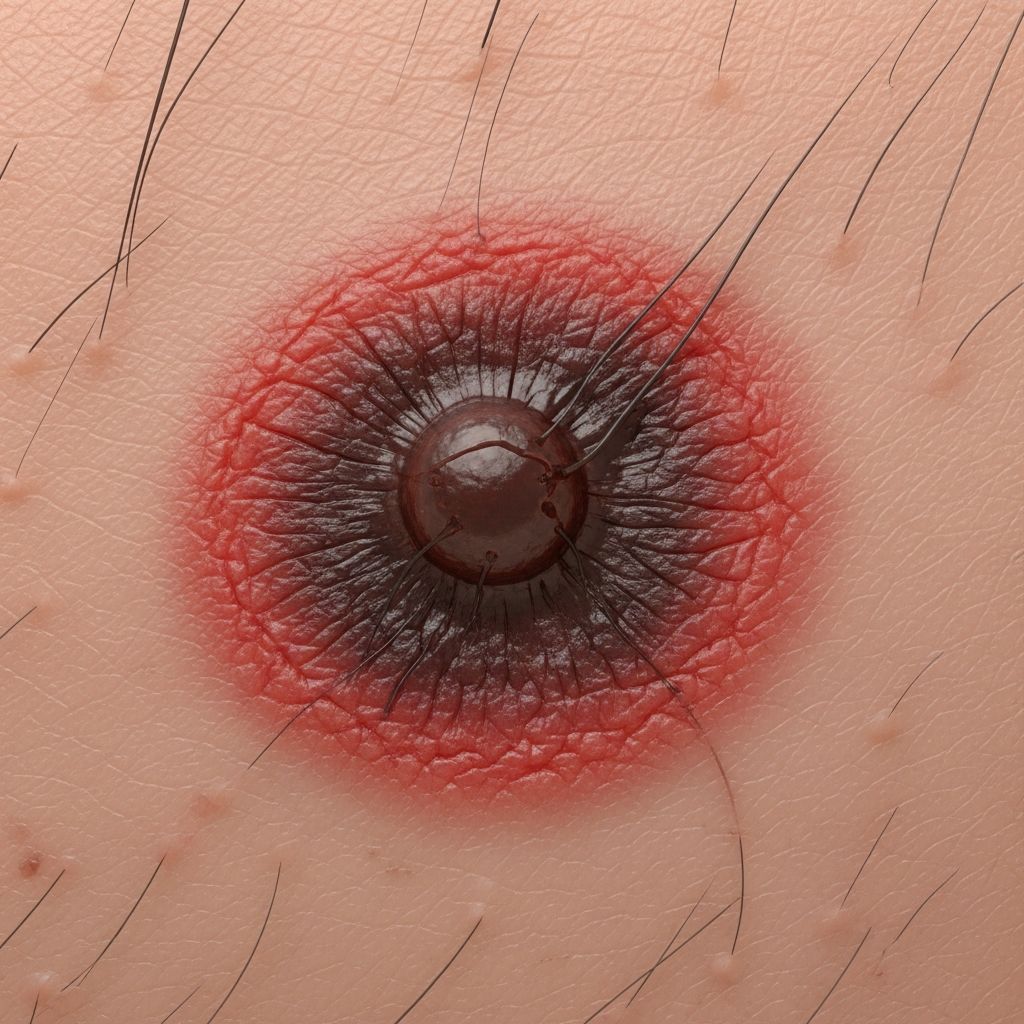
Meyerson naevus is a benign skin condition characterized by a mole surrounded by eczema, an itchy rash also known as dermatitis. A mole is more properly called a benign melanocytic naevus, and when eczematous changes develop around it, the condition is referred to as Meyerson naevus, halo dermatitis, halo eczema, or Meyerson’s phenomenon. This distinctive presentation distinguishes it from other similar-appearing skin lesions and requires proper understanding for accurate diagnosis and management.
Historical Background and Discovery
Meyerson naevus was first described in 1971 by Meyerson, who reported two men with benign melanocytic naevi surrounded by eczema. Since this initial description, the condition has been recognized as an uncommon clinical entity that can present in various forms. The condition is typically seen on the trunk and proximal extremities of healthy young adults, with a male predominance in affected populations. Understanding the historical context of this condition helps dermatologists recognize and appropriately manage cases they encounter in clinical practice.
Demographics and Prevalence
Meyerson naevus is considered an uncommon condition in clinical dermatology practice. While it can occur in individuals of various ages, it is typically observed in healthy young adults. The condition shows a male predominance, though cases in females and even infants have been documented in medical literature. Multiple lesions can appear simultaneously or develop sequentially, with approximately two-thirds of cases involving multiple nevi. This variability in presentation makes clinical recognition important for healthcare providers evaluating pruritic or inflammatory lesions around existing moles.
Causes and Pathogenesis
The exact cause of Meyerson naevus remains unknown, though multiple hypotheses have been proposed by researchers. Skin biopsy specimens show inflamed skin similar to that seen in psoriasis and eczema. Excision of the central mole often results in resolution of the eczematous reaction, suggesting the mole itself is the trigger for the inflammatory response.
The most widely supported theory involves an immune-mediated response. Evidence suggests that CD4+ lymphocytes (immune cells) react against target antigens on the surface of naevus cells, which are melanocytes. This immune mechanism is thought to be the primary driver of the eczematous reaction surrounding the central mole.
Several factors have been identified as potential triggers for Meyerson naevus development:
- Allergic contact dermatitis
- Hypersensitivity reactions
- Solar exposure
- Medication use
- Post-laser treatment (rare cases)
Despite these proposed mechanisms, the relationship between Meyerson naevus and atopic dermatitis remains controversial, and further research is needed to fully understand the pathogenesis of this condition.
Clinical Presentation and Signs
Meyerson naevus typically presents with distinctive clinical features that help differentiate it from other dermatological conditions. The condition usually develops as a single itchy patch, though multiple lesions appearing simultaneously have been reported.
The characteristic appearance includes:
- A centrally positioned naevus with regular borders and uniform color
- A surrounding red, dry, or blistered rash that may or may not be itchy
- An eczematous halo that is sharply defined and surrounds the central nevus symmetrically
- Pruritus (itching) and scaling over the lesion in many cases
Related Stories



An important clinical feature is that the naevus in the center of the halo is rarely cancerous (melanoma). The central mole remains unchanged and maintains its original appearance even as the surrounding eczema may resolve. This stability of the central lesion is a key distinguishing feature from other conditions.
Histopathological Findings
Although diagnosis is primarily clinical, histopathological examination can be performed in doubtful cases to confirm the diagnosis. Characteristic histopathological features include:
- Spongiosis (intercellular edema in the epidermis)
- Acanthosis (thickening of the epidermis)
- Parakeratosis (retention of nuclei in the stratum corneum)
- Superficial dermal lymphocytic infiltrate
- Epidermal hyperkeratosis
- Vesicles (small fluid-filled blisters)
- Perivascular lymphocytic infiltrate around the central nevus
These findings demonstrate an inflammatory pattern consistent with eczematous dermatitis overlying capillary ectasias and the melanocytic nevus. The dense inflammatory infiltrate provides histological confirmation when clinical presentation is unclear.
Differential Diagnosis
Meyerson naevus is sometimes mistaken for other skin lesions, particularly a halo mole, also known as Sutton naevus or halo nevus. Understanding the key differences is essential for accurate diagnosis and appropriate management.
| Feature | Meyerson Naevus | Halo Mole (Sutton Naevus) |
|---|---|---|
| Central mole behavior | Never changes or fades away, remains unchanged | Fades in color and eventually disappears |
| Surrounding changes | Eczematous halo with inflammation | Achromic (depigmented) halo without eczema |
| Histopathology | CD4+ T lymphocyte infiltration, eczematous features | Dense CD8+ T lymphocyte infiltration |
| Resolution pattern | Eczema resolves, mole persists | Both mole and halo regress |
The main distinguishing feature is what happens to the central naevus. In Meyerson naevus, the lesion in the center never changes or fades away even when the surrounding eczema has resolved. In contrast, the central mole of a halo mole usually fades in color and eventually disappears altogether. This critical difference helps guide clinical management and prognosis expectations.
Other conditions to exclude include malignant melanoma and vitiligo, particularly in children where an achromic halo surrounding melanocytic nevi can resemble early vitiligo. Dermoscopic examination and histopathological analysis are valuable tools when differential diagnosis is uncertain.
Treatment Approaches
Treatment of Meyerson naevus depends on the severity of symptoms and patient preferences. The prognosis is generally good, with various management options available.
Conservative Management
The eczema around Meyerson naevus usually resolves by itself within weeks without any intervention. Many cases spontaneously clear within a few months without involution of the central nevi. Observation alone may be appropriate for mild cases with minimal symptoms.
Topical Corticosteroids
Topical corticosteroid cream or ointment is the first-line pharmacological treatment and is usually successfully used to treat the eczema. Application for a few days or weeks typically results in resolution of the eczematous eruption. Potent topical steroids have been shown to clear the dermatitis effectively.
Surgical and Advanced Therapies
Surgical excision of the central mole may be arranged in specific circumstances:
- If there is concern that the lesion is melanoma
- When symptoms are a nuisance to the patient
- When conservative treatment fails
Surgical excision with appropriate margins (typically 2 mm) often results in complete resolution of the eczematous eruption and any associated hypopigmented halo. After excision, there is typically no recurrence observed during follow-up periods.
Pulsed dye laser therapy is sometimes used for lesions that do not respond to other treatments or show recurrence after discontinuation of topical corticosteroids. This advanced option is reserved for refractory cases.
Prognosis and Outcomes
The overall prognosis of Meyerson naevus is favorable. The central naevus remains unchanged and benign, requiring no removal unless there is concern about melanoma or the patient desires removal due to cosmetic or symptomatic concerns. Since the naevus is inherently harmless, conservative management with observation or topical corticosteroids is usually sufficient.
The main concern with benign lesions presenting with inflammation is the theoretical possibility of malignant transformation. However, the central naevus in Meyerson naevus is rarely cancerous. Nevertheless, clinicians should remain vigilant and consider histopathological examination when clinical features are atypical or concerning.
Clinical Significance and Awareness
Meyerson phenomenon is rarely mentioned in dermatology literature, and many dermatologists may not be familiar with the entity, making them prone to overlook the diagnosis. Increased awareness and consideration of this condition in the differential diagnosis of itchy melanocytic lesions is important for appropriate patient management. The condition is important to recognize because confusion with malignant melanoma or Sutton’s nevus can lead to unnecessary procedures or delayed diagnosis of true pathology.
Frequently Asked Questions
Q: Is Meyerson naevus a type of cancer?
A: No, Meyerson naevus is a benign skin condition. The central mole is rarely cancerous, though it is important to have any concerning lesions evaluated by a dermatologist to rule out melanoma.
Q: Can Meyerson naevus be confused with other skin conditions?
A: Yes, it is sometimes mistaken for halo moles (Sutton naevi). The key difference is that in Meyerson naevus, the central mole never changes or fades, whereas in halo moles, the central mole eventually disappears.
Q: Will the eczema around my mole go away on its own?
A: Often yes. The eczema usually resolves by itself within weeks or a few months without treatment. However, topical corticosteroids can speed up resolution if needed.
Q: Do I need to have the mole removed?
A: Not necessarily. Since the mole is benign and harmless, removal is only recommended if there are concerns about melanoma, if symptoms are bothersome, or for cosmetic reasons.
Q: What is the best treatment for the itching and rash?
A: Topical corticosteroid creams or ointments are usually effective for treating the eczema. In most cases, applying these for a few weeks results in resolution. Severe cases may require other treatments like pulsed dye laser therapy.
Q: Can multiple moles develop Meyerson naevus at the same time?
A: Yes, although Meyerson naevus usually develops as a single patch, multiple lesions can appear simultaneously or sequentially, with approximately two-thirds of cases involving multiple nevi.
Q: What triggers Meyerson naevus?
A: The exact cause is unknown, but potential triggers include allergic contact dermatitis, hypersensitivity reactions, solar exposure, certain medications, and rarely, laser treatment.
References
- Meyerson Phenomenon Over Nuchal Nevus Simplex — National Center for Biotechnology Information (NCBI). 2020-12-16. https://pmc.ncbi.nlm.nih.gov/articles/PMC7735407/
- Meyerson Naevus – DermNet — DermNet New Zealand. 2006. https://dermnetnz.org/topics/meyerson-naevus
- Meyerson Phenomenon Simulating a Halo Nevus — Clinical Medicine Insights. https://clinmedjournals.org/articles/cmil/cmil-4-114.php?jid=cmil
- Meyerson Phenomenon: A Marker of Benignity or a Diagnostic Trap? — Medcrave Online. https://medcraveonline.com/JDC/meyerson-phenomenon-a-marker-of-benignity-or-a-diagnostic-trap.html
- Meyerson’s Naevus – Primary Care Dermatology Society — Primary Care Dermatology Society. https://www.pcds.org.uk/clinical-guidance/meyersons-naevus
Similar Articles








Read full bio of Sneha Tete